Arthropeas magna
Arthropeas magna Johnson, 1913, is a species of fly belonging to the family Xylophagidae (formerly classified under Coenomyiidae) [1].
Taxonomy
This page represents the following TreeOfLife-200M taxonomic path.[2]
- Kingdom: Animalia
- Phylum: Arthropoda
- Class: Insecta
- Order: Diptera
- Family: Xylophagidae
- Genus: Arthropeas
- Species: Arthropeas magna
Visual Description
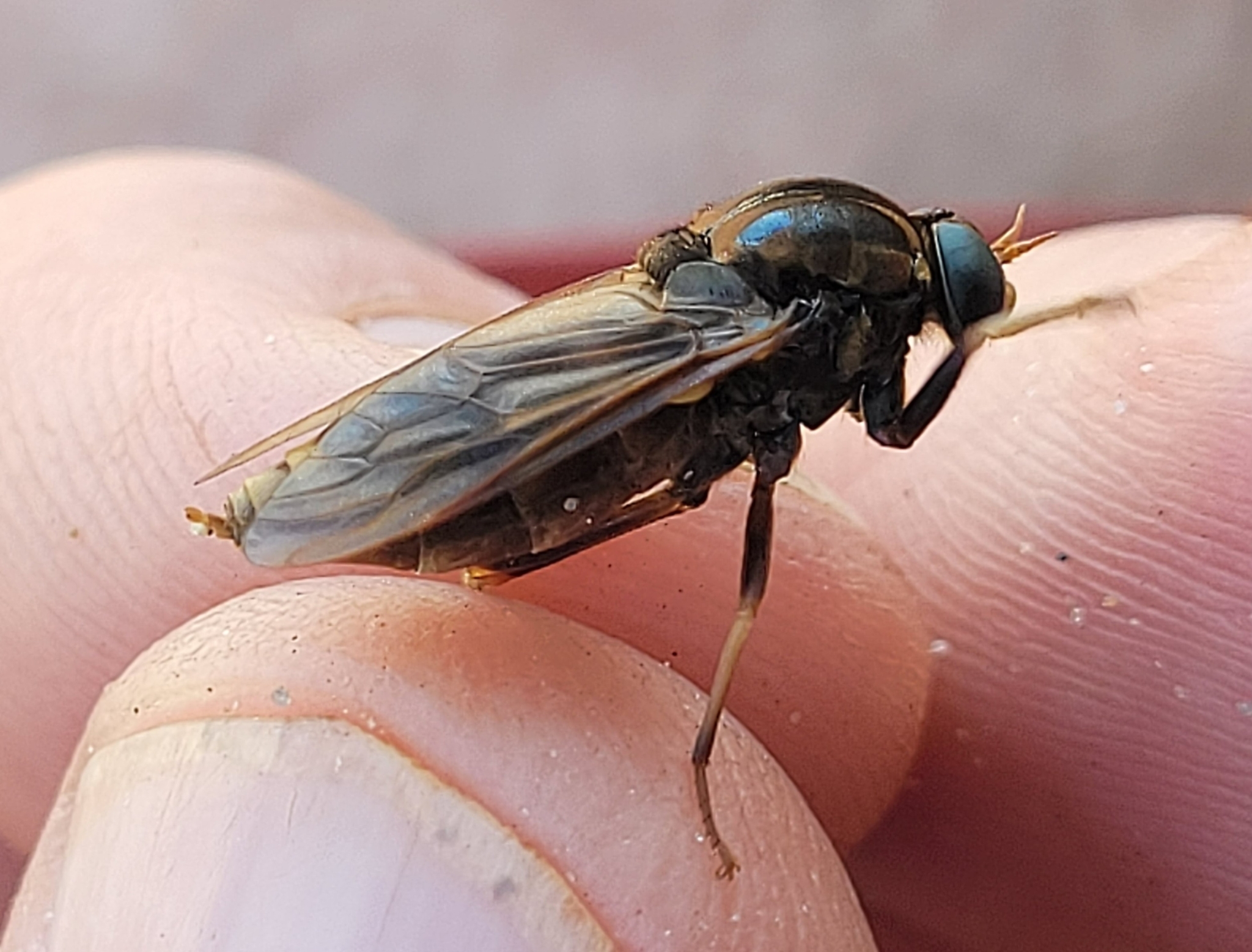
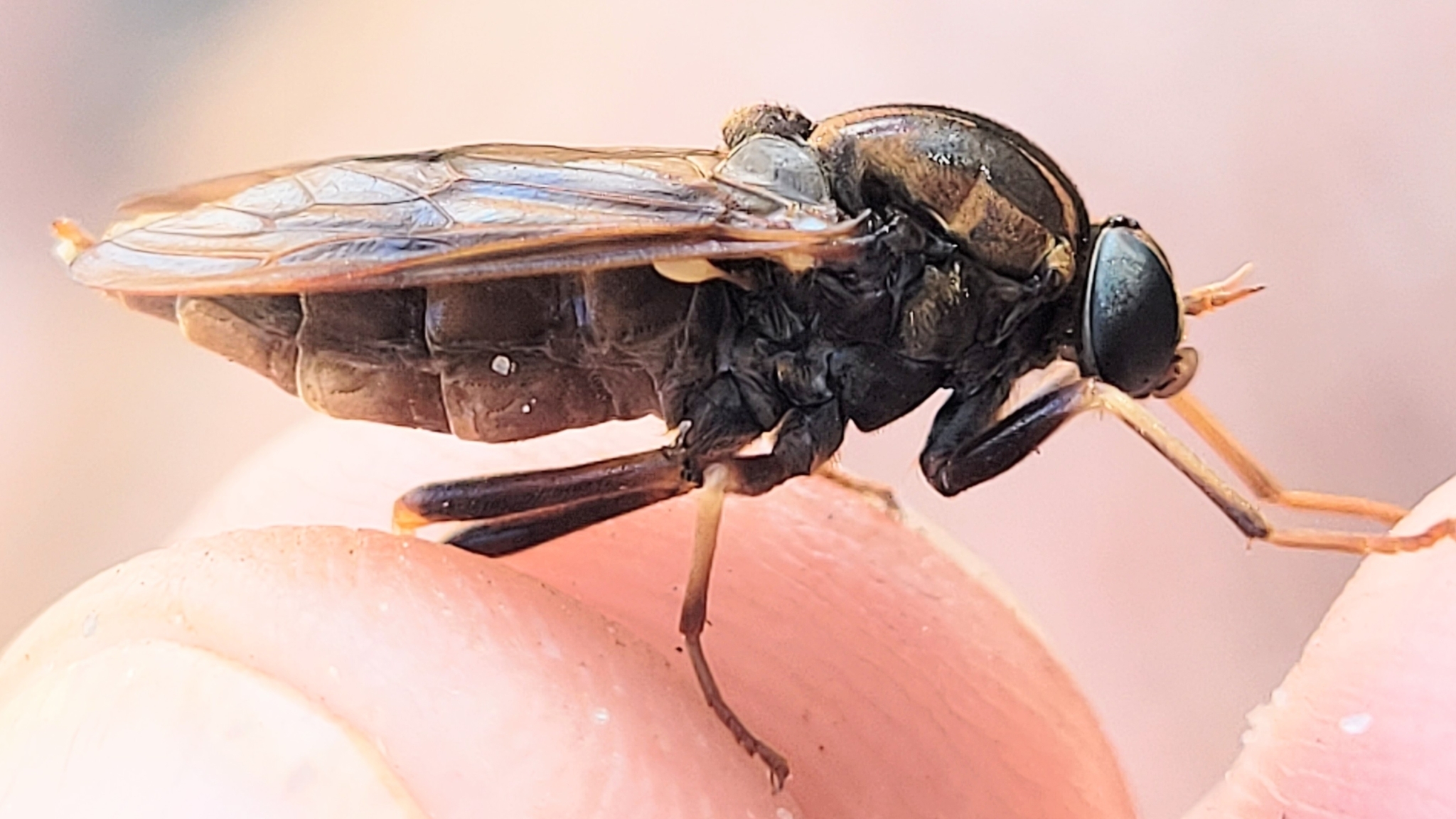
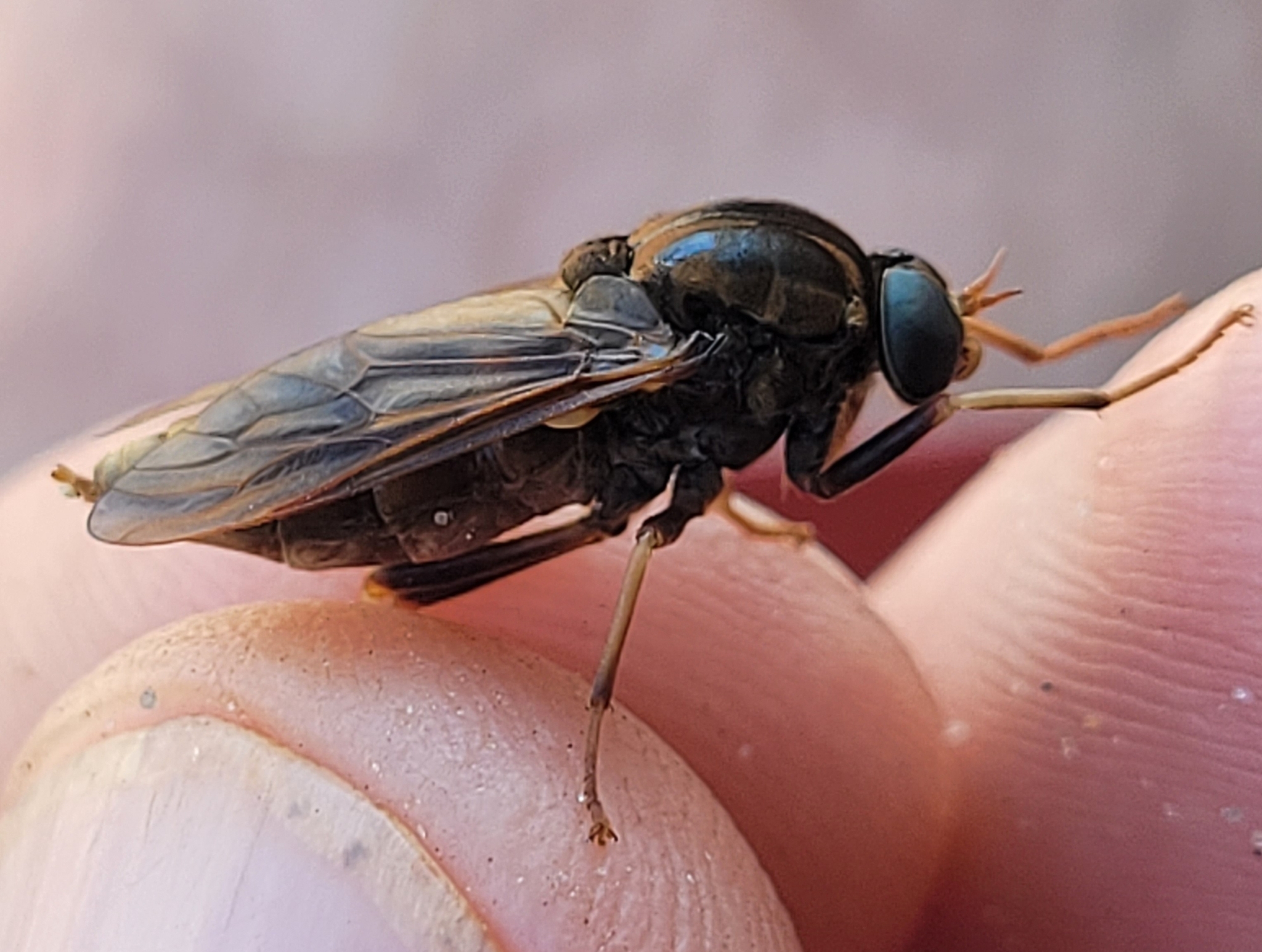
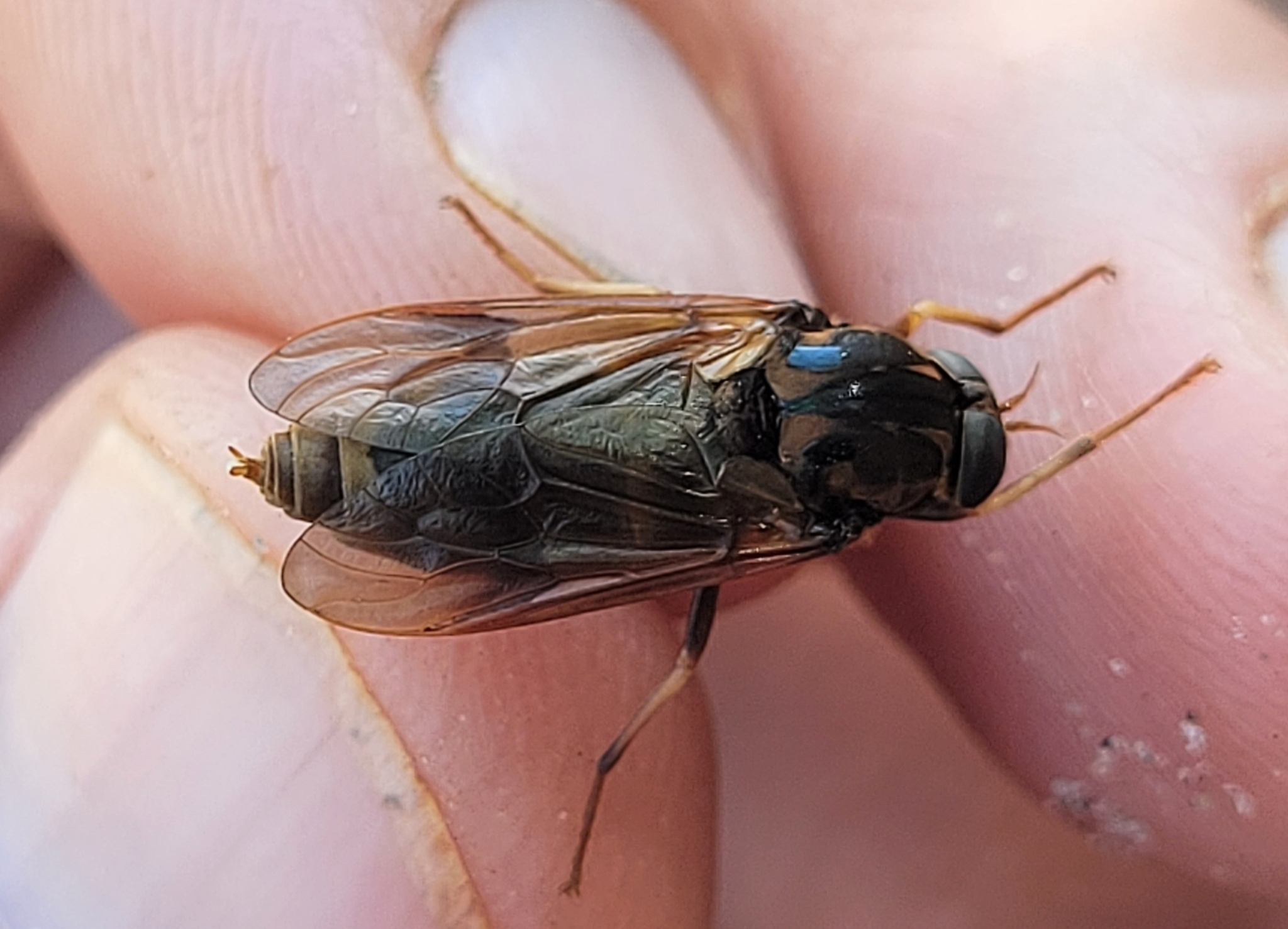
Arthropeas magna is a robust fly. Observations from the TreeOfLife-200M dataset indicate a dark, brownish-black overall coloration with a somewhat elongated, segmented abdomen that is widest at the first or second segment [2]. The wings are brownish and translucent, with distinct venation patterns visible. The head features prominent, dark, compound eyes, and the legs are relatively slender and pale in comparison to the darker body [2].
Morphology and Identification
Morphologically, A. magna is characterized by several diagnostic features [1]:
- Head and Face: The cheeks are well-developed below the eyes, and the sides of the face are haired.
- Antennae: The last segment of the antennal flagellum is less than half the length of the remaining segments.
- Thorax: The anterior thoracic spiracle is approximately equal in length to the posterior width of the humeral callus. The mid-posterior margin of the mesonotum features a pair of small, knob-like processes, and the metapleura exhibit strong convexity.
- Scutellum and Postscutellum: The scutellum is unarmed and roughly triangular or semicircular in shape, measuring at least half its basal width. A subscutellum is absent, and the postscutellum is short.
- Legs and Wings: The hind coxa lacks a mid-ventral process. In the wing, the vein between the 1st submarginal and 1st posterior cells is approximately equal in length to vein R4, and the distance between the apices of R4 and R5 is more than twice the distance between the apices of R5 and M1.
The genus Arthropeas is distinguished from related genera such as Dialysis, Odontosabula, Anacanthaspis, and Coenomyia by its unarmed scutellum and hind femora that do not exceed the combined length of the mesonotum and scutellum [1].
Gallery
References
- 1 2 3 Akira Nagatomi. Definition of Coenomyiidae (Diptera). II. Proceedings of the Japan Academy. 1975. https://doi.org/10.2183/pjab1945.51.457.
- 1 2 3 Dataset view for Animalia / Arthropoda / Insecta / Diptera / Xylophagidae / Arthropeas / magna constructed from imageomics/TreeOfLife-200M records under this taxonomic path. Hugging Face Datasets. https://huggingface.co/datasets/imageomics/TreeOfLife-200M.