Arenosclera brasiliensis
Taxonomy
This page represents the following TreeOfLife-200M taxonomic path.[1]
- Kingdom: Animalia
- Phylum: Porifera
- Class: Demospongiae
- Order: Haplosclerida
- Family: Callyspongiidae
- Genus: Arenosclera
- Species: Arenosclera brasiliensis
Visual Description
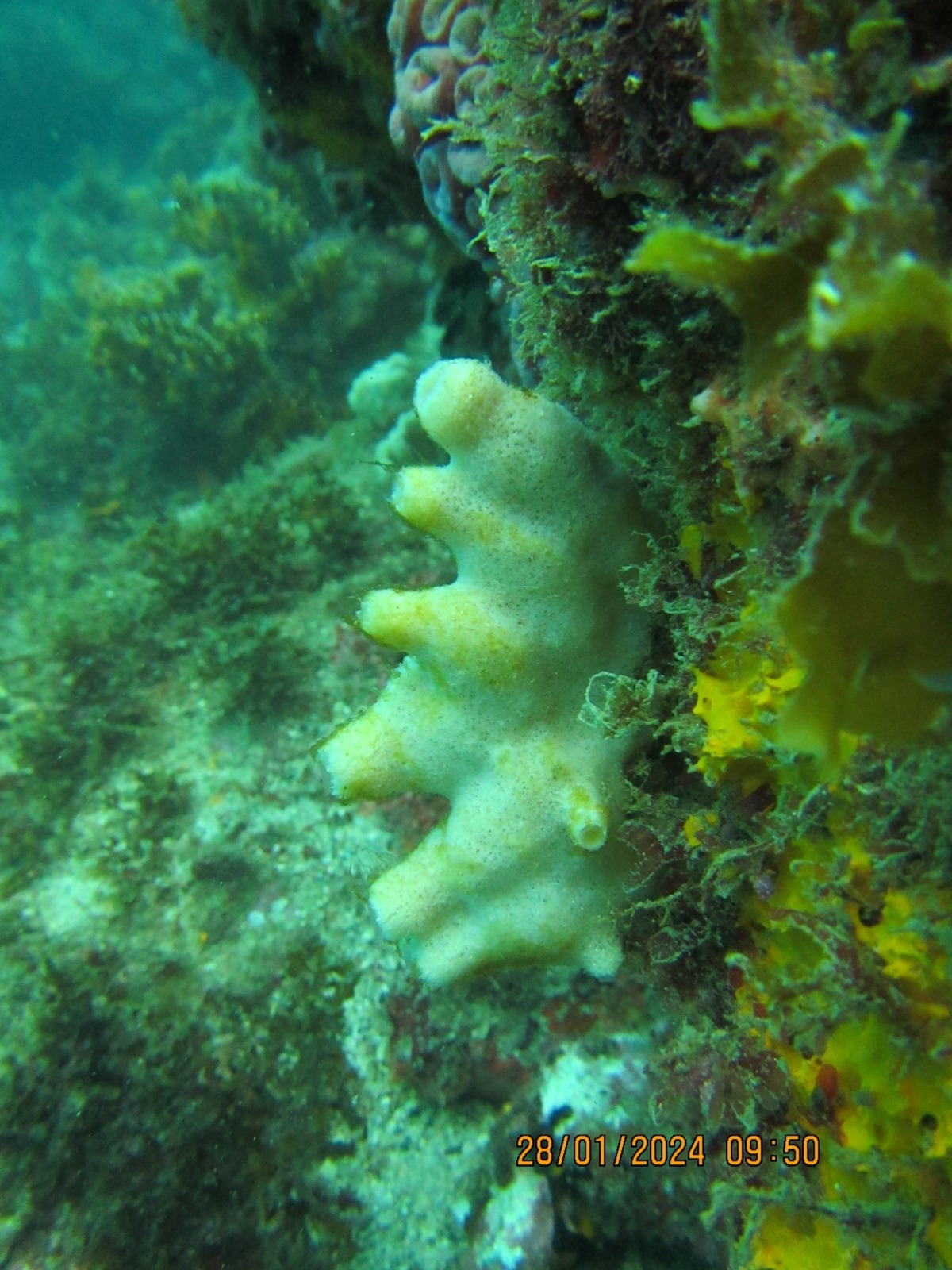
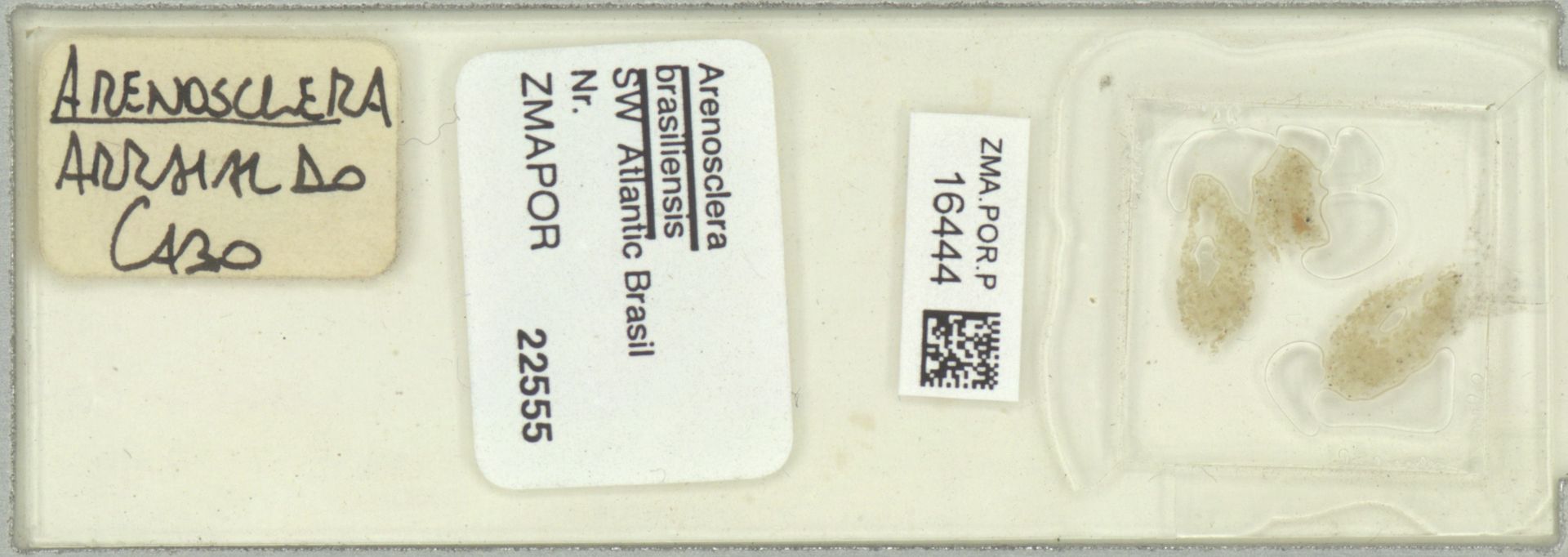
Arenosclera brasiliensis is a marine demosponge observed in biodiversity repositories as an attached, typically encrusting to cushion-like sponge on hard substrata (e.g., rock). Museum and community-science images show a rigid, irregular external surface with variable coloration (often pale to tan/gray tones), consistent with a benthic, shallow-water sponge growth form.
Distribution and ecology
This species is described as endemic to the marine environment of Rio de Janeiro State (Brazil). It has been reported from coastal localities including the Búzios and Arraial do Cabo areas, where it occurs on rocky shores.
Chemistry and microbial associations
Arenosclera brasiliensis is notable for producing arenosclerins A–C (alkylpiperidine alkaloid secondary metabolites), reported as cytotoxic and antimicrobial. The biosynthetic origin of these compounds (whether from the sponge host or associated microorganisms) remains unresolved.
Metagenomic analyses indicate that A. brasiliensis hosts a species-specific microbial community distinct from surrounding planktonic microbes. The sponge metagenome contained multiple bacterial phyla (including Proteobacteria, Cyanobacteria, Actinobacteria, Bacteroidetes, Firmicutes, and Chloroflexi) and showed enrichment for certain Proteobacteria groups relative to environmental plankton. Functional profiling suggests microbial processes related to membrane transport and one-carbon metabolism, and indicates broad metabolic potential including both aerobic and anaerobic pathways, consistent with the idea that microbial functions may contribute to secondary-metabolite dynamics in sponges.
Gallery
References
- ↑ Dataset view for Animalia / Porifera / Demospongiae / Haplosclerida / Callyspongiidae / Arenosclera / brasiliensis constructed from imageomics/TreeOfLife-200M records under this taxonomic path. Hugging Face Datasets. https://huggingface.co/datasets/imageomics/TreeOfLife-200M.