Arachnocampa tasmaniensis
Taxonomy
This page represents the following TreeOfLife-200M taxonomic path.[1]
- Kingdom: Animalia
- Phylum: Arthropoda
- Class: Insecta
- Order: Diptera
- Family: Keroplatidae
- Genus: Arachnocampa
- Species: Arachnocampa tasmaniensis
Visual Description
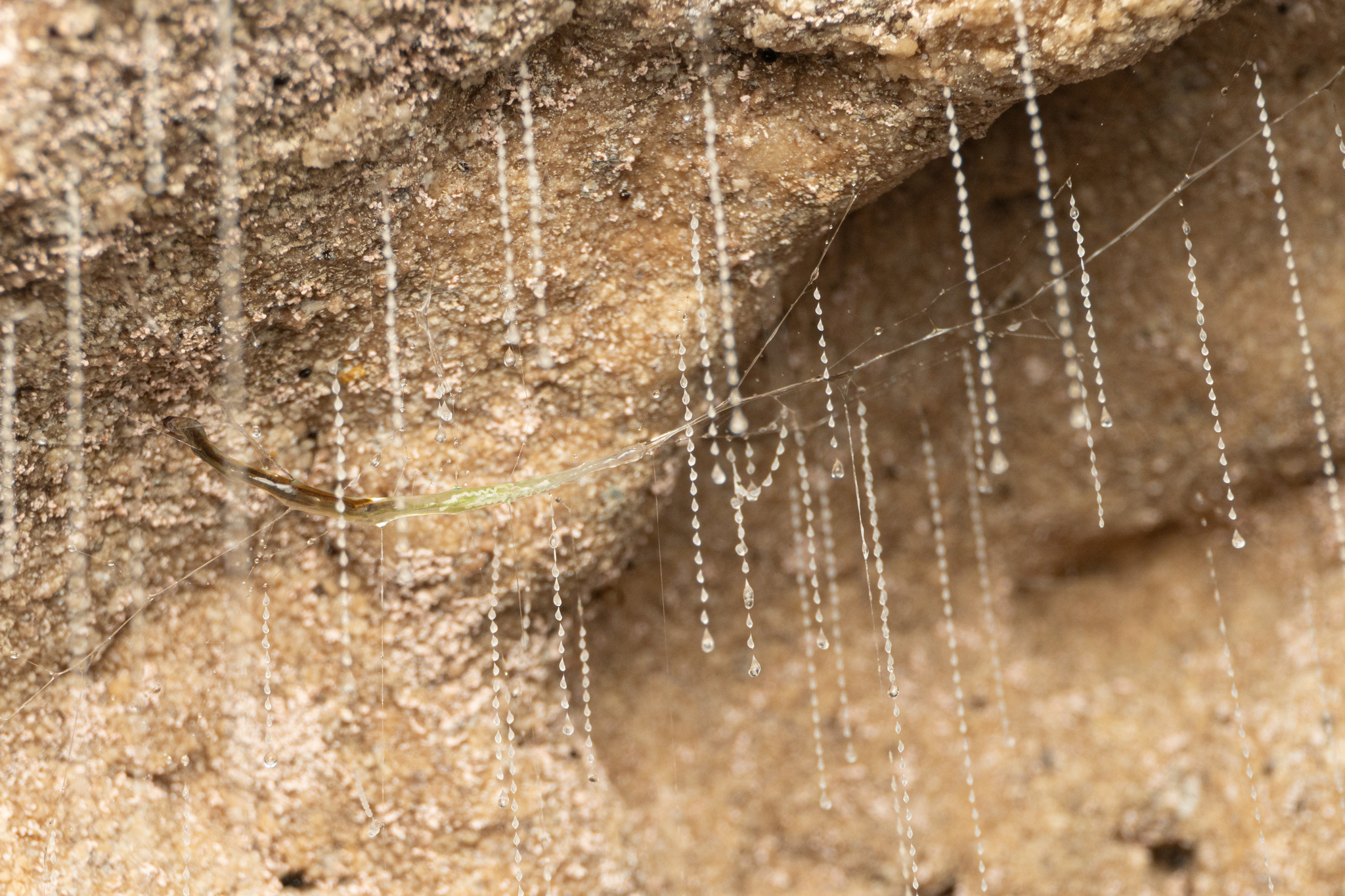
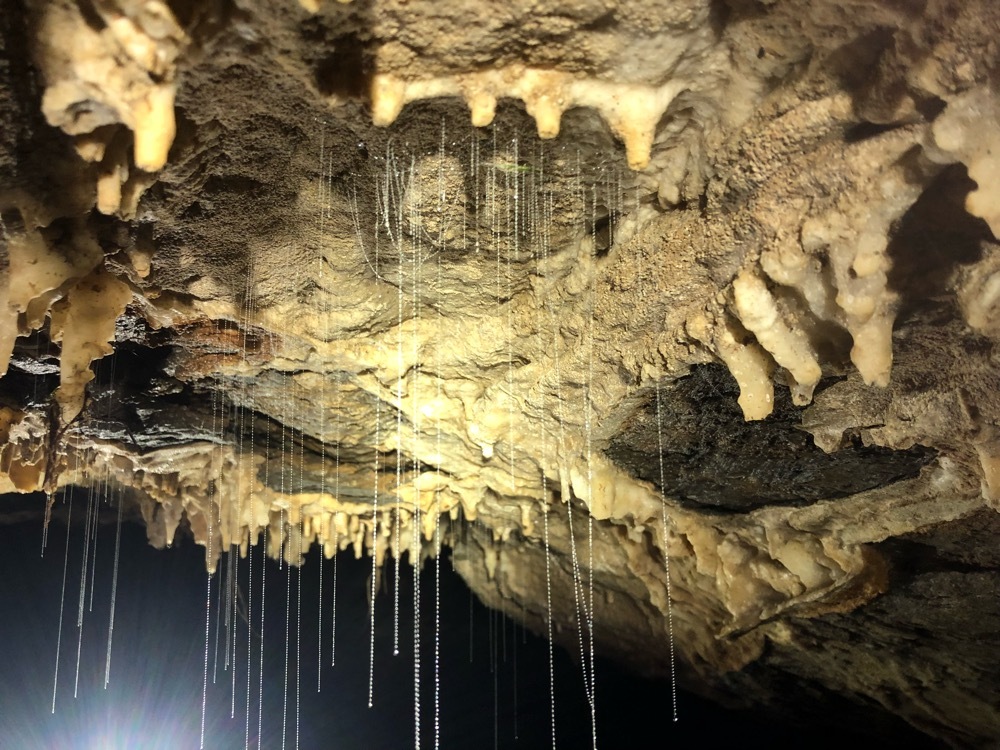
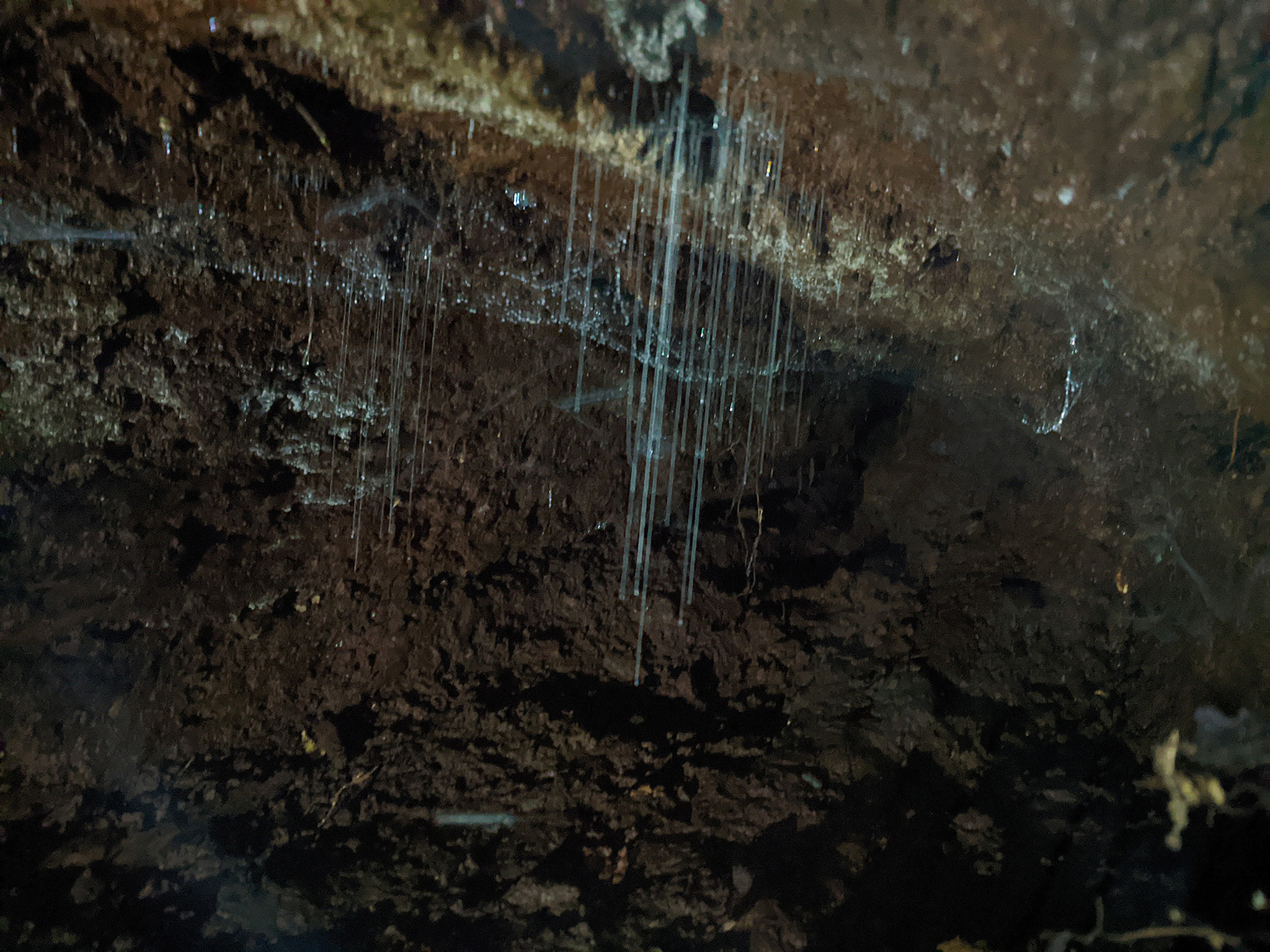
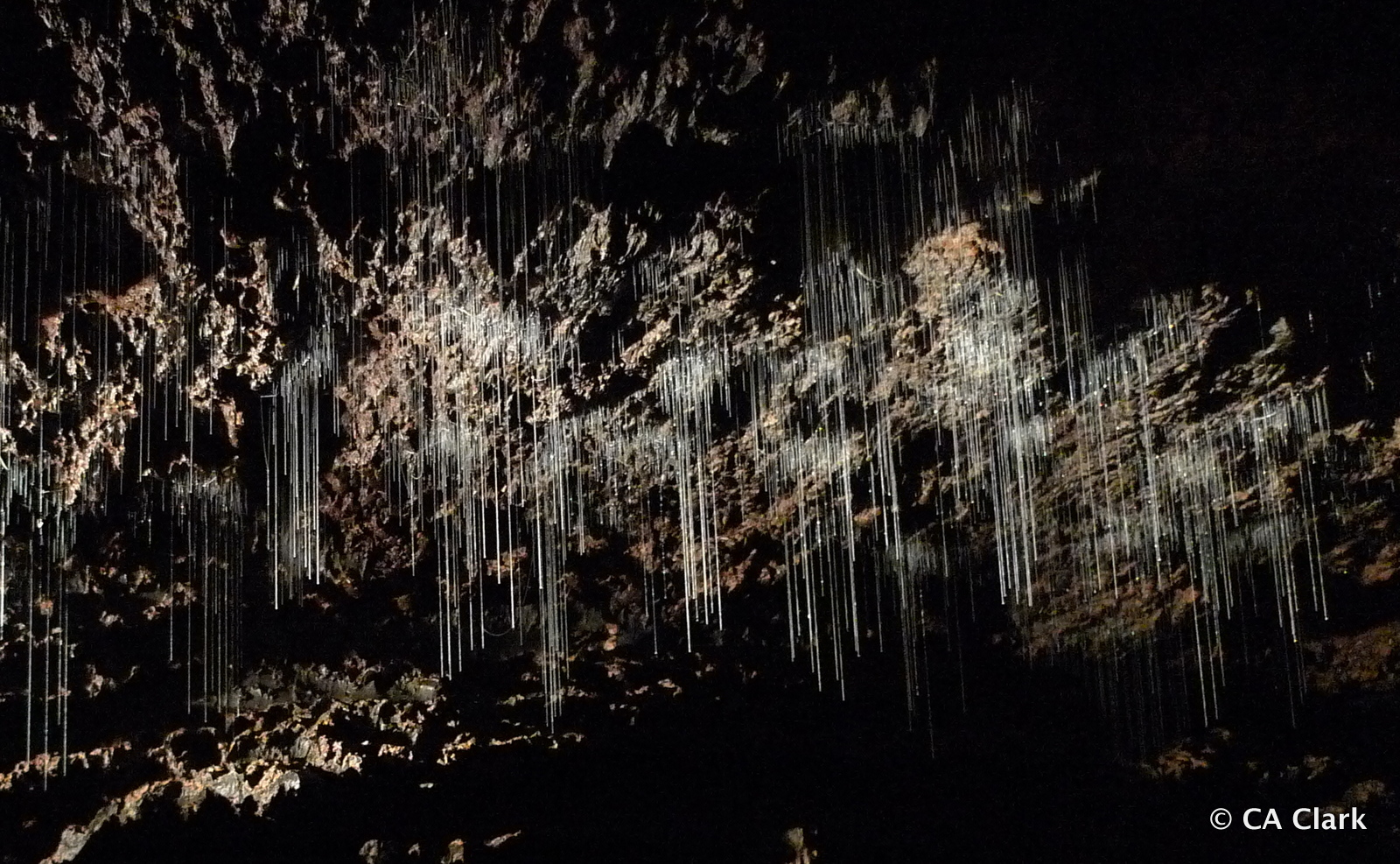
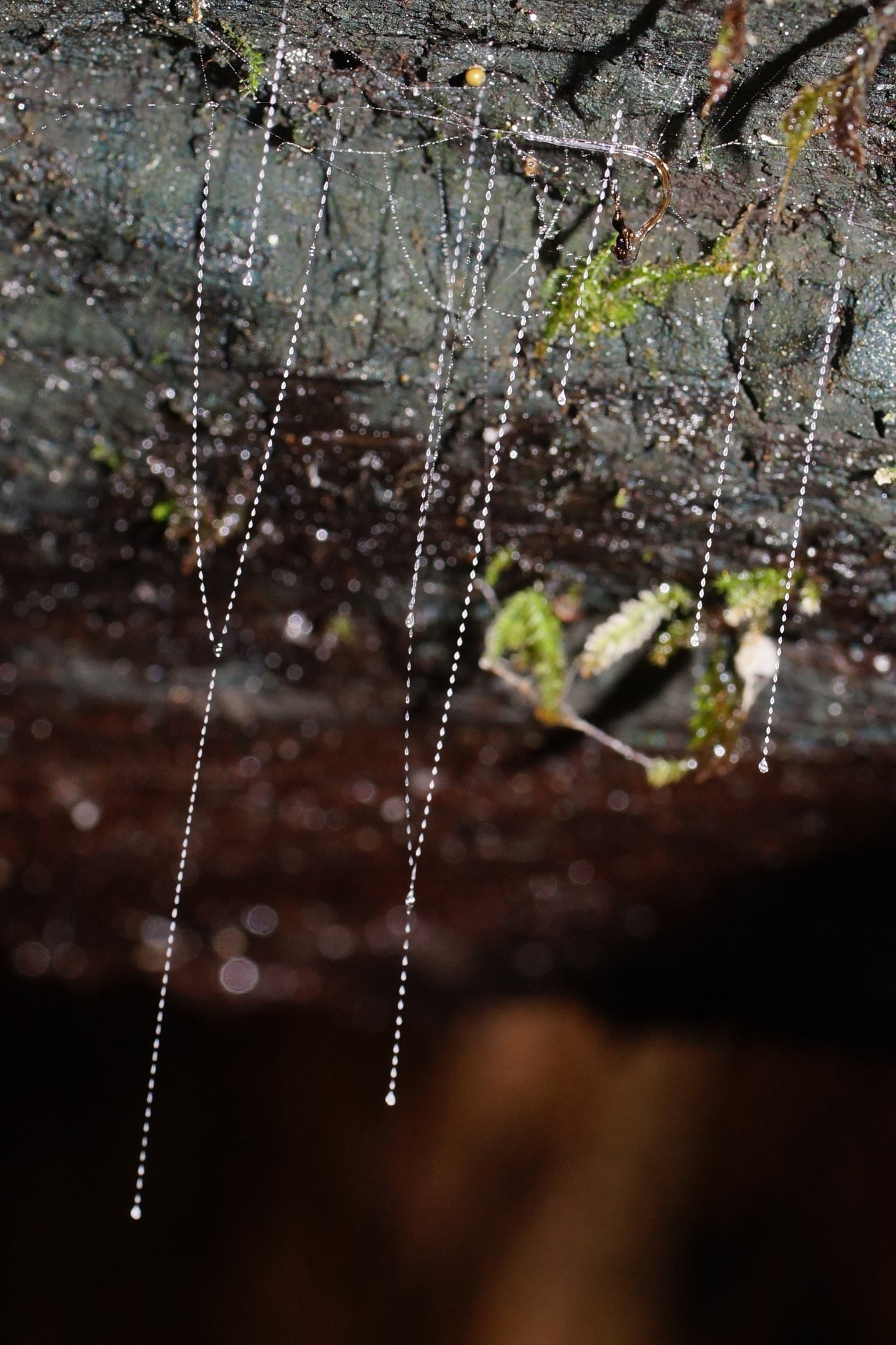
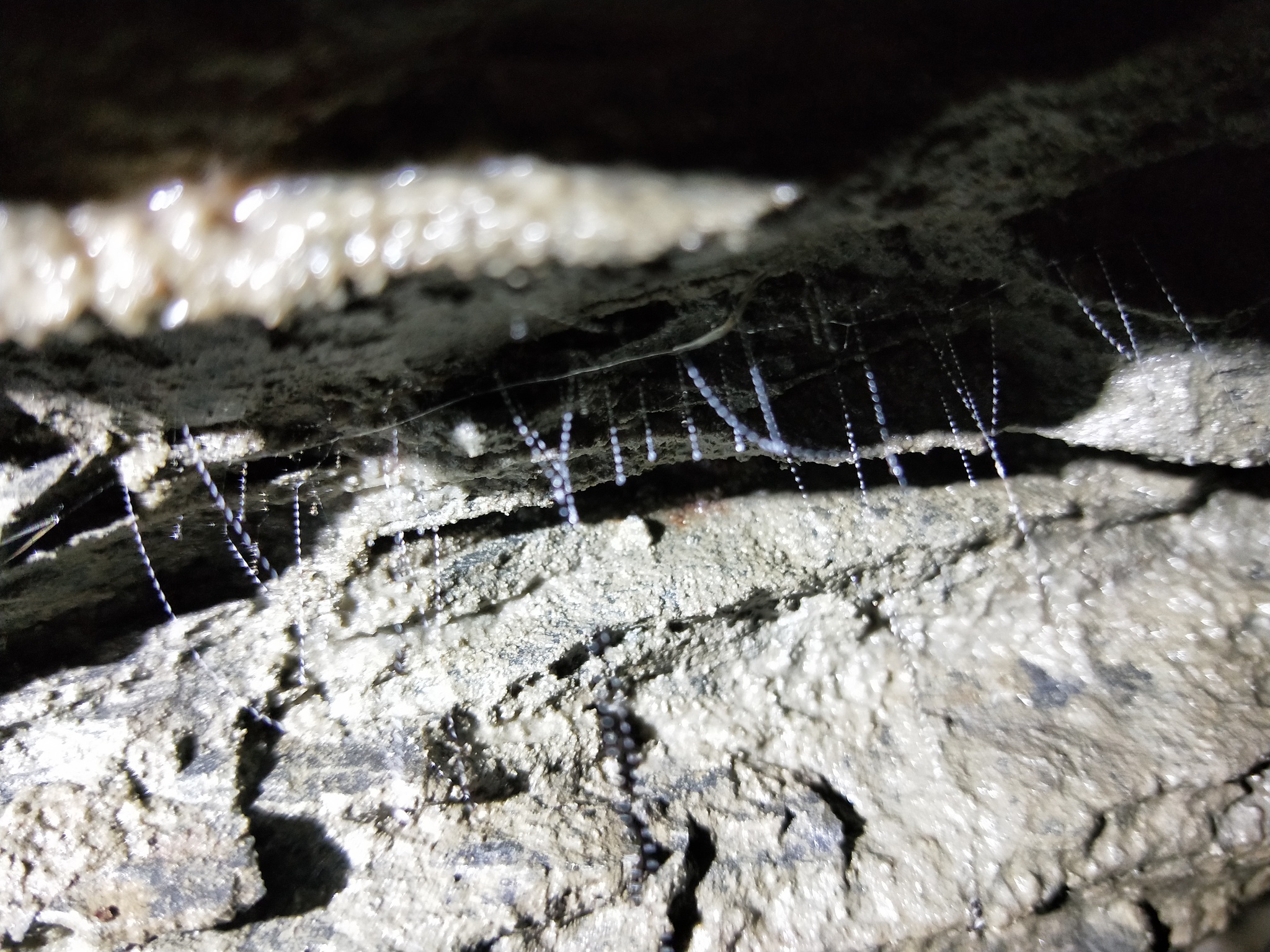
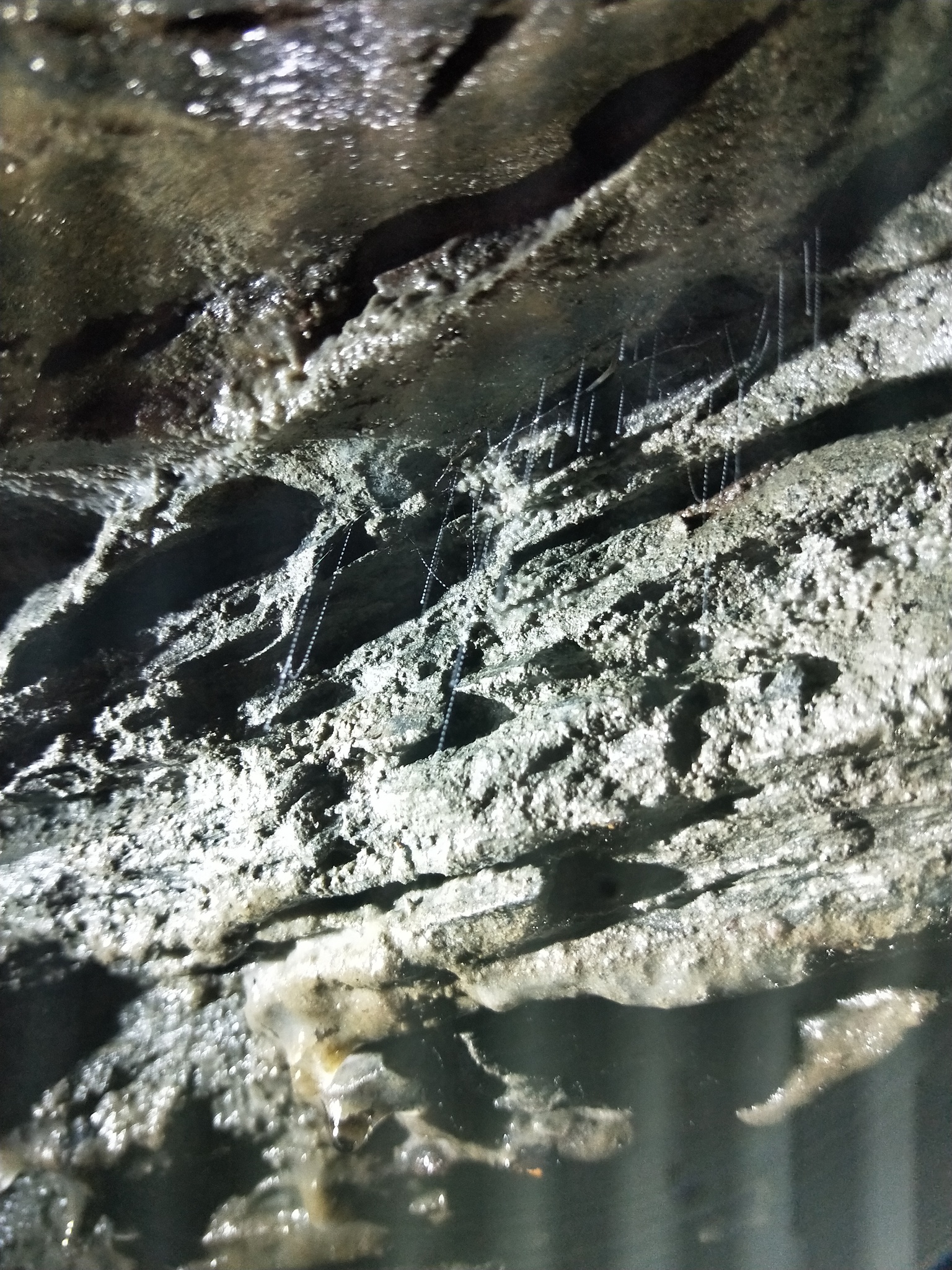
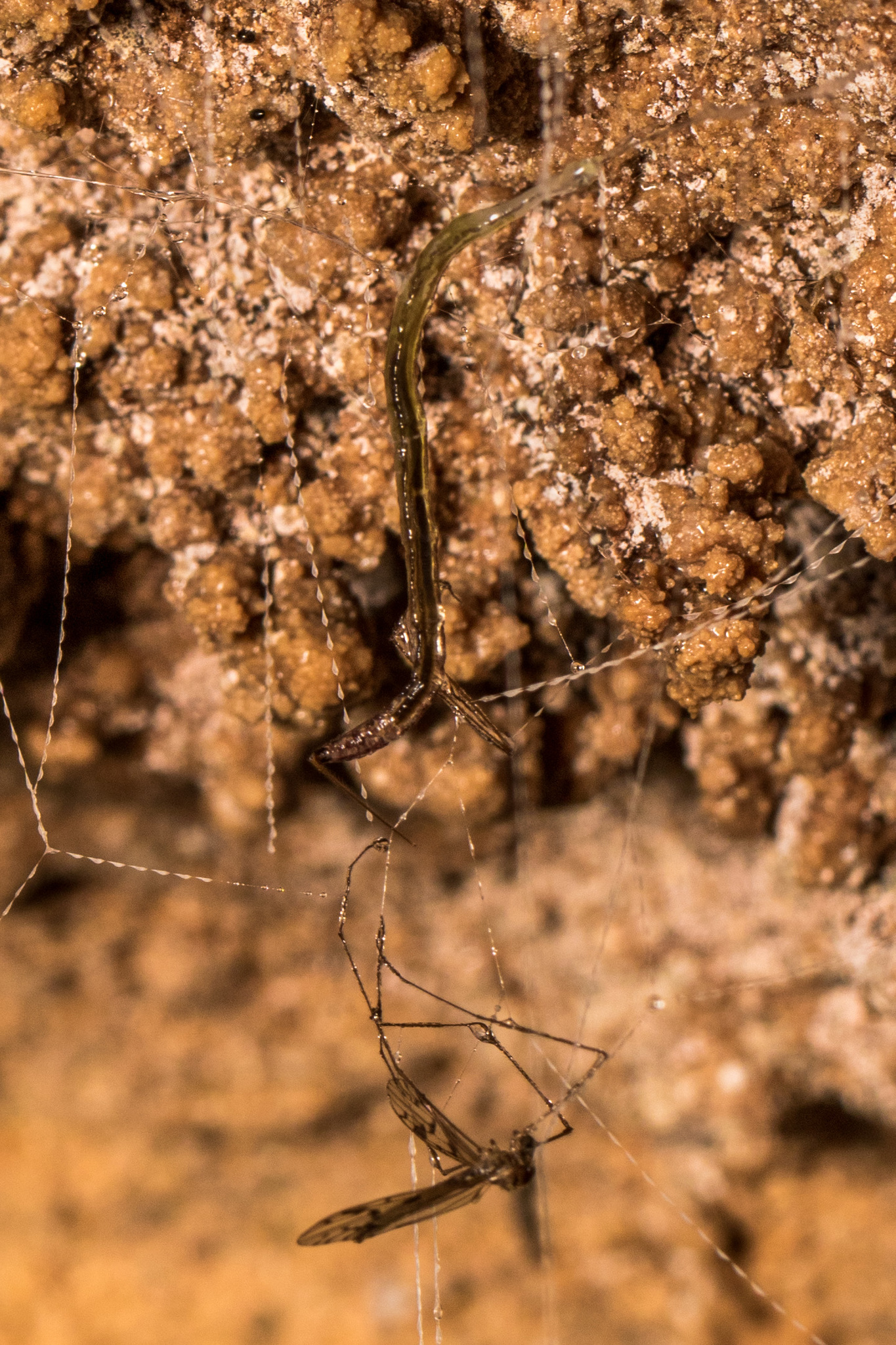
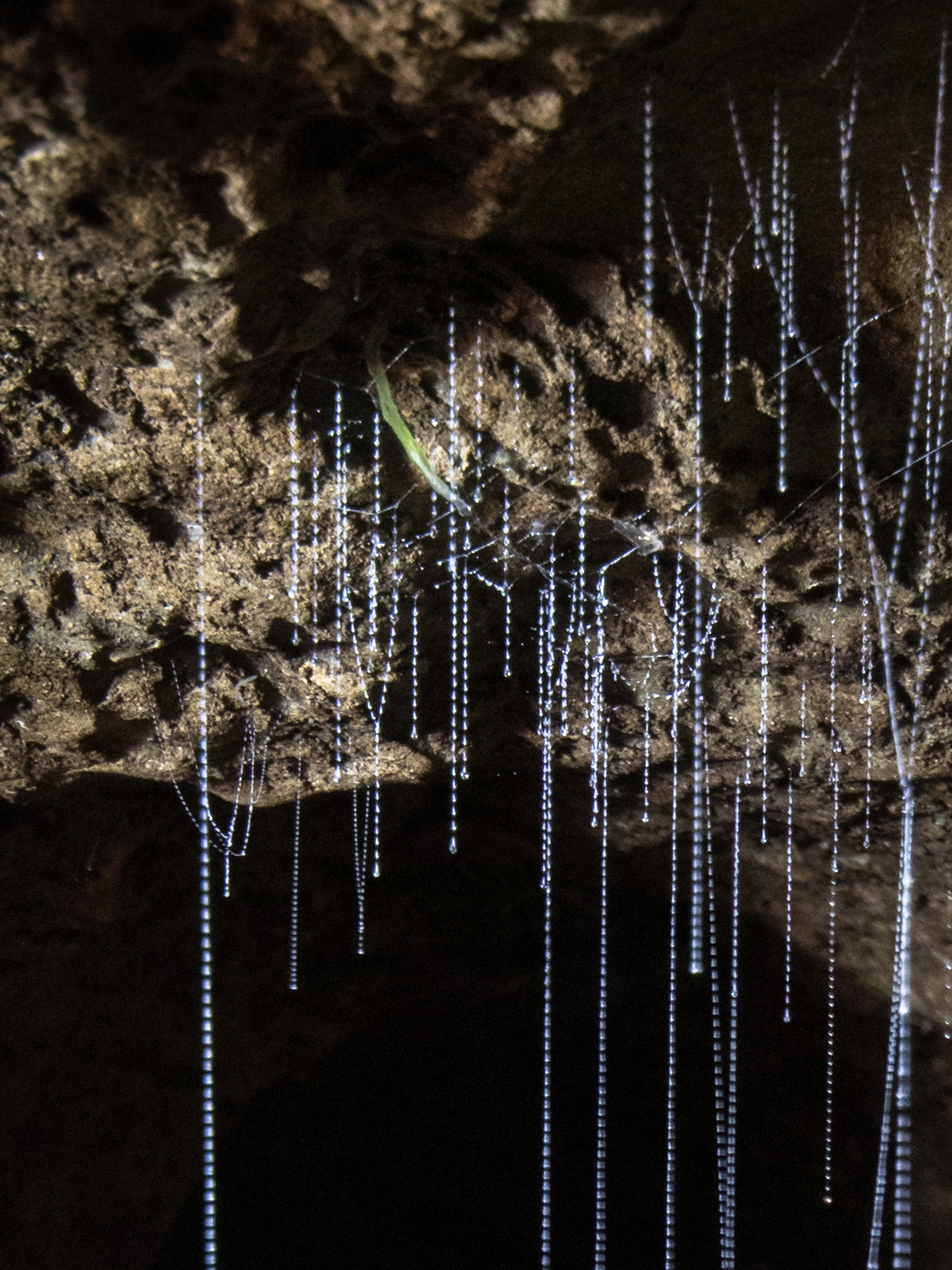
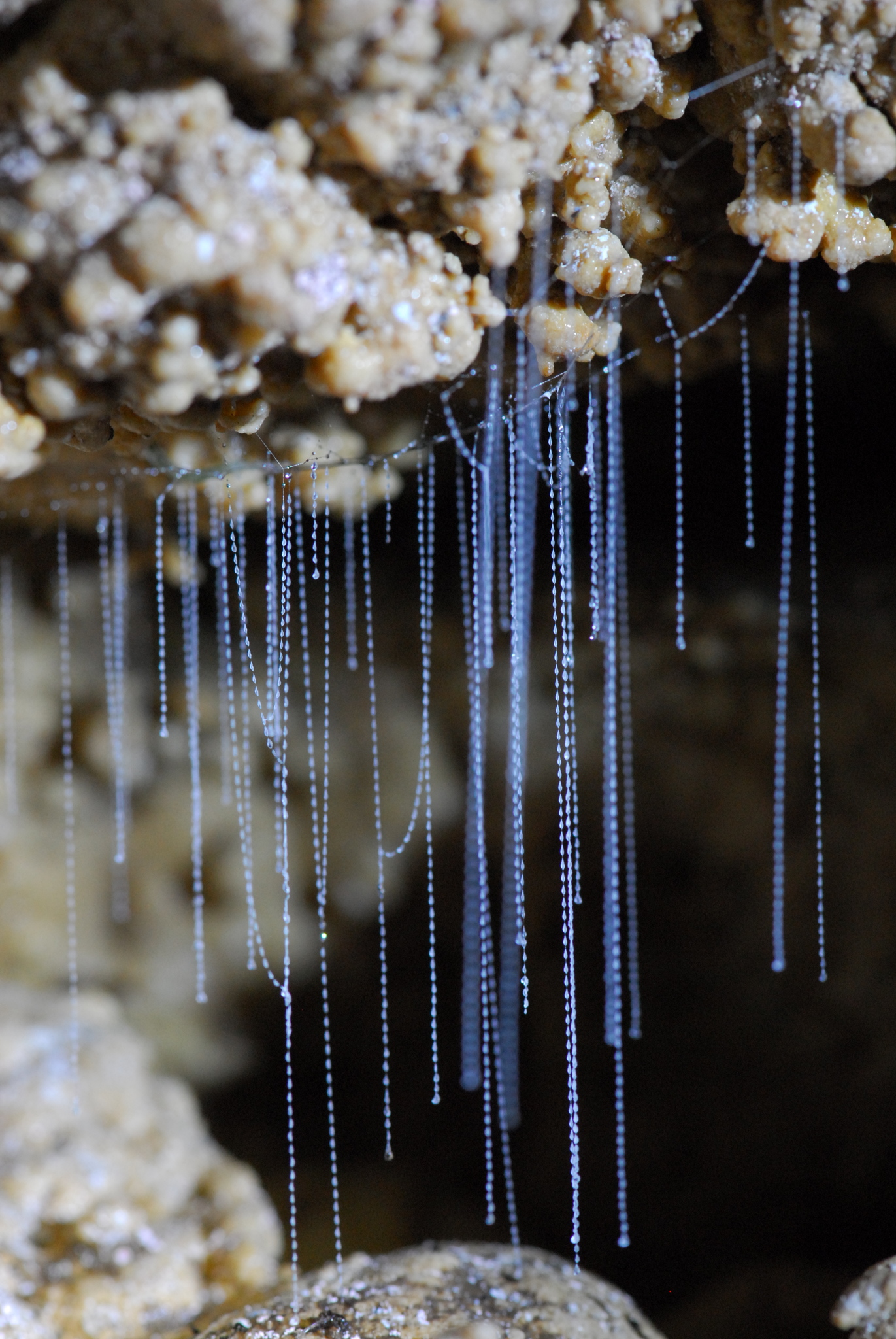
Arachnocampa tasmaniensis larvae are known for their specialized prey-capture system, which consists of silk threads ("fishing lines") adorned with evenly-spaced adhesive droplets.[2] These droplets appear as pointed ellipsoids along the central silk thread.[2] Observations from the TreeOfLife-200M dataset confirm the presence of these characteristic structures in the species' habitat.[1]
Ecology and Behavior
Arachnocampa tasmaniensis is a bioluminescent insect, with larvae using light to attract prey.[2] The adhesive threads are secreted from labial glands in the mouthparts, rather than from abdominal spinnerets.[2] These droplets are primarily composed of water, which allows them to remain functional in the high-humidity environments of caves.[2]
Compared to other Arachnocampa species, the threads of A. tasmaniensis contain higher amounts of sulphur and calcium.[2] Before pupating, the larva removes the long fishing lines and leaves a "defensive" circle of shorter, condensed lines.[2] The pupa then suspends itself using a distinct, dry, non-adhesive suspensory cord.[2]
Gallery
References
- 1 2 Dataset view for Animalia / Arthropoda / Insecta / Diptera / Keroplatidae / Arachnocampa / tasmaniensis constructed from imageomics/TreeOfLife-200M records under this taxonomic path. Hugging Face Datasets. https://huggingface.co/datasets/imageomics/TreeOfLife-200M.
- 1 2 3 4 5 6 7 8 Janek von Byern; Victoria Dorrer; David J. Merritt; Peter Chandler; Ian Stringer; Martina Marchetti‐Deschmann; Andrew McNaughton; Norbert Cyran; Karsten Thiel; Michael Noeske; Ingo Grunwald. Characterization of the Fishing Lines in Titiwai (=Arachnocampa luminosa Skuse, 1890) from New Zealand and Australia. PLoS ONE. 2016. https://doi.org/10.1371/journal.pone.0162687.