Arachnocampa richardsae
Taxonomy
This page represents the following TreeOfLife-200M taxonomic path.[1]
- Kingdom: Animalia
- Phylum: Arthropoda
- Class: Insecta
- Order: Diptera
- Family: Keroplatidae
- Genus: Arachnocampa
- Species: Arachnocampa richardsae
Visual Description
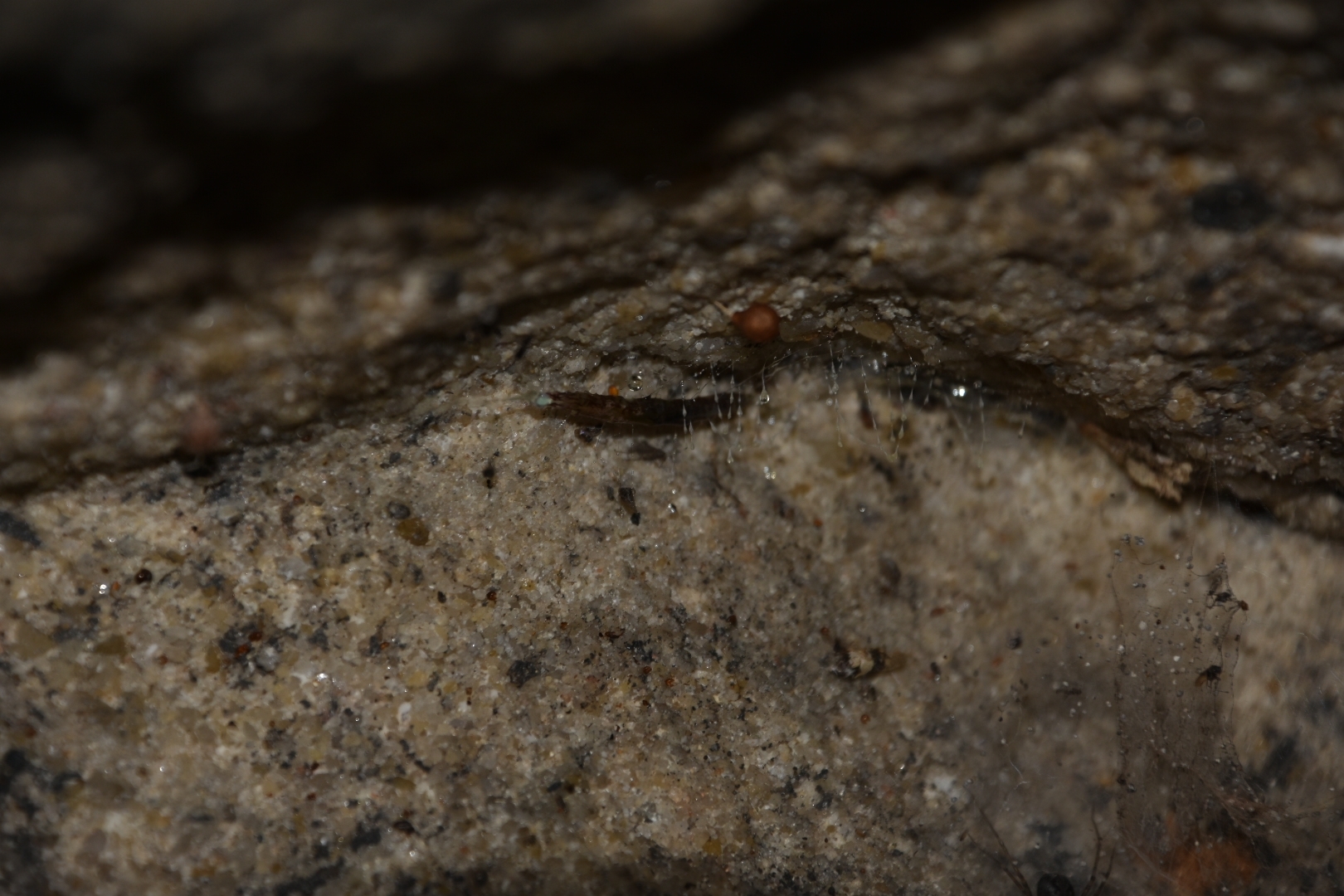
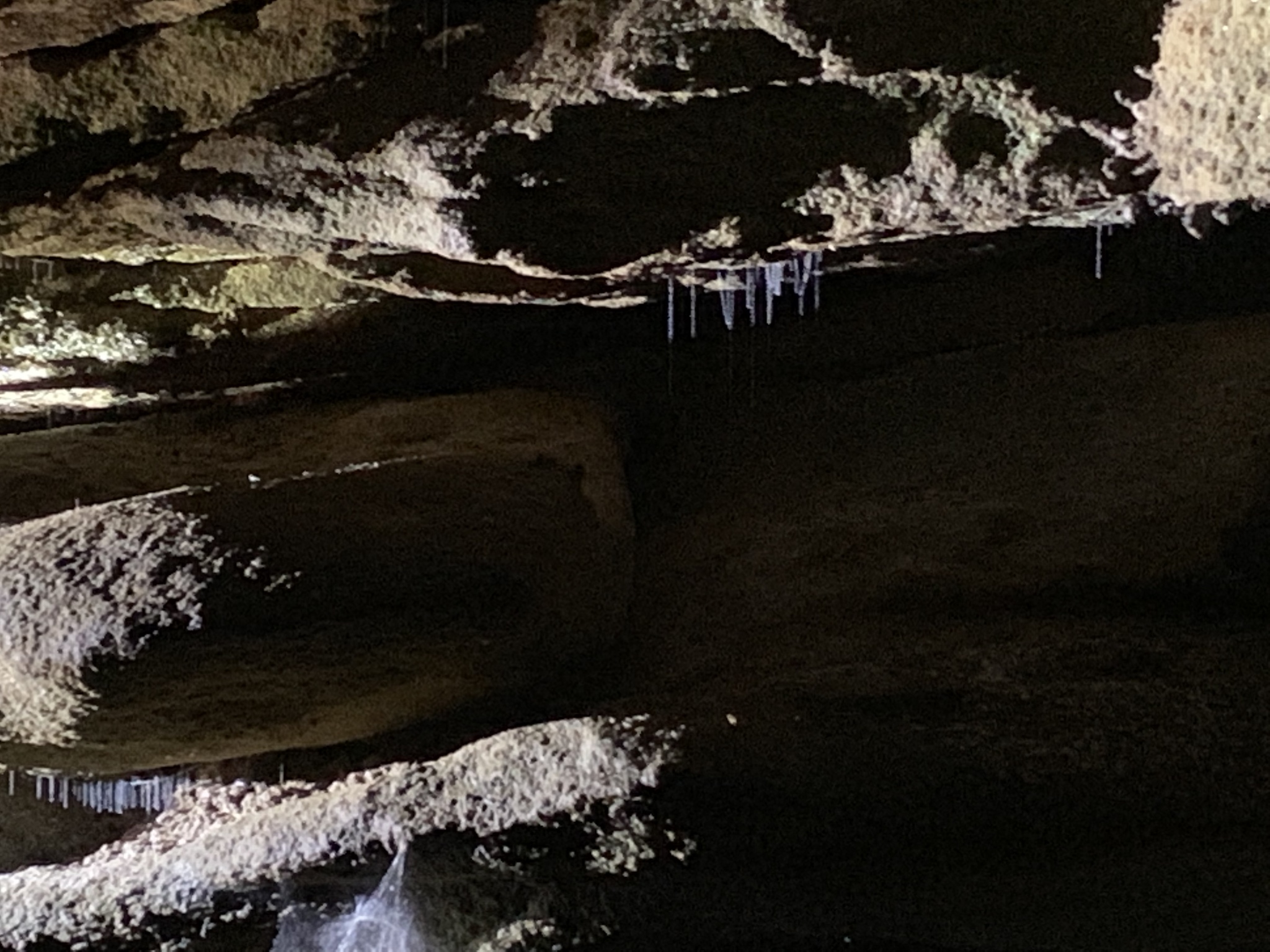
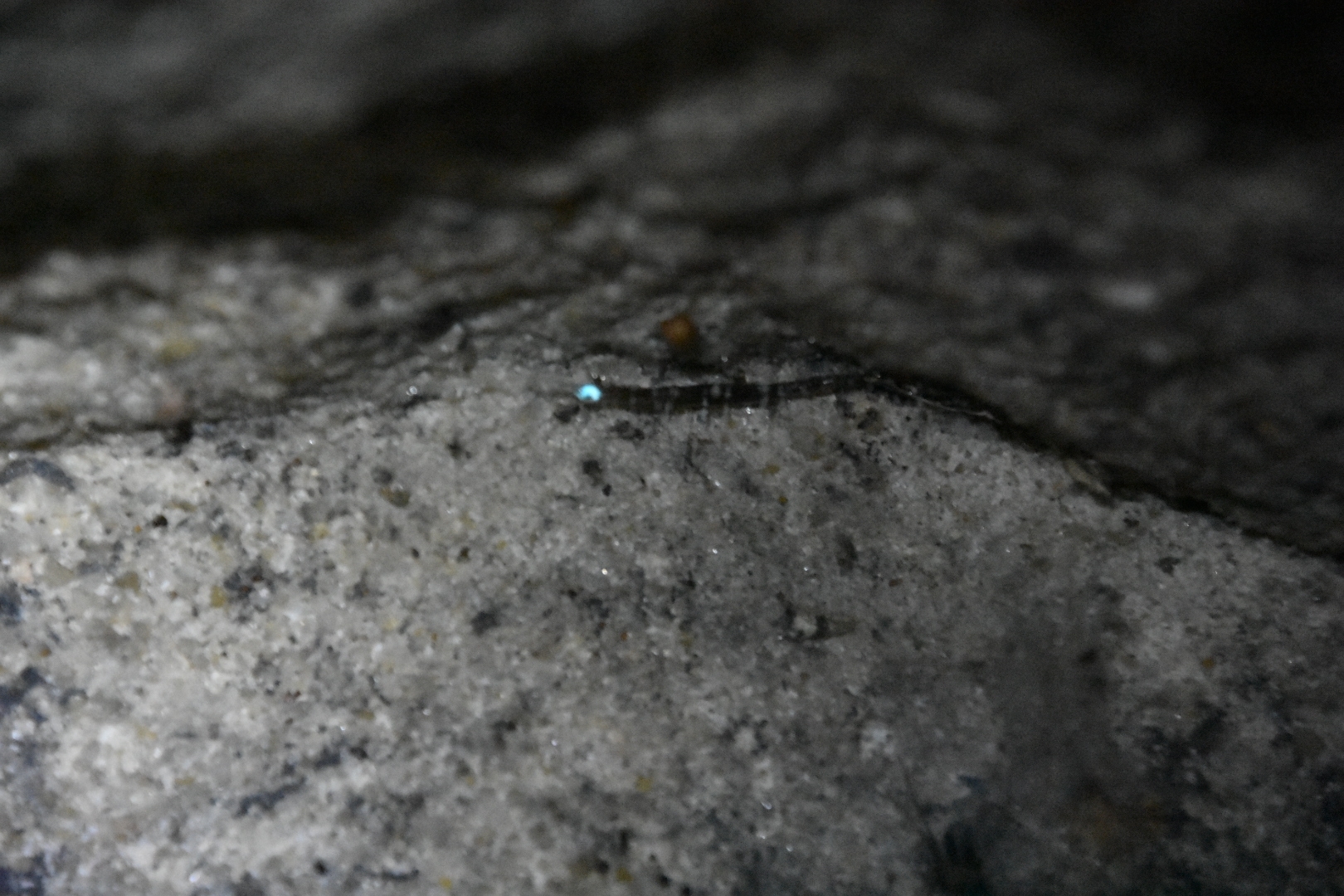
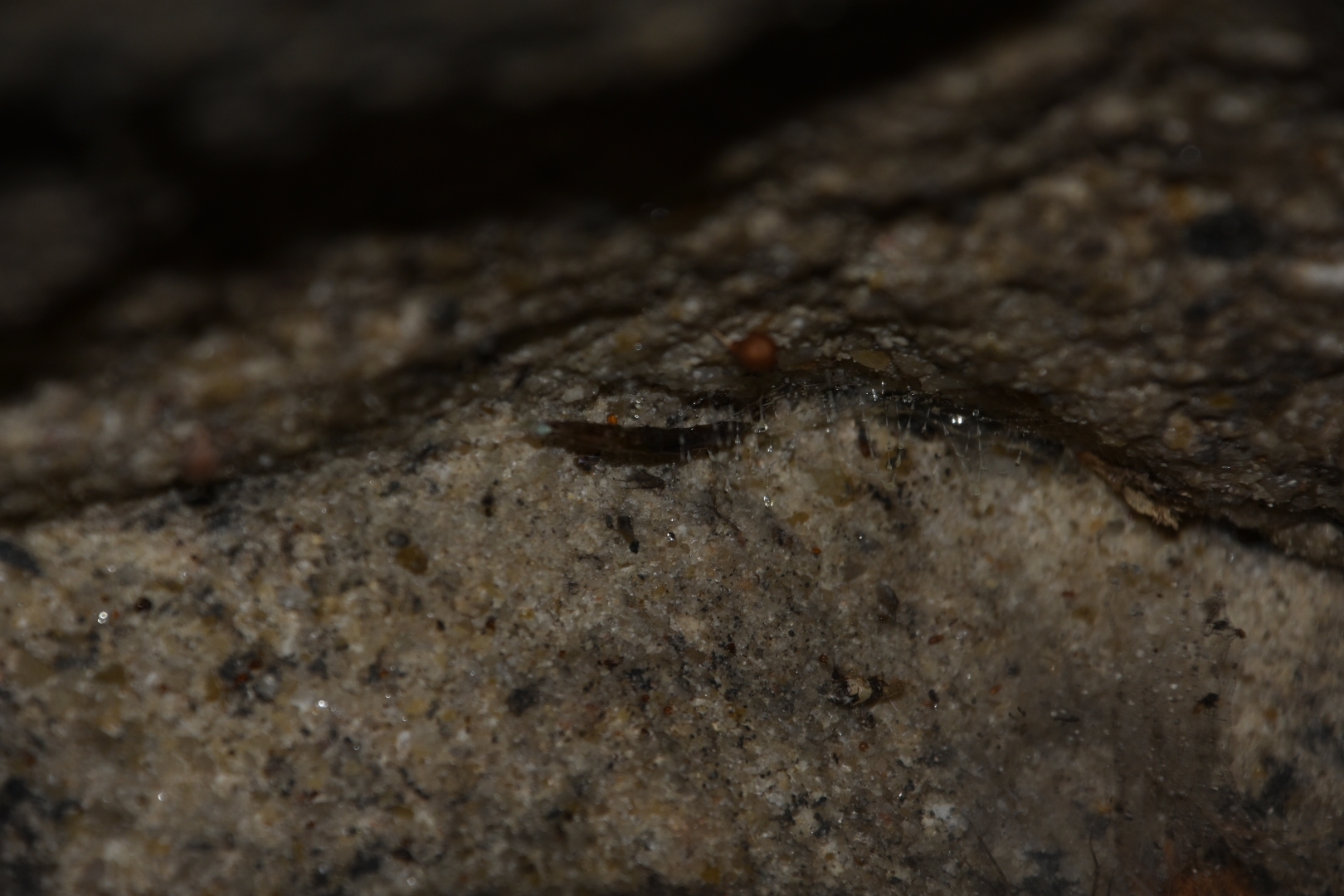
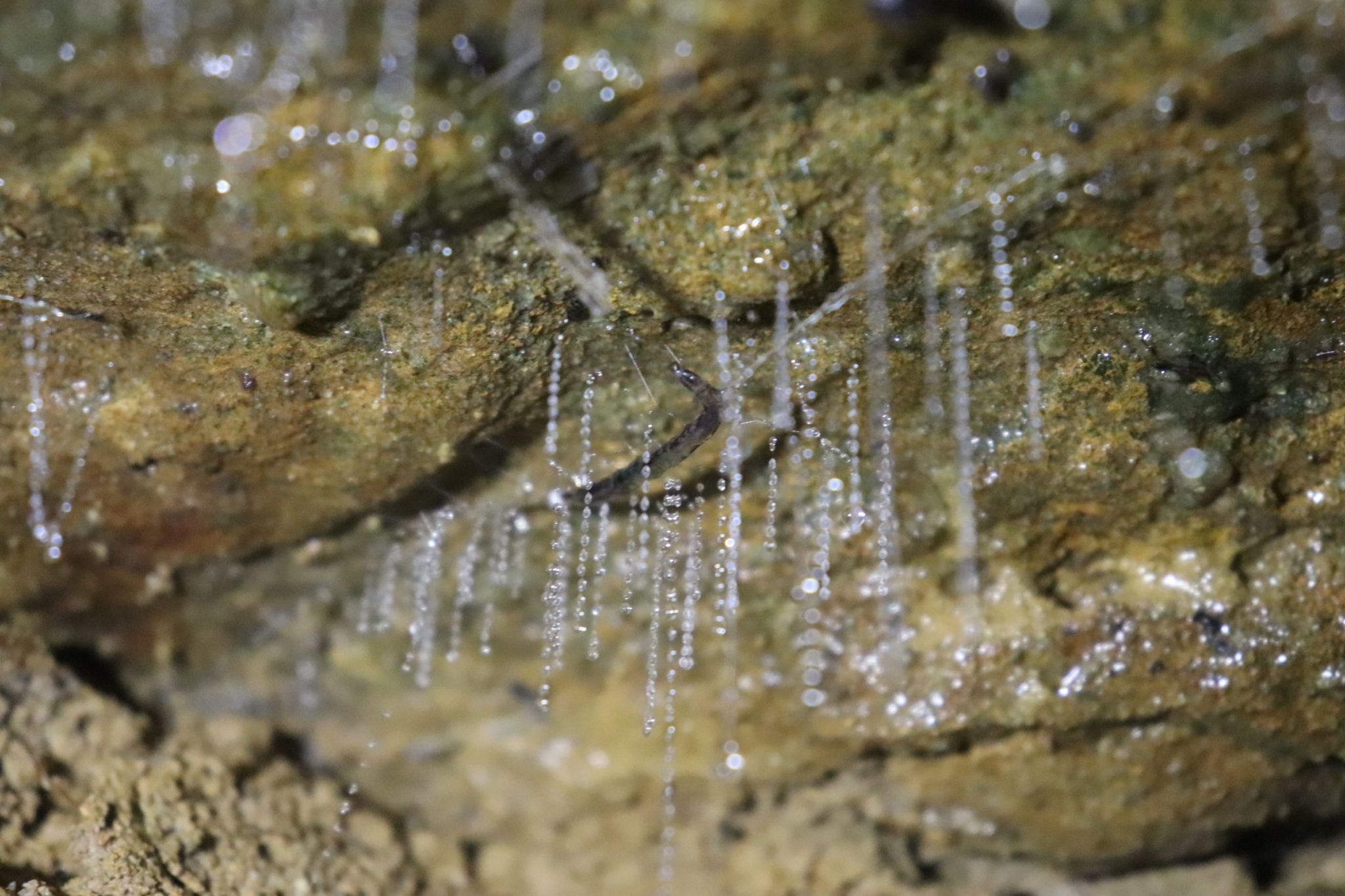
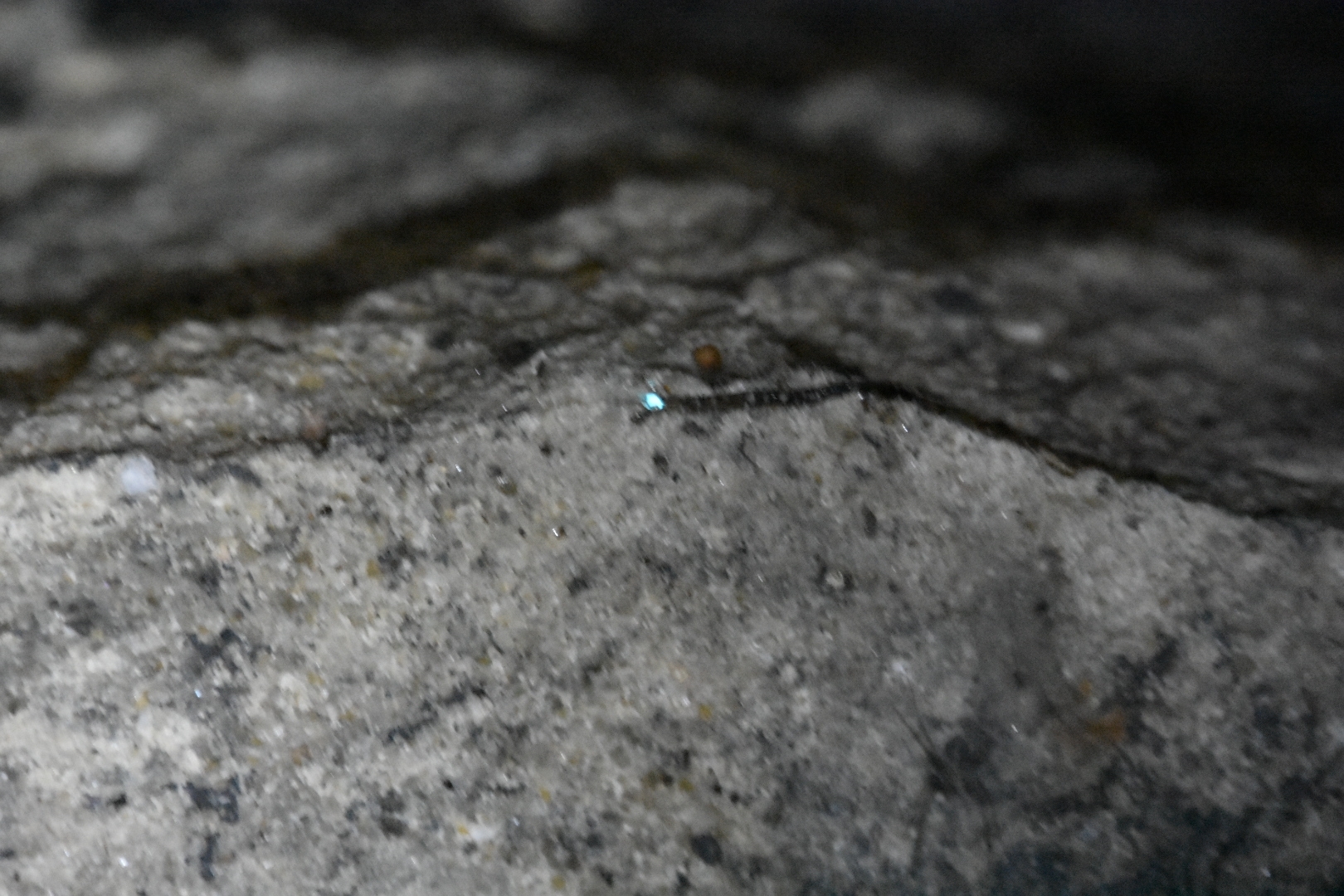
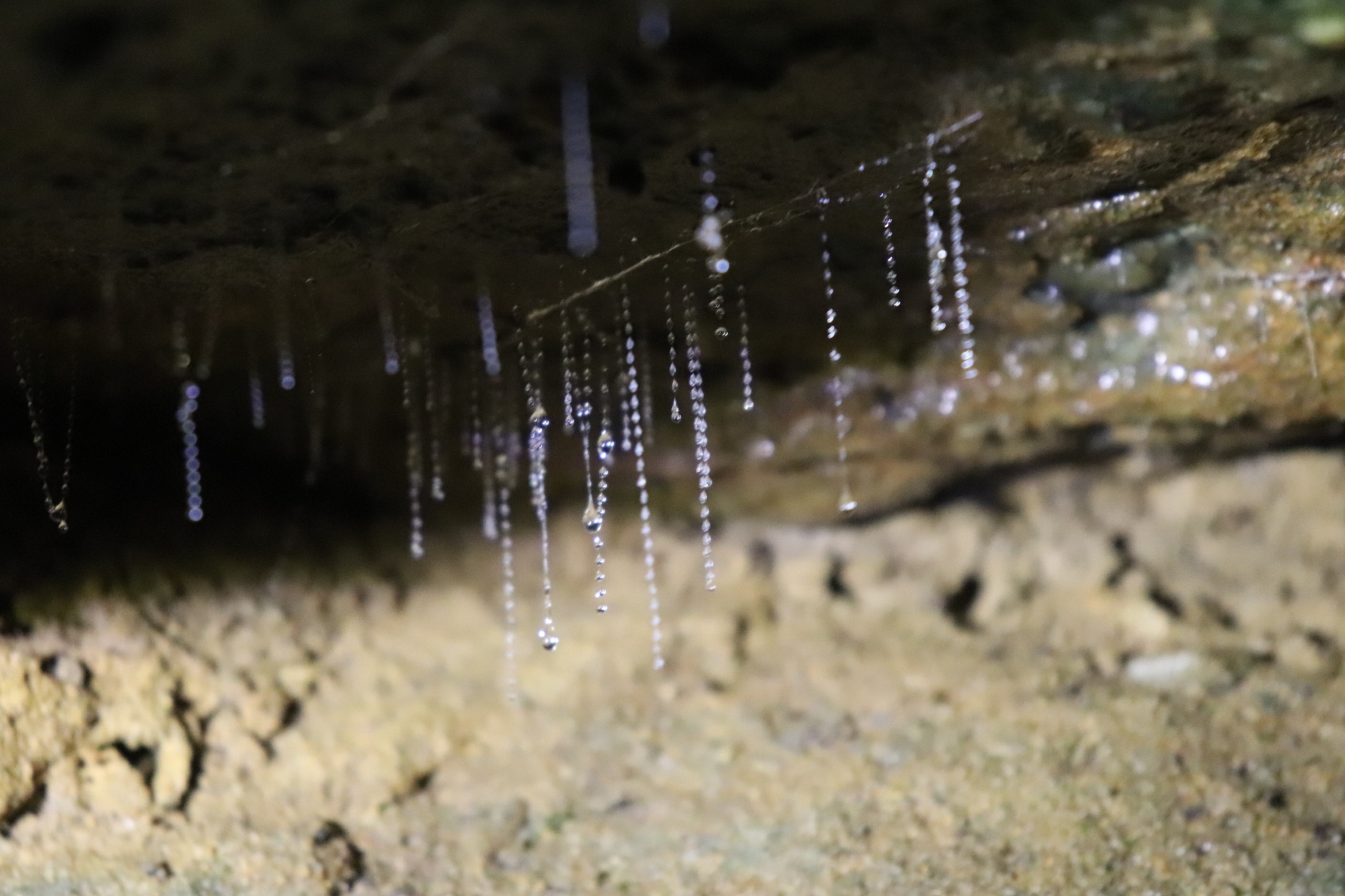
Arachnocampa richardsae larvae are known for constructing a specialized prey-capture system consisting of fine, vertical silk threads suspended from a substrate, such as a cave ceiling. These threads are adorned with a series of evenly spaced, glistening mucous droplets, which give the appearance of a string of beads [1]. The threads are typically arranged in parallel, hanging downwards into the open space of the cave environment [1].
Biology and Prey Capture
The larvae of Arachnocampa richardsae utilize these silk threads as an adhesive prey-capture system [2]. The threads are produced by labial glands located in the mouthparts [2].
The adhesive droplets are primarily composed of water and are hygroscopic [2]. While the overall structure of the capture system is consistent across the genus Arachnocampa, elemental analysis has shown that A. richardsae threads contain higher quantities of carbon, nitrogen, sodium, and phosphorus, and significantly lower oxygen levels compared to A. luminosa [2].
Gallery
References
- 1 2 3 Dataset view for Animalia / Arthropoda / Insecta / Diptera / Keroplatidae / Arachnocampa / richardsae constructed from imageomics/TreeOfLife-200M records under this taxonomic path. Hugging Face Datasets. https://huggingface.co/datasets/imageomics/TreeOfLife-200M.
- 1 2 3 4 Janek von Byern; Victoria Dorrer; David J. Merritt; Peter Chandler; Ian Stringer; Martina Marchetti‐Deschmann; Andrew McNaughton; Norbert Cyran; Karsten Thiel; Michael Noeske; Ingo Grunwald. Characterization of the Fishing Lines in Titiwai (=Arachnocampa luminosa Skuse, 1890) from New Zealand and Australia. PLoS ONE. 2016. https://doi.org/10.1371/journal.pone.0162687.