Apophallus brevis
Taxonomy
- Kingdom: Animalia
- Phylum: Platyhelminthes
- Class: Trematoda
- Order: Plagiorchiida
- Family: Opisthorchiidae
- Genus: Apophallus
- Species: Apophallus brevis
Biology and Ecology
Apophallus brevis is a species of trematode belonging to the family Opisthorchiidae within the order Plagiorchiida. As a member of the Digenea, it follows a complex life cycle typical of its group, involving various vertebrate hosts.[1][2]
This parasite utilizes a range of vertebrate hosts to complete its life cycle. Documented fish hosts include the smallmouth bass (Micropterus dolomieu), the Atlantic butterfish (Peprilus ovatus), the threespine stickleback (Gasterosteus aculeatus), the johnny darter (Etheostoma nigrum), the yellow perch (Perca flavescens), the iowa darter (Etheostoma exile), the pumpkinseed (Lepomis gibbosus), and the spottail shiner (Notropis hudsonius). Avian hosts identified for this species include the herring gull (Larus argentatus), the ring-billed gull (Larus delawarensis), the sora (Porzana carolina), and the common loon (Gavia immer).[1]
Visual Description
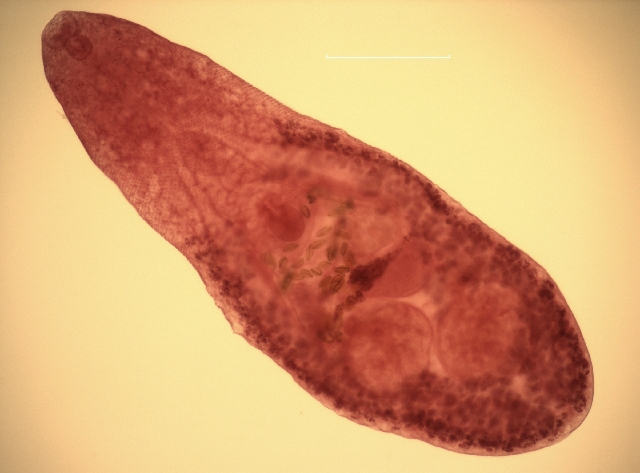
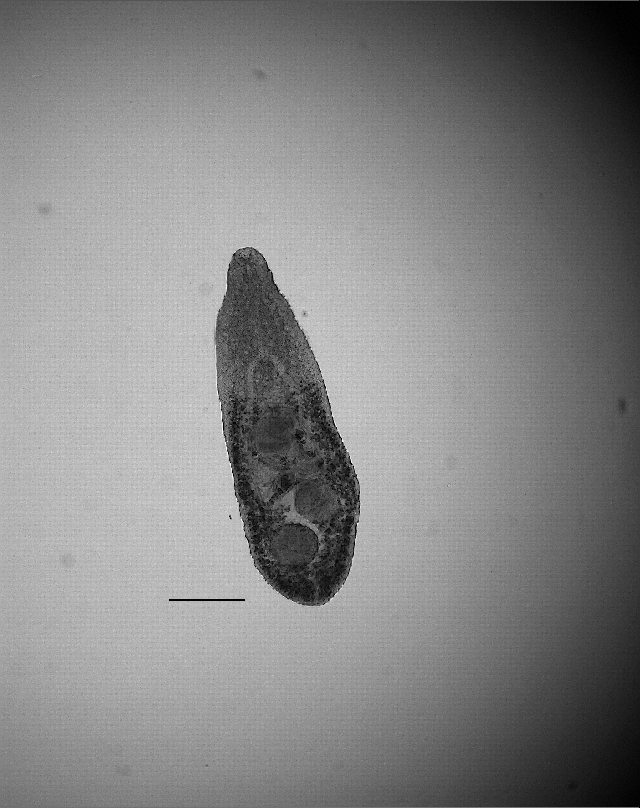
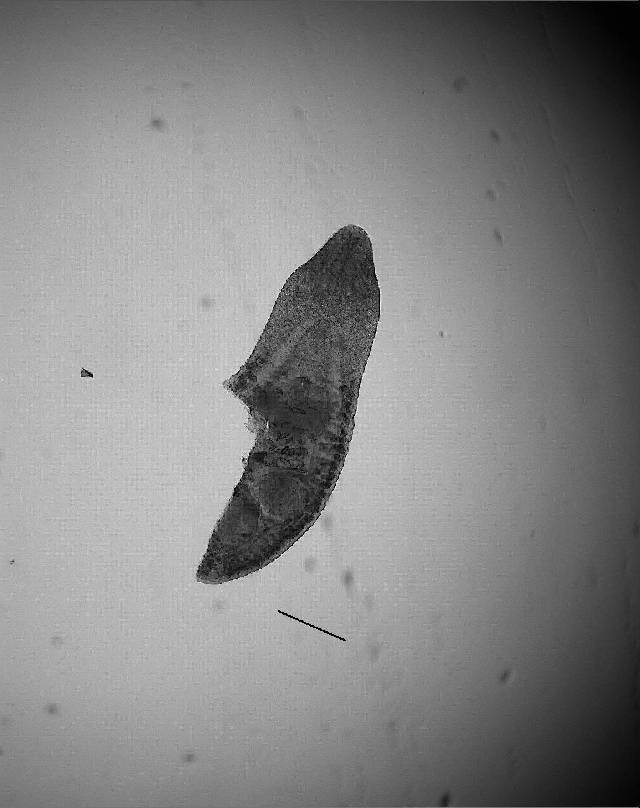
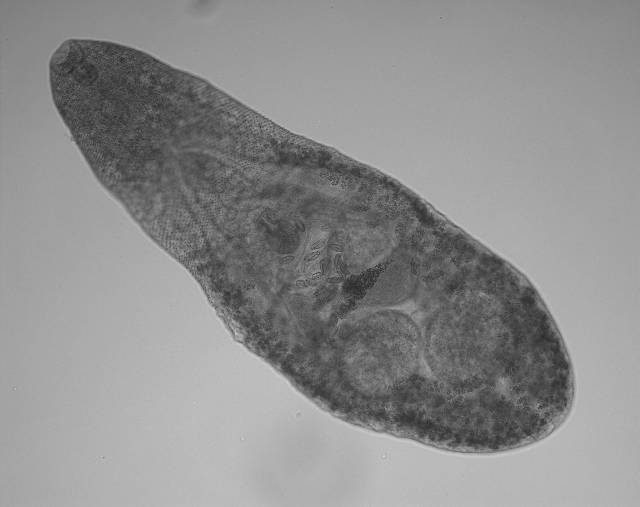
Specimens of Apophallus brevis appear as elongated, leaf-shaped or pyriform trematodes when viewed under microscopy. The body tapers toward the anterior end, which features a distinct oral sucker. Internal anatomy, including reproductive organs and developing eggs, is visible as denser, stained or darkened regions within the body cavity.
Gallery
References
- 1 2 Apophallus brevis. Global Biotic Interactions. https://www.globalbioticinteractions.org/?targetTaxon=Apophallus%20brevis. Accessed 2026-09-05.
- ↑ Dataset view for Animalia / Platyhelminthes / Trematoda / Plagiorchiida / Opisthorchiidae / Apophallus / brevis constructed from imageomics/TreeOfLife-200M records under this taxonomic path. Hugging Face Datasets. https://huggingface.co/datasets/imageomics/TreeOfLife-200M