Apophallus
Taxonomy
Apophallus is a genus of trematodes (flukes) within the family Opisthorchiidae, order Plagiorchiida, and phylum Platyhelminthes. The genus was established by Lühe in 1909 and is recognized as a valid scientific name. These parasites exhibit a broad geographical distribution, with occurrence records spanning latitudes from 9° to 62° and longitudes from -163° to 49°.[1][2][3]
The life cycle of Apophallus species typically involves fish as intermediate hosts, where metacercariae develop. Host specificity is observed in several species; for instance, A. donicus is known to infect perches, while A. muehlingi is specific to cyprinids. Adult flukes are parasites of a wide range of definitive hosts, including various birds such as common loons (Gavia immer), herring gulls (Larus argentatus), ring-billed gulls (Larus delawarensis), and roseate spoonbills (Platalea ajaja), as well as mammals including red foxes (Vulpes vulpes), arctic foxes (Vulpes lagopus), voles (Microtus spp.), domestic dogs (Canis lupus familiaris), domestic cats (Felis catus), and raccoons (Procyon lotor). A. muehlingi has also been documented as a parasite of the golden jackal (Canis aureus).[2][4]
Visual Description
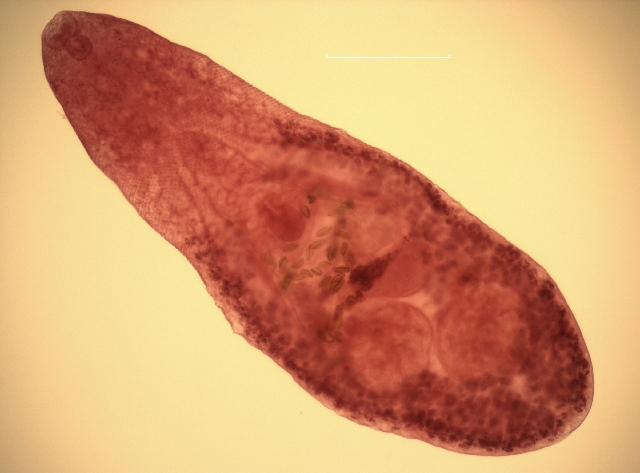
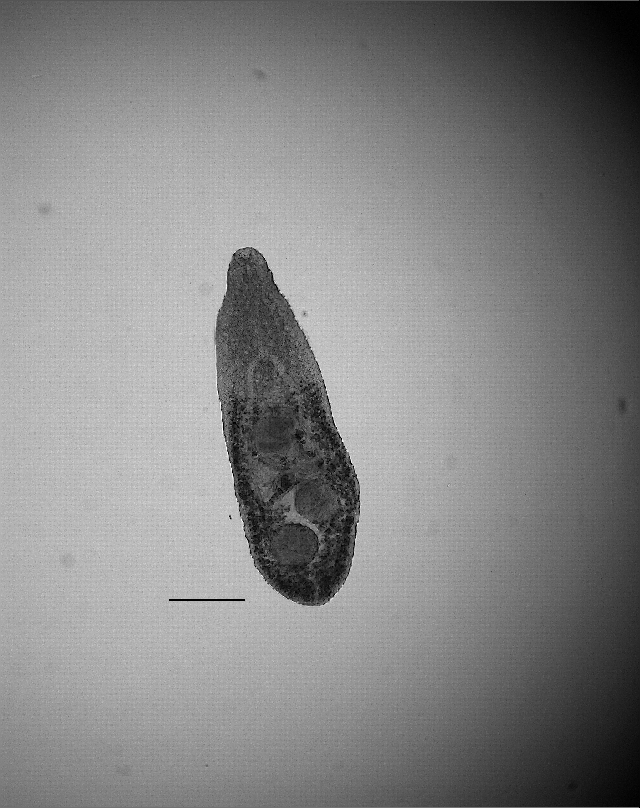
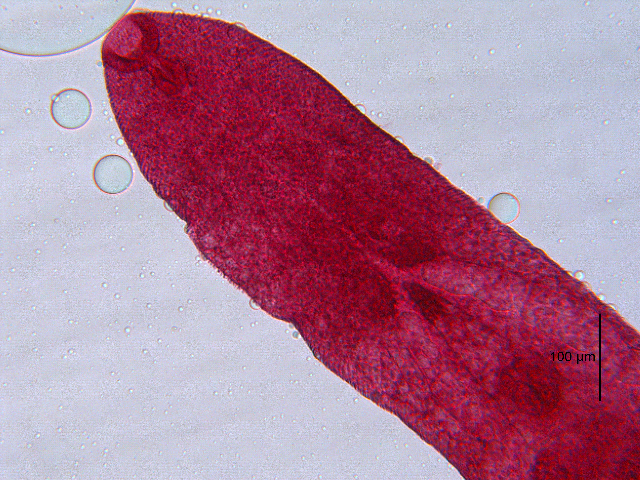
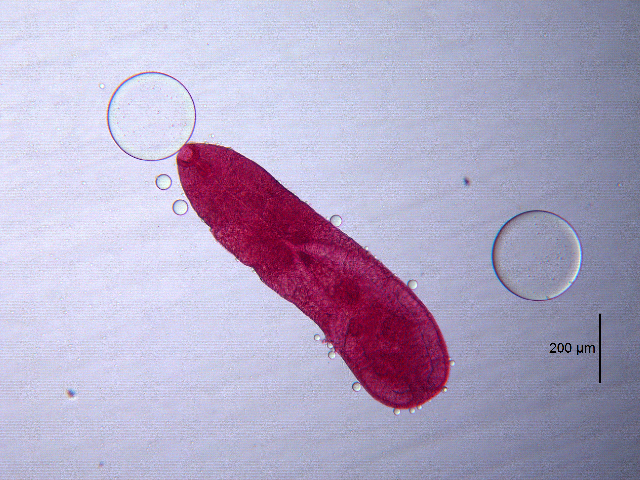
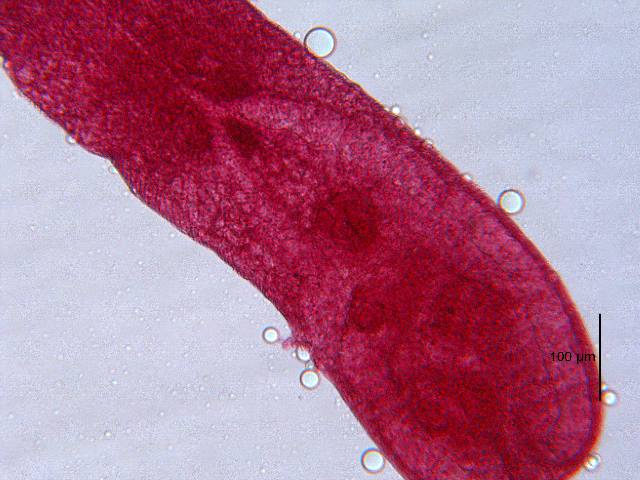
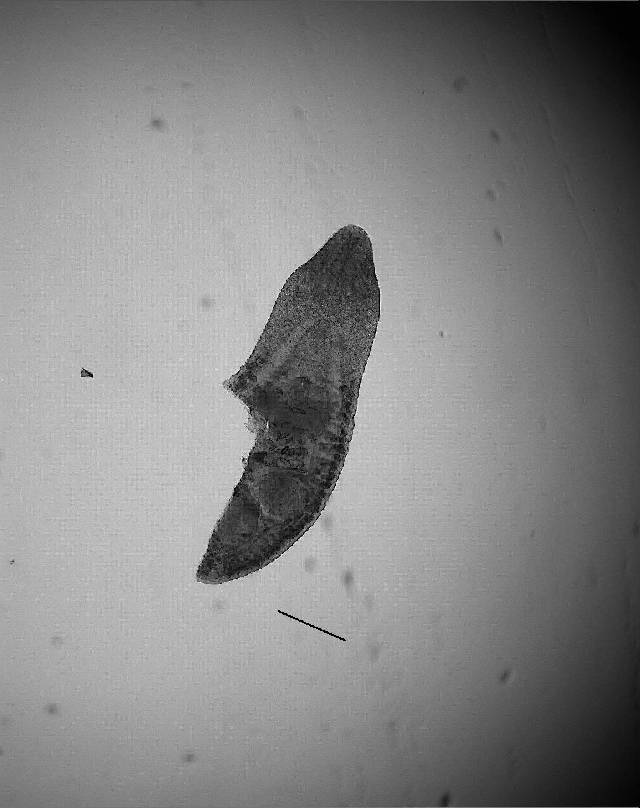
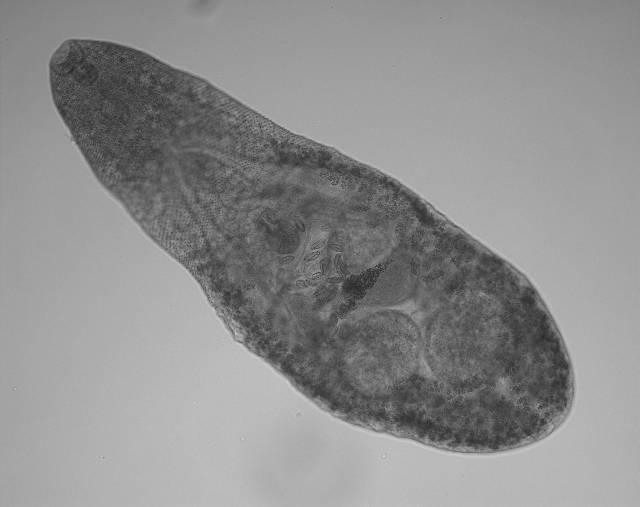
Adult specimens of Apophallus typically exhibit an elongated, leaf-like body shape, characterized by a rounded posterior and a slightly tapered anterior end. Microscopic examination reveals a body surface covered in fine, dense spines. Internal anatomy, including reproductive organs and eggs, is often visible in stained preparations. The anterior region features a prominent oral sucker. Larval stages, such as cercariae, possess an oval-shaped body and a long, slender tail, with distinct circular eyespots located near the anterior end.
Gallery
References
- ↑ Apophallus Lühe, 1909. GBIF. https://www.gbif.org/species/2505568. Accessed 2026-09-05.
- 1 2 Apophallus. Global Biotic Interactions. https://www.globalbioticinteractions.org/?targetTaxon=Apophallus. Accessed 2026-09-05.
- ↑ Dataset view for Animalia / Platyhelminthes / Trematoda / Plagiorchiida / Opisthorchiidae / Apophallus constructed from imageomics/TreeOfLife-200M records under this taxonomic path. Hugging Face Datasets. https://huggingface.co/datasets/imageomics/TreeOfLife-200M
- ↑ Jadwiga Wierzbicka; Krystyn Wierzbicki. Metacercariae of the genus Apophallus Lühe, 1909 (Trematoda: Heterophyidae) in Western Pomerania of Poland. Acta Ichthyologica Et Piscatoria. 1973. https://doi.org/10.3750/aip1973.03.1.07.