Aplysina fulva
Taxonomy
This page represents the following TreeOfLife-200M taxonomic path.[1]
- Kingdom: Animalia
- Phylum: Porifera
- Class: Demospongiae
- Order: Verongiida
- Family: Aplysinidae
- Genus: Aplysina
- Species: Aplysina fulva
Visual Description
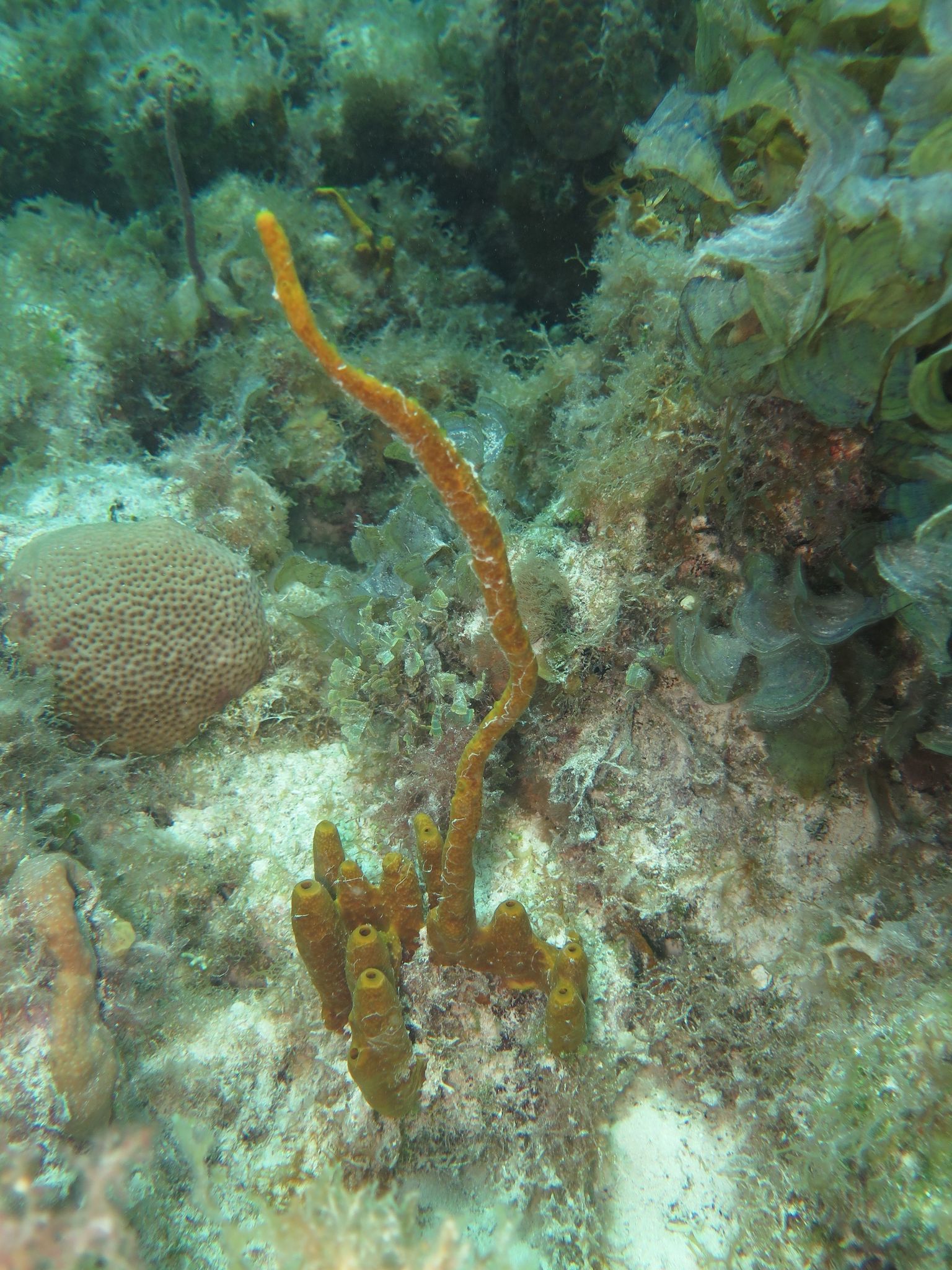
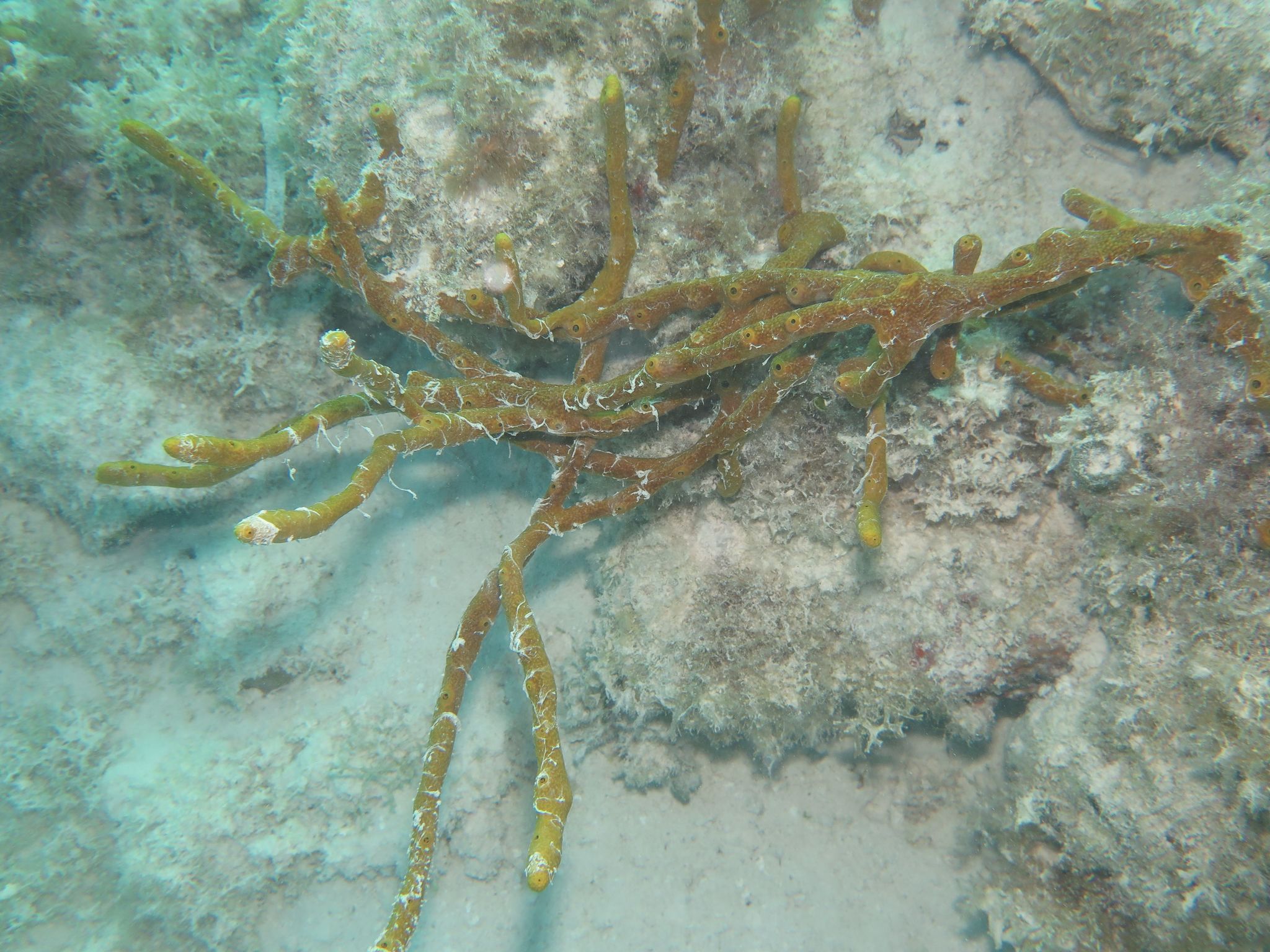
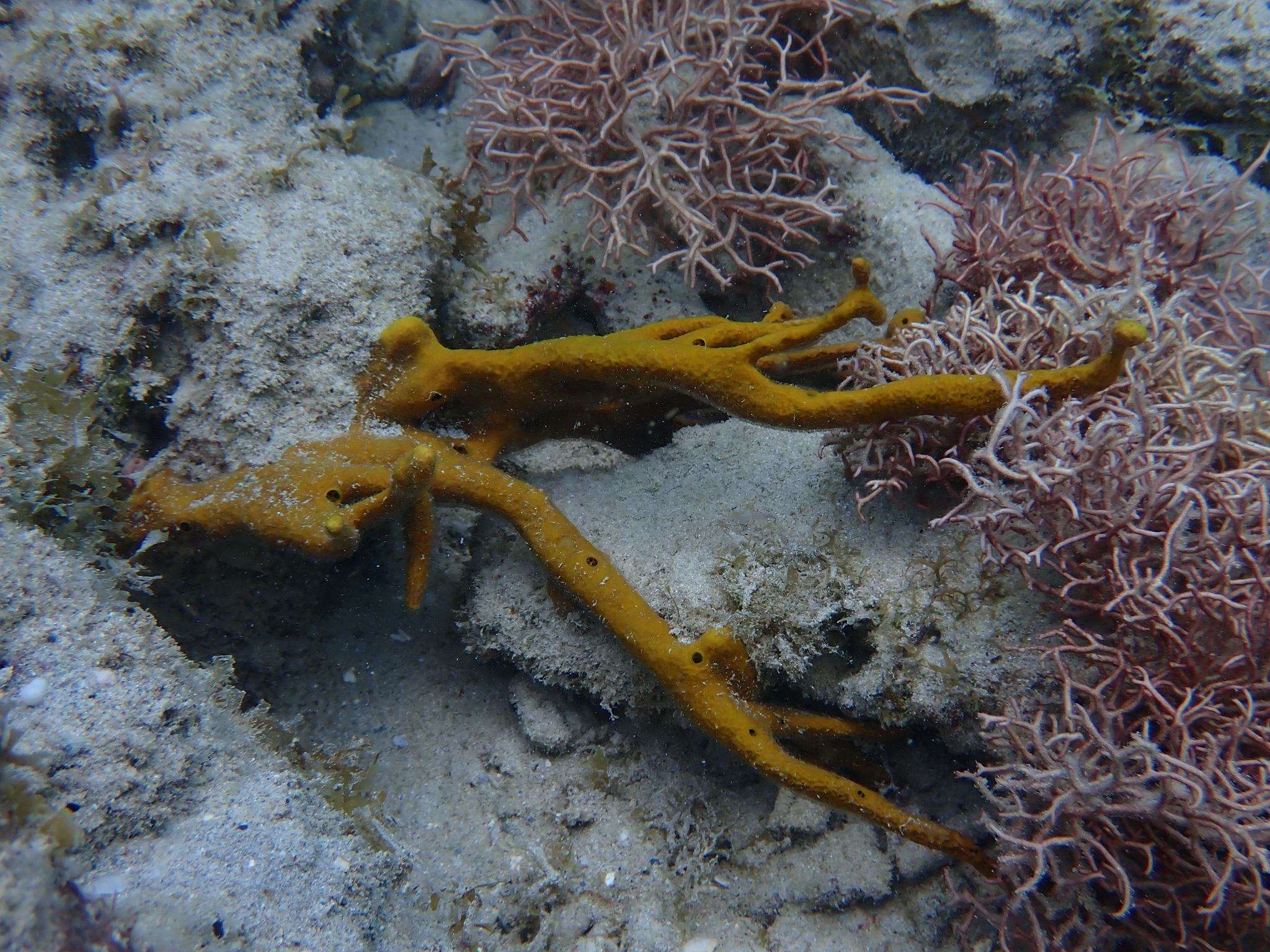
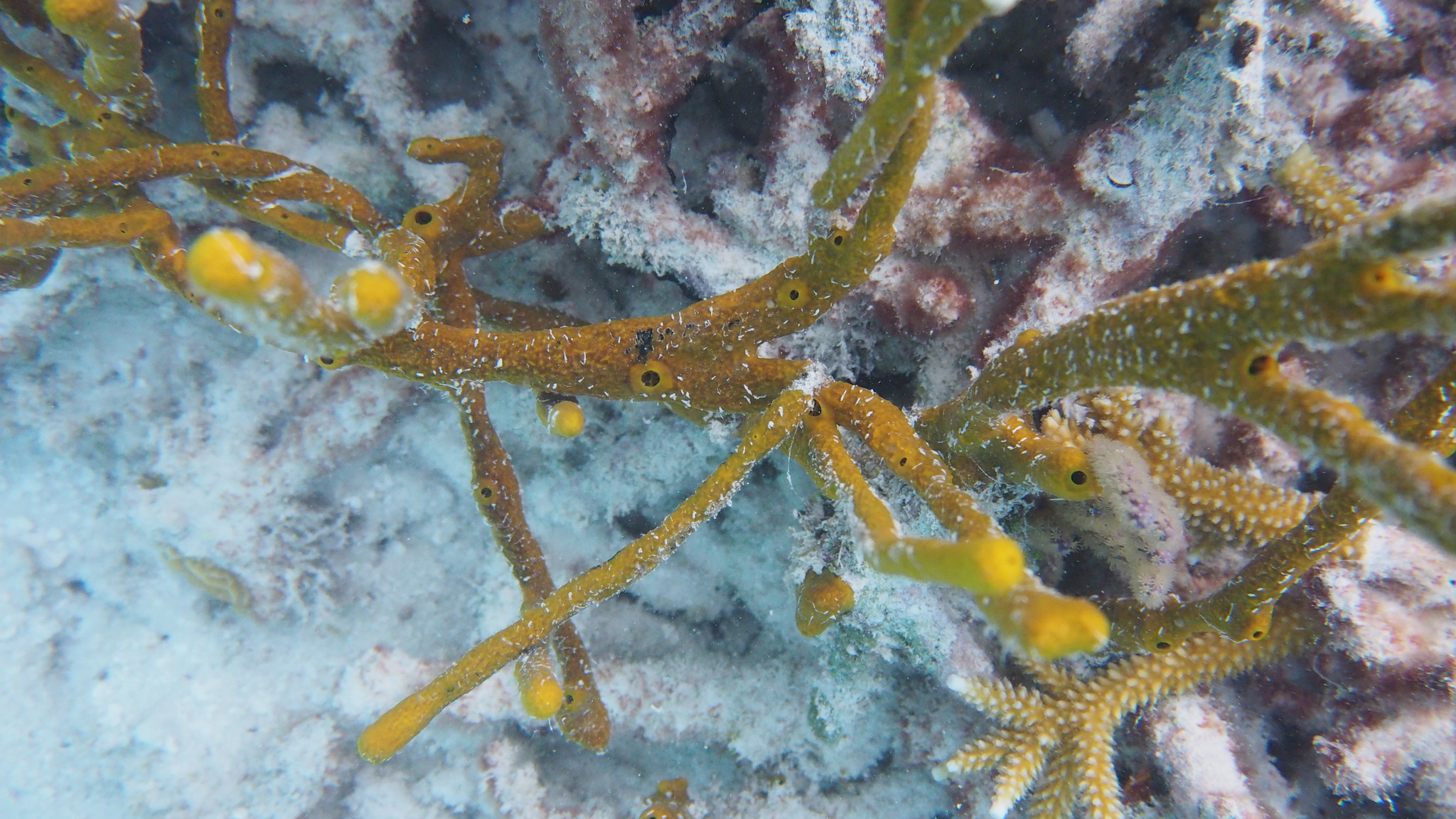
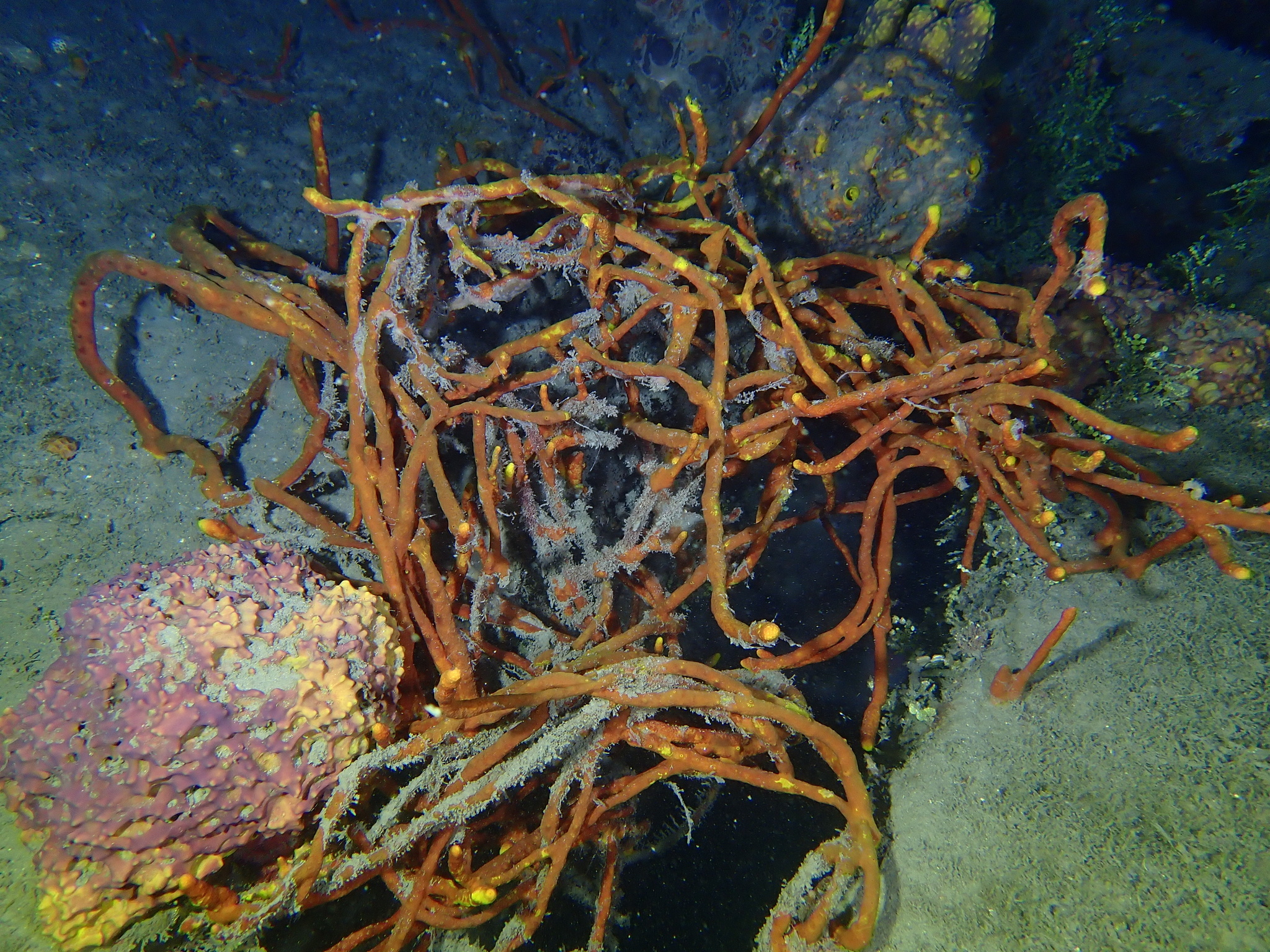
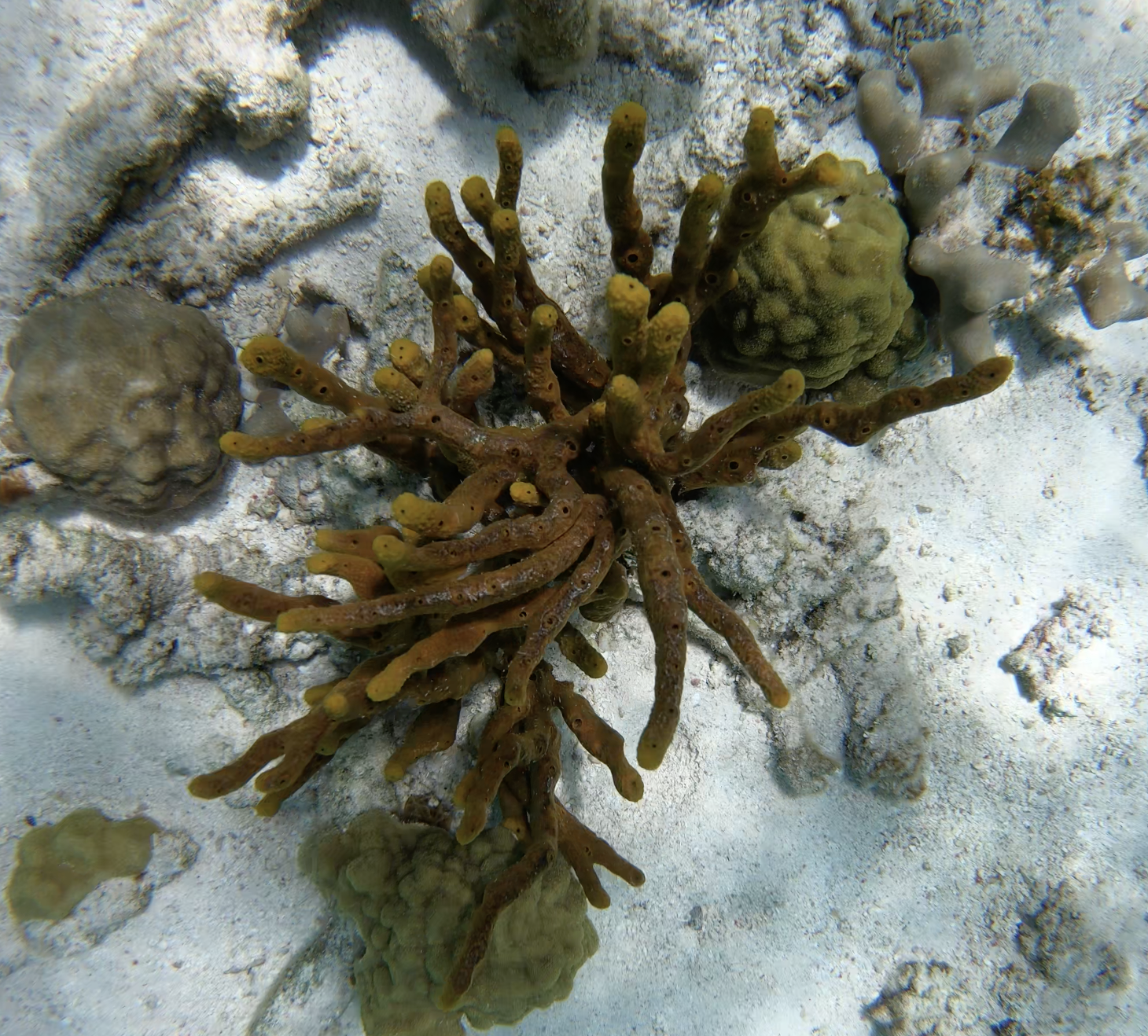
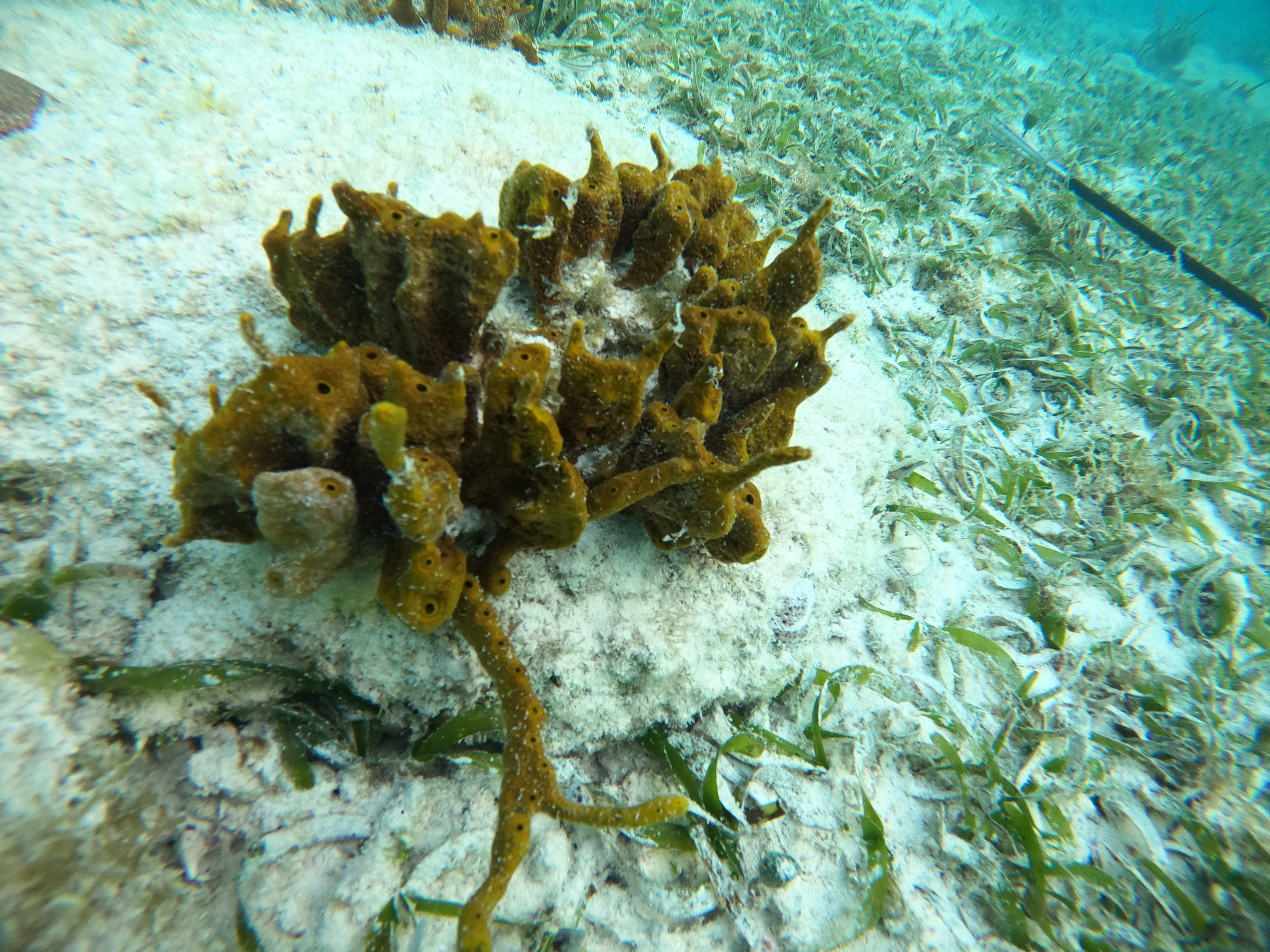
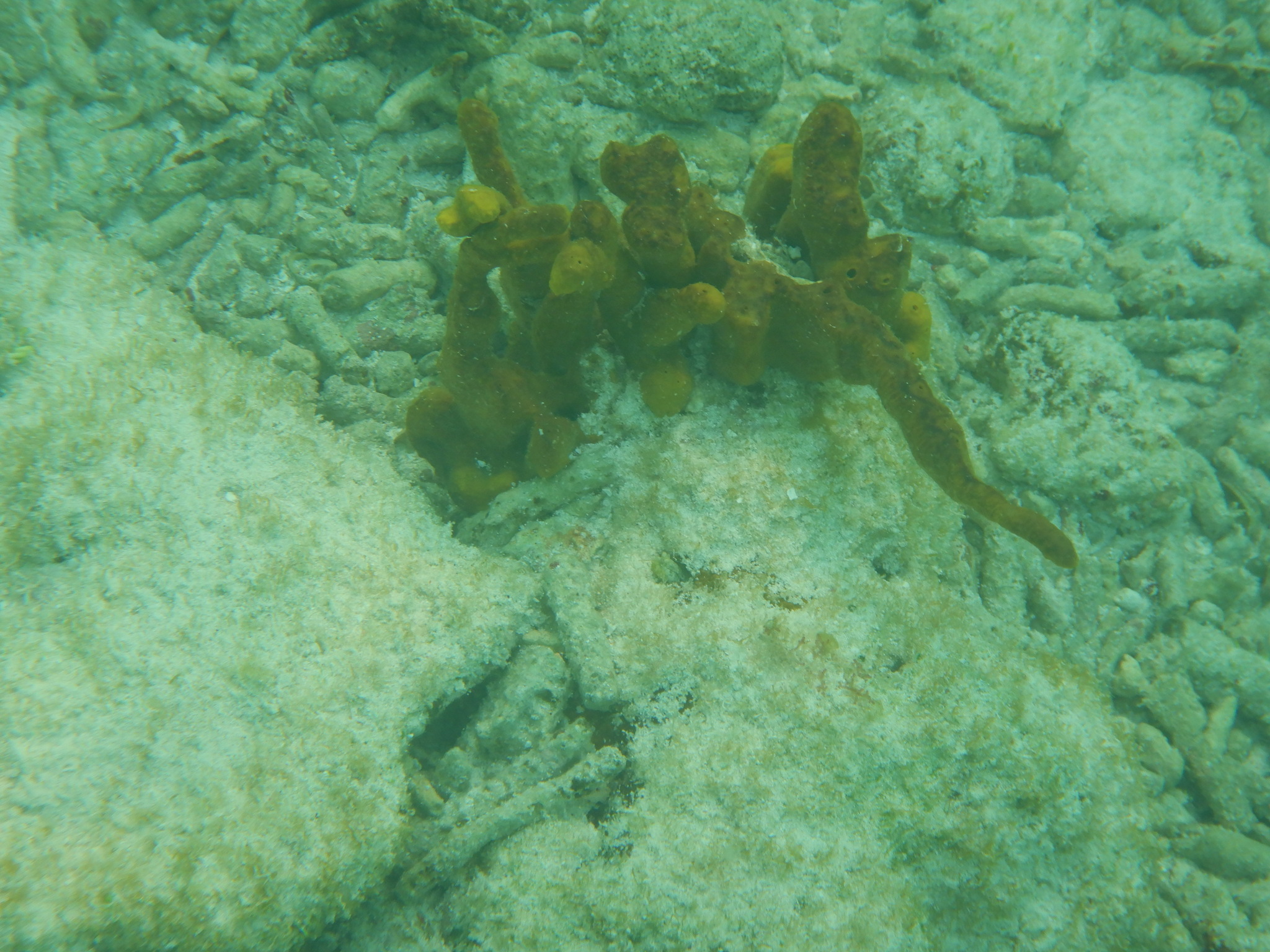
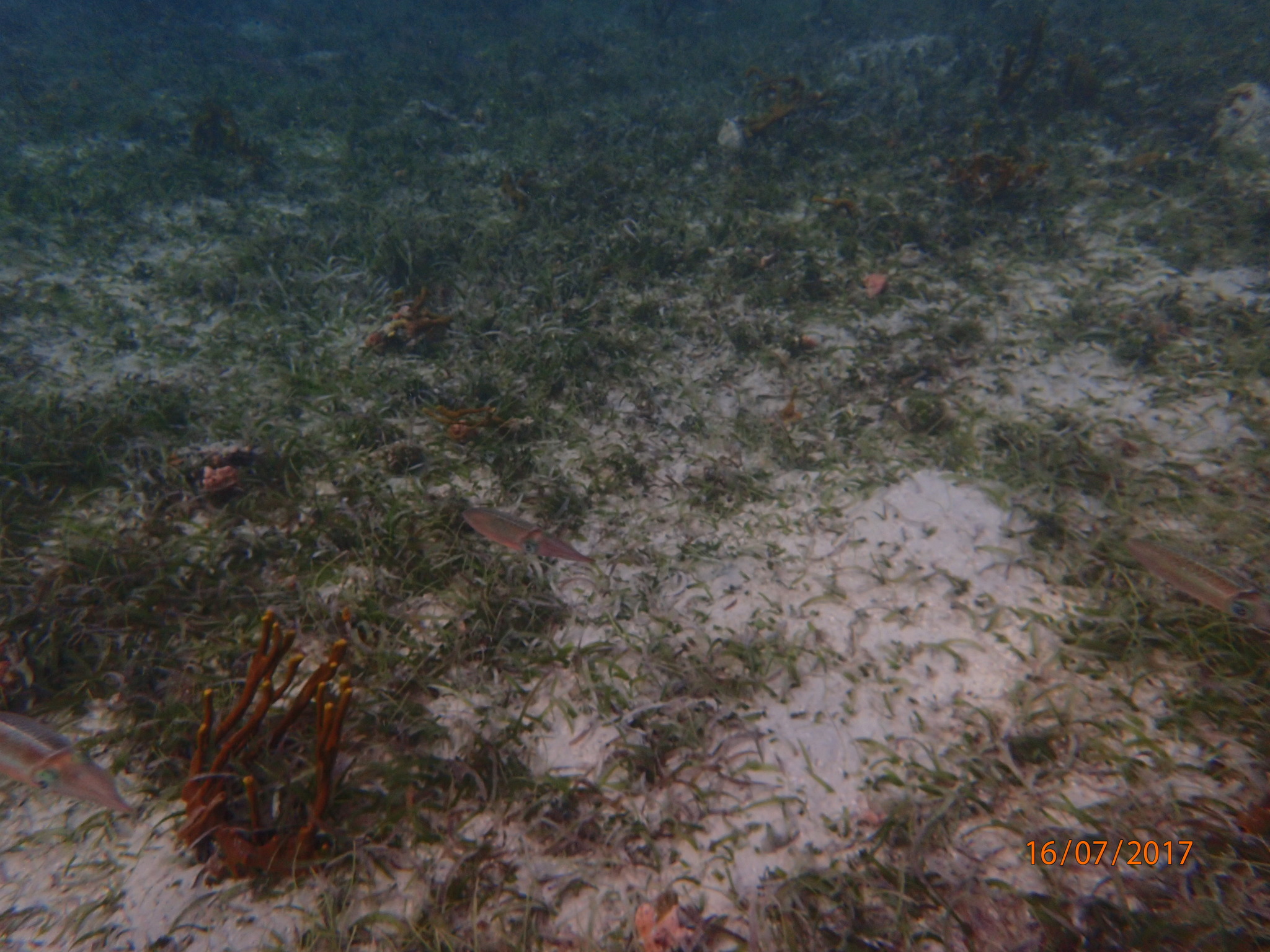
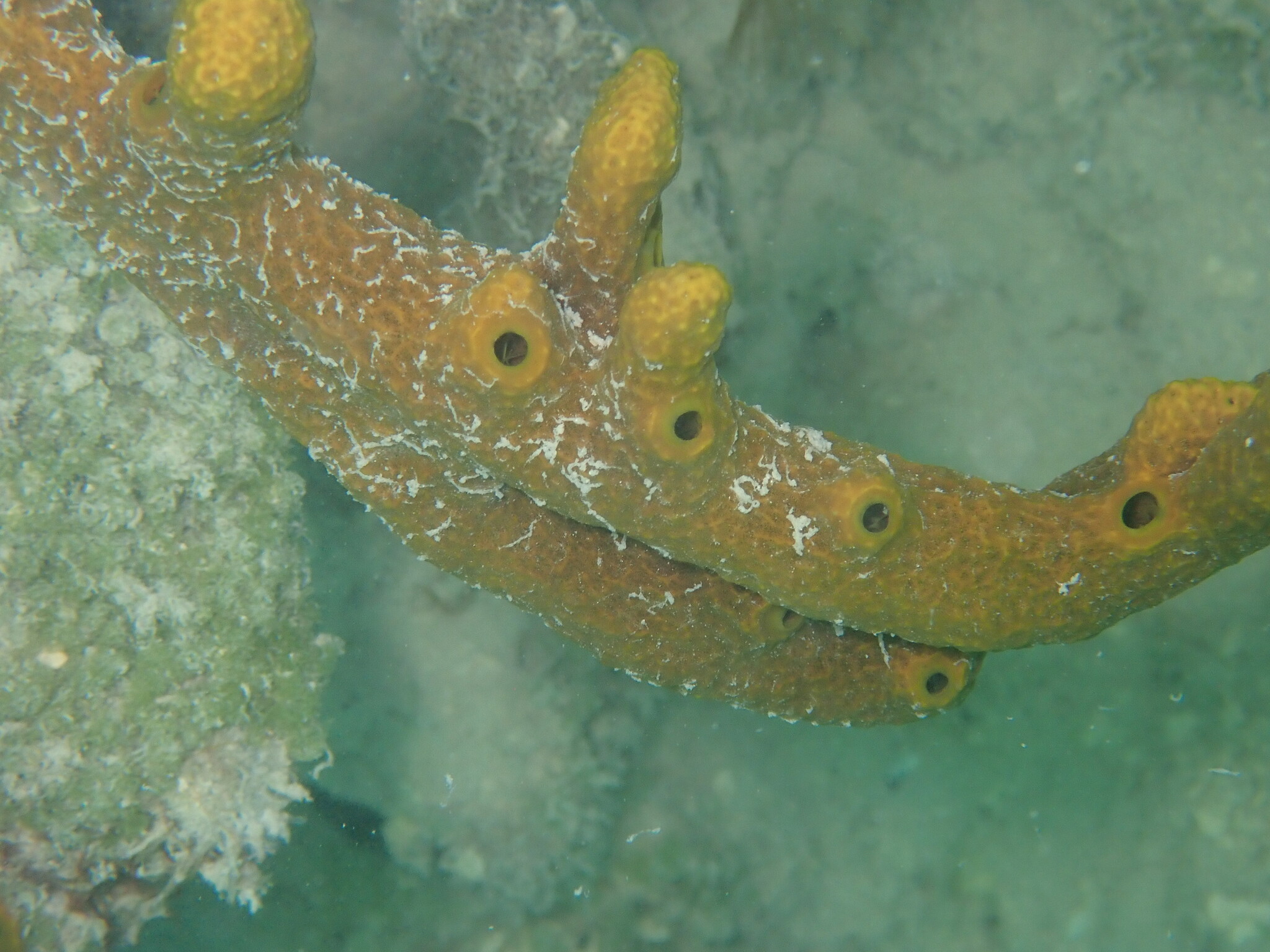
Aplysina fulva is commonly photographed as an orange to yellowish sponge forming rope-like, reticulated clusters or scattered patches on the substrate. Underwater observations and images show discontinuous, porous “pore rope” elements that can appear as scattered strands/openings across the surface.
Identity and nomenclature
GBIF treats Aplysina fulva as an accepted species name (Pallas, 1766) and lists the basionym as Spongia fulva Pallas, 1766. GBIF also provides the vernacular name “Scattered pore rope sponge.”[2]
Notes from biomedical research (material derived from A. fulva)
A study using Aplysina fulva collected from São Sebastião, Brazil prepared a “protein extract” (PE) fraction from sponge material for in vitro and in vivo testing (cytotoxicity/viability and genotoxicity signals, plus a short-term rat tibia defect model). The work is focused on properties of extracted material rather than on the taxonomy or natural history of the sponge.[3]
The same study reports that PE physicochemical characterization (SEM/EDS) supported a granular, irregular particle morphology and an organic-dominated composition (carbon as dominant element, followed by oxygen).[3]
Gallery
References
- ↑ Dataset view for Animalia / Porifera / Demospongiae / Verongiida / Aplysinidae / Aplysina / fulva constructed from imageomics/TreeOfLife-200M records under this taxonomic path. Hugging Face Datasets. https://huggingface.co/datasets/imageomics/TreeOfLife-200M.
- ↑ Aplysina fulva (Pallas, 1766). GBIF. https://www.gbif.org/species/2239310. Accessed 2026-07-09.
- 1 2 Alan de França Santana; Ingrid Regina Avanzi; Júlia Risso Parisi; Matheus de Almeida Cruz; Giovanna Caroline Aparecida do Vale; Tiago Akira Tashiro de Araújo; Samuel Rangel Cláudio; Daniel Araki Ribeiro; Renata Neves Granito; Ana Cláudia Muniz Rennó. In vitro and in vivo genotoxicity and cytotoxicity analysis of protein extract from Aplysina fulva sponges. Acta Scientiarum Biological Sciences. 2021. https://doi.org/10.4025/actascibiolsci.v43i1.57856.