Aplysina chiriquiensis
Taxonomy
This page represents the following TreeOfLife-200M taxonomic path.[1]
- Kingdom: Animalia
- Phylum: Porifera
- Class: Demospongiae
- Order: Verongiida
- Family: Aplysinidae
- Genus: Aplysina
- Species: Aplysina chiriquiensis
Visual Description
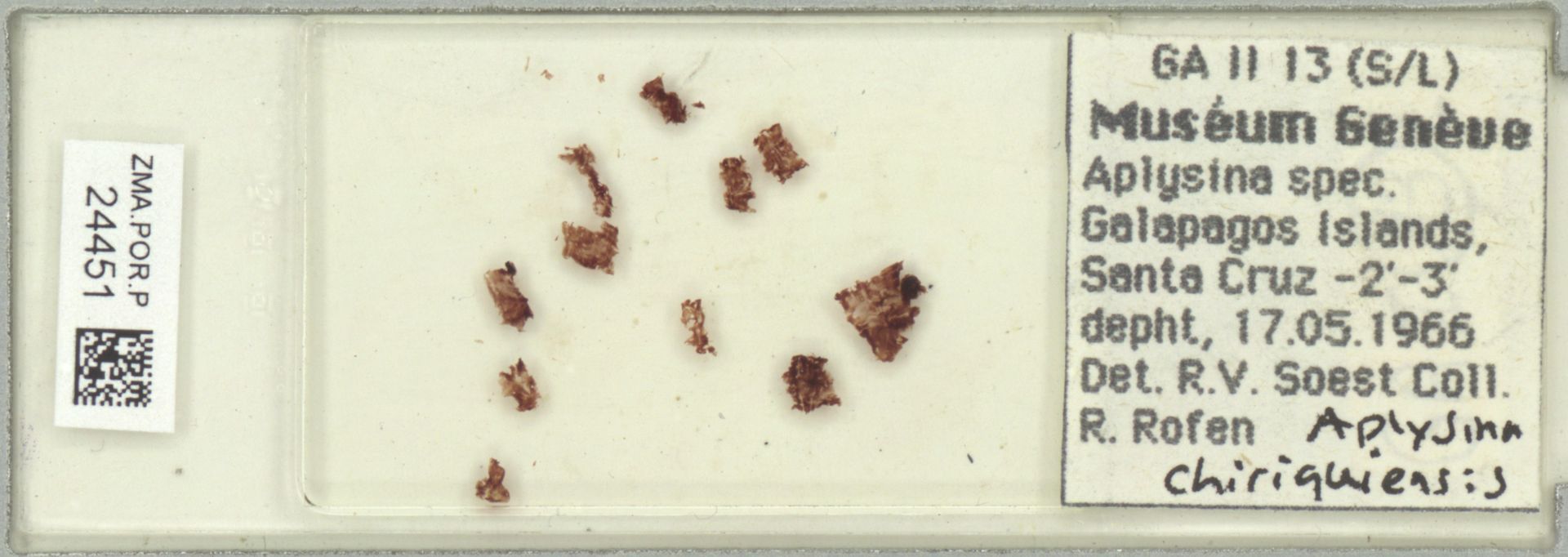
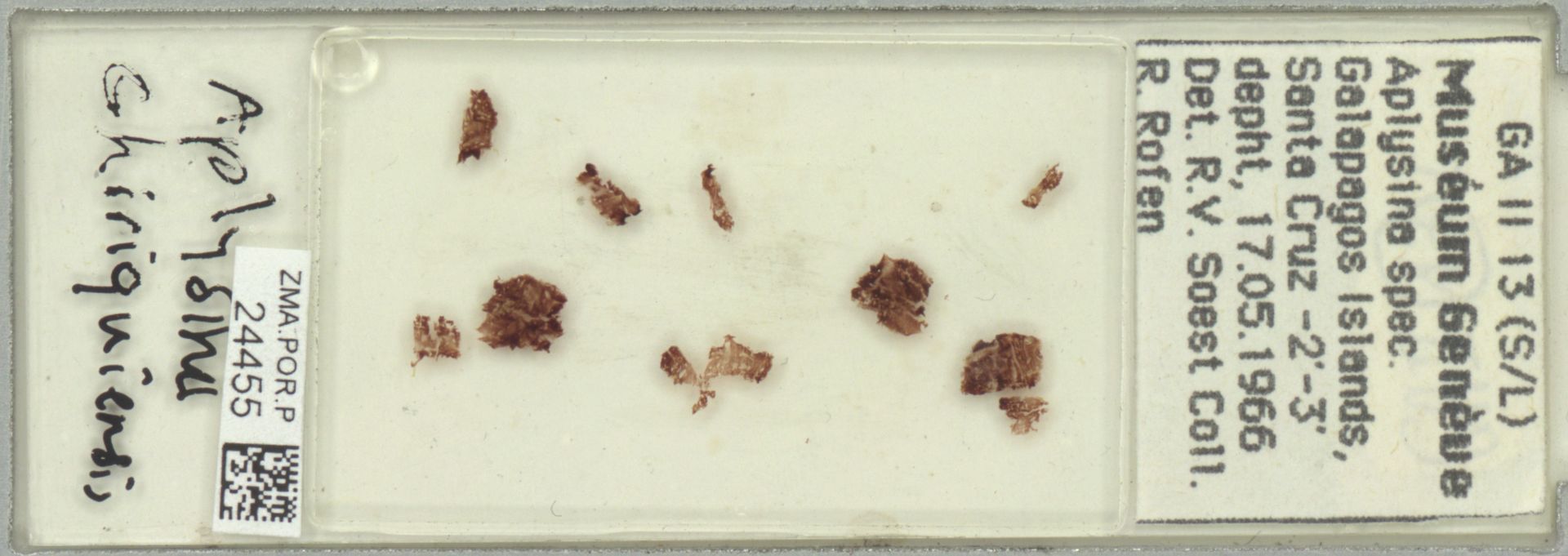
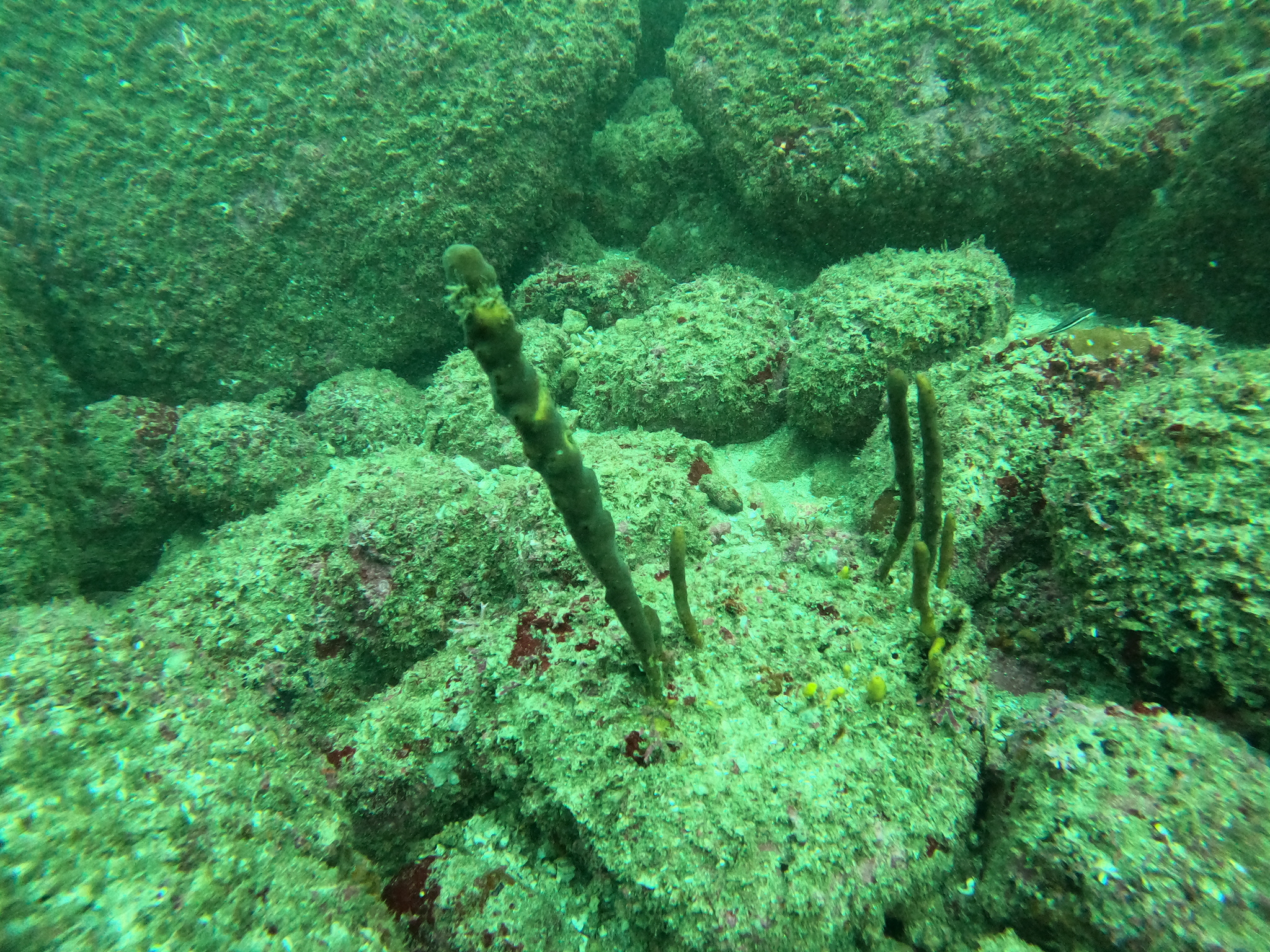
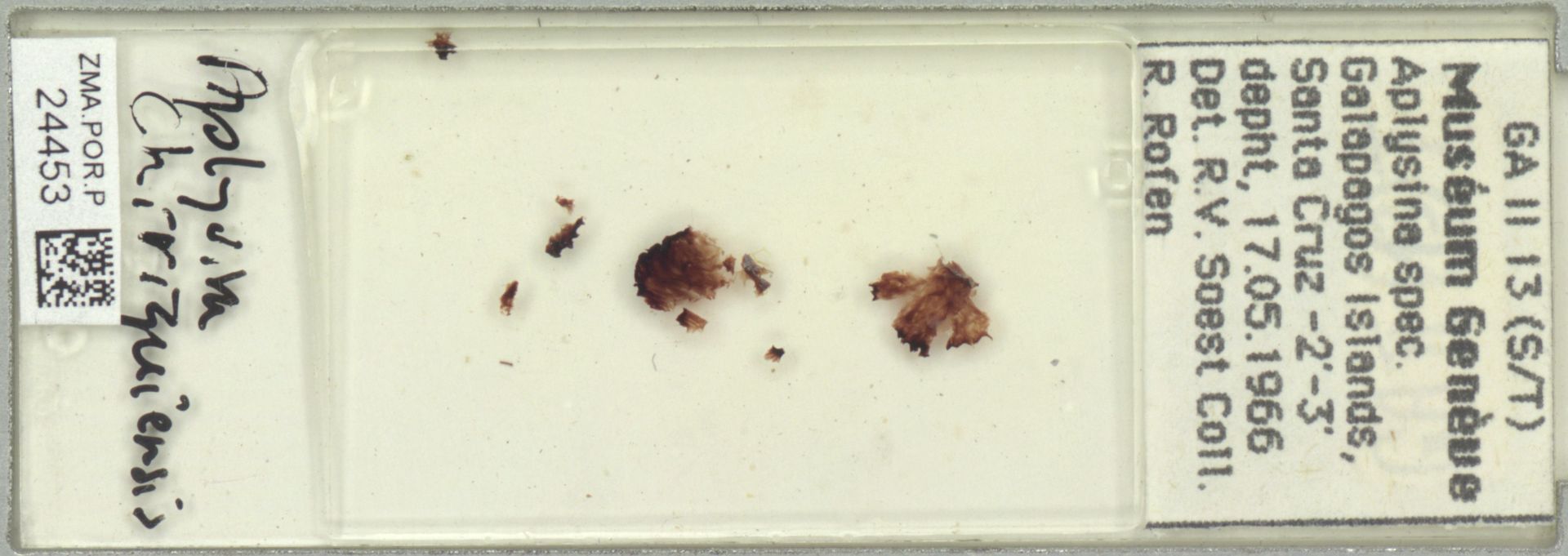
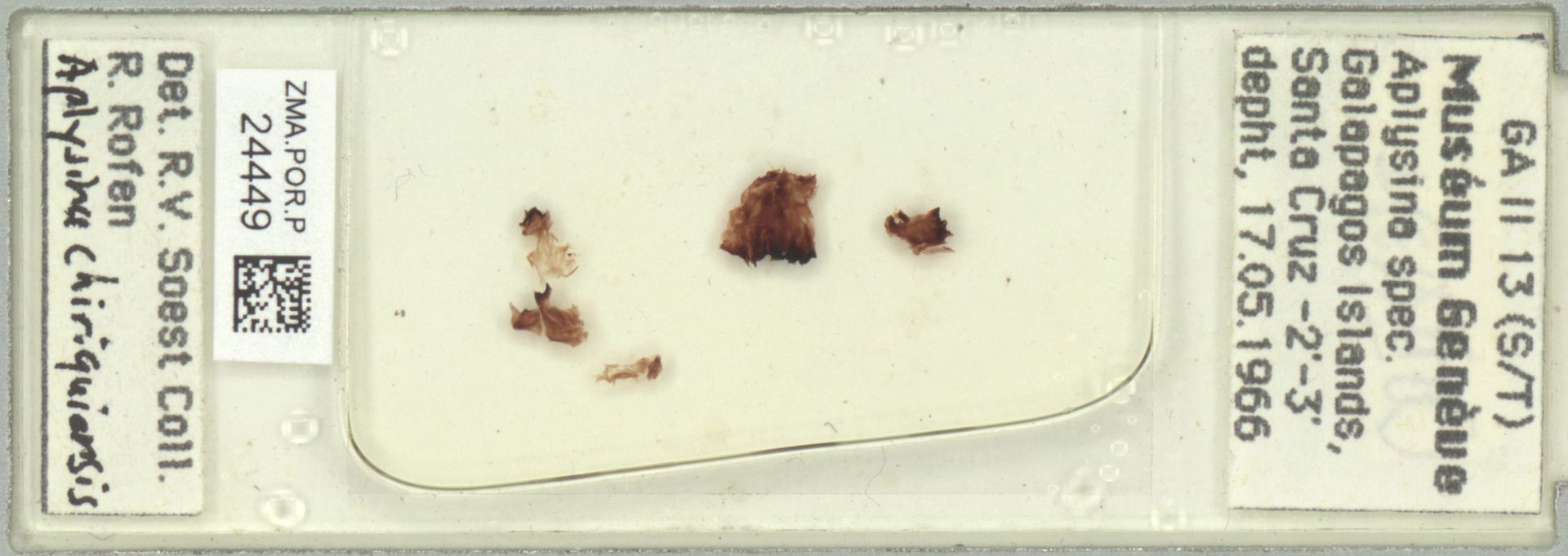
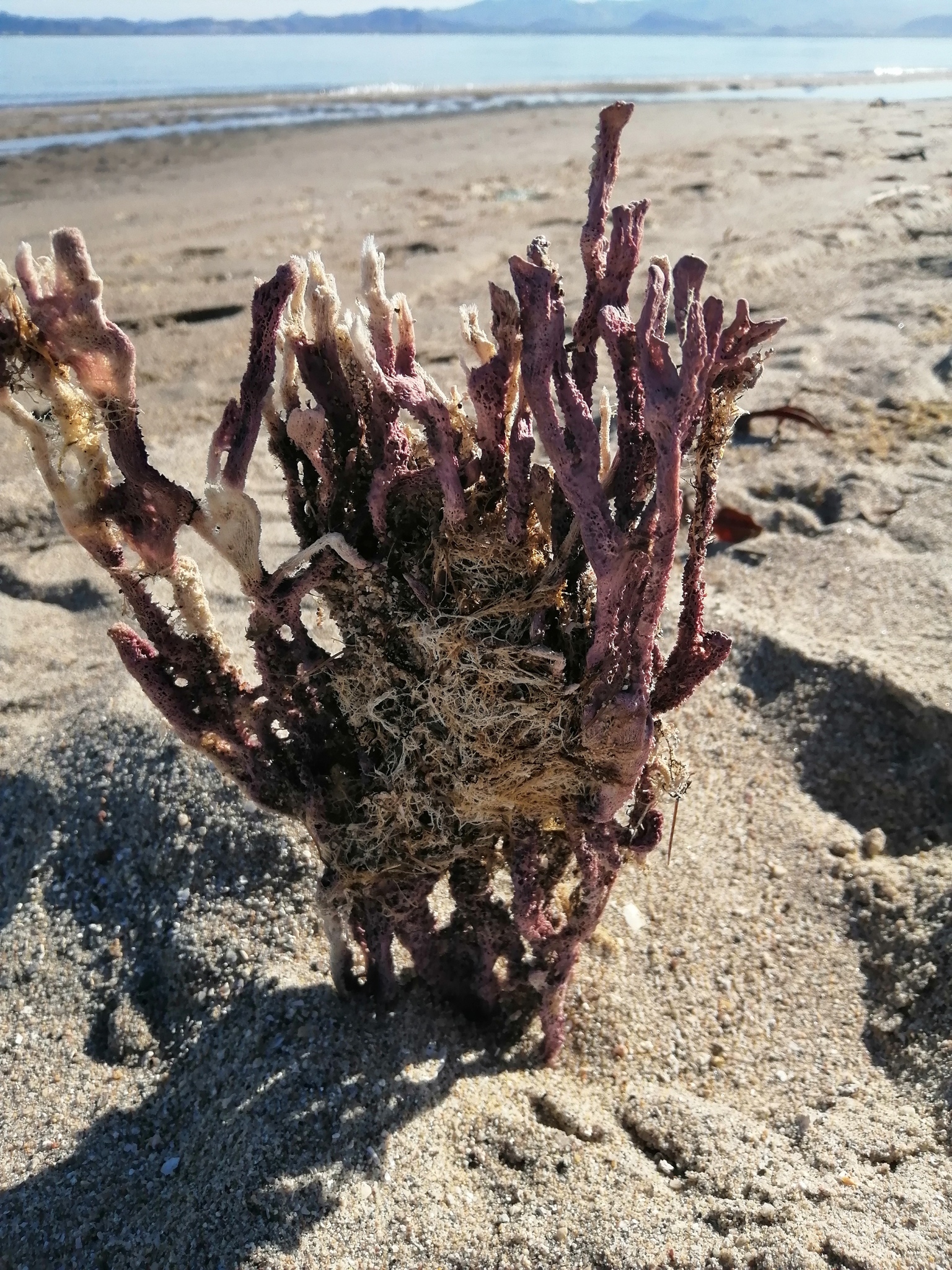
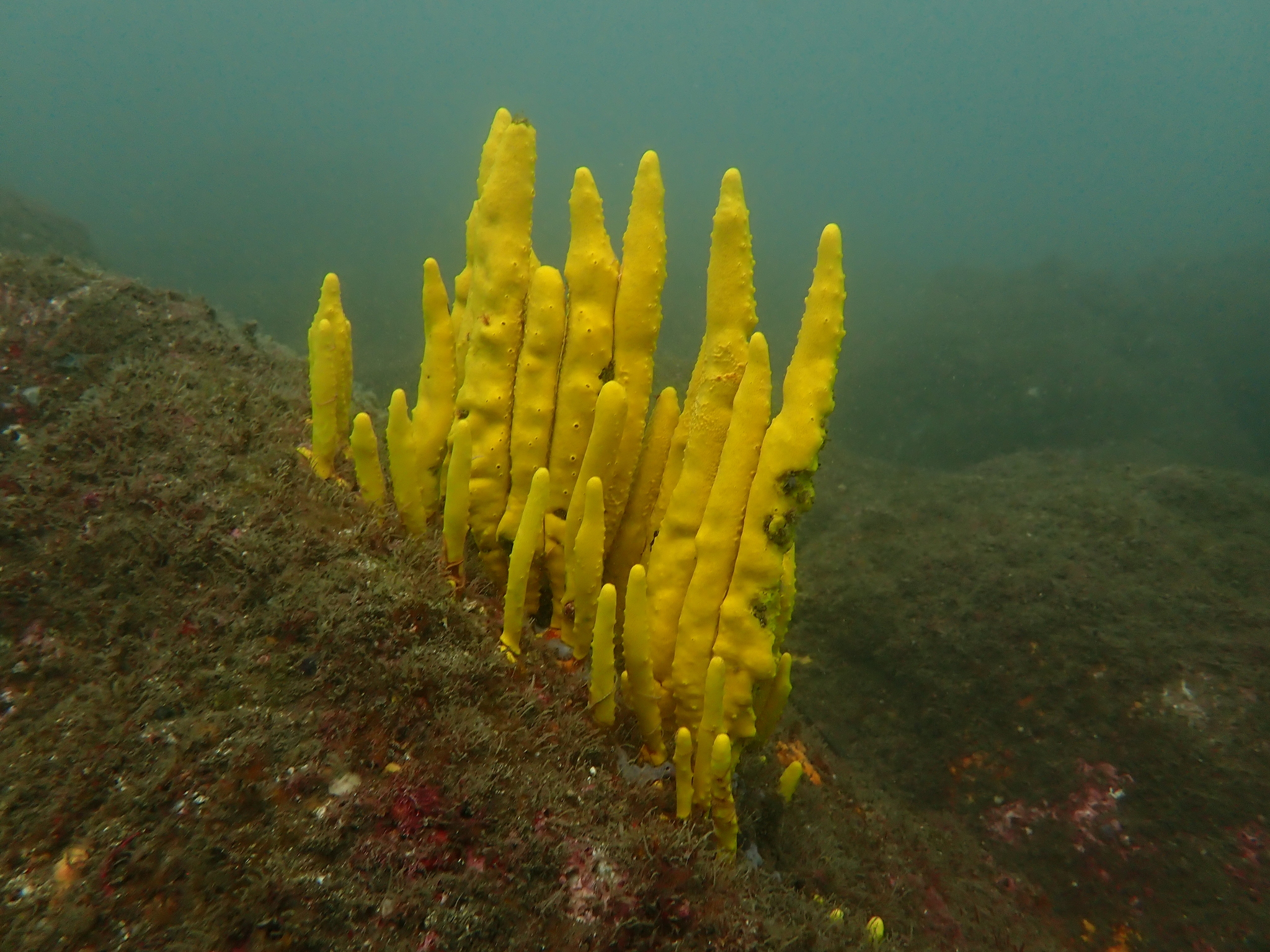
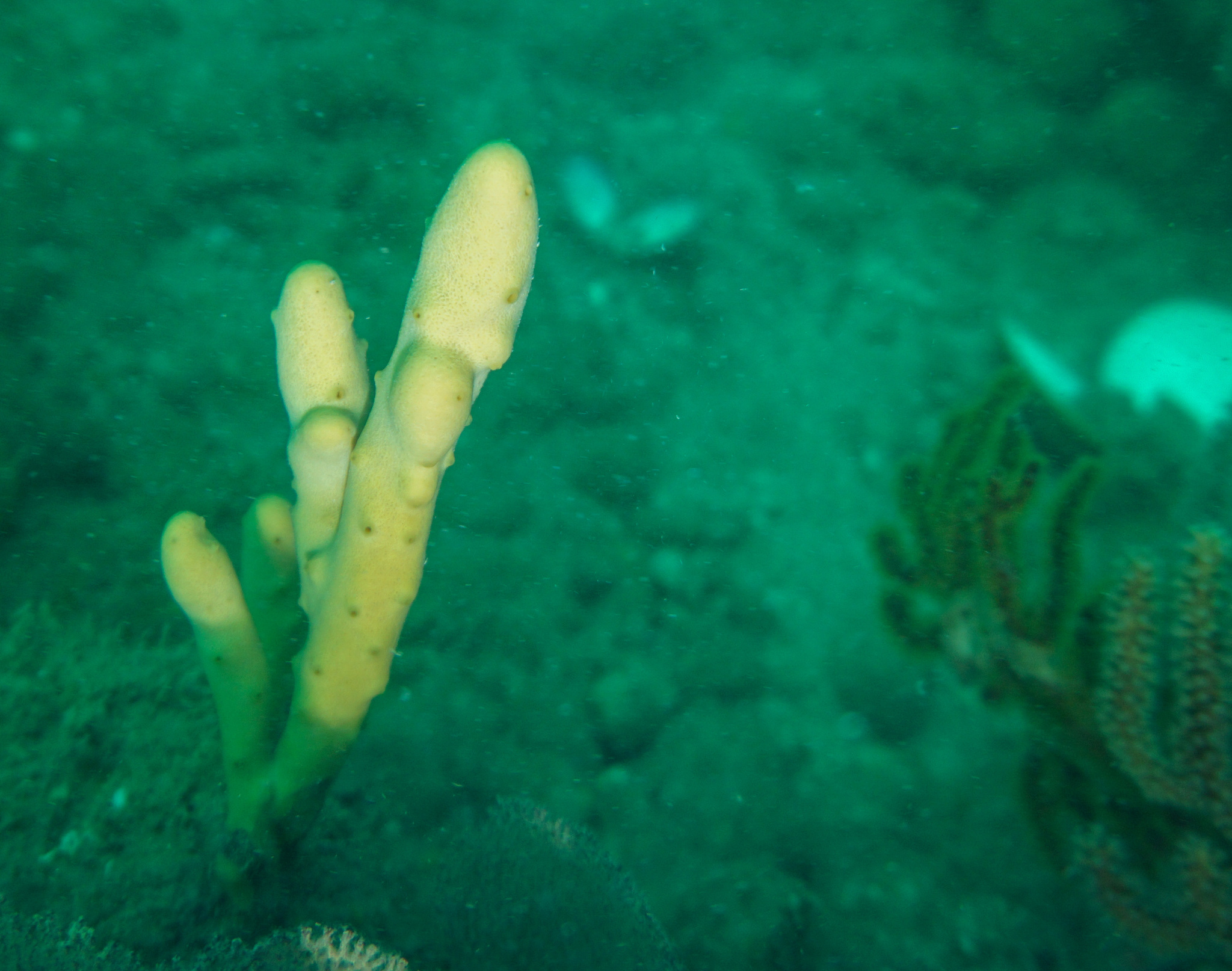
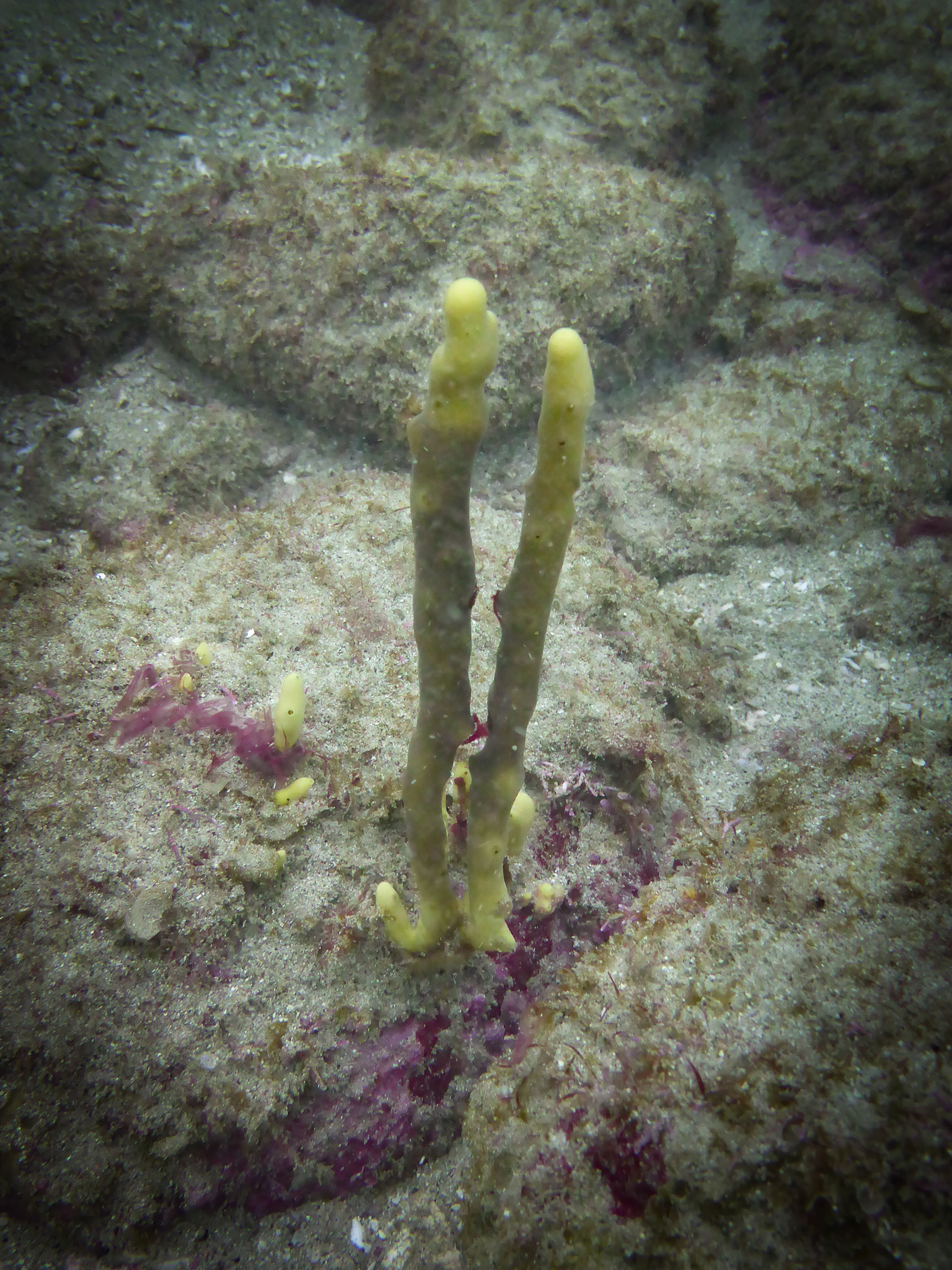
- Aplysina chiriquiensis* is a ramose, pedunculate sponge with branched “finger-like” projections arising from a common base.
Living external coloration is reported as intense yellow; after exposure to air it turns blue, and preserved specimens can darken to brown or black. Specimens are described as roughly 10–20 cm tall, with individual branches about 3–15 cm long and 1–4 cm thick.
The skeleton is described as compressible and elastic, with oscula typically occurring in small external protuberances. Internally it forms a reticulate meshwork of laminated amber fibers (with dichotomous termination in the reported figure).
Species ecology and distribution
This species is reported attached to large rocks and occurring among octocorals of the genus Carijoa, at depths around 8 m.
The species was originally described from the Gulf of Chiriqui, Panama. It has also been reported from the Galápagos Islands (under the synonym Aplysina ecuatorensis), and from the Pacific coasts of Colombia and Peru. It is mentioned as newly reported from Los Cóbanos, El Salvador.
Integrative taxonomy and identification notes
Work on eastern Pacific Aplysina emphasizes that species delimitation is most reliable when external morphology and skeleton/reticulation patterns are interpreted alongside skeletal composition (in Aplysina, fibers are dominated by alpha-chitin) and nuclear rDNA sequence data (ITS1–5.8–ITS2), rather than relying on mitochondrial COI alone.
For A. chiriquiensis, the distinctive pedunculate/ramose growth form and bright yellow coloration are used as key diagnostic features among eastern Pacific congeners.
Gallery
References
- ↑ Dataset view for Animalia / Porifera / Demospongiae / Verongiida / Aplysinidae / Aplysina / chiriquiensis constructed from imageomics/TreeOfLife-200M records under this taxonomic path. Hugging Face Datasets. https://huggingface.co/datasets/imageomics/TreeOfLife-200M.