Aploparaksis crassirostris
Taxonomy
- Kingdom: Animalia
- Phylum: Platyhelminthes
- Class: Cestoda
- Order: Cyclophyllidea
- Family: Hymenolepididae
- Genus: Aploparaksis
- Species: Aploparaksis crassirostris
Aploparaksis crassirostris is a species of cestode (tapeworm) belonging to the family Hymenolepididae. It is a member of the genus Aploparaksis, a group of widespread avian parasites within the order Cyclophyllidea.[1][2][3]
Host Relationships and Ecology
This species is an endoparasite that infects various avian hosts, including the dunlin (Calidris alpina), common snipe (Gallinago gallinago), Wilson's snipe (Gallinago delicata), common ringed plover (Charadrius hiaticula), semipalmated sandpiper (Calidris pusilla), and Eurasian woodcock (Scolopax rusticola). Ecological associations have also been recorded with annelids, specifically Eiseniella tetraedra and Lumbriculus variegatus. Preserved specimens of the species are maintained in the collections of the Natural History Museum of Denmark.[1][2]
Visual Description
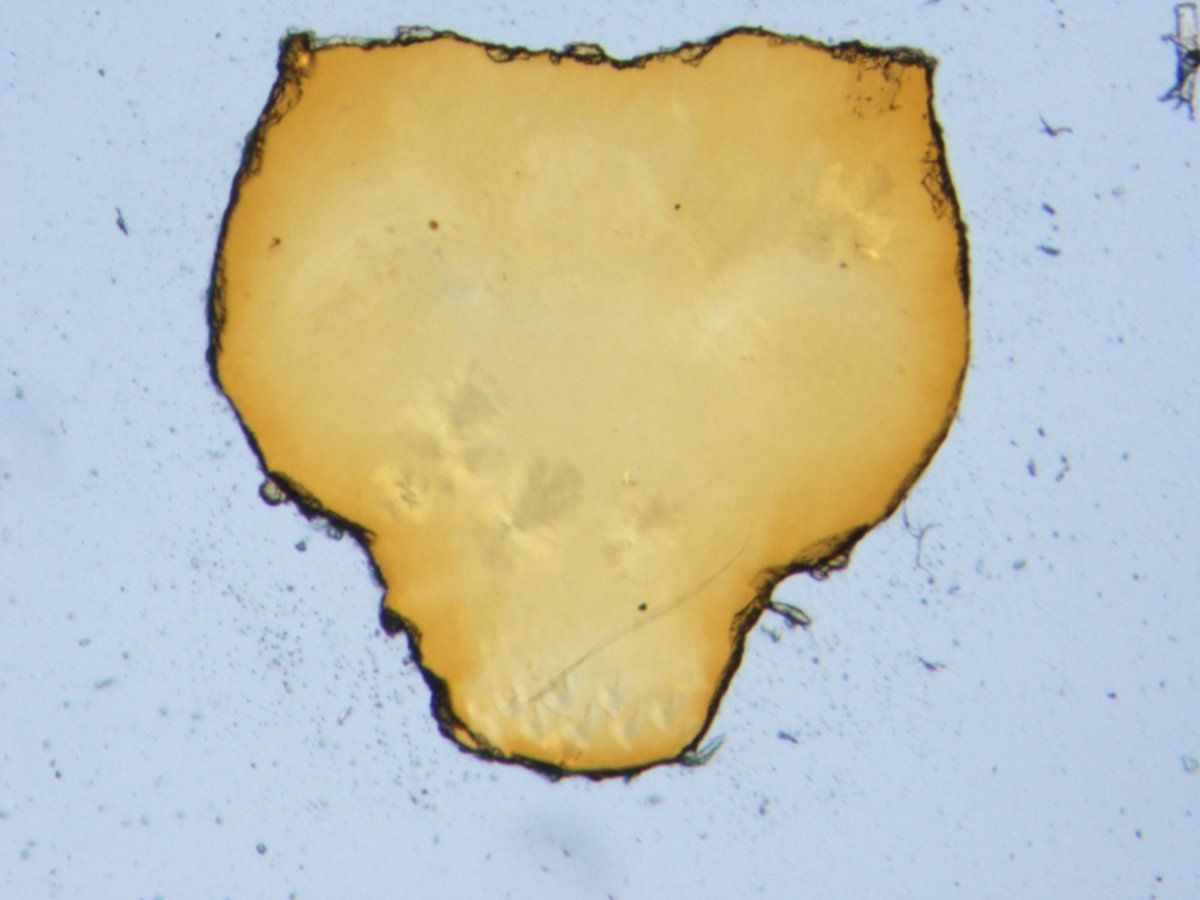
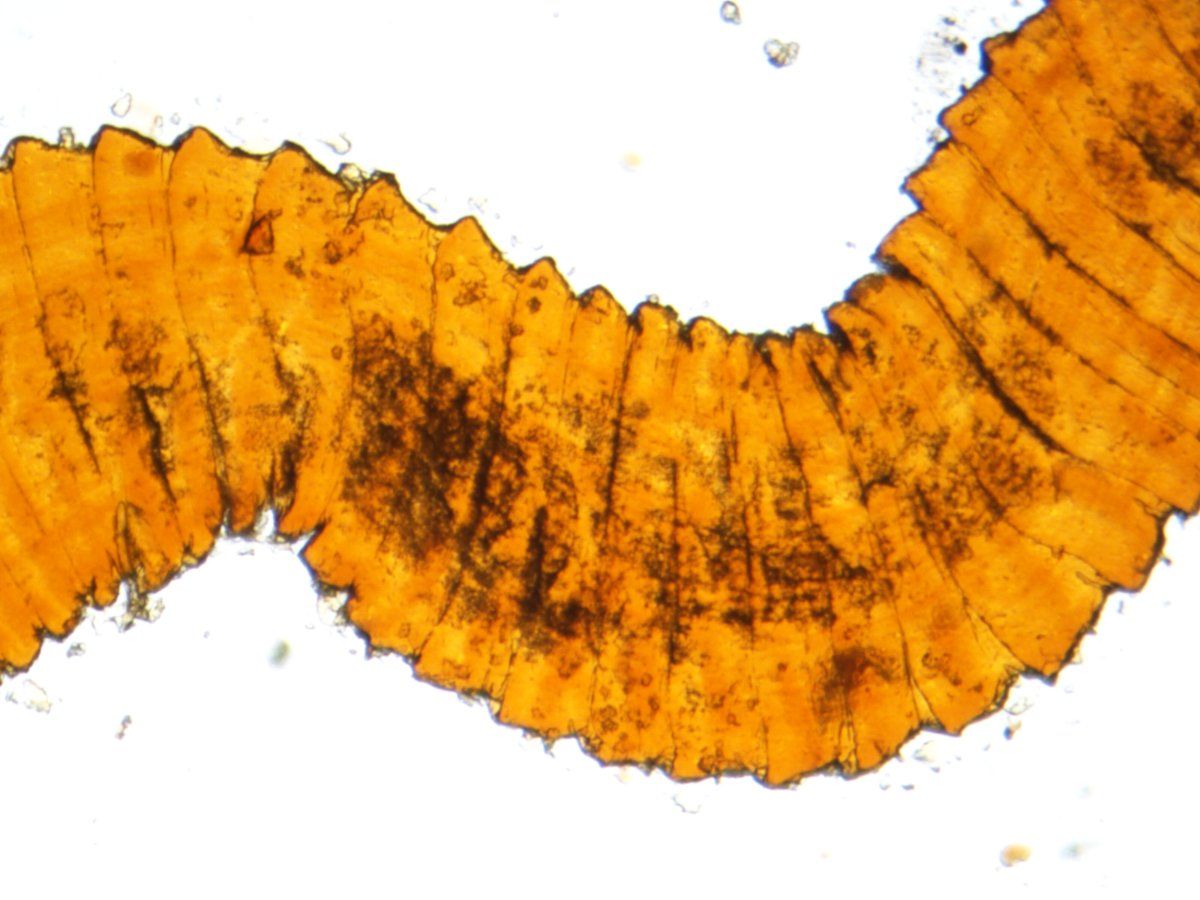
Microscopic examination of stained specimens reveals the characteristic morphology of the cestode. The strobila consists of a chain of distinct, rectangular proglottids, each containing internal granular structures. Other preparations show amber-colored, translucent structures, such as the scolex or individual proglottids, which exhibit a somewhat triangular or heart-shaped outline with irregular edges.
Gallery
References
- 1 2 Aploparaksis crassirostris. Global Biotic Interactions. https://www.globalbioticinteractions.org/?targetTaxon=Aploparaksis%20crassirostris. Accessed 2026-09-05.
- 1 2 Dataset view for Animalia / Platyhelminthes / Cestoda / Cyclophyllidea / Hymenolepididae / Aploparaksis / crassirostris constructed from imageomics/TreeOfLife-200M records under this taxonomic path. Hugging Face Datasets. https://huggingface.co/datasets/imageomics/TreeOfLife-200M
- ↑ Svetlana Bondarenko; V. L. Kontrimavichus. Revision of Aploparaksis Clerc, 1903 (Cestoda: Cyclophyllidea, Aploparaksidae), with keys to the species of the genus. Biologija. 2018. https://doi.org/10.6001/biologija.v64i1.3659.