Aploparaksis
Taxonomy
Aploparaksis is a genus of cestodes within the family Hymenolepididae, order Cyclophyllidea, and class Cestoda. First described by Clerc in 1903, the genus is widely distributed as a parasite of birds. Taxonomic revisions have established the validity of 58 species, which are categorized into two subgenera based on the topography of the female gonads: the nominotypical subgenus Aploparaksis, where gonads are arranged along the longitudinal axis of the proglottid, and the subgenus Tanureria, where gonads are disposed in a transverse row in the median part of the proglottid.[1][2][3][4]
These cestodes infect a variety of avian hosts, including species within the orders Charadriiformes, such as the long-billed dowitcher (Limnodromus scolopaceus) and the lesser yellowlegs (Tringa flavipes); Anseriformes, including the bufflehead (Bucephala albeola) and the Eurasian teal (Anas crecca); and Galliformes, such as the willow ptarmigan (Lagopus lagopus). Taxonomic characterization of these parasites involves the study of adult morphological features, as well as data regarding metacestode ontogeny and life cycles. Documented species include A. brachyphallos, A. crassirostris, A. groenlandica, and A. furcigera.[2][3][4]
Visual Description
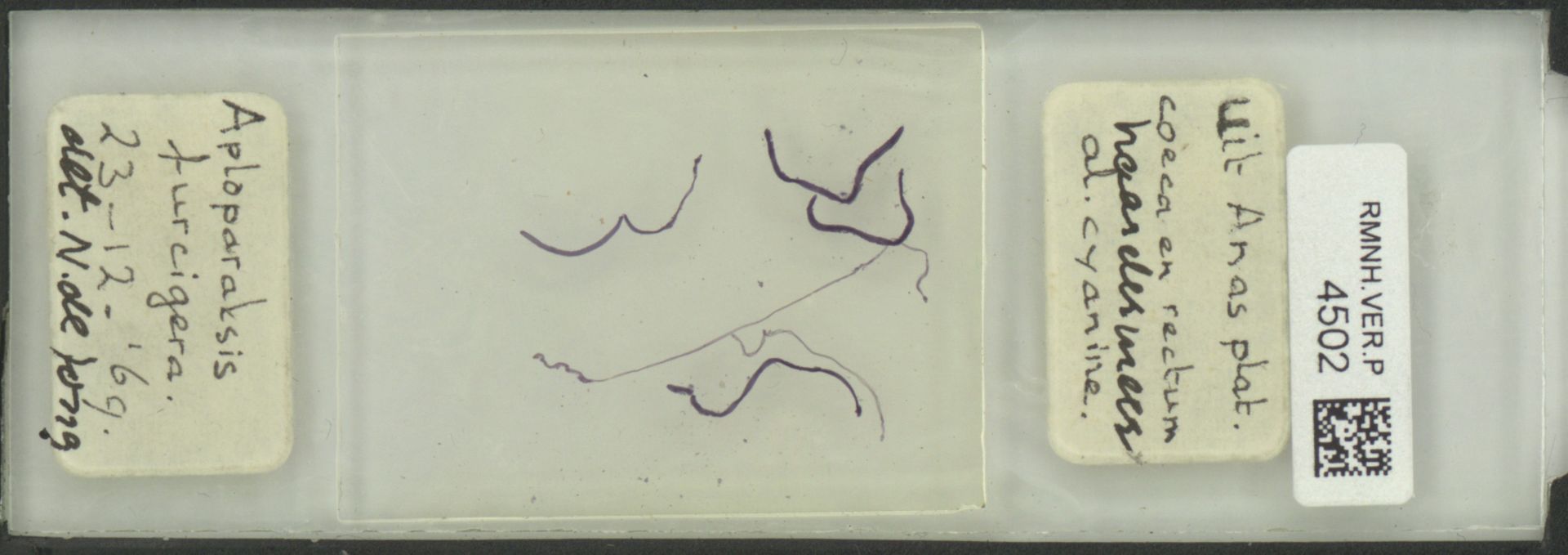
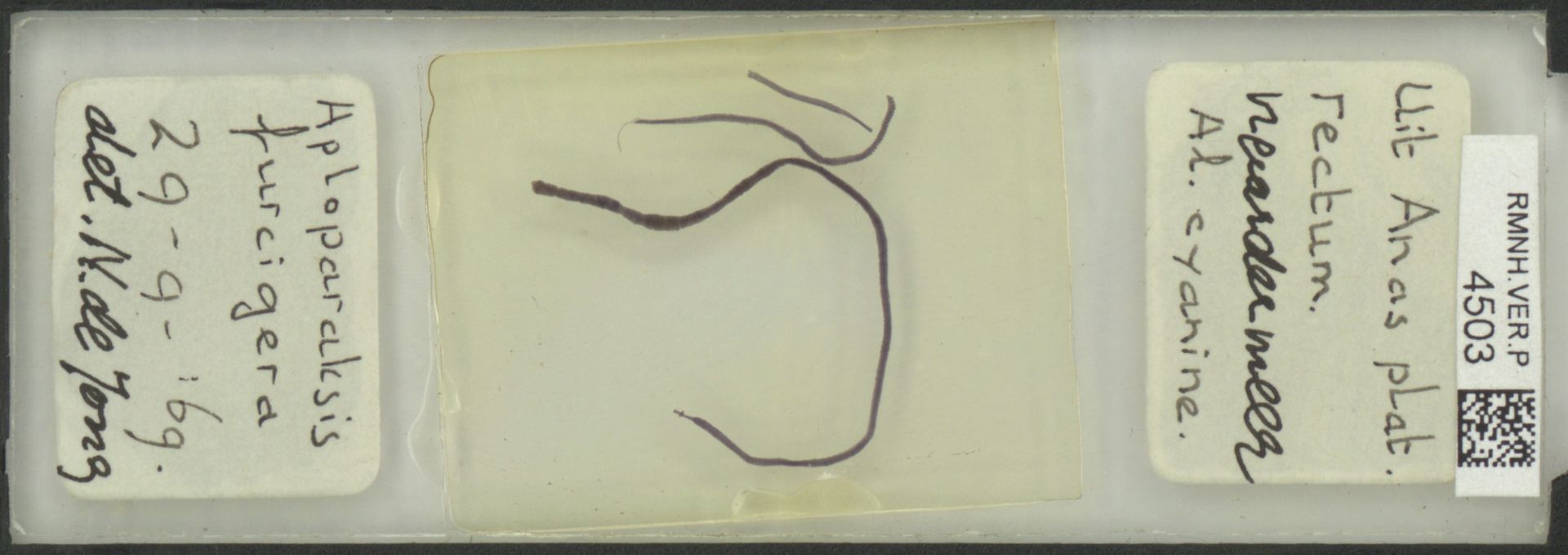
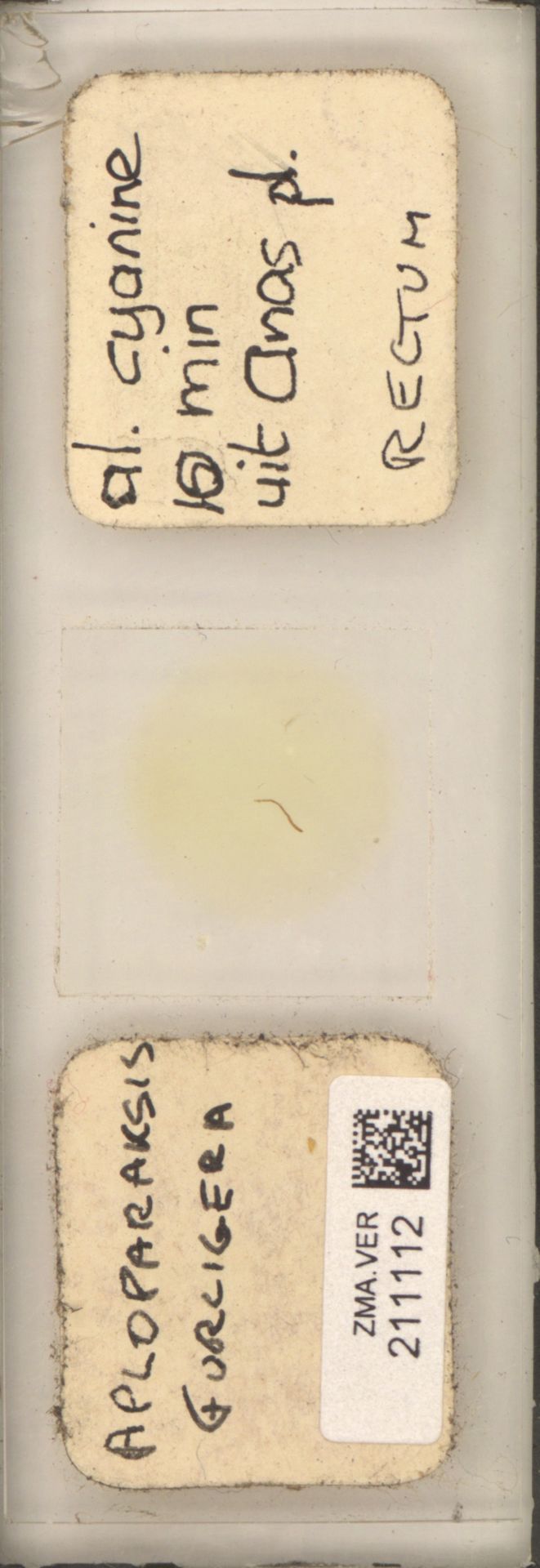
Specimens of Aploparaksis, such as A. furcigera, appear as stained, thread-like organisms when mounted on microscope slides. The body is elongated and typically exhibits a coiled or curved structure.
Gallery
References
- ↑ Aploparaksis. NCBI Nucleotide. https://www.ncbi.nlm.nih.gov/nuccore/?term=txid2268038[organism:exp]. Accessed 2026-09-05.
- 1 2 Svetlana Bondarenko; V. L. Kontrimavichus. Revision of Aploparaksis Clerc, 1903 (Cestoda: Cyclophyllidea, Aploparaksidae), with keys to the species of the genus. Biologija. 2018. https://doi.org/10.6001/biologija.v64i1.3659.
- 1 2 Aploparaksis. Global Biotic Interactions. https://www.globalbioticinteractions.org/?targetTaxon=Aploparaksis. Accessed 2026-09-05.
- 1 2 Dataset view for Animalia / Platyhelminthes / Cestoda / Cyclophyllidea / Hymenolepididae / Aploparaksis constructed from imageomics/TreeOfLife-200M records under this taxonomic path. Hugging Face Datasets. https://huggingface.co/datasets/imageomics/TreeOfLife-200M