Apharyngostrigea
Taxonomy
Apharyngostrigea is a genus of trematodes belonging to the family Strigeidae, order Diplostomida, and class Trematoda. Established by Ciurea in 1927, the genus is recognized as a valid scientific name within the phylum Platyhelminthes.[1][2][3]
The genus exhibits a broad global distribution, with occurrence records spanning latitudes from approximately -36° to 61° and longitudes from -124° to 153°. Documented species within the genus include A. cornu, A. pipientis, A. brasiliana, and A. ardeolina. The latter has been identified as a parasite inhabiting the small intestine of the Eastern grey heron (Ardea cinerea jouyi).[4][2][3]
Visual Description
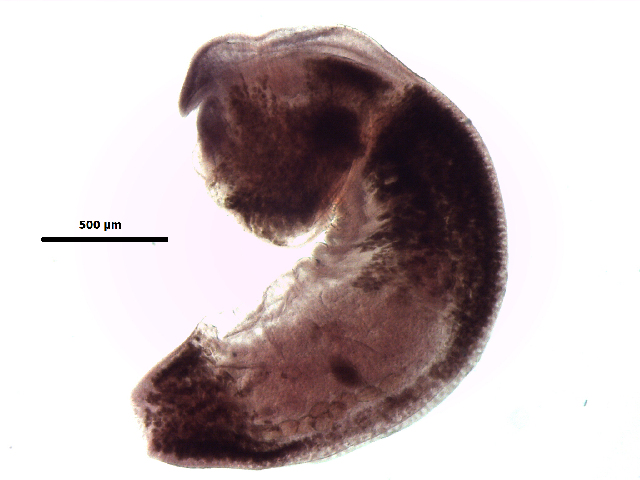
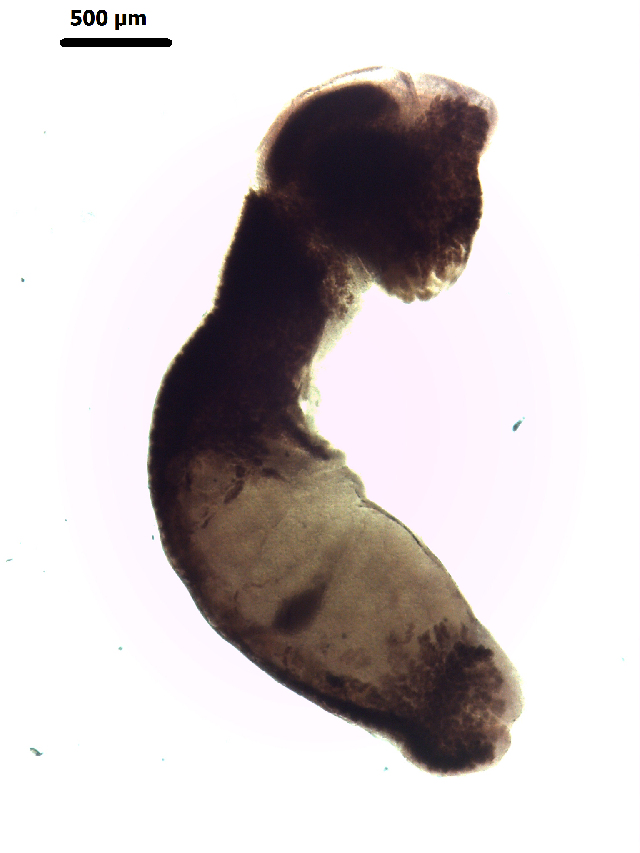
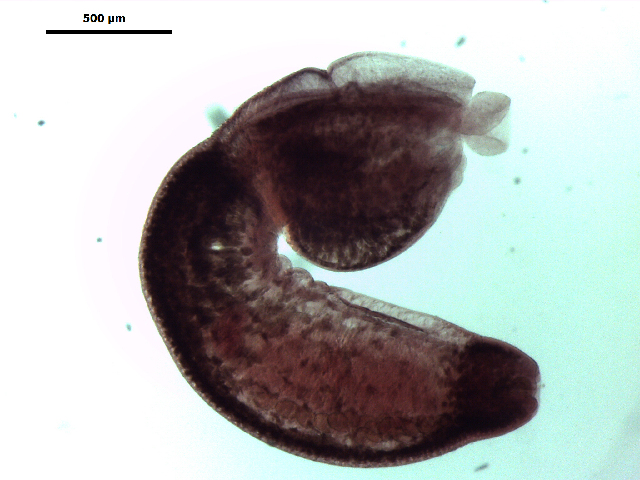
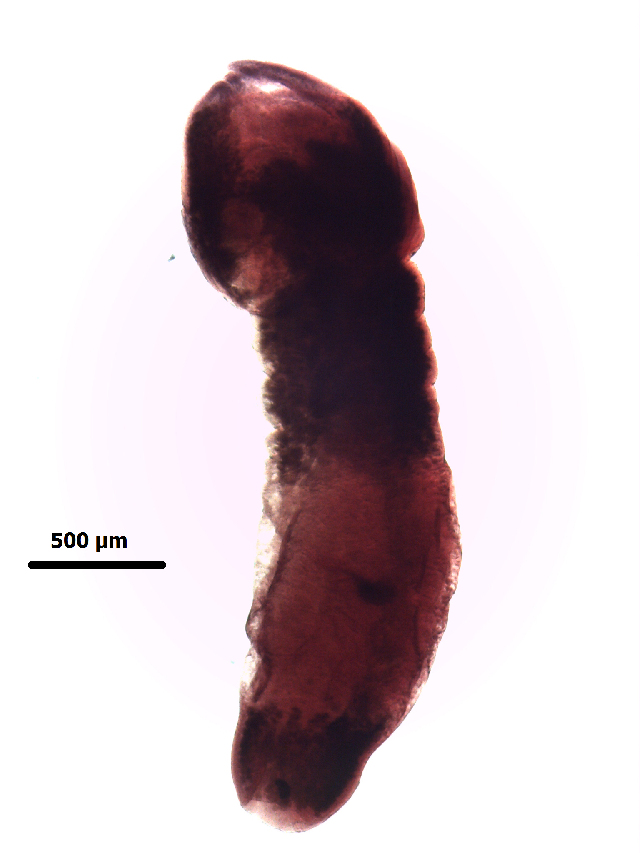
Specimens of Apharyngostrigea are flattened, brownish trematodes characterized by a curved body morphology. They typically feature a distinct, rounded or cup-shaped anterior region and a broader, elongated posterior body. The internal anatomy is often visible through the translucent body wall as dense, mottled, dark-brown or reddish-brown regions.
Gallery


References
- ↑ Apharyngostrigea. NCBI Nucleotide. https://www.ncbi.nlm.nih.gov/nuccore/?term=txid138591[organism:exp]. Accessed 2026-09-05.
- 1 2 Apharyngostrigea Ciurea, 1927. GBIF. https://www.gbif.org/species/2503591. Accessed 2026-09-05.
- 1 2 Dataset view for Animalia / Platyhelminthes / Trematoda / Diplostomida / Strigeidae / Apharyngostrigea constructed from imageomics/TreeOfLife-200M records under this taxonomic path. Hugging Face Datasets. https://huggingface.co/datasets/imageomics/TreeOfLife-200M
- ↑ M Obayashi. Gryporhynchus nycticoracis Yamaguti, 1956 (Dilepididae; Cestoda) and Apharyngostrigea ardeolina Vidyarthi, 1937 (Strigeidae; Trematoda) from Ardea cinerea jouyi Clark.. PubMed. 1967. https://doi.org/10.14943/jjvr.15.1.1.