Anthomyia liturata
Taxonomy
This page represents the following TreeOfLife-200M taxonomic path.[1]
- Kingdom: Animalia
- Phylum: Arthropoda
- Class: Insecta
- Order: Diptera
- Family: Anthomyiidae
- Genus: Anthomyia
- Species: Anthomyia liturata
Visual Description
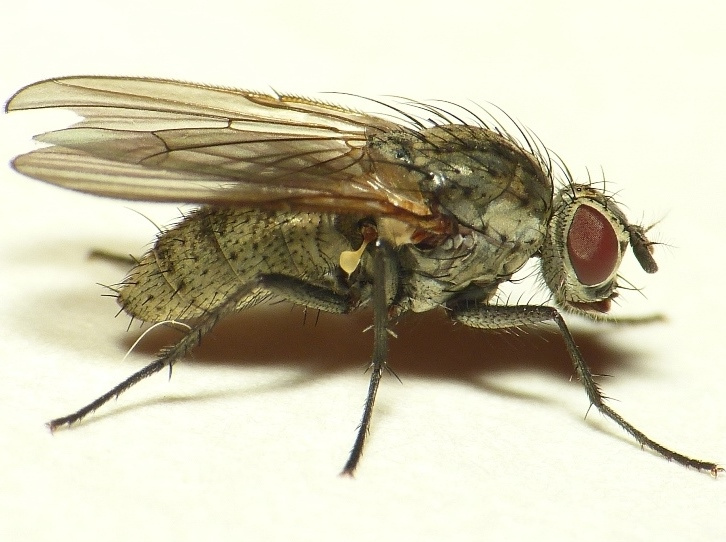
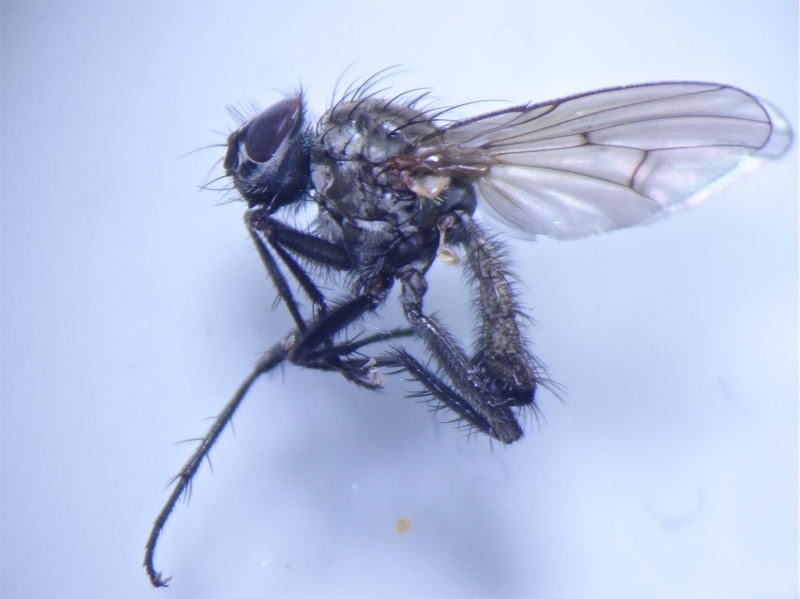
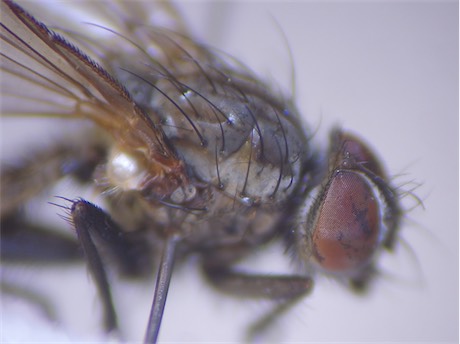
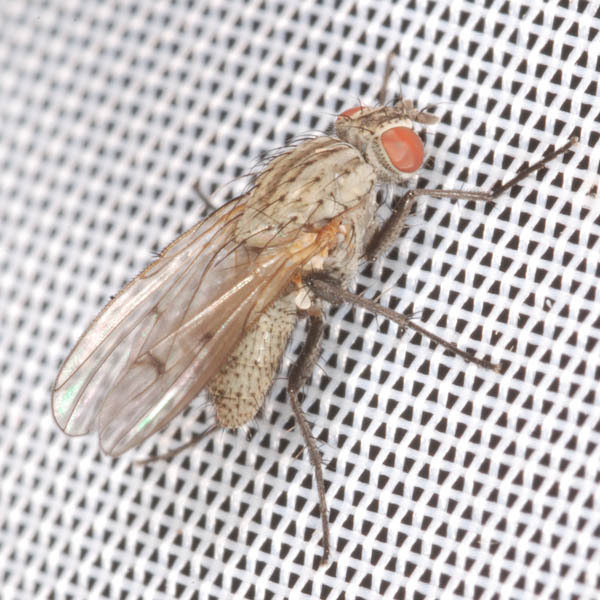
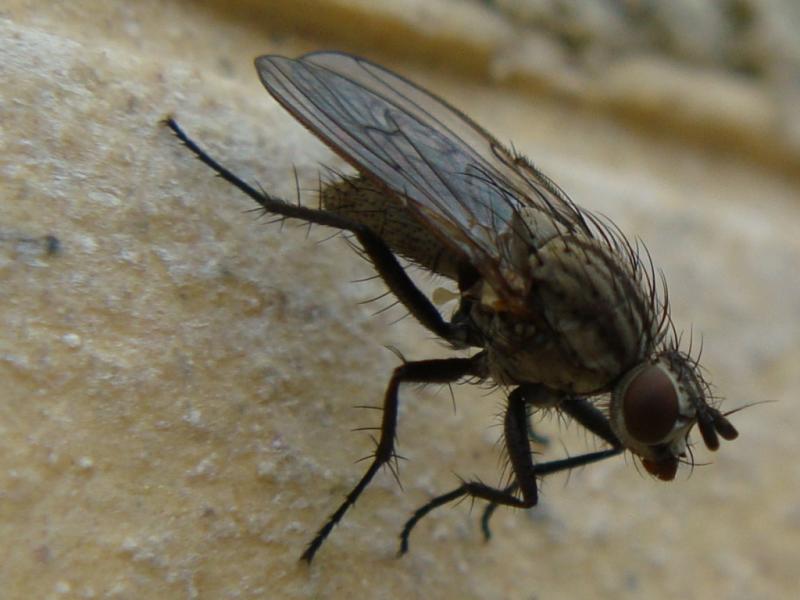
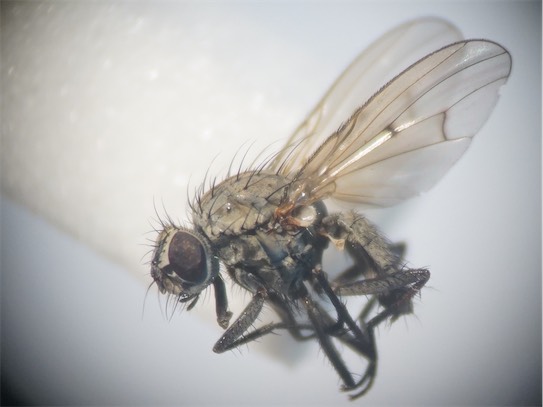
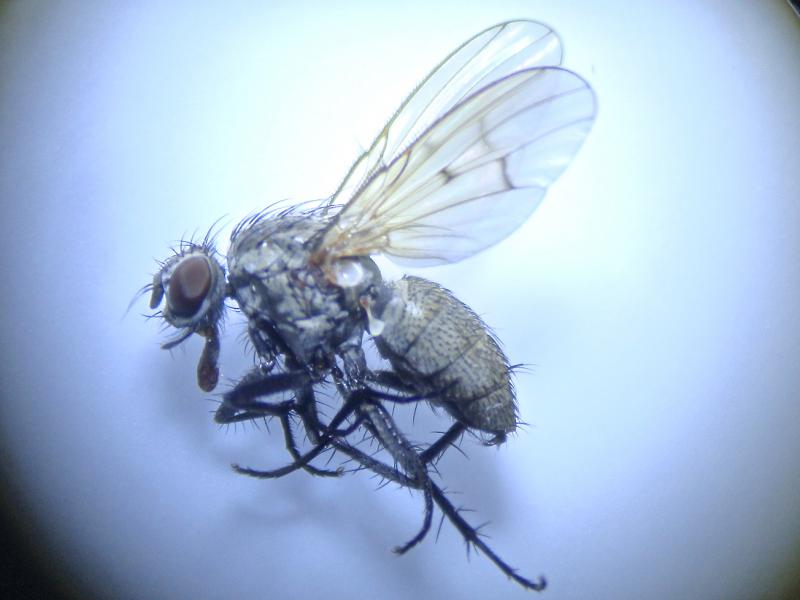
Anthomyia liturata is a fly characterized by a distinct pattern of black markings on a greyish thorax and abdomen, typical of the genus Anthomyia. Observations from the TreeOfLife-200M dataset show these flies possess a robust, bristly body structure common to many anthomyiids. The thorax typically exhibits prominent, dark, longitudinal or transverse bands, and the abdomen often features a series of dark, paired spots or transverse bands on a lighter, greyish background.[1]
Ecology and Pathogens
Anthomyia liturata is known to be a host for the insect-pathogenic fungus Strongwellsea lata (Entomophthorales: Entomophthoraceae).[2] Infected adult flies may develop one or, occasionally, two holes in the ventral abdomen, through which the fungus discharges conidia while the host is still alive. Alternatively, the fly may die with a compact mass of resting spores visible beneath the cuticle.[2] In Denmark, these infections have been documented between July and October in both arable land and adjacent uncultivated habitats.[2]
Gallery
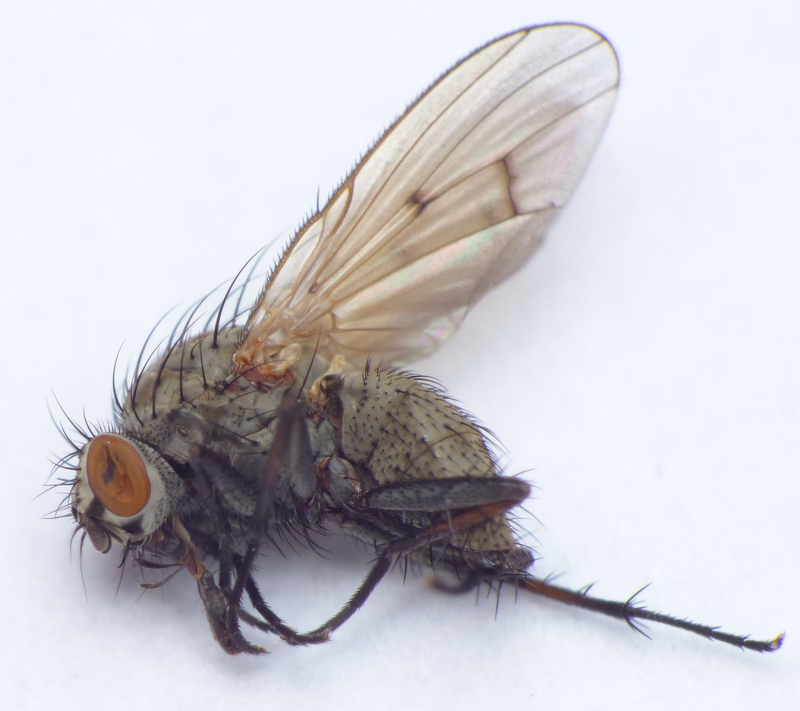
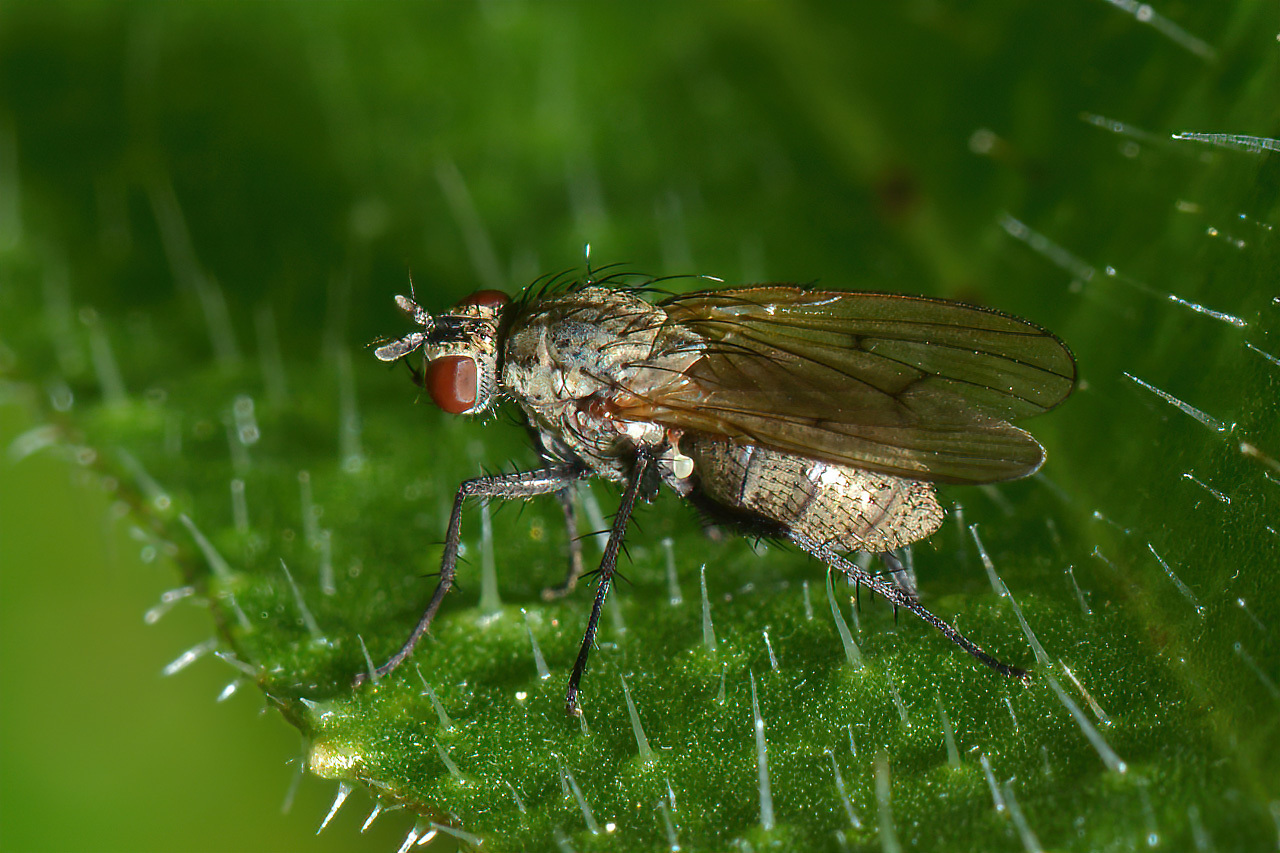
References
- 1 2 Dataset view for Animalia / Arthropoda / Insecta / Diptera / Anthomyiidae / Anthomyia / liturata constructed from imageomics/TreeOfLife-200M records under this taxonomic path. Hugging Face Datasets. https://huggingface.co/datasets/imageomics/TreeOfLife-200M.
- 1 2 3 Jørgen Eilenberg; Annette Bruun Jensen; Verner Michelsen; Richard A. Humber. Strongwellsea caulis, Strongwellsea lata, and Strongwellsea potentia (Entomophthorales: Entomophthoraceae), three new species infecting adult flies (Diptera: Anthomyiidae). . 2025. https://doi.org/10.22541/au.174160304.41930902/v1.