Anopheles pharoensis
Taxonomy
This page represents the following TreeOfLife-200M taxonomic path.[1]
- Kingdom: Animalia
- Phylum: Arthropoda
- Class: Insecta
- Order: Diptera
- Family: Culicidae
- Genus: Anopheles
- Species: Anopheles pharoensis
Visual Description
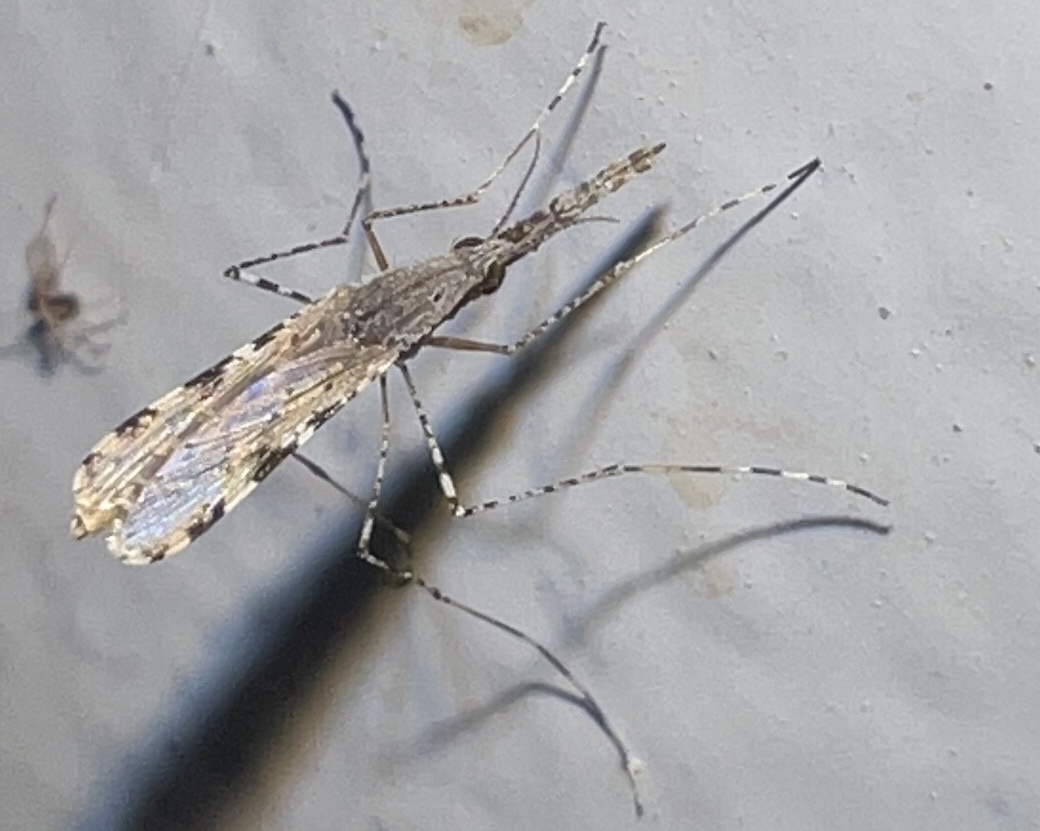
Based on observations of preserved specimens in the TreeOfLife-200M dataset, Anopheles pharoensis exhibits typical morphological characteristics of the genus Anopheles.[1] The specimens display the characteristic slender body form and long, thin legs associated with mosquitoes in the family Culicidae. The wings are narrow and elongated, and the proboscis is prominent and forward-projecting. Due to the nature of the preserved specimens, finer diagnostic features such as specific scale patterns on the thorax or abdomen are not clearly resolvable in these images.[1]
Medical Significance
Anopheles pharoensis has been studied for its role as a potential vector of malaria. Research conducted in Ethiopia using Direct Membrane Feeding Assays (DMFA) has evaluated the susceptibility of this species to Plasmodium vivax infection.[2]
In these laboratory studies, An. pharoensis showed an infection rate of 28.80% and an infection intensity of 1.4 when exposed to P. vivax gametocytes. These susceptibility trends were observed to be similar to those of Anopheles arabiensis, with no statistically significant difference in susceptibility rates between the two species. Furthermore, both the infection rate and the intensity of infection in An. pharoensis were found to be positively correlated with the density of gametocytes in the blood meal.[2]
Gallery
References
- 1 2 3 Dataset view for Animalia / Arthropoda / Insecta / Diptera / Culicidae / Anopheles / pharoensis constructed from imageomics/TreeOfLife-200M records under this taxonomic path. Hugging Face Datasets. https://huggingface.co/datasets/imageomics/TreeOfLife-200M.
- 1 2 Nuredin Abduselam; Ahmed Zeynudin; Nicole Berens‐Riha; Dinberu Seyoum; Michael Pritsch; Tibebu Habtewold; Kasahun Eba; Michael Höelscher; Andreas Wieser; Delenasaw Yewhalaw. Similar trends of susceptibility in Anopheles arabiensis and Anopheles pharoensis to Plasmodium vivax infection in Ethiopia. Parasites & Vectors. 2016. https://doi.org/10.1186/s13071-016-1839-0.