Anopheles koliensis
Taxonomy
This page represents the following TreeOfLife-200M taxonomic path.[1]
- Kingdom: Animalia
- Phylum: Arthropoda
- Class: Insecta
- Order: Diptera
- Family: Culicidae
- Genus: Anopheles
- Species: Anopheles koliensis
Visual Description
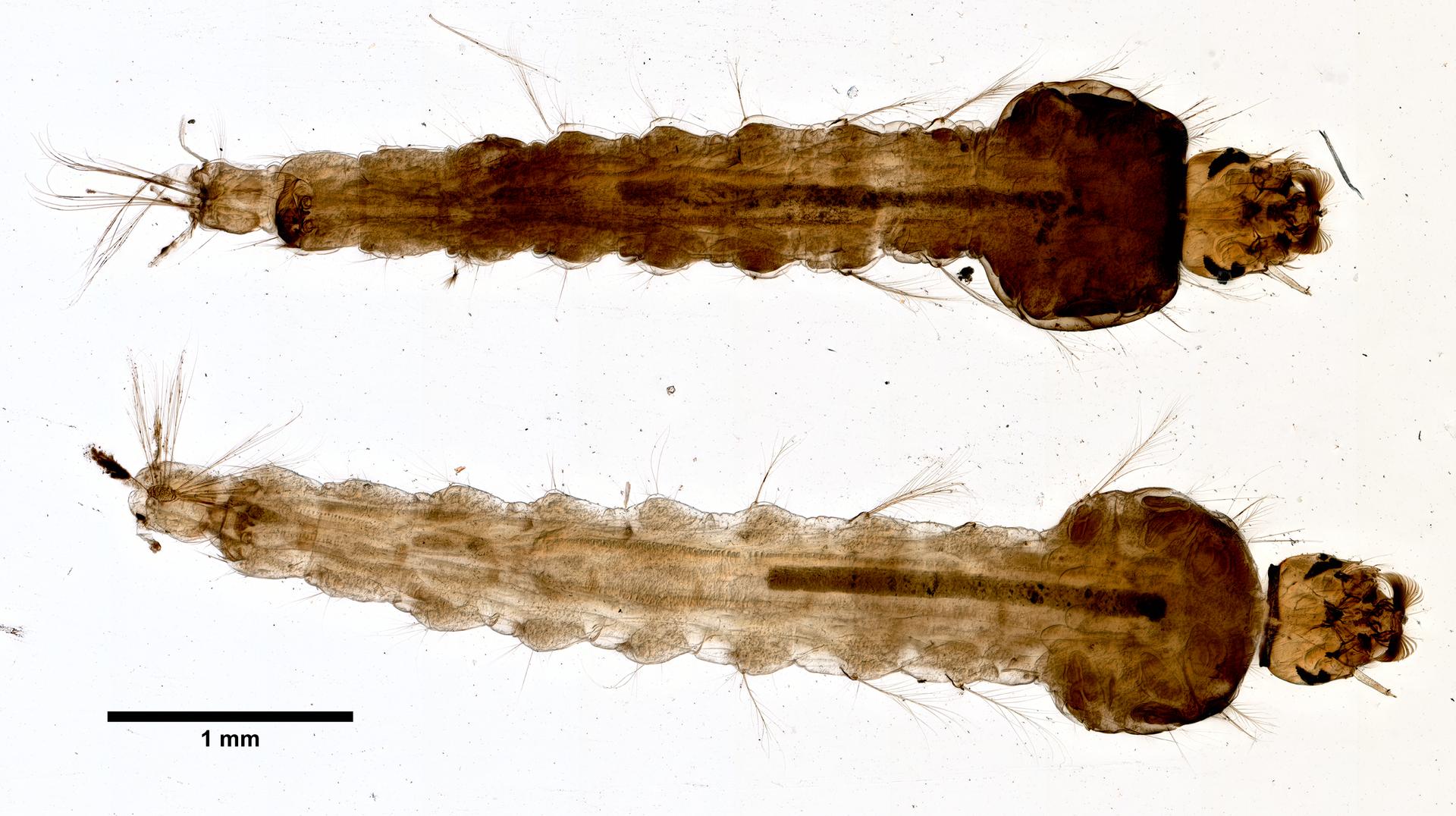
Based on observations of museum specimens, Anopheles koliensis exhibits the characteristic slender, elongated body form typical of the genus Anopheles. The specimens display the long, fragile legs and narrow, veined wings associated with culicid morphology. The coloration is generally muted, consistent with many Anopheles species, and the overall structure reflects the delicate, elongated habitus of these mosquitoes.[1]
Ecology and Behavior
Anopheles koliensis is recognized as a primary malaria vector in the southwest Pacific region.[2] It is an endophagic species, meaning it typically feeds indoors, with peak biting activity occurring around midnight.[2]
Historically, populations of An. koliensis showed limited behavioral plasticity in response to indoor residual spraying (IRS) with DDT. Following intensive DDT-IRS programs in the 1960s and 1970s, the species experienced significant population reductions and is believed to have been eliminated from the Solomon Islands. Unlike some sympatric species such as Anopheles farauti, which adapted through behavioral resistance (e.g., shifting to outdoor or early-evening biting), An. koliensis did not develop such resistance.[2]
Gallery
References
- 1 2 Dataset view for Animalia / Arthropoda / Insecta / Diptera / Culicidae / Anopheles / koliensis constructed from imageomics/TreeOfLife-200M records under this taxonomic path. Hugging Face Datasets. https://huggingface.co/datasets/imageomics/TreeOfLife-200M.
- 1 2 3 Tanya L. Russell; Nigel W. Beebe; Robert D. Cooper; Neil F. Lobo; Thomas R. Burkot. Successful malaria elimination strategies require interventions that target changing vector behaviours. Malaria Journal. 2013. https://doi.org/10.1186/1475-2875-12-56.