Anopheles daciae
Taxonomy
This page represents the following TreeOfLife-200M taxonomic path.[1]
- Kingdom: Animalia
- Phylum: Arthropoda
- Class: Insecta
- Order: Diptera
- Family: Culicidae
- Genus: Anopheles
- Species: Anopheles daciae
Overview
Anopheles daciae is a mosquito species belonging to the Anopheles maculipennis complex, a group of sibling species characterized by extreme morphological and genetic similarities [2]. Before its formal recognition as a distinct species, An. daciae was frequently misidentified and classified as An. messeae [2].
Identification and Distribution
Molecular identification of An. daciae is primarily achieved through the analysis of ITS2 rDNA sequences to detect species-specific nucleotide differences [2].
In Germany, the species has been confirmed to occur in sympatry with other members of the Maculipennis group, including An. messeae, An. maculipennis, and An. atroparvus [2]. While its presence has been documented in both north-eastern (Brandenburg and Saxony) and south-western (Hesse) regions of Germany, it appears to exist at low population densities [2].
Epidemiological Significance
Because sibling species within the Maculipennis complex can differ in their vector competence for malaria parasites and other pathogens, the presence of An. daciae may have implications for the epidemiology of mosquito-borne diseases, necessitating further research into its specific vector competence compared to related species [2].
Visual Description
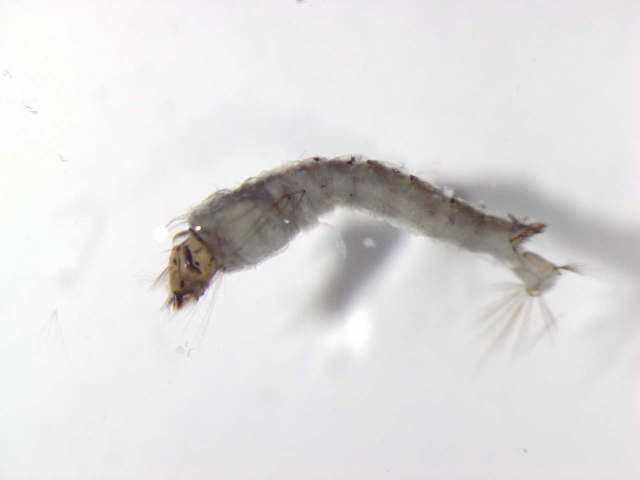
As a member of the Anopheles maculipennis complex, An. daciae shares the general morphological characteristics typical of this group, which are often subtle and difficult to distinguish from sibling species without molecular analysis [2]. Due to the high degree of morphological similarity among these sibling species, specific diagnostic visual traits are not easily resolved from general imagery without expert-level examination of microscopic structures [1].
Gallery
References
- 1 2 Dataset view for Animalia / Arthropoda / Insecta / Diptera / Culicidae / Anopheles / daciae constructed from imageomics/TreeOfLife-200M records under this taxonomic path. Hugging Face Datasets. https://huggingface.co/datasets/imageomics/TreeOfLife-200M.
- 1 2 3 4 5 6 7 Mandy Kronefeld; Marko Dittmann; Dorothee Zielke; Doreen Werner; Helge Kampen. Molecular confirmation of the occurrence in Germany of Anopheles daciae (Diptera, Culicidae). Parasites & Vectors. 2012. https://doi.org/10.1186/1756-3305-5-250.