Anopheles crucians
Taxonomy
This page represents the following TreeOfLife-200M taxonomic path.[1]
- Kingdom: Animalia
- Phylum: Arthropoda
- Class: Insecta
- Order: Diptera
- Family: Culicidae
- Genus: Anopheles
- Species: Anopheles crucians
Visual Description
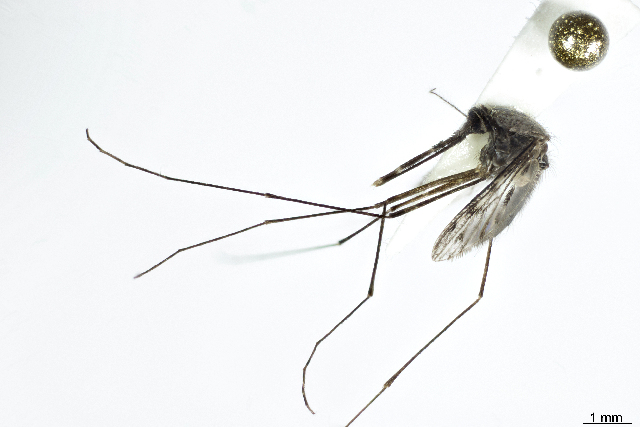
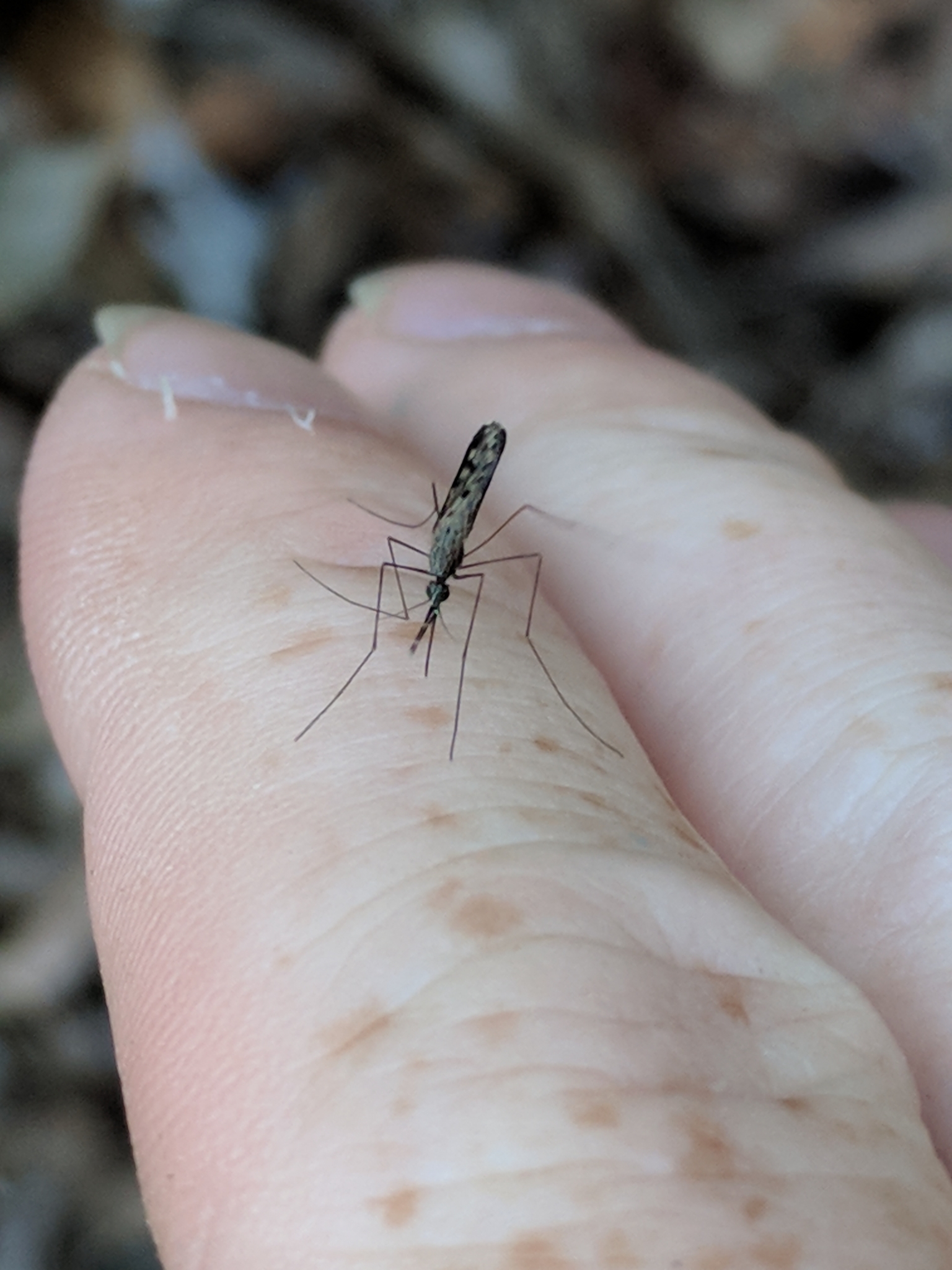
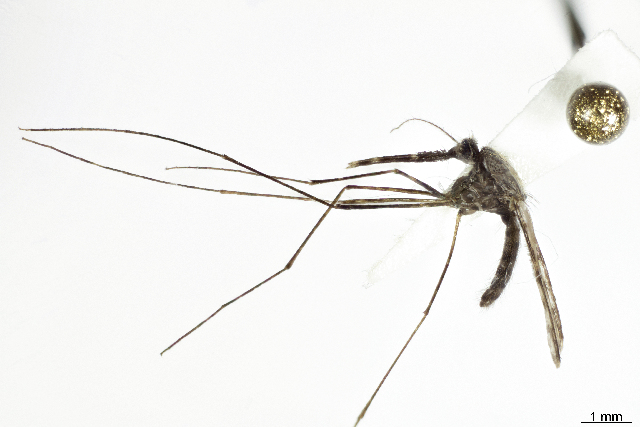
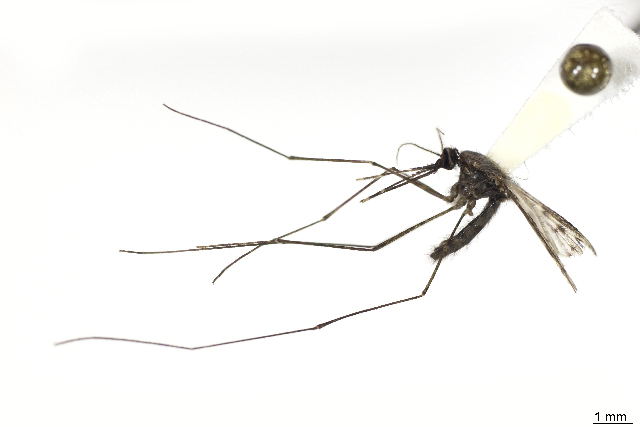
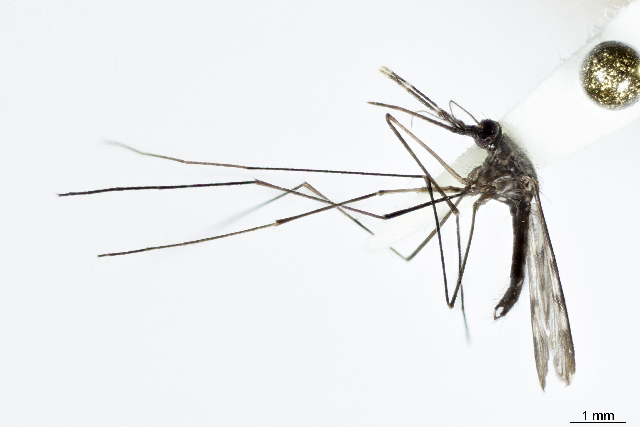
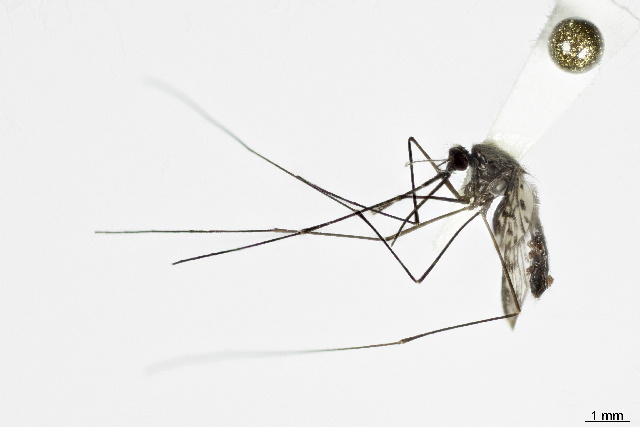
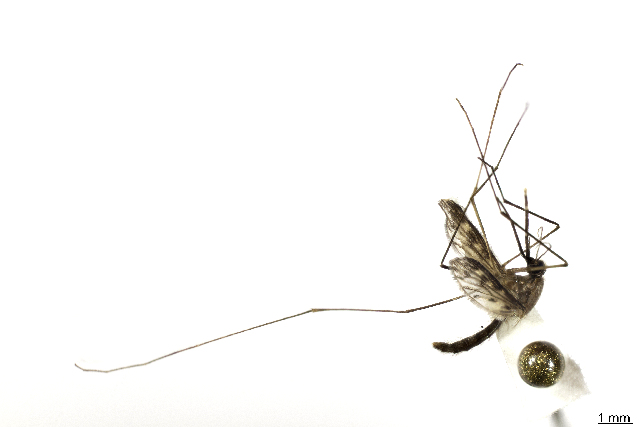
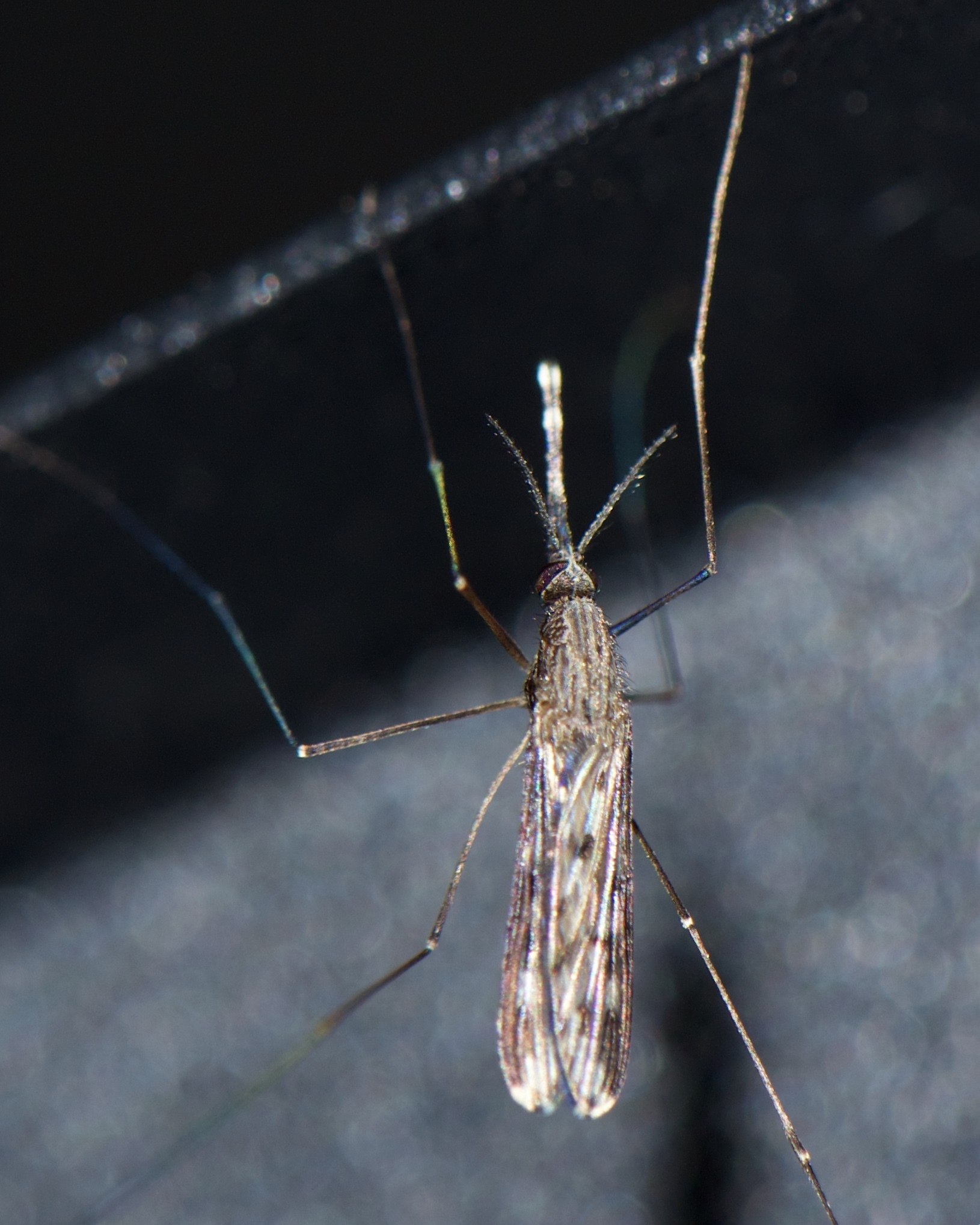
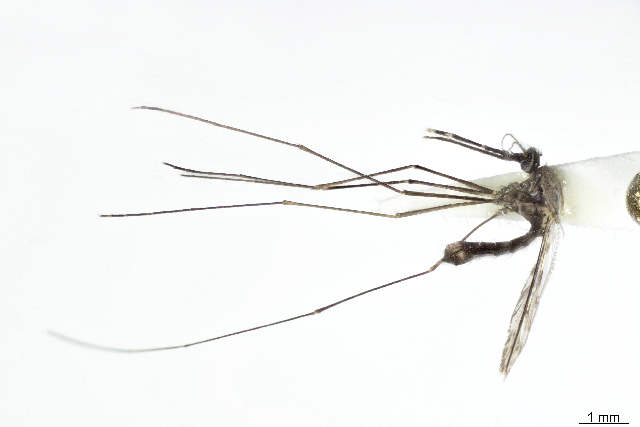
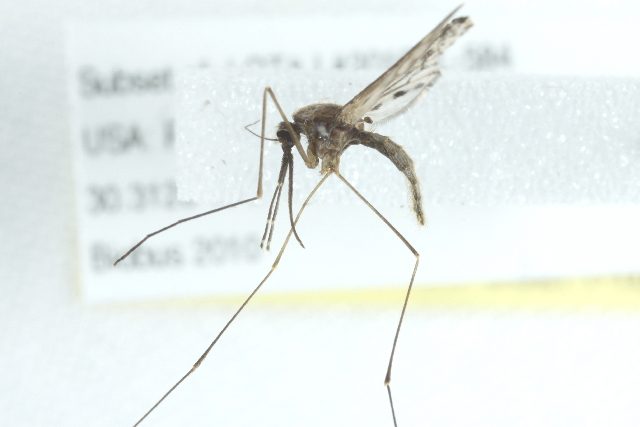
Anopheles crucians exhibits the characteristic slender body form typical of mosquitoes in the genus Anopheles. Based on observations from the TreeOfLife-200M dataset, the adult mosquito displays a patterned appearance on its wings, which are marked with distinct dark and light scales. The legs are long and slender, and the proboscis is elongated, adapted for feeding. The overall coloration includes shades of brown and grey, providing camouflage in its natural environment.[1]
Distribution and Biology
Anopheles crucians is distributed across the eastern United States, extending west to New Mexico, south along the Gulf Coast to northern Nicaragua, and is present on several islands in the Antilles.[2] It is a member of a closely related group of species in the southeastern United States that also includes Anopheles bradleyi and Anopheles georgianus. Adults of these species are difficult to distinguish morphologically, and larvae differ only by minor characteristics in the fourth instar.[2]
Cytogenetics
The salivary gland chromosome complement of A. crucians consists of three pairs of chromosomes: a short, telocentric X chromosome and two pairs of longer, metacentric autosomes. The chromosomes are weakly attached at the centromere region. The standard map for A. crucians defines zones 1–5 for the X chromosome, 6–14 for 2R, 15–21 for 2L, 22–32 for 3R, and 33–39 for 3L.[2]
Gallery
References
- 1 2 Dataset view for Animalia / Arthropoda / Insecta / Diptera / Culicidae / Anopheles / crucians constructed from imageomics/TreeOfLife-200M records under this taxonomic path. Hugging Face Datasets. https://huggingface.co/datasets/imageomics/TreeOfLife-200M.
- 1 2 3 Richard D. Kreutzer; S. Narang; J. B. Kitzmiller. A Comparison of the Salivary Gland Chromosomes of <i>Anopheles crucians</i> and <i>Anopheles bradleyi</i>. CYTOLOGIA. 1970. https://doi.org/10.1508/cytologia.35.527.