Anopheles bradleyi
Taxonomy
This page represents the following TreeOfLife-200M taxonomic path.[1]
- Kingdom: Animalia
- Phylum: Arthropoda
- Class: Insecta
- Order: Diptera
- Family: Culicidae
- Genus: Anopheles
- Species: Anopheles bradleyi
Visual Description
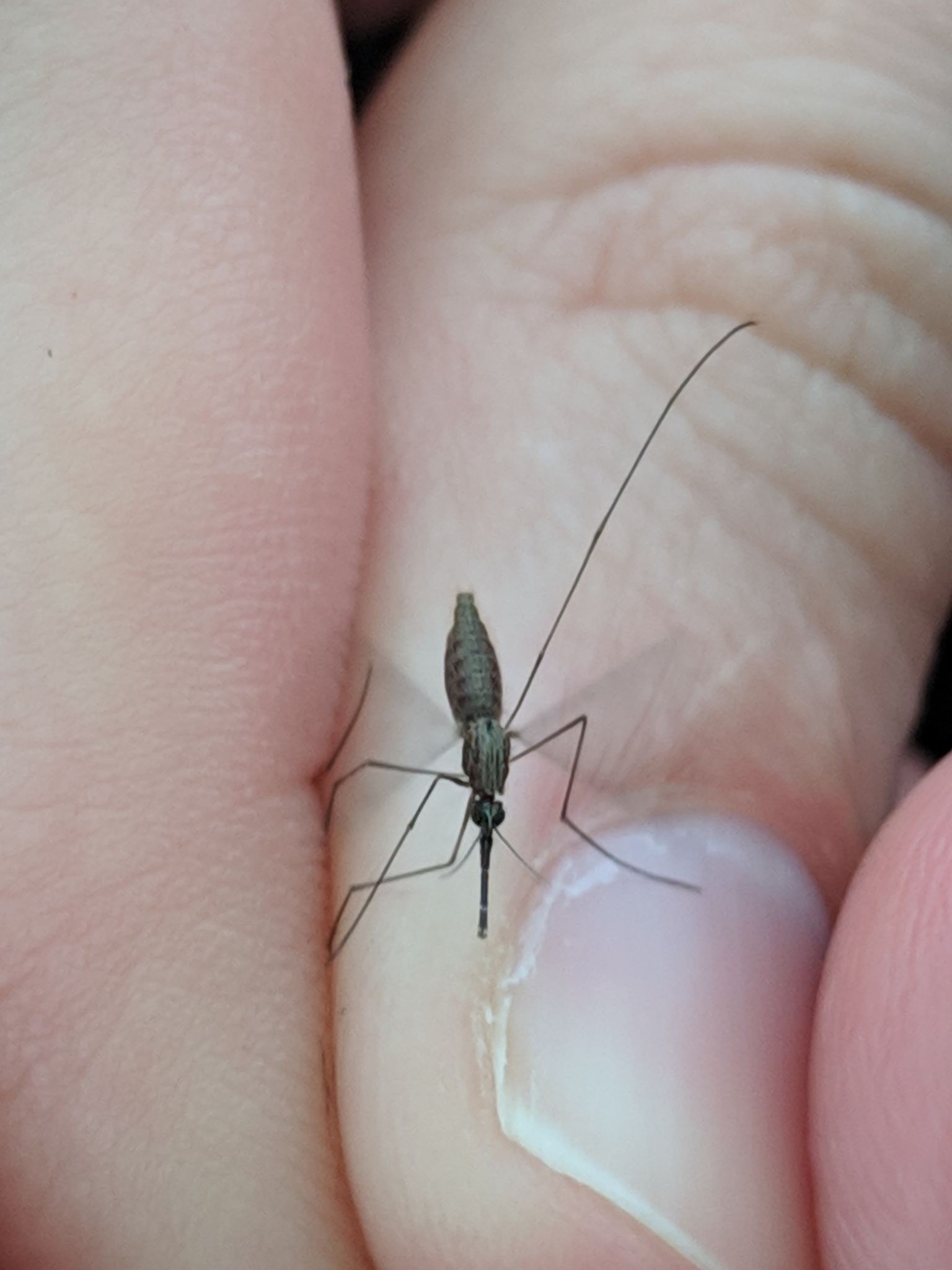
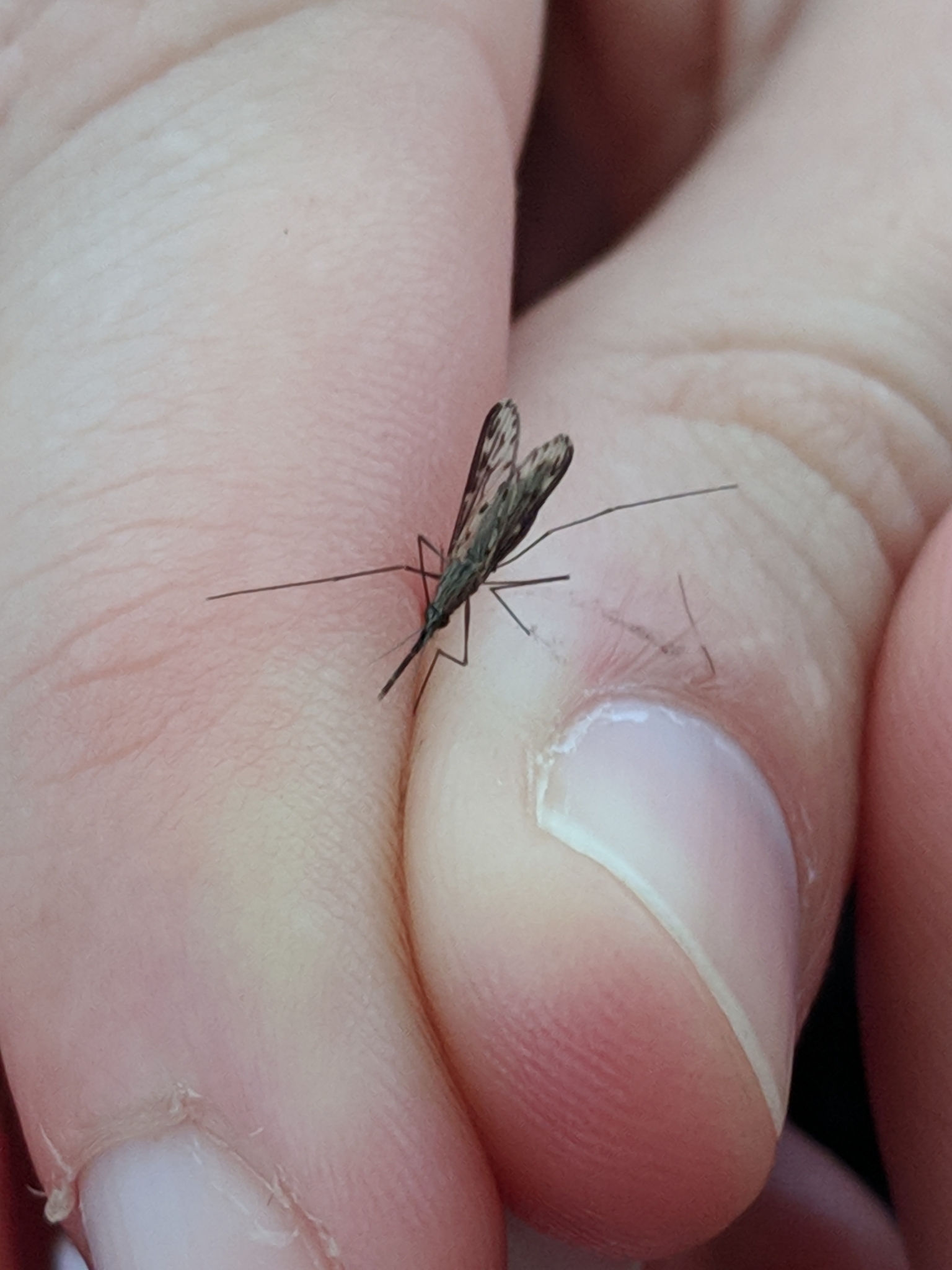
Anopheles bradleyi exhibits the typical mosquito body plan, characterized by a slender, elongated abdomen, long, delicate legs, and a prominent proboscis. Observations from the TreeOfLife-200M dataset show the adult insect possesses a patterned thorax and abdomen with fine, hair-like setae (scales) covering the body surface, which are typical of the genus Anopheles [1]. The wings are long and narrow, featuring distinct venation patterns that are characteristic of the family Culicidae [1].
Ecology and Distribution
Anopheles bradleyi is a coastal species primarily associated with brackish water habitats. Its geographic range extends from Maryland in the United States to Vera Cruz, Mexico [2]. Its distribution largely overlaps with the sympatric species Anopheles crucians, though A. bradleyi has not been documented in the Antilles [2].
Morphology and Cytogenetics
Adults of A. bradleyi are morphologically similar to A. crucians and A. georgianus, making them difficult to distinguish without specialized examination. Larval stages can be differentiated from related species only by minor characteristics observed in the fourth instar [2].
Cytogenetic studies have provided clearer distinctions between A. bradleyi and A. crucians. The salivary gland chromosome complement of A. bradleyi consists of three pairs of chromosomes: a short, telocentric X chromosome and two pairs of metacentric autosomes [2]. Key differences from A. crucians include a large paracentric inversion on chromosome 2R and specific band displacements on chromosome 3R [2].
Gallery
References
- 1 2 3 Dataset view for Animalia / Arthropoda / Insecta / Diptera / Culicidae / Anopheles / bradleyi constructed from imageomics/TreeOfLife-200M records under this taxonomic path. Hugging Face Datasets. https://huggingface.co/datasets/imageomics/TreeOfLife-200M.
- 1 2 3 4 5 Richard D. Kreutzer; S. Narang; J. B. Kitzmiller. A Comparison of the Salivary Gland Chromosomes of <i>Anopheles crucians</i> and <i>Anopheles bradleyi</i>. CYTOLOGIA. 1970. https://doi.org/10.1508/cytologia.35.527.