Anastrepha suspensa
Taxonomy
This page represents the following TreeOfLife-200M taxonomic path.[1]
- Kingdom: Animalia
- Phylum: Arthropoda
- Class: Insecta
- Order: Diptera
- Family: Tephritidae
- Genus: Anastrepha
- Species: Anastrepha suspensa
Visual Description
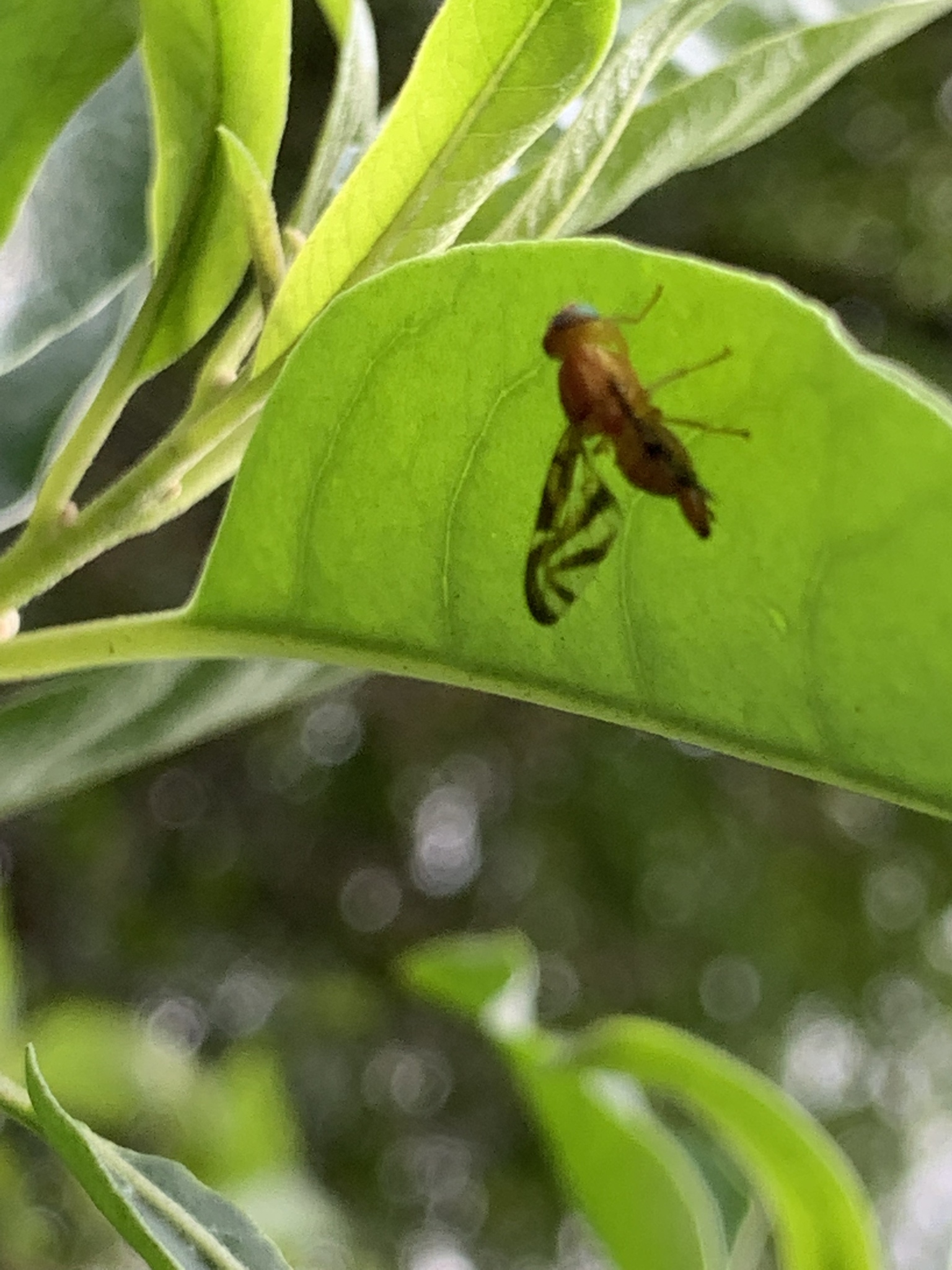
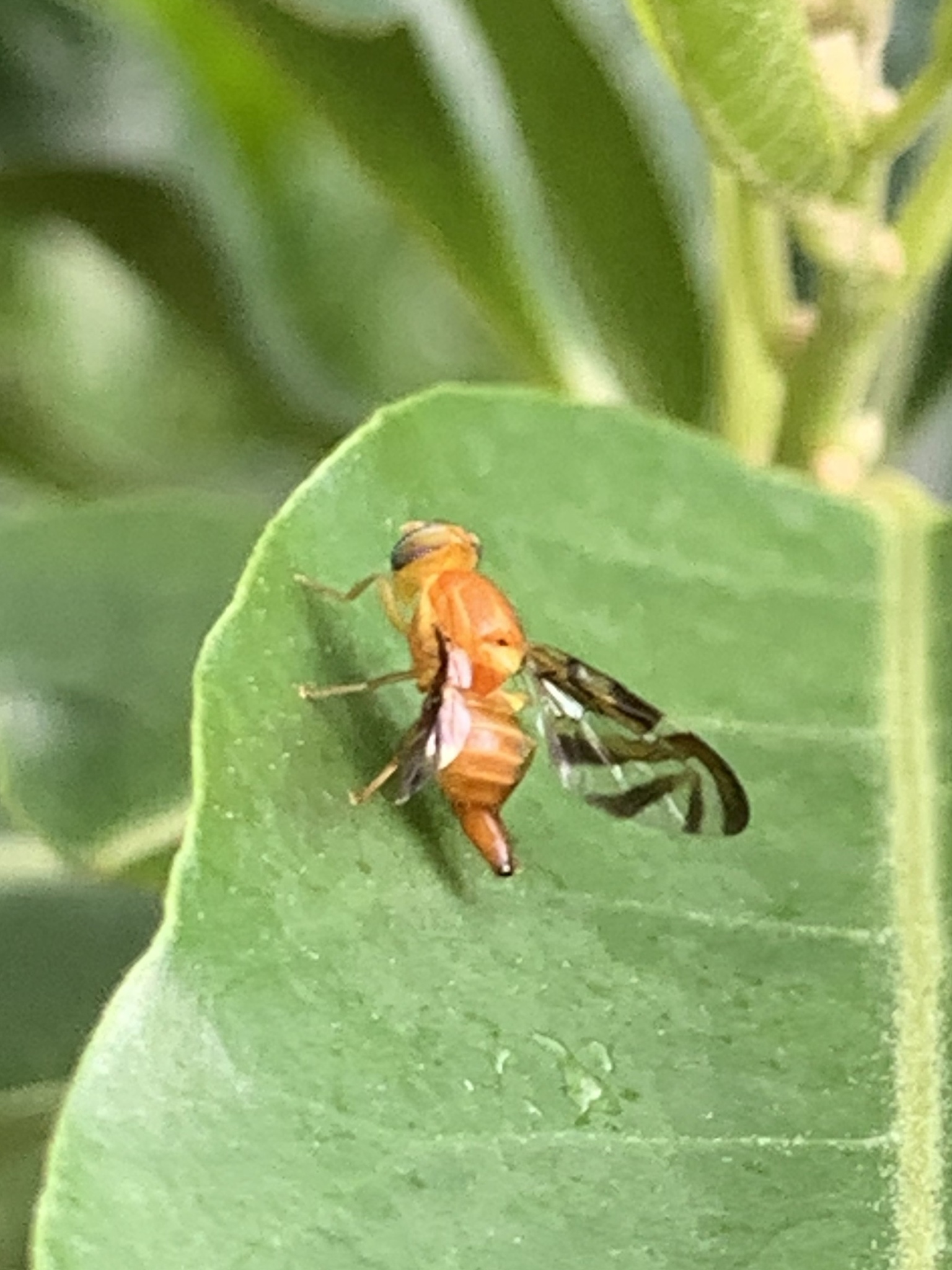
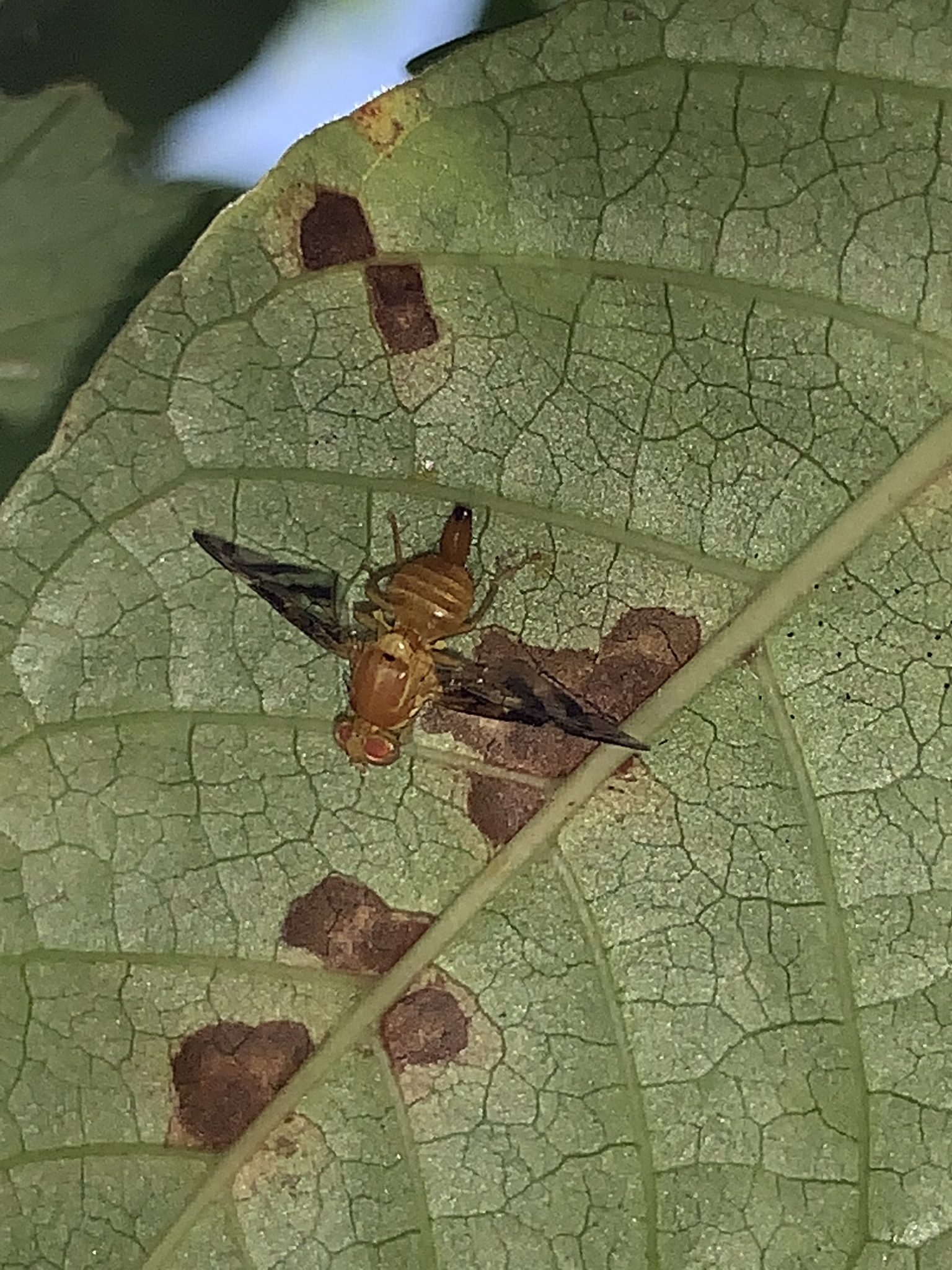
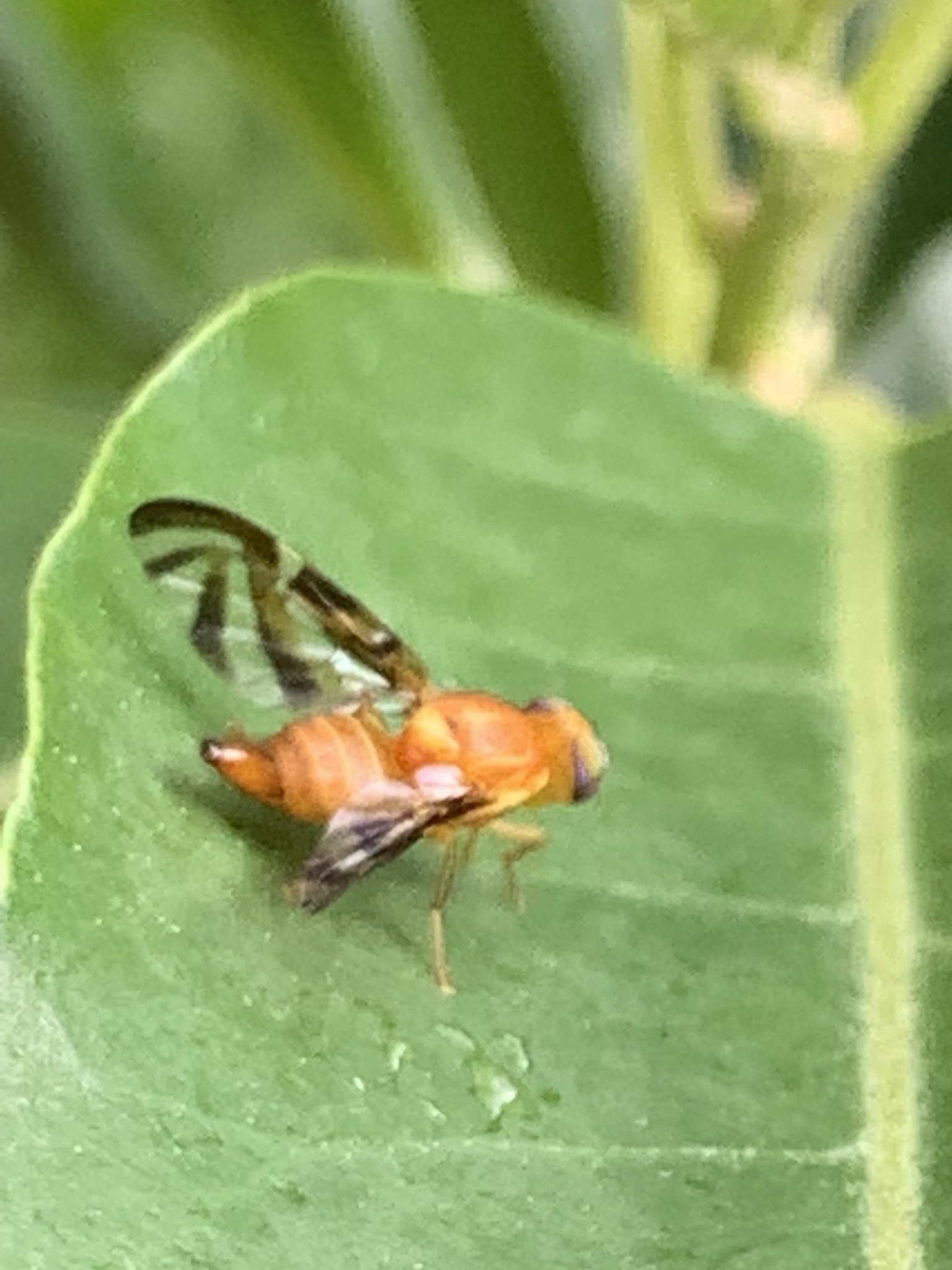
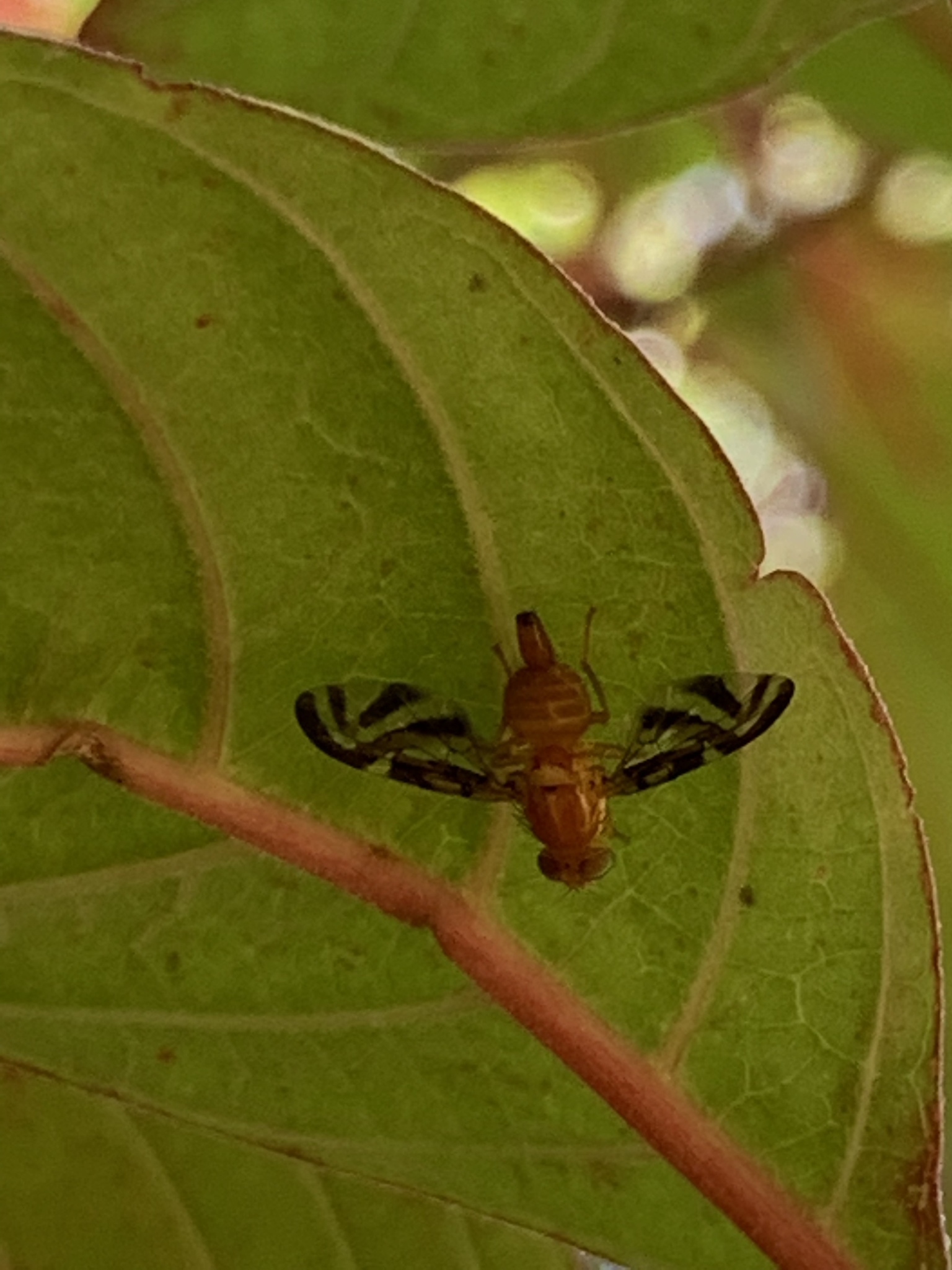
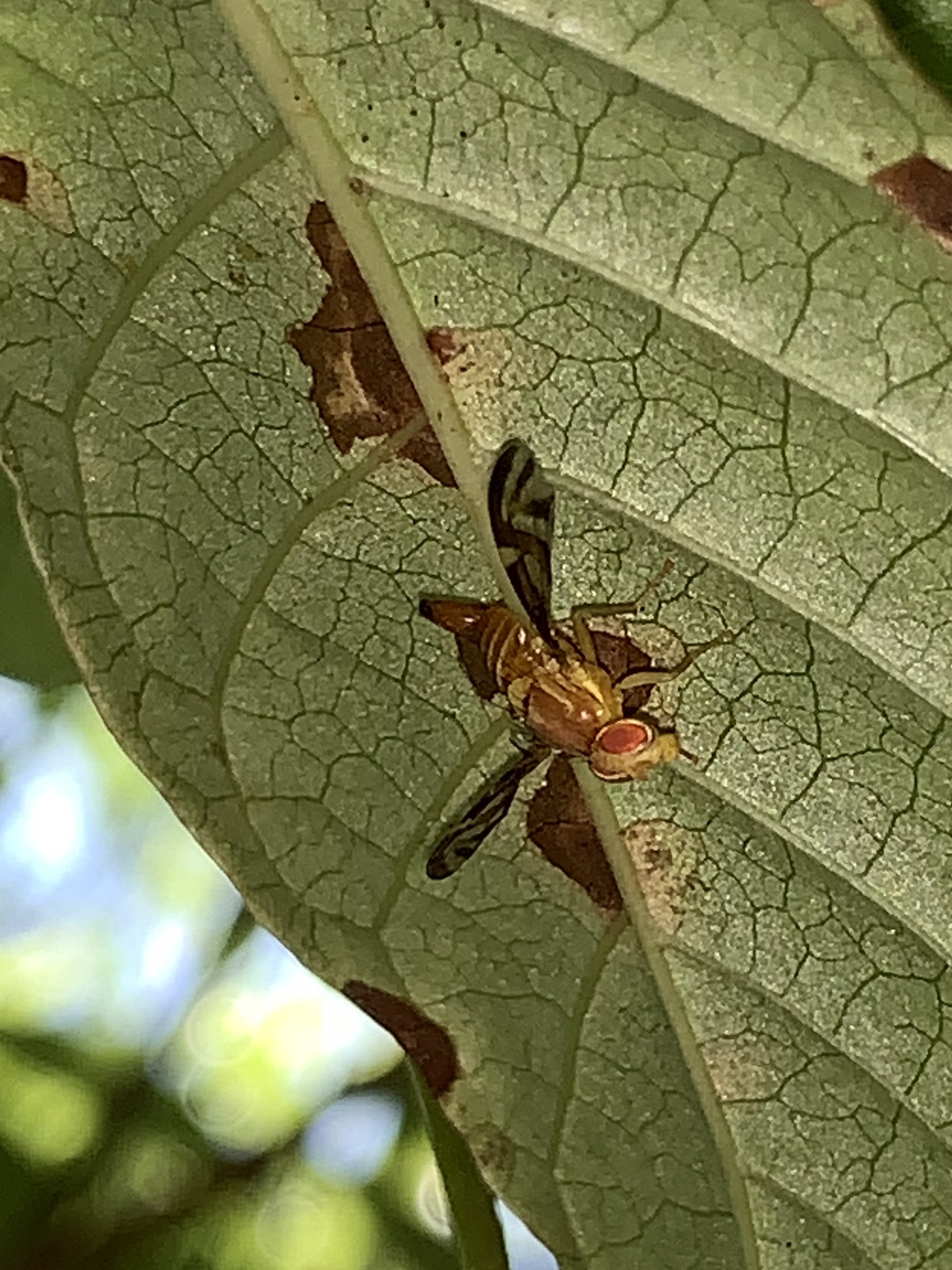
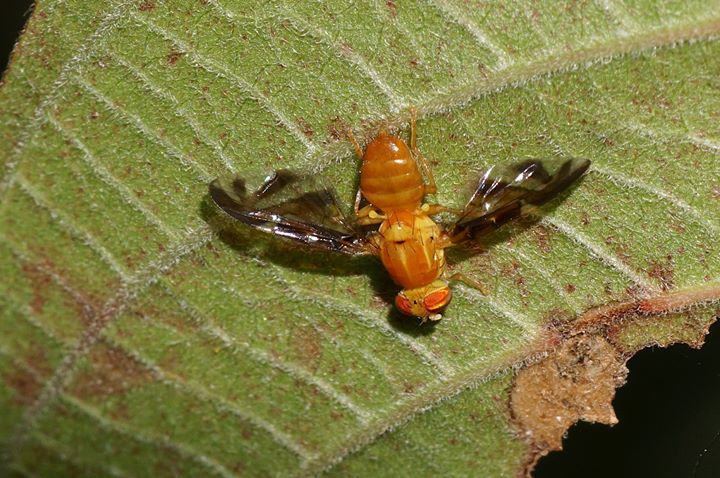
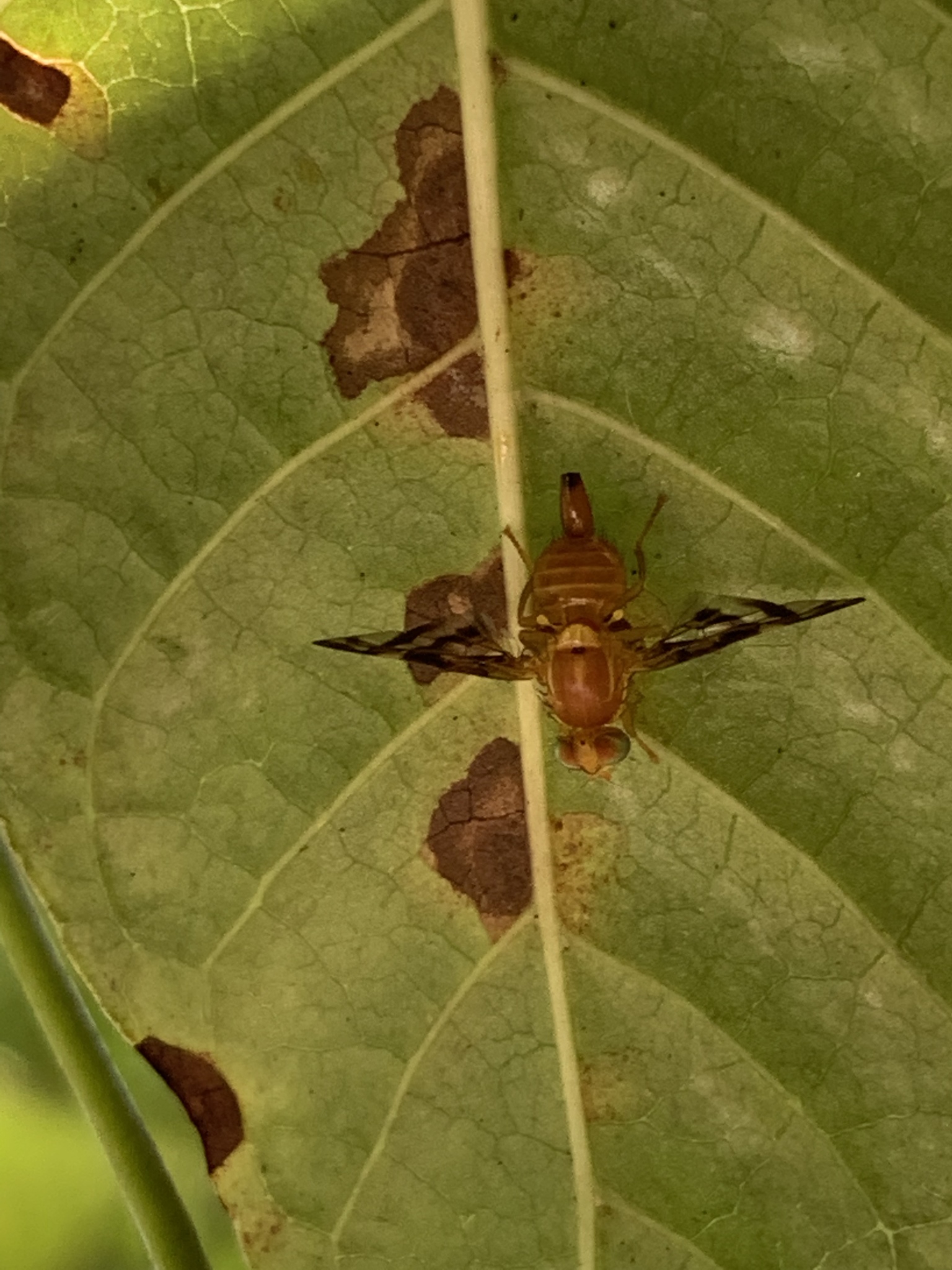
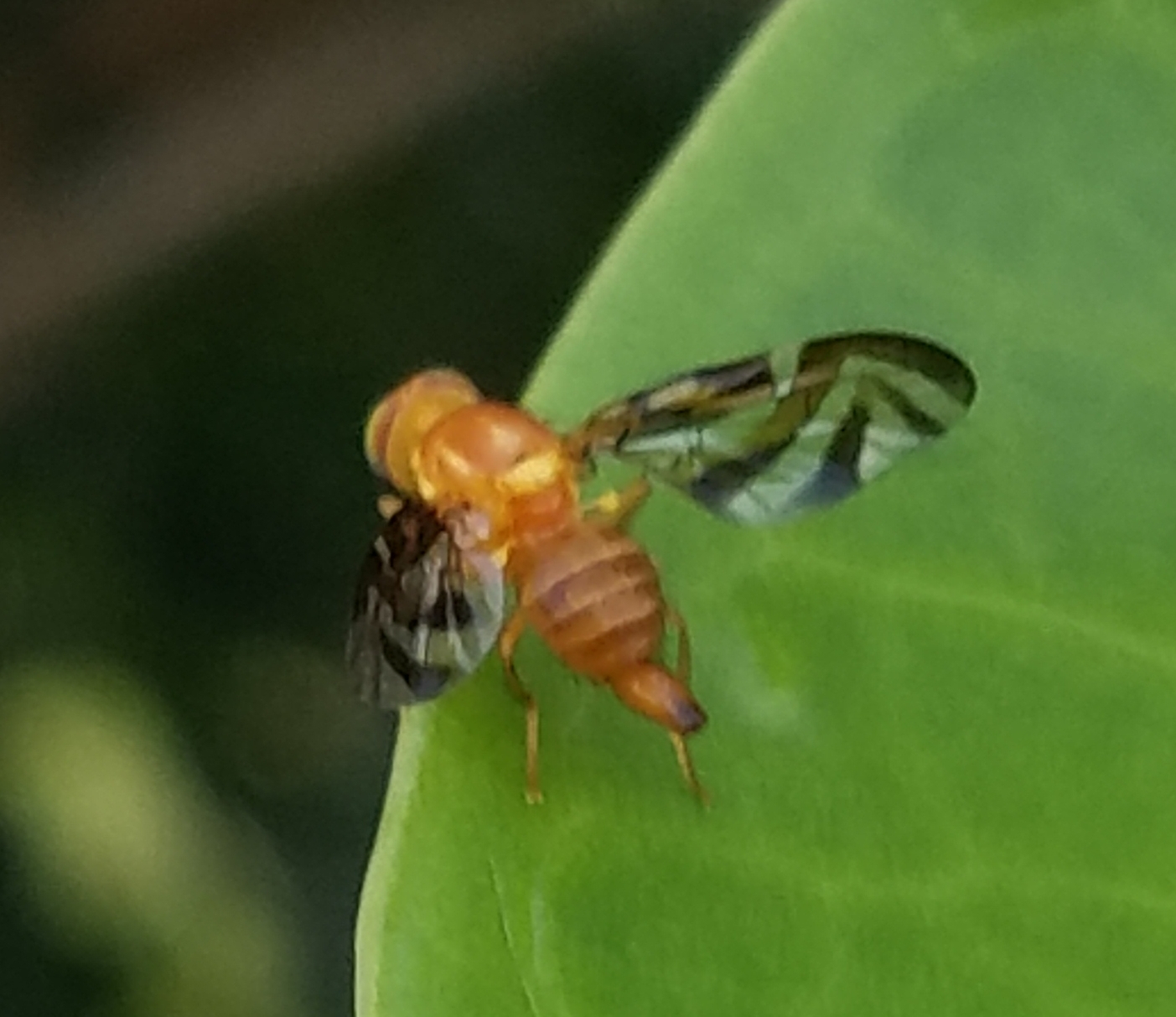
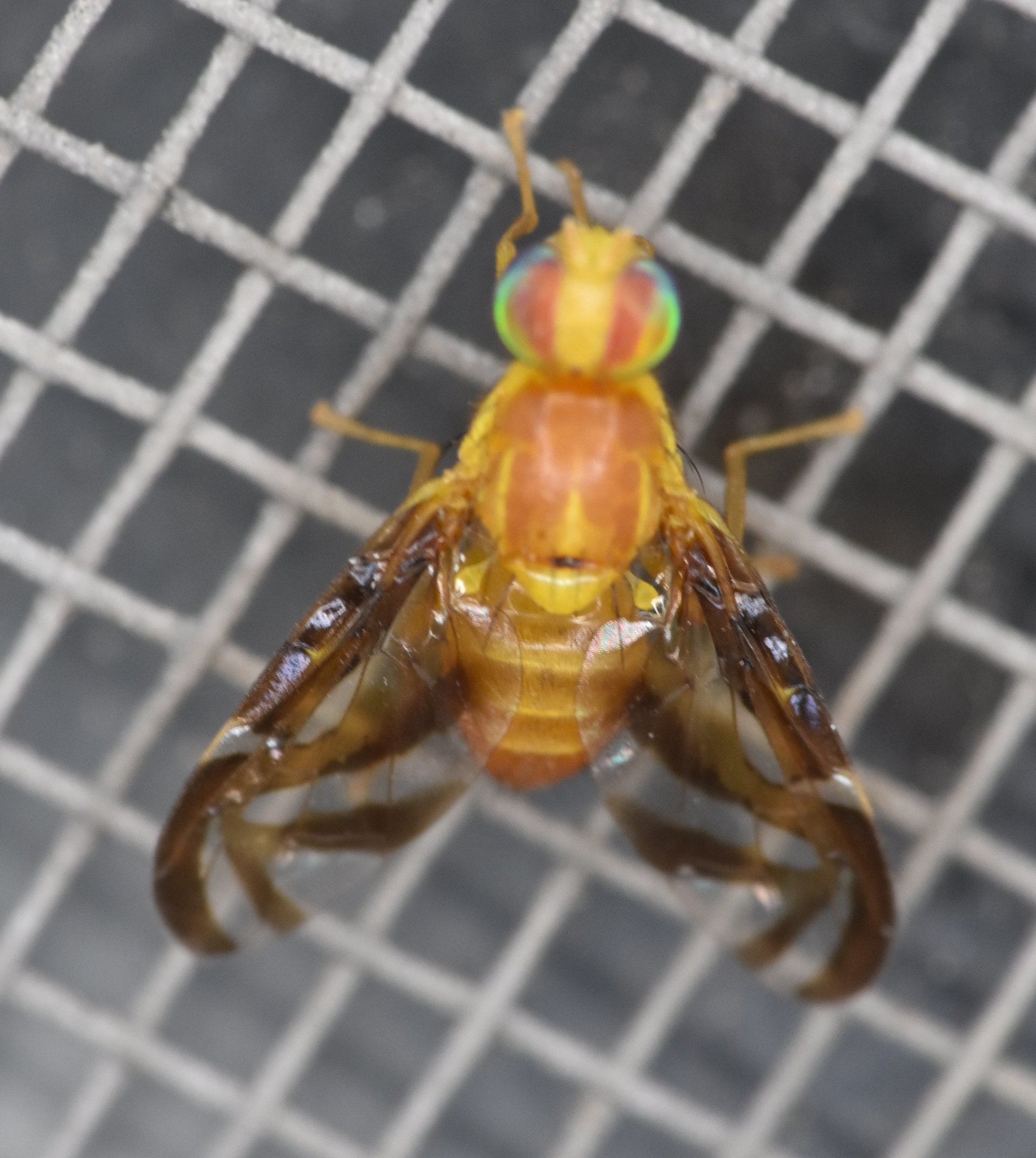
Anastrepha suspensa, commonly known as the Caribbean fruit fly, is a small, yellow-brown fly characterized by distinct wing patterns.[2] Observations from the TreeOfLife-200M dataset show the adult fly has a yellowish-brown body and wings marked with dark, brownish bands.[1] A diagnostic feature is that the third longitudinal wing vein (M1+2) terminates at or slightly within the S-band at the wing apex.[2] Females possess a short, stout ovipositor with rounded serrations on the apical two-thirds.[2]
Biology and Ecology
Anastrepha suspensa is indigenous to the West Indies, including Cuba, Jamaica, Hispaniola, and Puerto Rico.[2] The species infests mature to overripe fruits, with nearly 100 recorded host plants, including common guava (Psidium guajava), Surinam cherry (Eugenia uniflora), roseapple (Syzygium jambos), peach (Prunus persica), and tropical almond (Terminalia catappa).[2] Eggs are laid singly, and the larval feeding period lasts 10 to 14 days, with a similar duration for pupation, though development is temperature-dependent.[2]
Pest Status and Management
In Florida, A. suspensa was first identified in 1931, with a significant reintroduction in 1965 that led to its establishment as a pest of citrus and other fruits in southern peninsular Florida.[2] Management strategies include pesticide bait sprays, biological control (e.g., the release of the endoparasitic braconid wasp Diachasmimorpha longicaudata), and the Sterile Insect Technique (SIT).[2] "Fly-free zones" are also maintained through sanitation and host removal to facilitate citrus export certification.[2]
Gallery
References
- 1 2 Dataset view for Animalia / Arthropoda / Insecta / Diptera / Tephritidae / Anastrepha / suspensa constructed from imageomics/TreeOfLife-200M records under this taxonomic path. Hugging Face Datasets. https://huggingface.co/datasets/imageomics/TreeOfLife-200M.
- 1 2 3 4 5 6 7 8 9 Howard V. Weems; John B. Heppner; Thomas R. Fasulo; James L. Nation. Caribbean Fruit Fly, Anastrepha suspensa (Loew) (Insecta: Diptera: Tephritidae). EDIS. 1969. https://doi.org/10.32473/edis-in353-2001.