Amphimerus
Taxonomy
- Kingdom: Animalia
- Phylum: Platyhelminthes
- Class: Trematoda
- Order: Plagiorchiida
- Family: Opisthorchiidae
- Genus: Amphimerus
Biology and Ecology
Amphimerus is a genus of parasitic liver flukes within the family Opisthorchiidae, class Trematoda, and phylum Platyhelminthes. The genus was formally described by Barker in 1911. These trematodes are characterized by their life cycle as food-borne parasites, where adult flukes typically reside in the bile ducts of their definitive hosts.[1][2][3][4]
The life cycle of Amphimerus involves the consumption of raw or undercooked freshwater fish containing metacercariae. Infection can lead to significant health complications, including suppurative cholangitis, cholelithiasis, and cholangiocarcinoma. The genus exhibits a broad host range, infecting various birds, such as Phalacrocorax auritus, Rallus crepitans, Plegadis chihi, and Tringa flavipes, as well as mammals like Nectomys rattus. Additionally, the genus has been observed to co-occur with other parasitic groups, including members of the families Echinostomatidae and Heterophyidae, as well as the phylum Nematoda.[1][2]
Visual Description
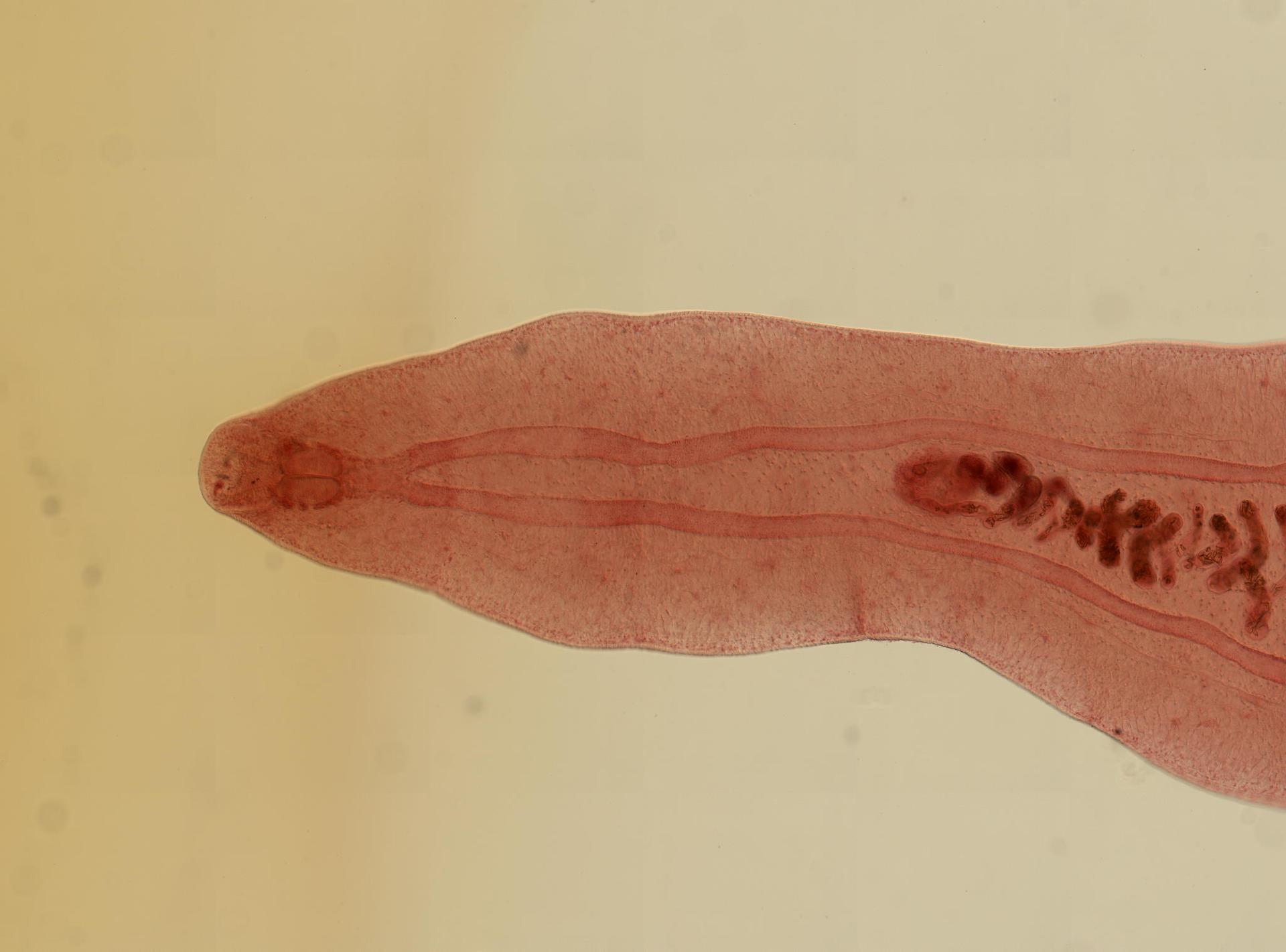
The genus is characterized by a flattened, elongated body typical of trematodes. Microscopic examination of stained specimens reveals an oral sucker located at the anterior tip, followed by a pharynx. The intestinal caeca bifurcate and extend posteriorly along the lateral margins of the body. Internal reproductive structures are often visible within the stained tissue.
Gallery
References
- 1 2 Amphimerus. Global Biotic Interactions. https://www.globalbioticinteractions.org/?targetTaxon=Amphimerus. Accessed 2026-09-05.
- 1 2 Manuel Calvopiña; William Cevallos; Richard Atherton; Matthew J Saunders; Alexander Small; Hideo Kumazawa; Hiromu Sugiyama. High Prevalence of the Liver Fluke Amphimerus sp. in Domestic Cats and Dogs in an Area for Human Amphimeriasis in Ecuador. PLoS neglected tropical diseases. 2015. https://doi.org/10.1371/journal.pntd.0003526.
- ↑ Opisthorchiidae. Wikipedia. https://en.wikipedia.org/wiki/Amphimerus. Accessed 2026-09-05.
- ↑ Dataset view for Animalia / Platyhelminthes / Trematoda / Plagiorchiida / Opisthorchiidae / Amphimerus constructed from imageomics/TreeOfLife-200M records under this taxonomic path. Hugging Face Datasets. https://huggingface.co/datasets/imageomics/TreeOfLife-200M