Amphilinidea
Taxonomy
Amphilinidea is an order of parasitic flatworms within the class Cestoda and subclass Cestodaria. These organisms are closely related to the Eucestoda, or true tapeworms, a relationship supported by phylogenetic studies and ultrastructural analysis of spermiogenesis. The order is monotypic, containing a single family, Amphilinidae, and approximately eight known species, including the representative species Amphilina foliacea.[1][2][3][4][5]
Adult amphilinids are large, hermaphroditic flatworms characterized by a flattened, leaf-like body. Unlike true tapeworms, they are unsegmented and lack proglottids. They may possess a muscular proboscis at the anterior end, though this structure can be weakly developed or absent. In species such as Amphilina foliacea, spermiogenesis involves the orthogonal development of two flagella that undergo rotation and fusion with a median cytoplasmic process, a process that incorporates the nucleus and mitochondrion.[3][4]
Amphilinideans exhibit a global distribution, with records spanning a wide range of latitudes and longitudes. Adults typically inhabit the body cavities of freshwater turtles and teleost fish, including various species of sturgeon (Acipenseriformes) such as those in the genera Acipenser and Huso. Juveniles are found within the bodies of crustaceans. While they have little economic importance, their role as parasites of sturgeon has been noted. They are of scientific interest for the insights they provide into the evolutionary history of tapeworms.[1][6][4]
Visual Description
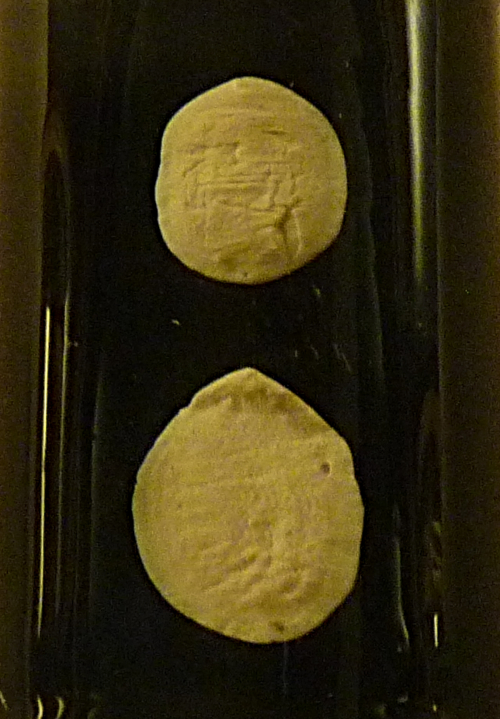
Adult amphilinids, such as those of the species Amphilina foliacea, present as flattened, pale, leaf-like structures. The body is generally oval to elongated in shape, reflecting their characteristic unsegmented morphology.
Gallery
References
- 1 2 Amphilinidea. Global Biotic Interactions. https://www.globalbioticinteractions.org/?targetTaxon=Amphilinidea. Accessed 2026-09-05.
- ↑ Amphilinidea. NCBI Nucleotide. https://www.ncbi.nlm.nih.gov/nuccore/?term=txid108232[organism:exp]. Accessed 2026-09-05.
- 1 2 Magdaléna Bruňanská; Larisa G. Poddubnaya; Willi E. R. Xylander. A reinvestigation of spermiogenesis in Amphilina foliacea (Platyhelminthes: Amphilinidea). Folia Parasitologica. 2013. https://doi.org/10.14411/fp.2013.006.
- 1 2 3 Amphilinidae. Wikipedia. https://en.wikipedia.org/wiki/Amphilinidea. Accessed 2026-09-05.
- ↑ Dataset view for Animalia / Platyhelminthes / Cestoda / Amphilinidea constructed from imageomics/TreeOfLife-200M records under this taxonomic path. Hugging Face Datasets. https://huggingface.co/datasets/imageomics/TreeOfLife-200M
- ↑ Amphilinidea. GBIF. https://www.gbif.org/species/504. Accessed 2026-09-05.