Amphilinidae
Taxonomy
- Kingdom: Animalia
- Phylum: Platyhelminthes
- Class: Cestoda
- Order: Amphilinidea
- Family: Amphilinidae
Amphilinidae is a family of parasitic flatworms within the phylum Platyhelminthes and class Cestoda. It constitutes the sole family in the monotypic order Amphilinidea, which is placed within the subclass Cestodaria. The family was established by Claus in 1879 and is sometimes referred to by the synonym Schizochoeridae. The group includes approximately 8 recognized species distributed across several genera, including Amphilina, Australamphilina, Gephyrolina, Gigantolina, Nesolecithus, and Schizochoerus.[1][2][3][4]
Biology and Ecology
Amphilinids are large, hermaphroditic worms characterized by a flattened, leaf-like body. Unlike members of the Eucestoda (true tapeworms), they are unsegmented and lack proglottids. Some species possess a muscular proboscis at the anterior end, though this structure may be weakly developed or entirely absent.[1]
Adult amphilinids are endoparasites that inhabit the body cavities of freshwater turtles and teleost fish. A well-studied representative, *Amphilina foliacea*, is a parasite of various sturgeon species (family Acipenseridae), including members of the genera *Acipenser* and *Huso*. The life cycle typically involves juvenile stages that develop within the bodies of various crustaceans. While these parasites have been investigated for their potential to provide insights into tapeworm phylogeny, they generally have limited economic importance, with the exception of localized parasitism in sturgeon populations. Occurrence data indicates a broad geographic distribution, with records spanning a wide range of latitudes and longitudes.[1][2][5]
Visual Description
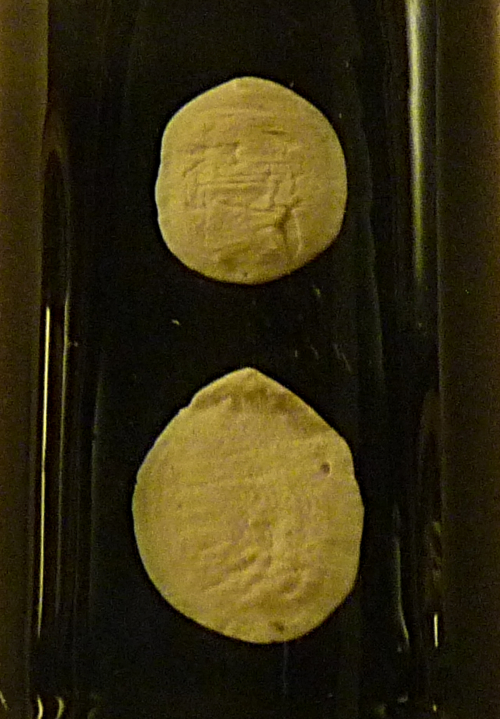
Amphilinids exhibit a flattened, leaf-like morphology. The body is unsegmented and lacks the proglottids characteristic of true tapeworms. Specimens may appear pale and vary in shape from roughly circular to elongated, tear-drop, or leaf-like forms.
Gallery
References
- 1 2 3 Amphilinidae. Wikipedia. https://en.wikipedia.org/wiki/Amphilinidae. Accessed 2026-09-05.
- 1 2 Amphilinidae. Global Biotic Interactions. https://www.globalbioticinteractions.org/?targetTaxon=Amphilinidae. Accessed 2026-09-05.
- ↑ Amphilinidae. NCBI Nucleotide. https://www.ncbi.nlm.nih.gov/nuccore/?term=txid99401[organism:exp]. Accessed 2026-09-05.
- ↑ Dataset view for Animalia / Platyhelminthes / Cestoda / Amphilinidea / Amphilinidae constructed from imageomics/TreeOfLife-200M records under this taxonomic path. Hugging Face Datasets. https://huggingface.co/datasets/imageomics/TreeOfLife-200M
- ↑ Amphilinidae. GBIF. https://www.gbif.org/species/7243. Accessed 2026-09-05.