Amphilectus utriculus
Taxonomy
This page represents the following TreeOfLife-200M taxonomic path.[1]
- Kingdom: Animalia
- Phylum: Porifera
- Class: Demospongiae
- Order: Poecilosclerida
- Family: Esperiopsidae
- Genus: Amphilectus
- Species: Amphilectus utriculus
Visual Description
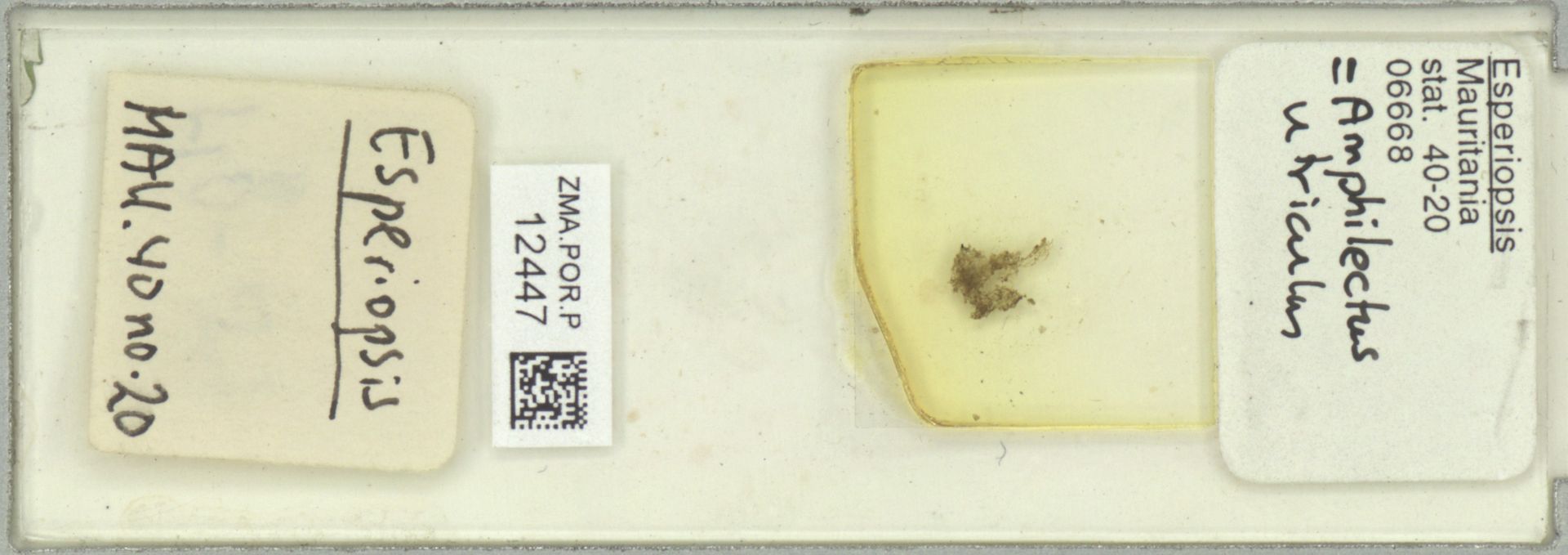
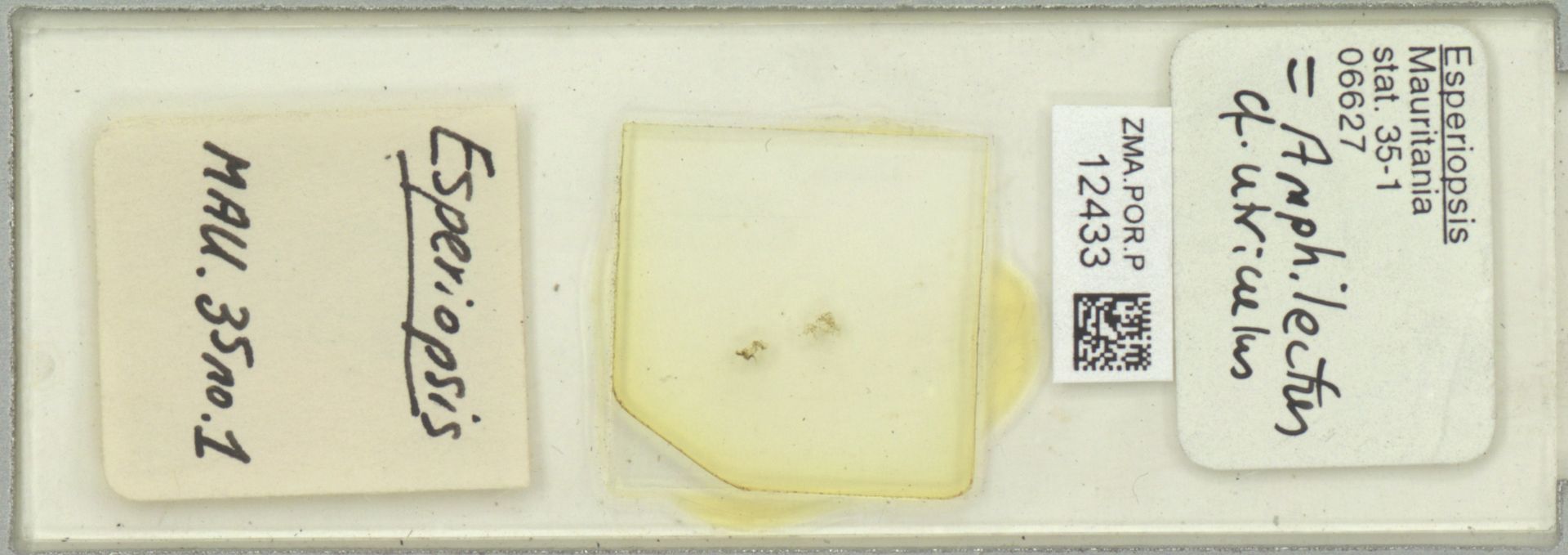
Available specimen images (museum/preserved-record sources) depict Amphilectus utriculus as a small, purse-like sponge body with a hollow appearance. The main body is laterally flattened and associated with a short stalk. The external surface looks irregular and shaggy, consistent with skeletal elements projecting close to the surface. Color in preservation is reported as reddish to greyish brown.
Identification Notes
Within Esperiopsidae, Amphilectus is diagnosed by microsclere composition: the genus has chelae microscleres only (i.e., lacking additional microsclere types such as sigmas). For A. utriculus, the spicule complement treated in the original description includes mycalostyle-type styles (megascleres) and palmate isochelae (microscleres).
Distribution and Ecology
Amphilectus utriculus is reported from Mauritania (south of Banc d’Arguin, Northwest Africa), from muddy bottoms at approximately 200–500 m depth.
Gallery
References
- ↑ Dataset view for Animalia / Porifera / Demospongiae / Poecilosclerida / Esperiopsidae / Amphilectus / utriculus constructed from imageomics/TreeOfLife-200M records under this taxonomic path. Hugging Face Datasets. https://huggingface.co/datasets/imageomics/TreeOfLife-200M.