Amphilectus strepsichelifer
Taxonomy
This page represents the following TreeOfLife-200M taxonomic path.[1]
- Kingdom: Animalia
- Phylum: Porifera
- Class: Demospongiae
- Order: Poecilosclerida
- Family: Esperiopsidae
- Genus: Amphilectus
- Species: Amphilectus strepsichelifer
Visual Description
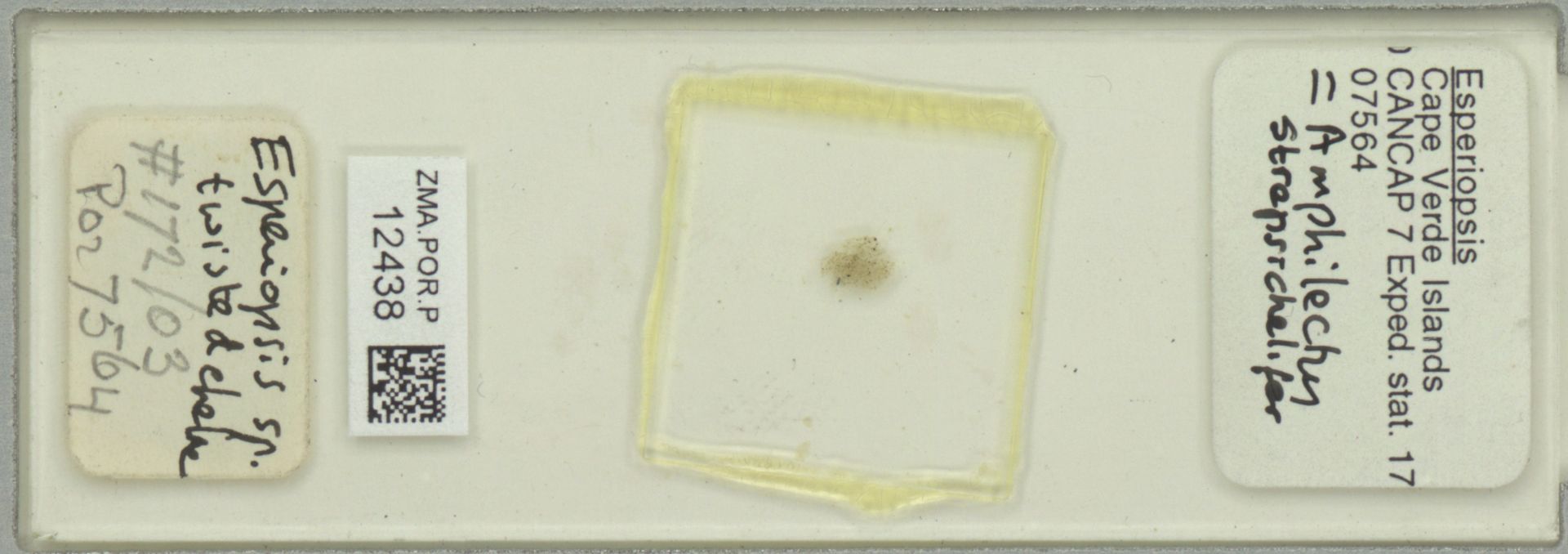
The species is represented in image collections by photographs of (a) an intact sponge specimen and (b) a preserved museum specimen. Both visual representations depict a stalked (“pedunculate”) morphology with a comparatively small main body attached above a longer, thin stalk.
Species Account (Generalized)
Amphilectus strepsichelifer is described as a pedunculate esperiopsid sponge with a long, thin, smooth stalk and an abruptly attached, small ovate main body. The main body is flattened but solid (not hollow) and has an irregular shaggy surface. Color is reported as light brown alive and grey in alcohol.
Skeleton / Spicule Characters (Generalized)
In the species account, the main body is described as plumose, with diffuse spicule bundles directed at right angles to the surface, forming loose brushes at the surface. Chelae occur in loose groups in a subectosomal layer at the base of the surface brushes.
At the microsclere level, the chelae are palmate isochelae characterized by a diagnostic “twisted” condition of the shaft (so that alae at opposite ends face different angles). Styles are thin and slightly curved.
Distribution and Habitat (Generalized)
Known only from its type locality in the Cape Verde Islands (between São Vicente and Santo Antão), from hard bottom at depths below 300 m.
Gallery
References
- ↑ Dataset view for Animalia / Porifera / Demospongiae / Poecilosclerida / Esperiopsidae / Amphilectus / strepsichelifer constructed from imageomics/TreeOfLife-200M records under this taxonomic path. Hugging Face Datasets. https://huggingface.co/datasets/imageomics/TreeOfLife-200M.