Amorphinopsis atlantica
Taxonomy
This page represents the following TreeOfLife-200M taxonomic path.[1]
- Kingdom: Animalia
- Phylum: Porifera
- Class: Demospongiae
- Order: Suberitida
- Family: Halichondriidae
- Genus: Amorphinopsis
- Species: Amorphinopsis atlantica
Visual Description
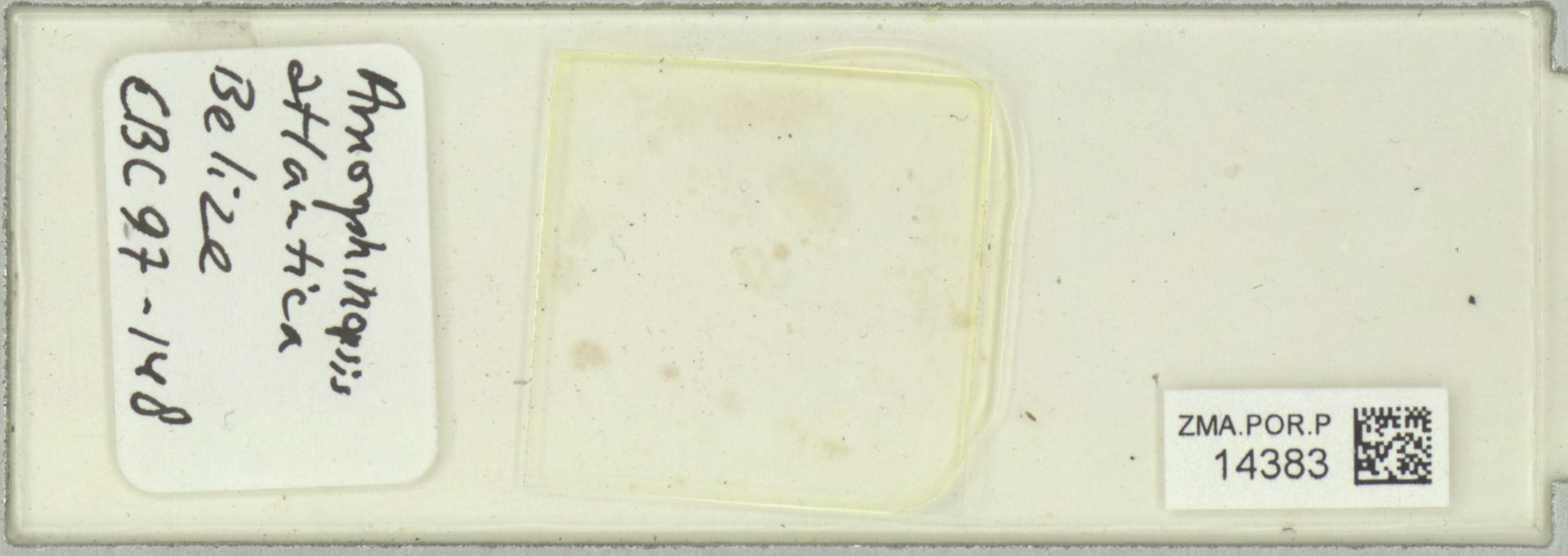
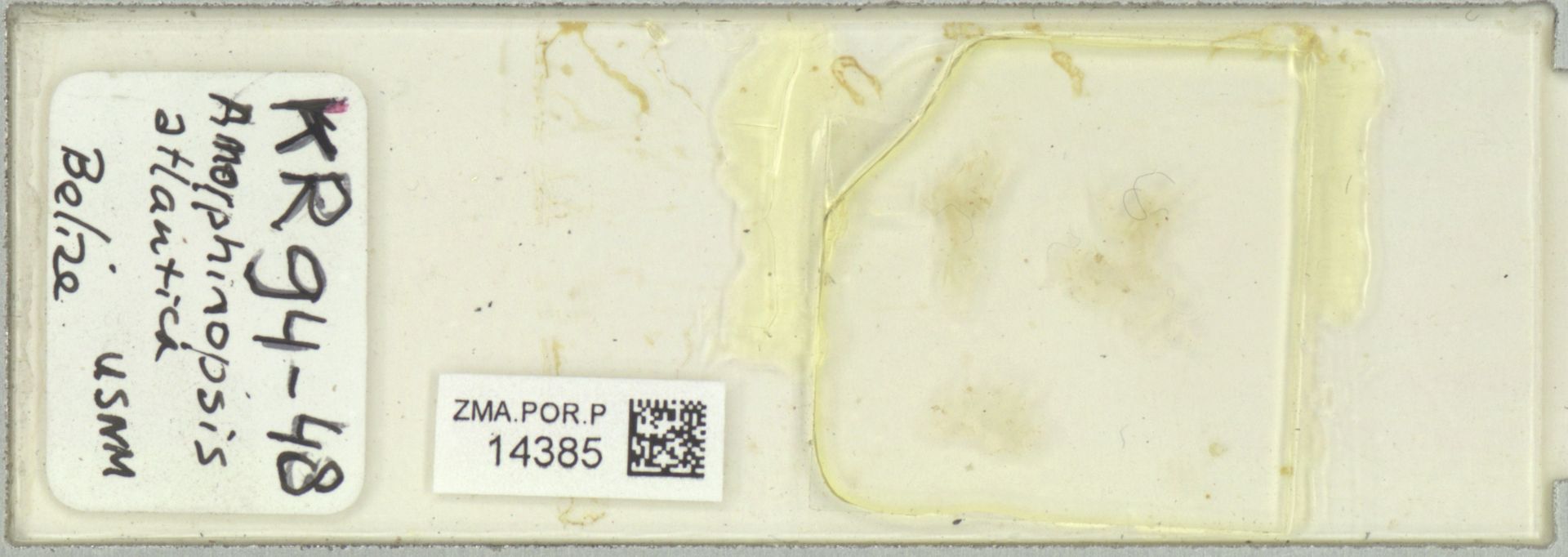
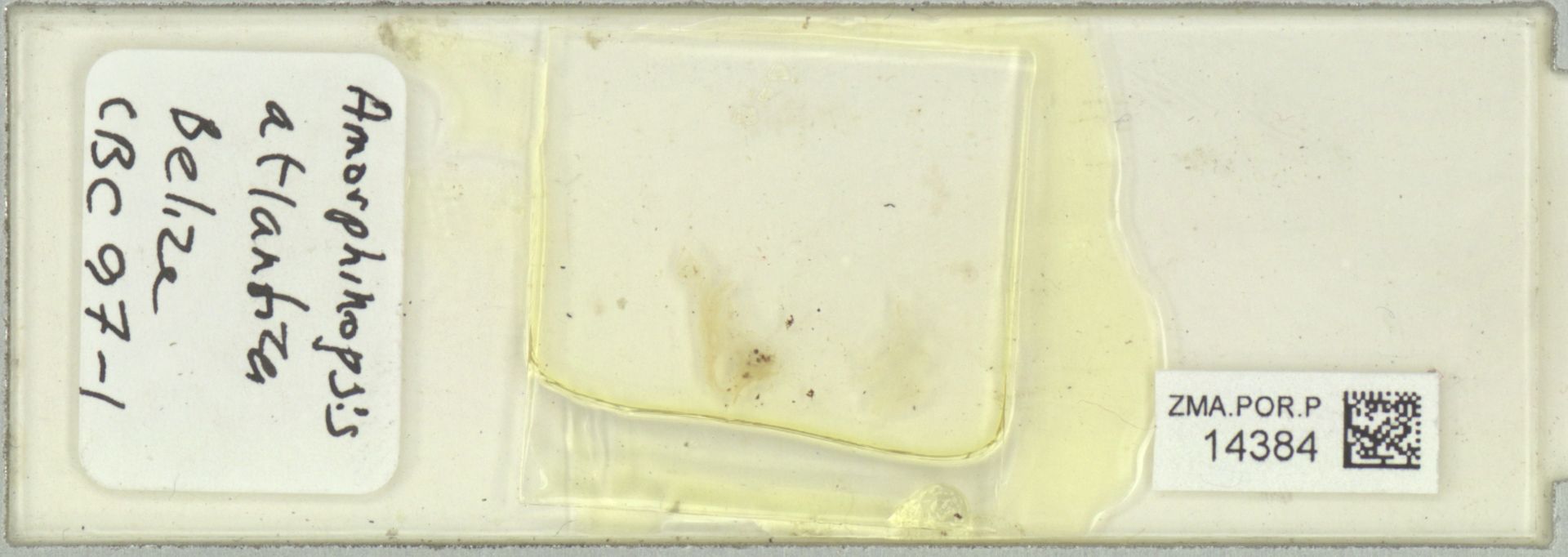
Museum specimens in the Naturalis Biodiversity Center collection (GBIF-linked) show Amorphinopsis atlantica as a sponge with a compact to lobate morphology (encrusting to low, mound-like growth form). Specimens are preserved dry and thus appear matte, with surface texture consistent with a thick, histologically dense sponge body typical of Halichondriidae. The oscula are not reliably discernible from these preserved images alone.
Ecology and associations
Amorphinopsis atlantica is documented as a common seagrass-dwelling demospong(e) host in the Laguna de Términos estuarine system (southern Gulf of Mexico). In that study, sponge individuals were collected by snorkeling from shallow seagrass meadows (dominated by Thalassia testudinum and Halodule wrightii), and the associated macrofauna (epibionts and endobionts) was quantified after dissection.
The associated macrofaunal community was characterized by high abundance and diversity on A. atlantica relative to a co-occurring sponge species (Haliclona implexiformis), with the dominant associated organisms including arthropods (notably gammaridean amphipods and tanaidaceans), plus additional contributions from polychaetes and echinoderms.
The study also reports that differences in hosted assemblages corresponded to host identity and local site conditions (an “exposed” versus “protected” site context), indicating that A. atlantica functions as a habitat host whose associated fauna is shaped by both sponge traits and the surrounding seagrass environment.
Taxonomic status and nomenclature anchors
GBIF treats Amorphinopsis atlantica as an accepted species, credited to Carvalho, Hajdu, Mothes & van Soest (2004).
Gallery
References
- ↑ Dataset view for Animalia / Porifera / Demospongiae / Suberitida / Halichondriidae / Amorphinopsis / atlantica constructed from imageomics/TreeOfLife-200M records under this taxonomic path. Hugging Face Datasets. https://huggingface.co/datasets/imageomics/TreeOfLife-200M.