Ametadoria
Taxonomy
This page represents the following TreeOfLife-200M taxonomic path.[1]
- Kingdom: Animalia
- Phylum: Arthropoda
- Class: Insecta
- Order: Diptera
- Family: Tachinidae
- Genus: Ametadoria
Visual Description
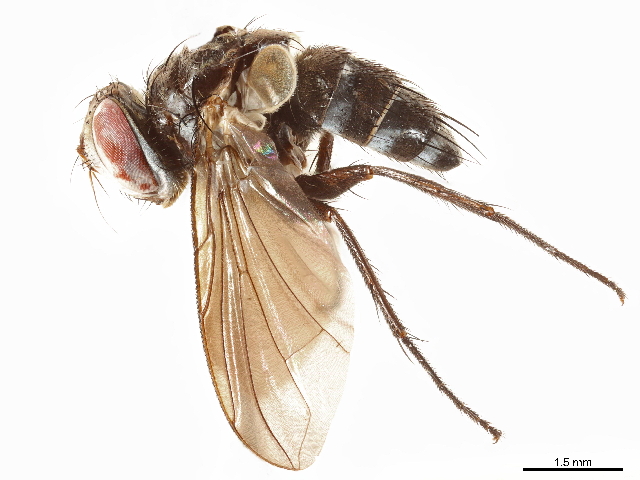
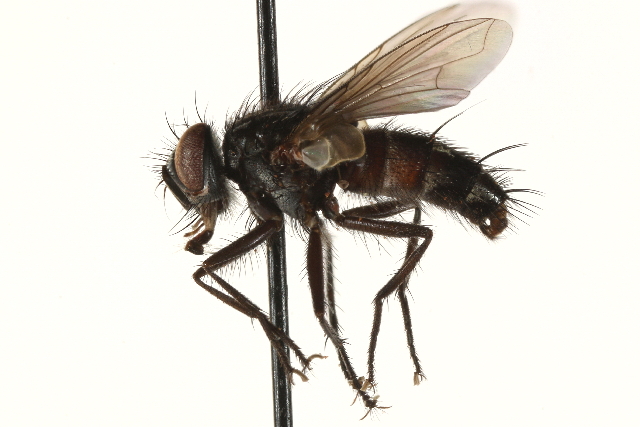
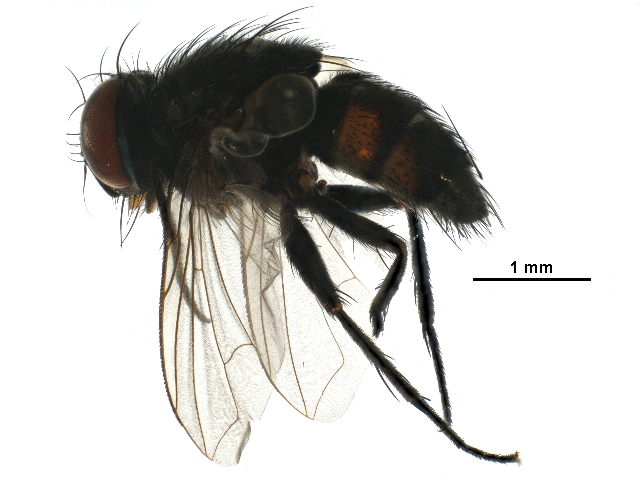
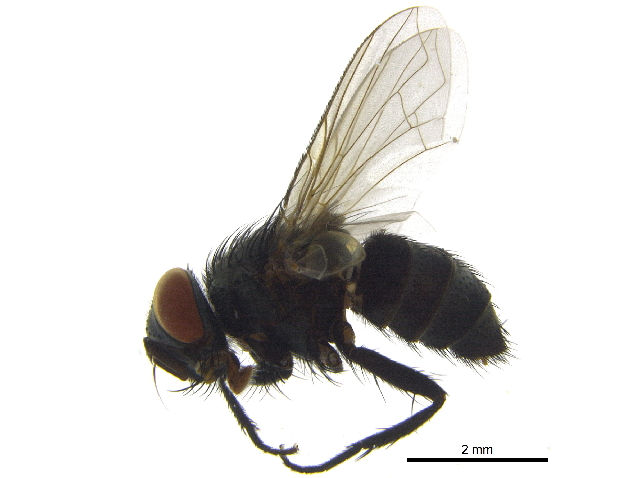
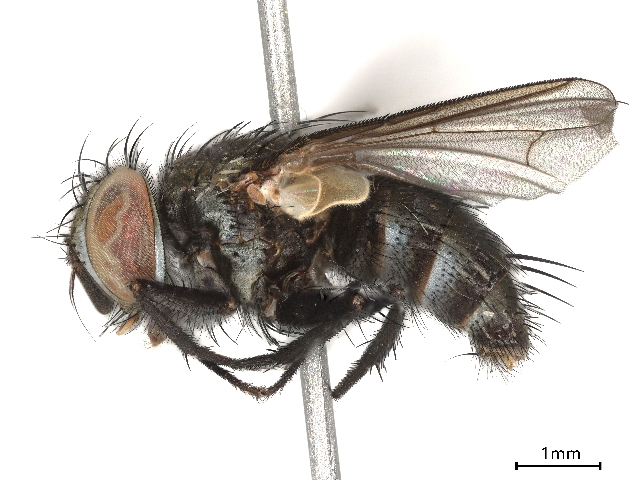
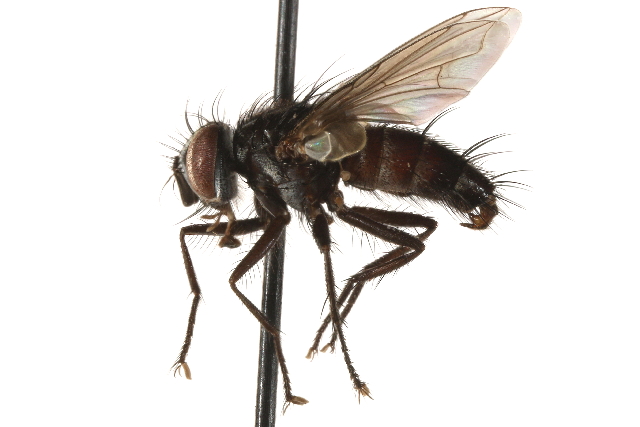
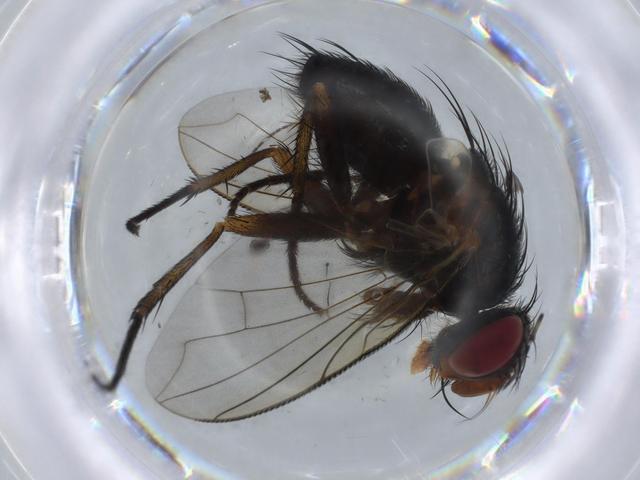
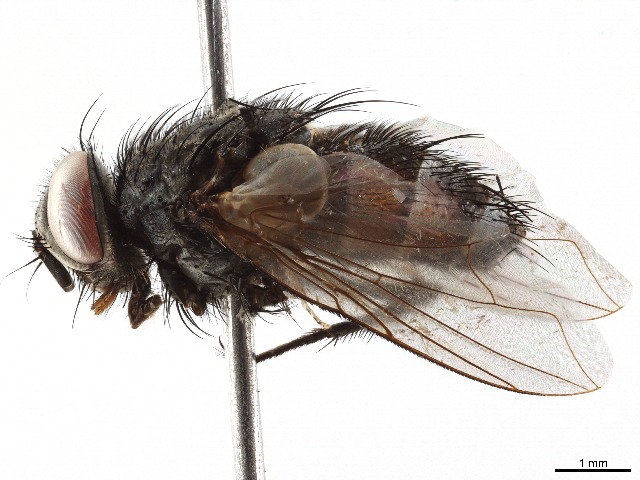
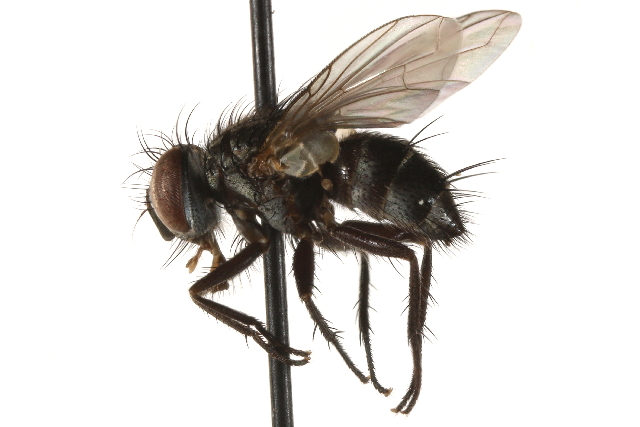
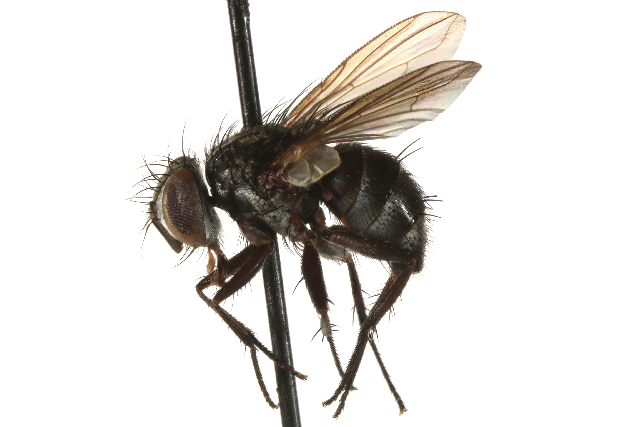
Based on observations from the TreeOfLife-200M dataset, members of the genus Ametadoria exhibit typical tachinid morphology.[1] They are robust flies characterized by a dense covering of setae (bristles) on the thorax and abdomen, a common trait in the family Tachinidae. The head features prominent compound eyes and well-developed antennae. The wings are typically clear or slightly smoky, with distinct venation patterns characteristic of the Oestroidea superfamily. Due to the nature of the museum specimen imagery, finer diagnostic details such as specific chaetotaxy (bristle arrangement) are difficult to resolve without microscopic examination.[1]
Biology and Ecology
Ametadoria is a genus of tachinid flies, a group known for their role as parasitoids of other insects.[2] Research indicates that these flies are parasitoids of Lepidoptera, specifically having been reared from caterpillars in the families Zygaenidae and Lacturidae.[2],[3]
Taxonomy and Systematics
The genus Ametadoria was described by Charles Henry Tyler Townsend in 1927.[4] Taxonomic revisions have included the synonymization of Adidyma Townsend and Abolodoria Townsend with Ametadoria. Several species have been transferred to the genus, including Ametadoria abdominalis, Ametadoria austrina, Ametadoria humilis, and Ametadoria misella. Additionally, Ametadoria adversa is now considered a junior synonym of Ametadoria unispinosa.[2] Recent work has expanded the genus with the description of new species such as Ametadoria karolramosae, Ametadoria leticiamartinezae, and Ametadoria mauriciogurdiani.[2]
Gallery
References
- 1 2 3 Dataset view for Animalia / Arthropoda / Insecta / Diptera / Tachinidae / Ametadoria constructed from imageomics/TreeOfLife-200M records under this taxonomic path. Hugging Face Datasets. https://huggingface.co/datasets/imageomics/TreeOfLife-200M.
- 1 2 3 4 Alan J. Fleming; David M. Wood; M. Alex Smith; Winnie Hallwachs; Daniel H. Janzen. Three new species of Ametadoria Townsend (Diptera: Tachinidae) from Area de Conservación Guanacaste, Costa Rica. Biodiversity Data Journal. 2015. https://doi.org/10.3897/bdj.3.e5039.
- ↑ Ametadoria. Global Biotic Interactions. https://www.globalbioticinteractions.org/?targetTaxon=Ametadoria. Accessed 2026-07-16.
- ↑ Ametadoria Townsend, 1927. GBIF. https://www.gbif.org/species/1478245. Accessed 2026-07-17.