Alyssomyia
Taxonomy
This page represents the following TreeOfLife-200M taxonomic path.[1]
- Kingdom: Animalia
- Phylum: Arthropoda
- Class: Insecta
- Order: Diptera
- Family: Asilidae
- Genus: Alyssomyia
Visual Description
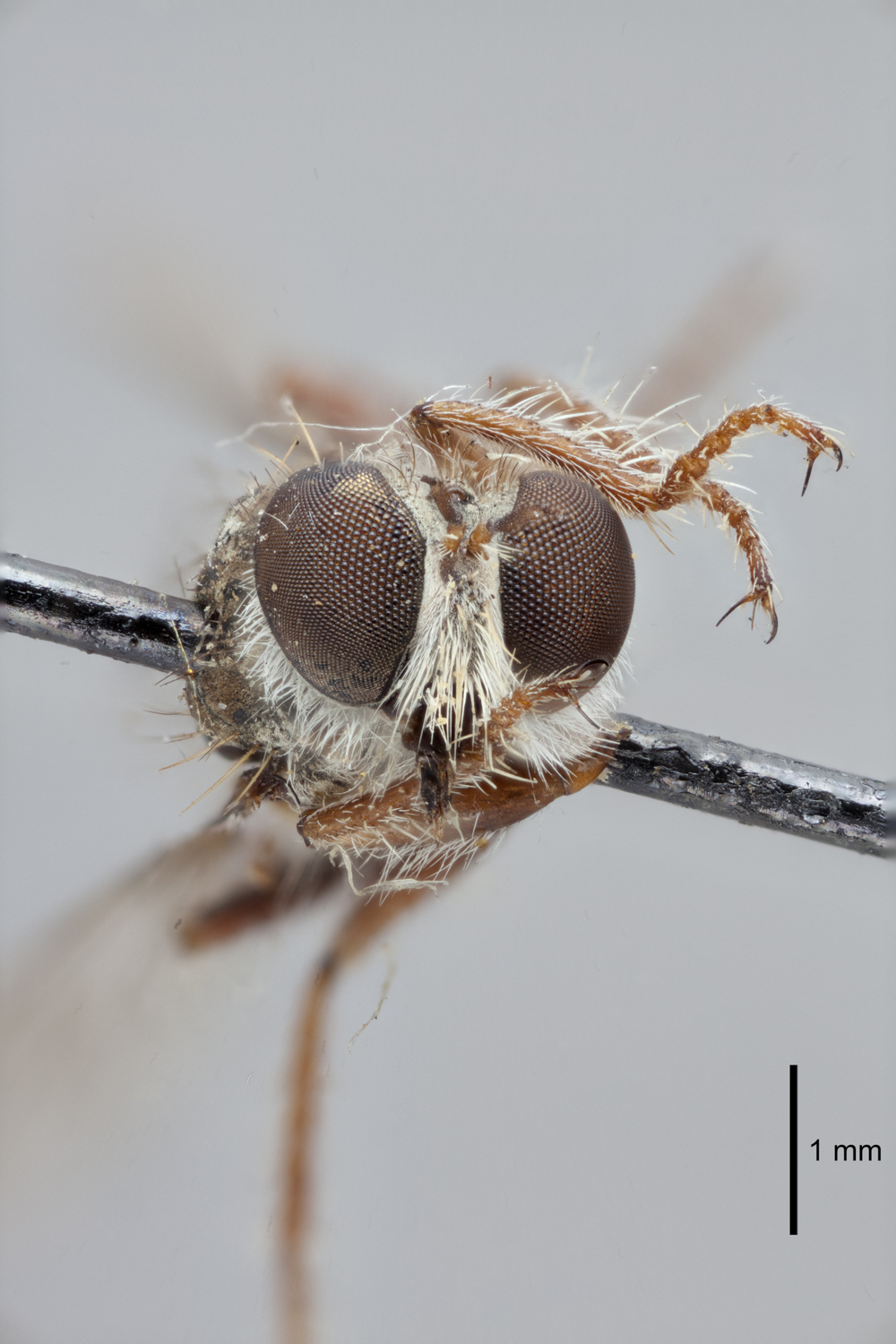
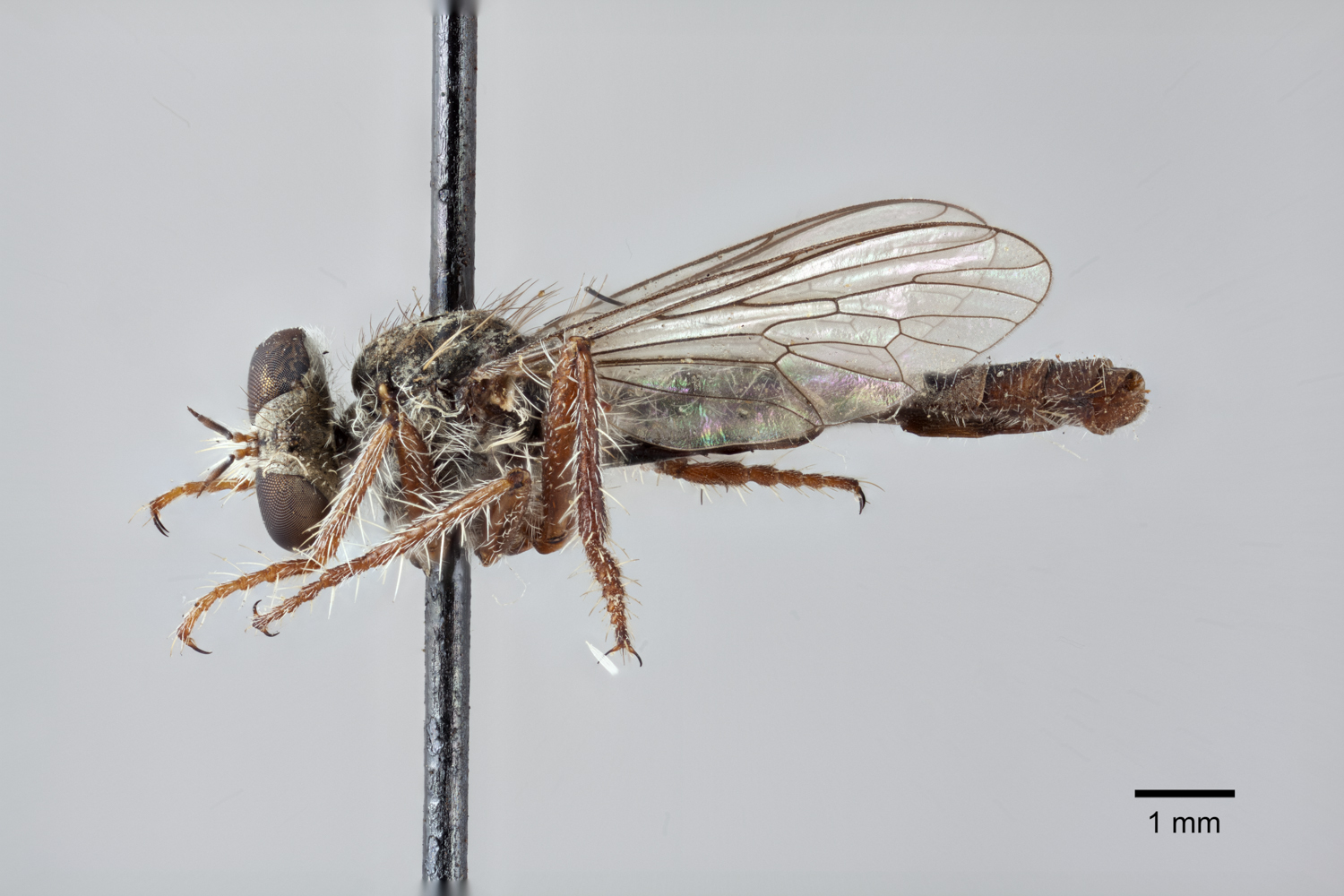
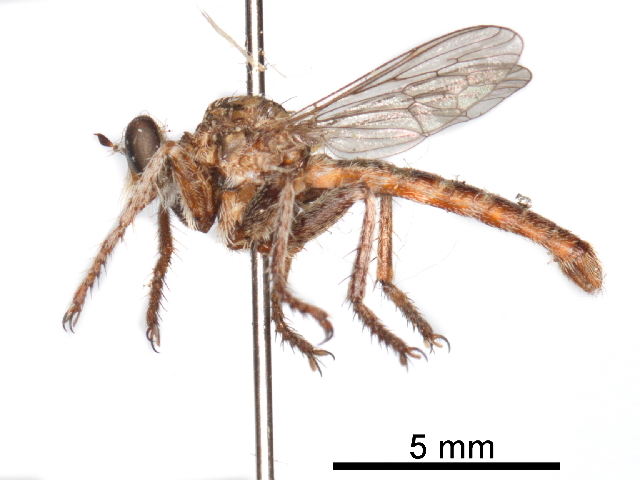
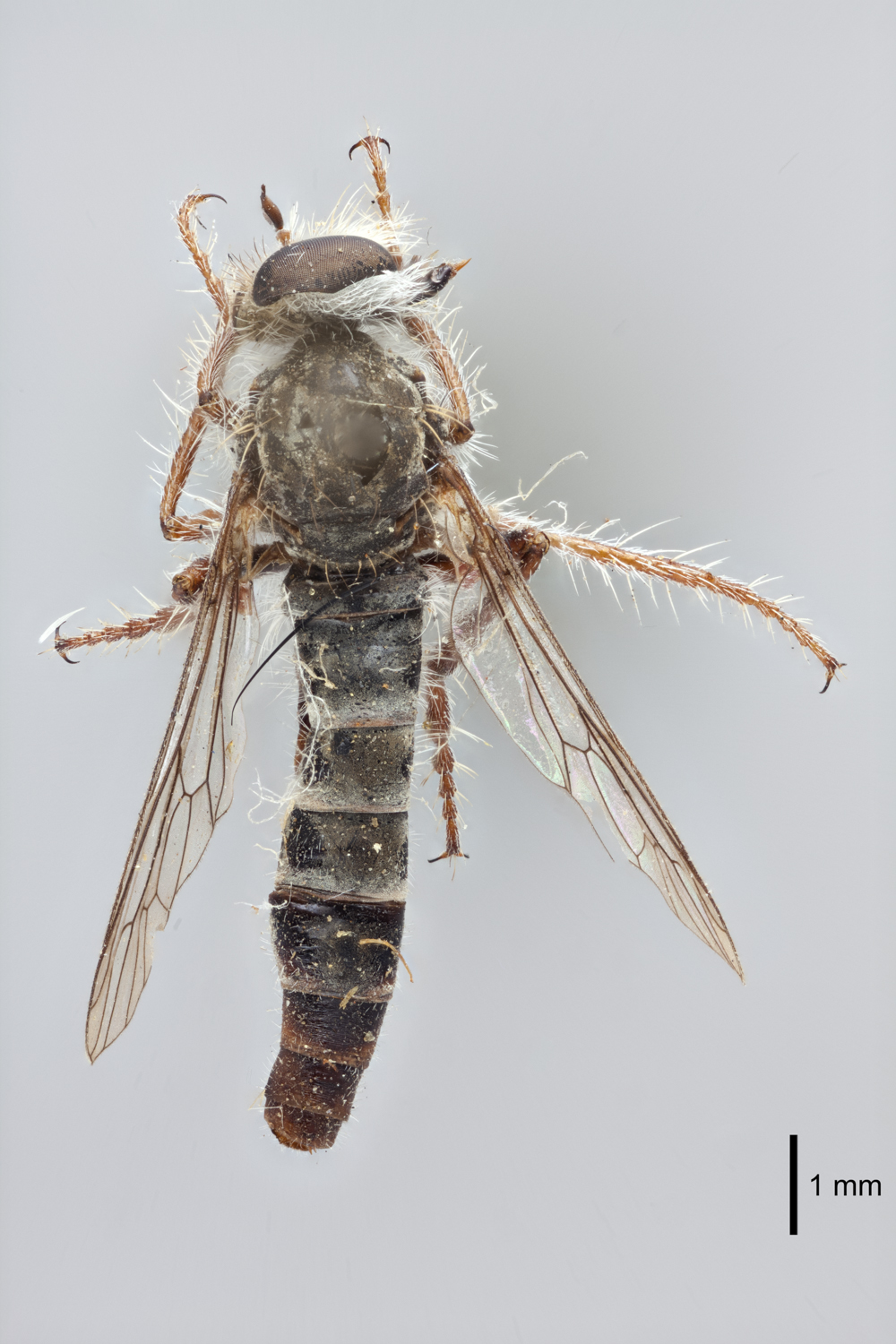
Based on observations of museum specimens, Alyssomyia species exhibit a robust, typical asilid body form. Key morphological traits include a sessile third antennal segment, which is a diagnostic feature distinguishing the genus from related taxa such as Hypenetes[2]. The wings are characterized by a closed fourth posterior cell[2]. Specimens observed in the TreeOfLife-200M dataset show a dense, setose appearance typical of the family, with distinct thoracic and abdominal patterning[1].
Biology and Classification
The genus Alyssomyia was established by Hull in 1962, with Clavator brevicornis Philippi designated as the type species[2]. It is classified within the tribe Stenopogonini[2].
The genus includes several species, such as Alyssomyia brevicornis, Alyssomyia nigribarbis, Alyssomyia rubricornis, and Alyssomyia keiseri[2]. Alyssomyia keiseri, described from Chile, is noted for its smaller size, golden pollen, and wings that are milky-white on the basal half in males[2].
Gallery
References
- 1 2 Dataset view for Animalia / Arthropoda / Insecta / Diptera / Asilidae / Alyssomyia constructed from imageomics/TreeOfLife-200M records under this taxonomic path. Hugging Face Datasets. https://huggingface.co/datasets/imageomics/TreeOfLife-200M.
- 1 2 3 4 5 6 Messias Carrera; Nelson Papavero. Sôbre os gêneros Pritchardia Stuardo, Alyssomyia Hull e Hypenetes Loew (Diptera, Asilidae). Papéis Avulsos de Zoologia. 1965. https://doi.org/10.11606/0031-1049.1965.18p47-55.