Allocreadiidae
Taxonomy
- Kingdom: Animalia
- Phylum: Platyhelminthes
- Class: Trematoda
- Order: Plagiorchiida
- Family: Allocreadiidae
Allocreadiidae is a family of digenean trematodes established by Looss in 1902. It is classified within the order Plagiorchiida, suborder Xiphidiata, and superfamily Gorgoderoidea. The family comprises approximately 40 genera, including *Allocreadium*, *Crepidostomum*, *Bunodera*, and *Creptotrema*. Taxonomic revisions have included the synonymization of *Polylekithum* with *Allocreadium* and the reassignment of *Austrocreadium* to the family Homalometridae.[1][2][3][4][5][6]
Biology and Ecology
Adult allocreadiids are primarily endoparasites inhabiting the digestive tracts of teleost fishes, though they are also known to infect other freshwater vertebrates such as amphibians (e.g., *Dendropsophus nanus*) and snakes. The life cycle typically involves lamellibranch mollusks as intermediate hosts. Diagnostic features of the family include cercariae that possess both a stylet and an eye-spot, distinguishing them from many other trematode groups that utilize gastropods as intermediate hosts.[1][6]
Visual Description
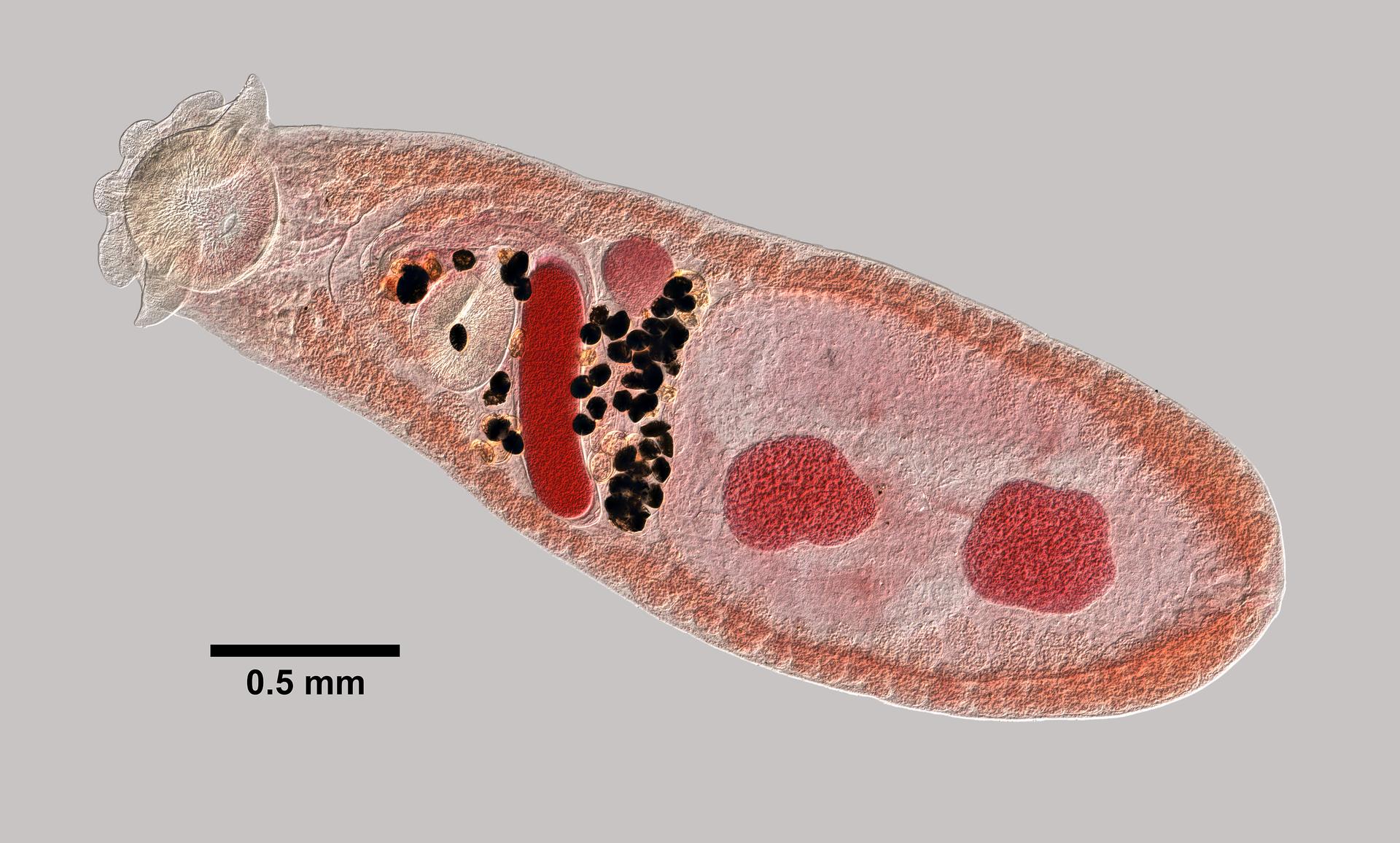
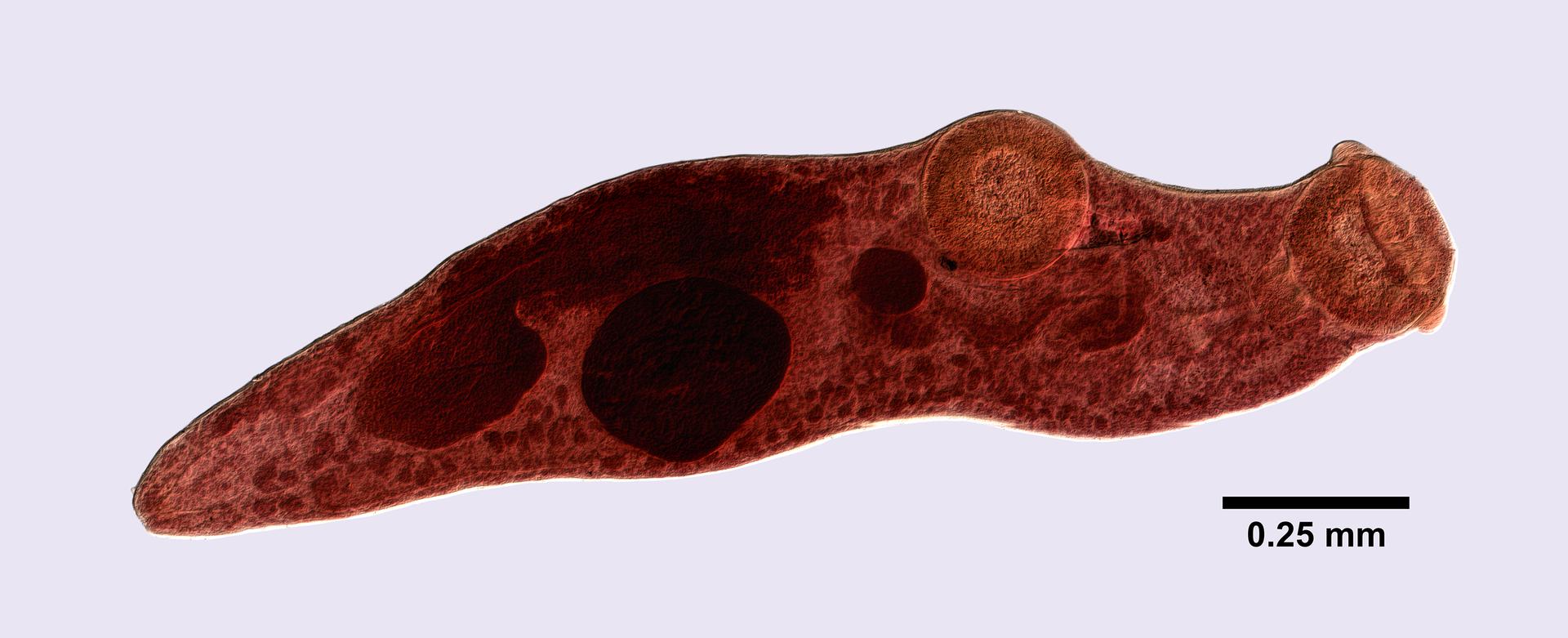
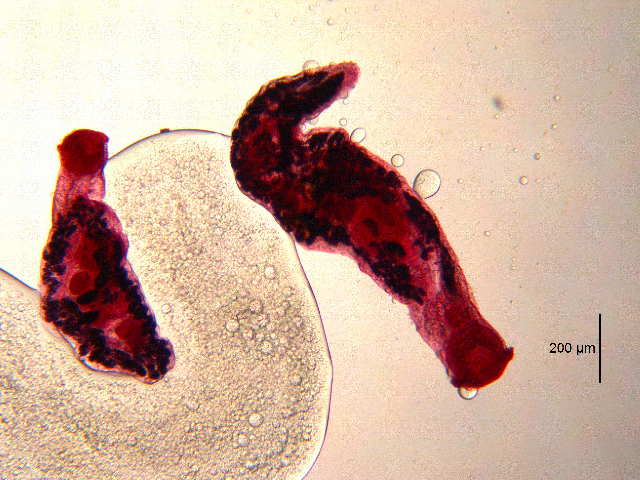
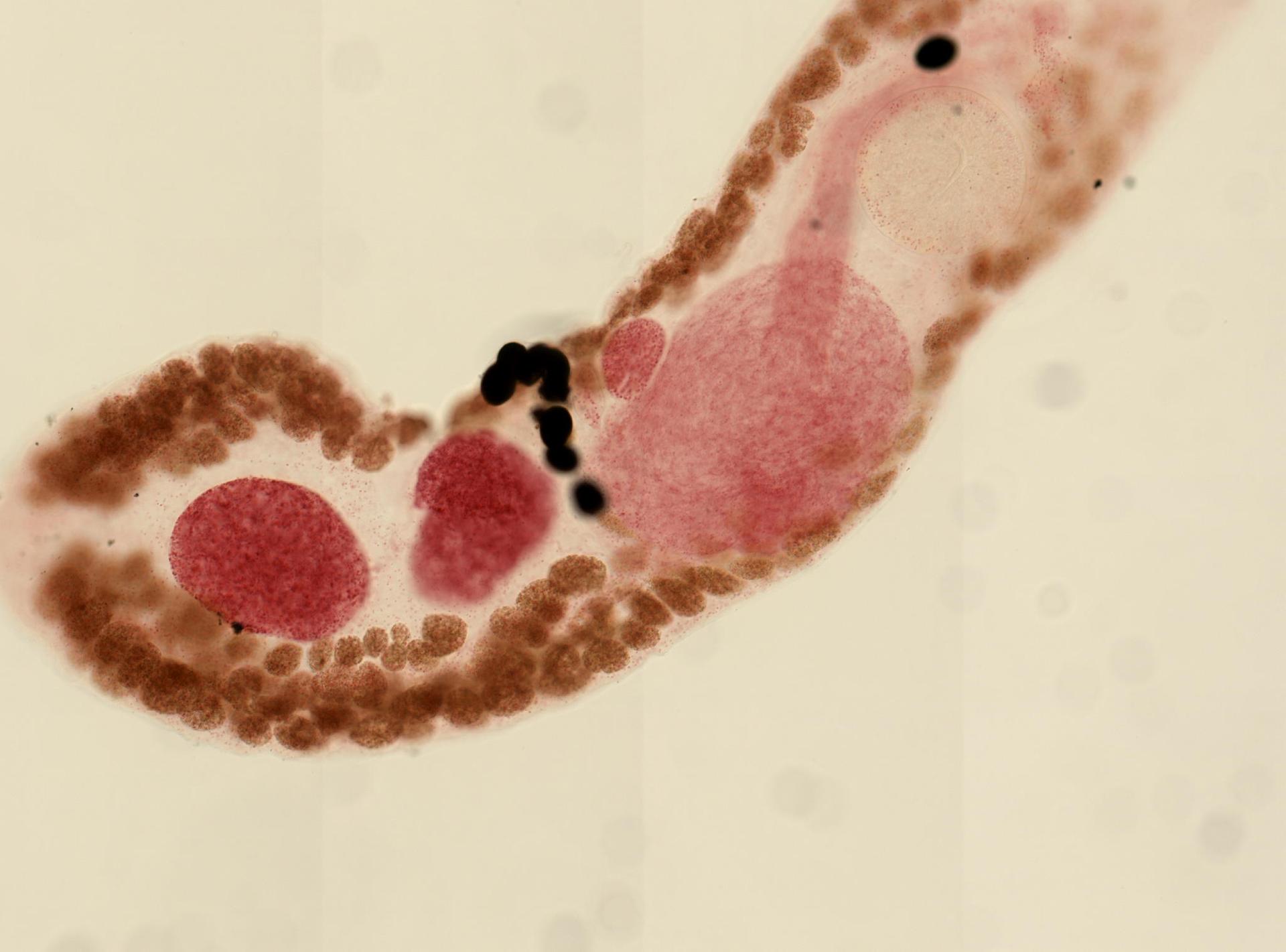
Members of the family, such as those in the genus *Crepidostomum*, exhibit an elongated, leaf-like or oval body shape characteristic of digenean trematodes. The anterior end features a prominent oral sucker, which in some species is surrounded by distinct papillae. A ventral sucker, or acetabulum, is typically located in the anterior half of the body. Internal anatomy, visible in stained preparations, includes a pharynx, intestinal caeca, and reproductive structures such as large, rounded testes and vitellaria.
Gallery
References
- 1 2 Allocreadiidae Looss 1902 - Plazi TreatmentBank. Plazi TreatmentBank. http://tb.plazi.org/GgServer/xhtml/65424420FFB8FFE1FF2489F3A69D26E5. Accessed 2026-09-05.
- ↑ Allocreadiidae. NCBI Nucleotide. https://www.ncbi.nlm.nih.gov/nuccore/?term=txid334449[organism:exp]. Accessed 2026-09-05.
- ↑ Takeshi Shimazu; Shigehiko Urawa; Claudio O. Coria. Four species of digeneans, including Allocreadium patagonicum sp. n. (Allocreadiidae), from freshwater fishes of Patagonia, Argentina. Folia Parasitologica. 2000. https://doi.org/10.14411/fp.2000.023.
- ↑ Allocreadiidae. Global Biotic Interactions. https://www.globalbioticinteractions.org/?targetTaxon=Allocreadiidae. Accessed 2026-09-05.
- ↑ Allocreadiidae. GBIF. https://www.gbif.org/species/3199. Accessed 2026-09-05.
- 1 2 Allocreadiidae. Wikipedia. https://en.wikipedia.org/wiki/Allocreadiidae. Accessed 2026-09-05.