Alcataenia
Taxonomy
- Kingdom: Animalia
- Phylum: Platyhelminthes
- Class: Cestoda
- Order: Cyclophyllidea
- Family: Dilepididae
- Genus: Alcataenia
Alcataenia is a genus of tapeworms within the family Dilepididae, order Cyclophyllidea, and class Cestoda. The genus was formally described by Spasskaya in 1971 and is currently recognized as including 13 descendant taxa. These cestodes are known to occur as endoparasites in avian hosts, such as the Atlantic puffin (Fratercula arctica grabae). Representative species include Alcataenia micracantha and Alcataenia larina, with reference specimens maintained in the collections of the Natural History Museum of Denmark.[1][2][3][4]
Visual Description
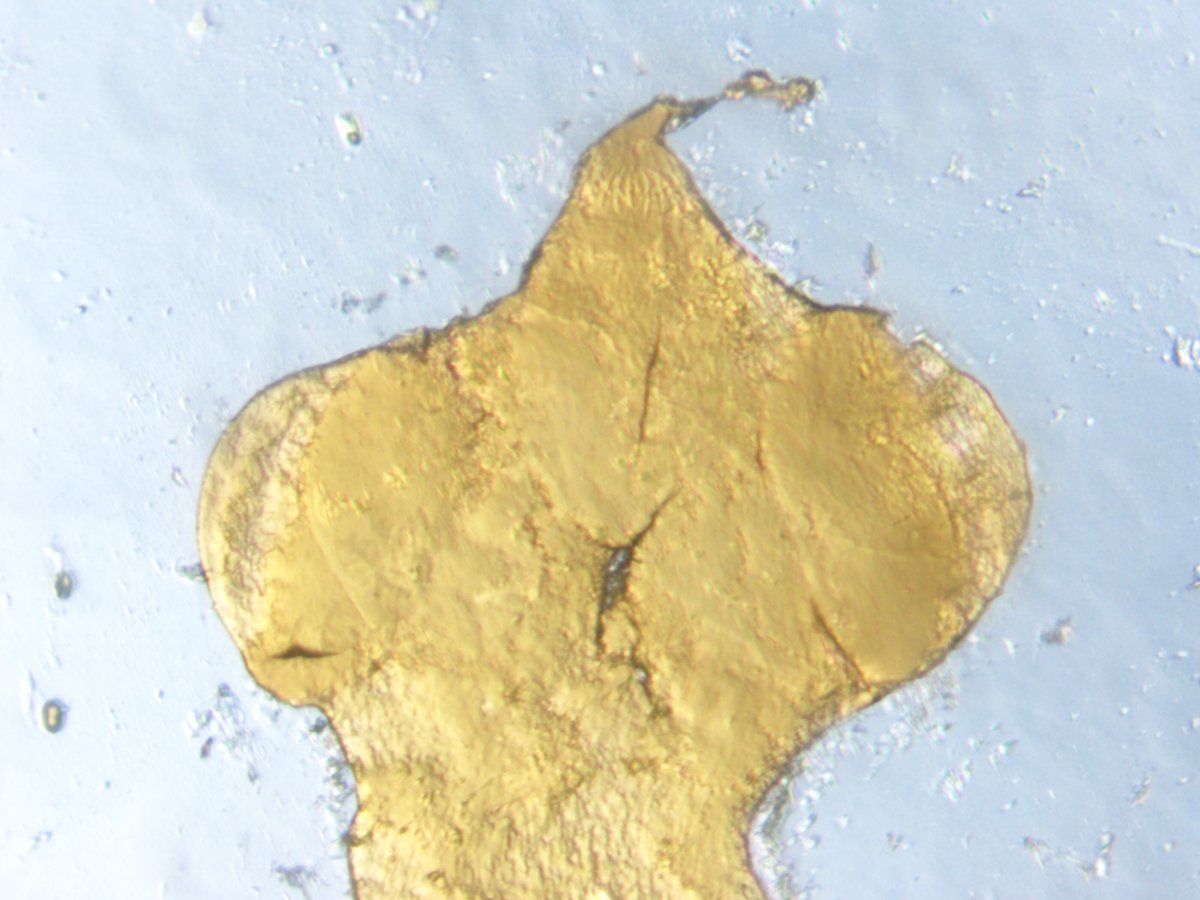
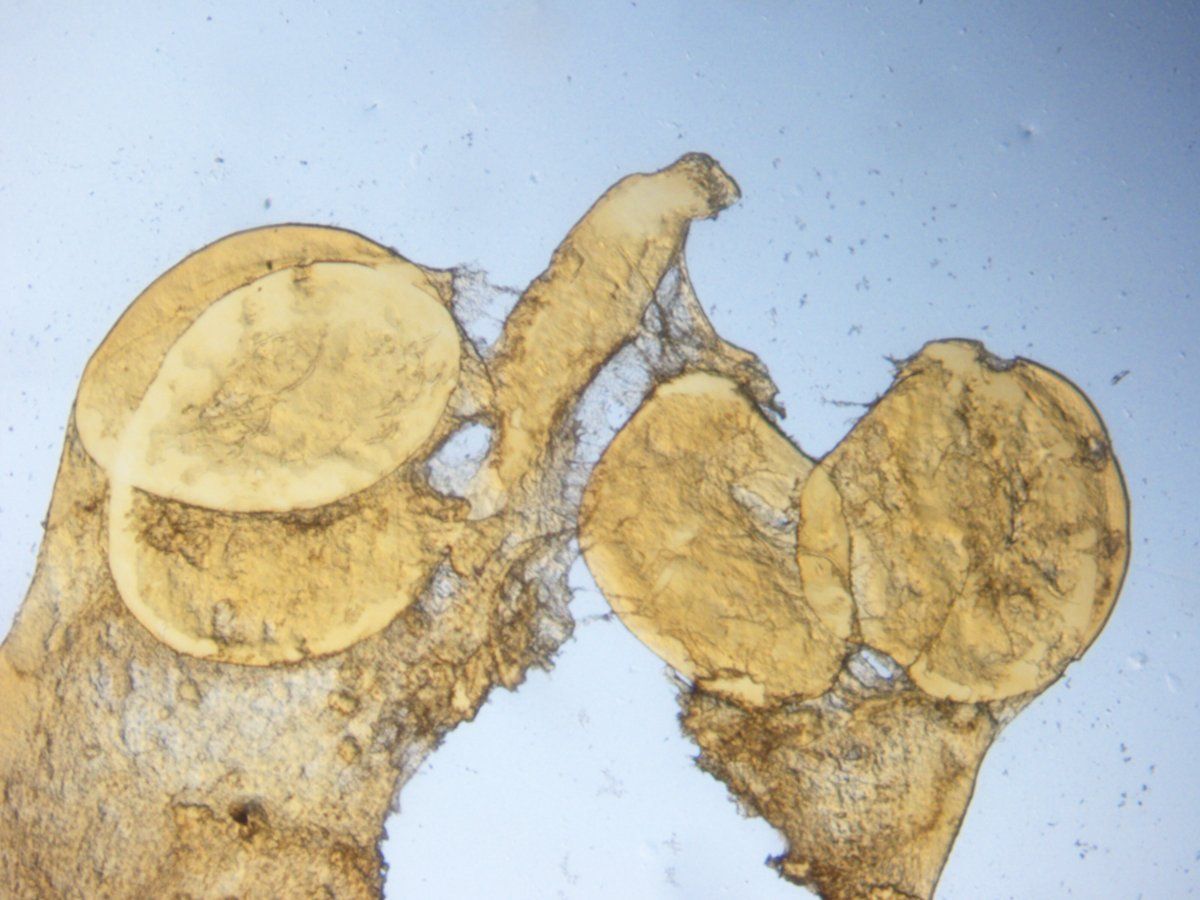
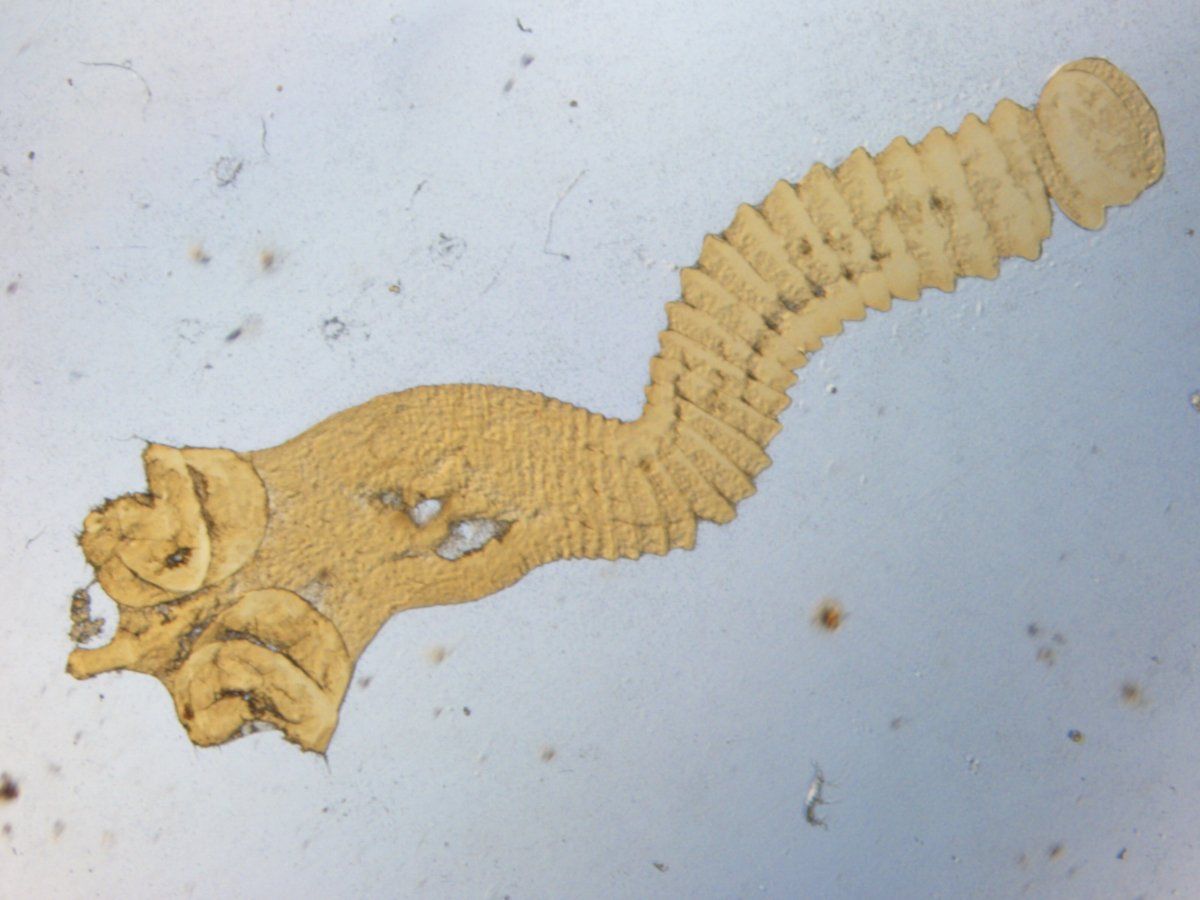
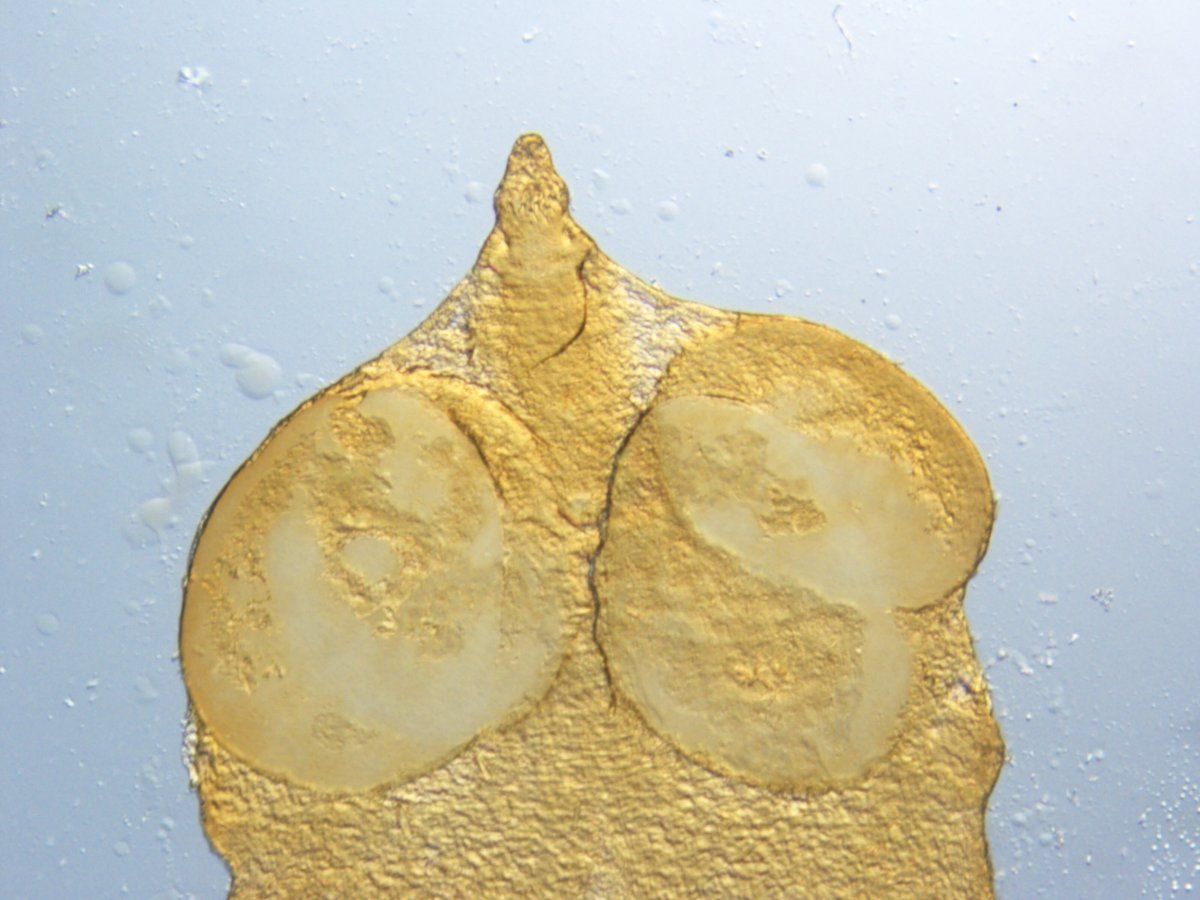
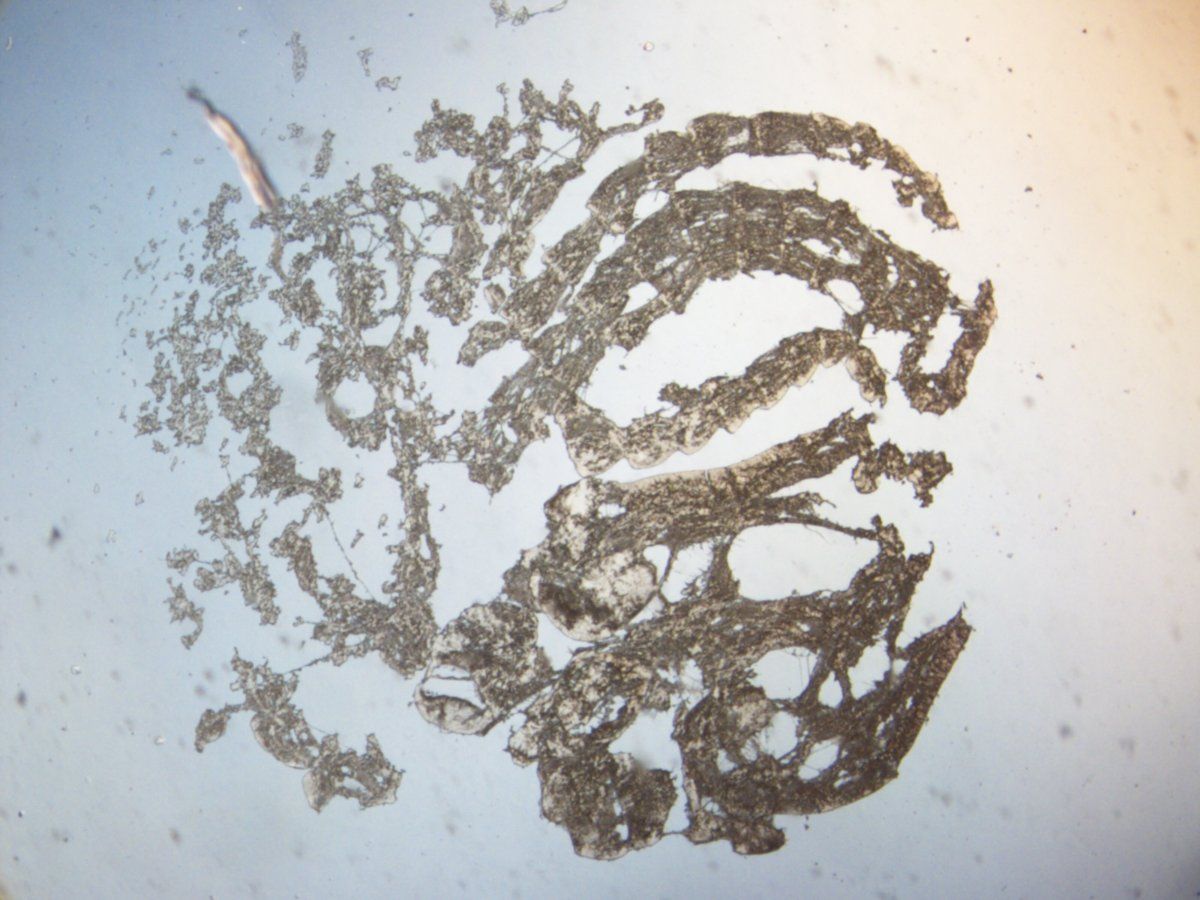
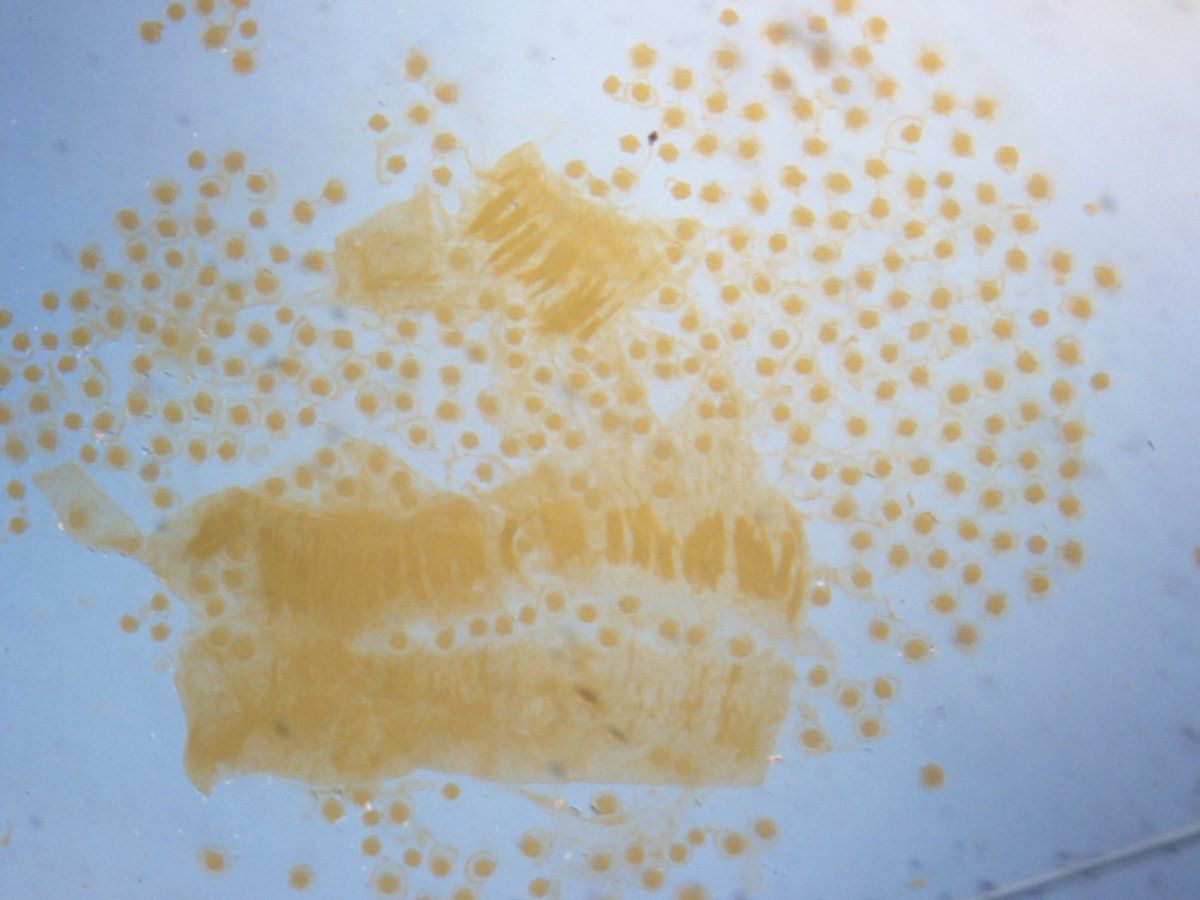
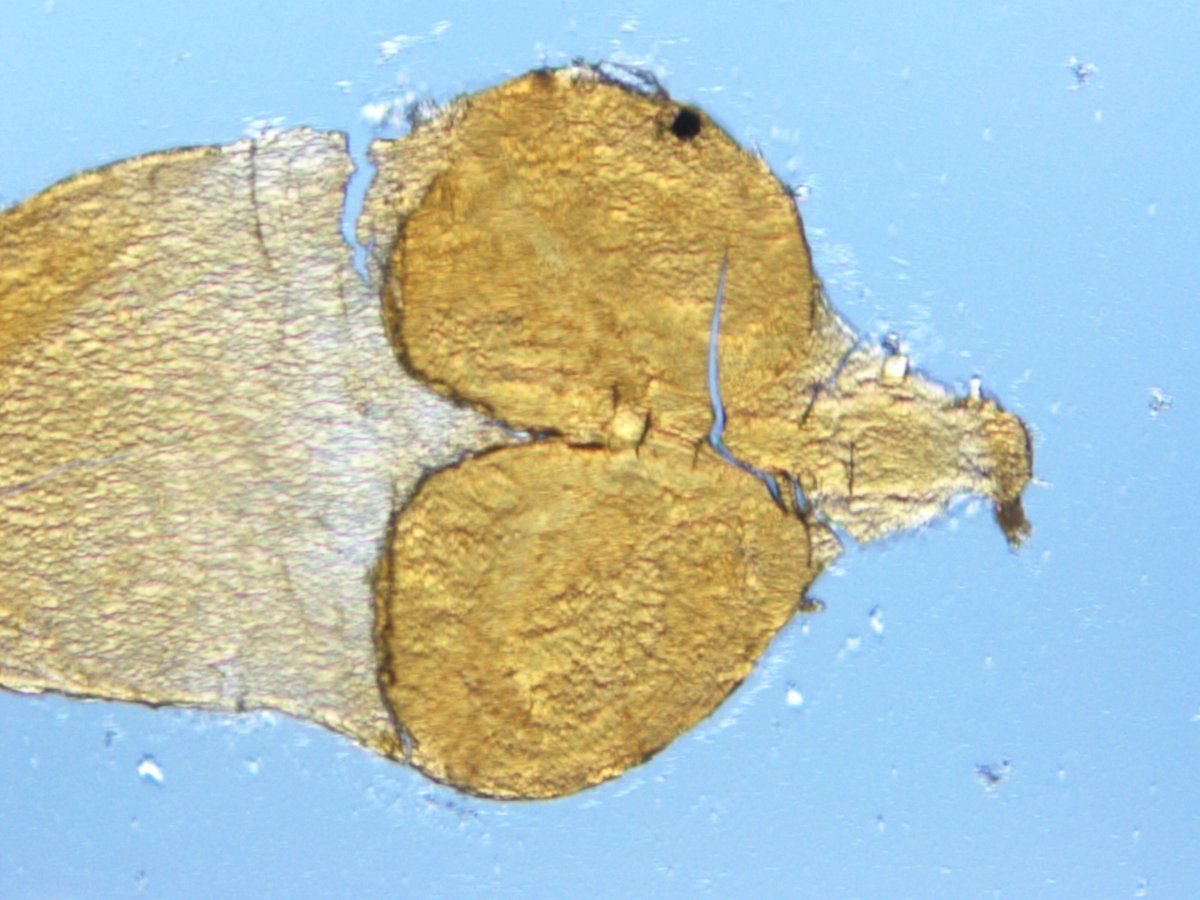
Specimens of Alcataenia are typically observed as flattened, golden-yellow, preserved cestodes. The scolex is characterized by a distinct, pointed anterior rostellum flanked by two prominent, rounded lateral suckers (acetabula). The body, or strobila, consists of a series of rectangular proglottids that may exhibit a serrated or craspedote appearance along the margins. Microscopic examination of the proglottids reveals internal tissue organization, including the presence of large, circular, egg-filled capsules.
Gallery
References
- ↑ Alcataenia. NCBI Nucleotide. https://www.ncbi.nlm.nih.gov/nuccore/?term=txid2586962[organism:exp]. Accessed 2026-09-05.
- ↑ Ámundur Nolsøe. Ecology of Endoparasites of the Atlantic Puffin (Fratercula arctica grabae) (Alcidae: Charadriiformes). Fróðskaparrit - Faroese Scientific Journal. 2024. https://doi.org/10.18602/fsj.v50i.783.
- ↑ Alcataenia Spasskaya, 1971. GBIF. https://www.gbif.org/species/4345239. Accessed 2026-09-05.
- ↑ Dataset view for Animalia / Platyhelminthes / Cestoda / Cyclophyllidea / Dilepididae / Alcataenia constructed from imageomics/TreeOfLife-200M records under this taxonomic path. Hugging Face Datasets. https://huggingface.co/datasets/imageomics/TreeOfLife-200M