albertense
Taxonomy
This page represents the following TreeOfLife-200M taxonomic path.[1]
- Kingdom: Animalia
- Phylum: Porifera
- Class: Tienodictyidae
- Order: Hammatostroma
- Family: albertense
Visual Description
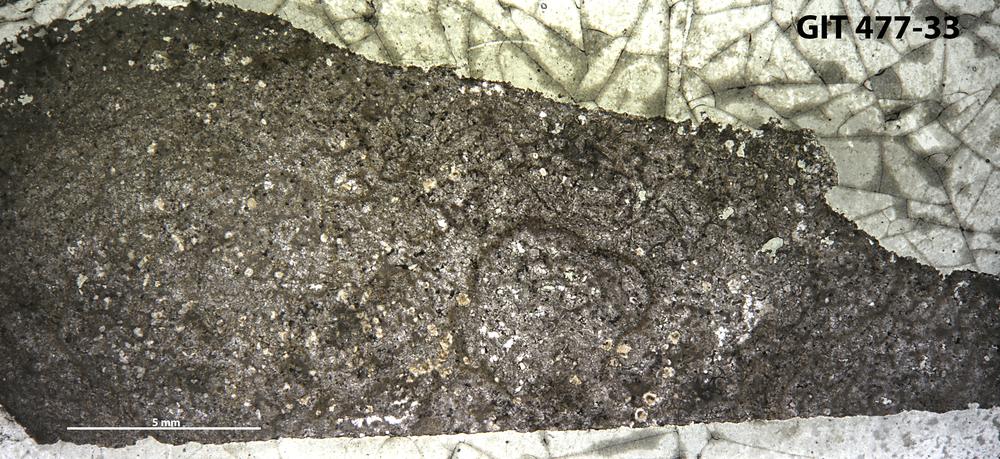
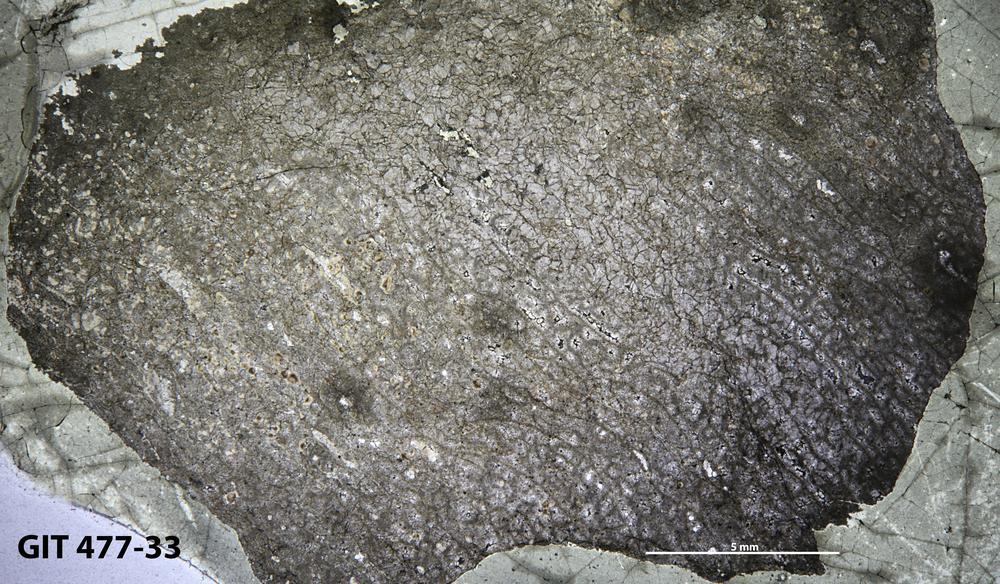
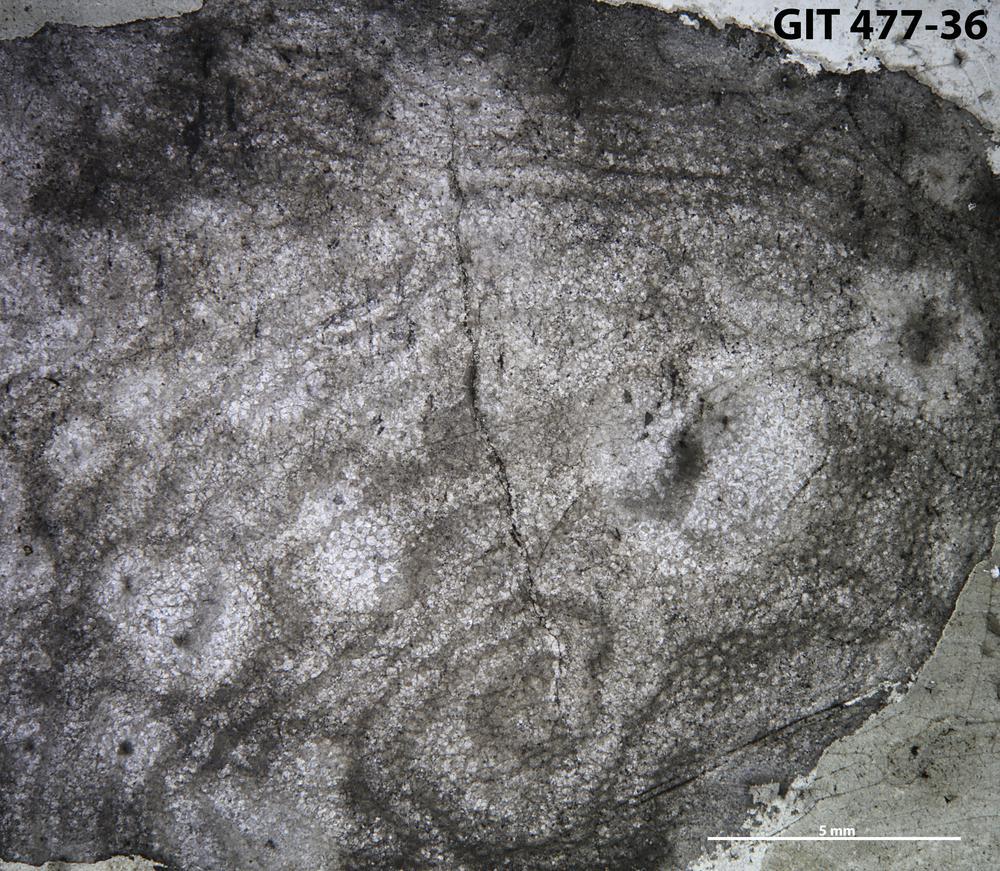
Available GBIF-linked museum-image records under Hammatostroma albertense show fossil stromatoporoid material presented as hand-specimen or curated catalog items (invertebrate zoology fossil specimen images), rather than diagnostic microscopic thin-section views. As such, visible features in these images are primarily gross morphology and surface/texture of the fossil fragment, with no consistent, universally observable microstructural characters derivable from these specimen photographs alone.[1]
Diagenetic context relevant to stromatoporoid preservation
Stromatoporoid skeletons (hypercalcified sponges) commonly undergo post-mortem diagenesis that can overprint primary textures. A general three-stage framework synthesized from Palaeozoic stromatoporoid studies includes: (1) early micrite filling of gallery/void space after death, (2) fabric-retentive recrystallisation (FRR) producing fabric-retentive irregular calcite cement (FRIC) that is often oriented relative to growth layers, and (3) later dissolution/silicification and burial-pressure dissolution forming stylolites. This framework is used to interpret how skeletal carbonate and gallery cements are altered and how cementation history is recorded in textures and mineral fabrics.[2]
Taxon-related variation in diagenetic cement textures (generalizable)
Although FRR/FRIC overprinting occurs broadly among stromatoporoids, the detailed appearance and geometry of FRIC can vary with taxon. Even neighboring encrusting stromatoporoids may show FRIC cement styles that do not cross taxonomic boundaries, interpreted as reflecting interactions among skeletal architecture/microstructure and diagenetic recrystallisation.[2]
Gallery
References
- 1 2 Dataset view for Animalia / Porifera / Tienodictyidae / Hammatostroma / albertense constructed from imageomics/TreeOfLife-200M records under this taxonomic path. Hugging Face Datasets. https://huggingface.co/datasets/imageomics/TreeOfLife-200M.
- 1 2 Stephen Kershaw; Axel Munnecke; Emilia Jarochowska; Graham Young. Palaeozoic stromatoporoid diagenesis: a synthesis. Facies. 2021. https://doi.org/10.1007/s10347-021-00628-x.