Agelas flabelliformis
Taxonomy
This page represents the following TreeOfLife-200M taxonomic path.[1]
- Kingdom: Animalia
- Phylum: Porifera
- Class: Demospongiae
- Order: Agelasida
- Family: Agelasidae
- Genus: Agelas
- Species: Agelas flabelliformis
Visual Description
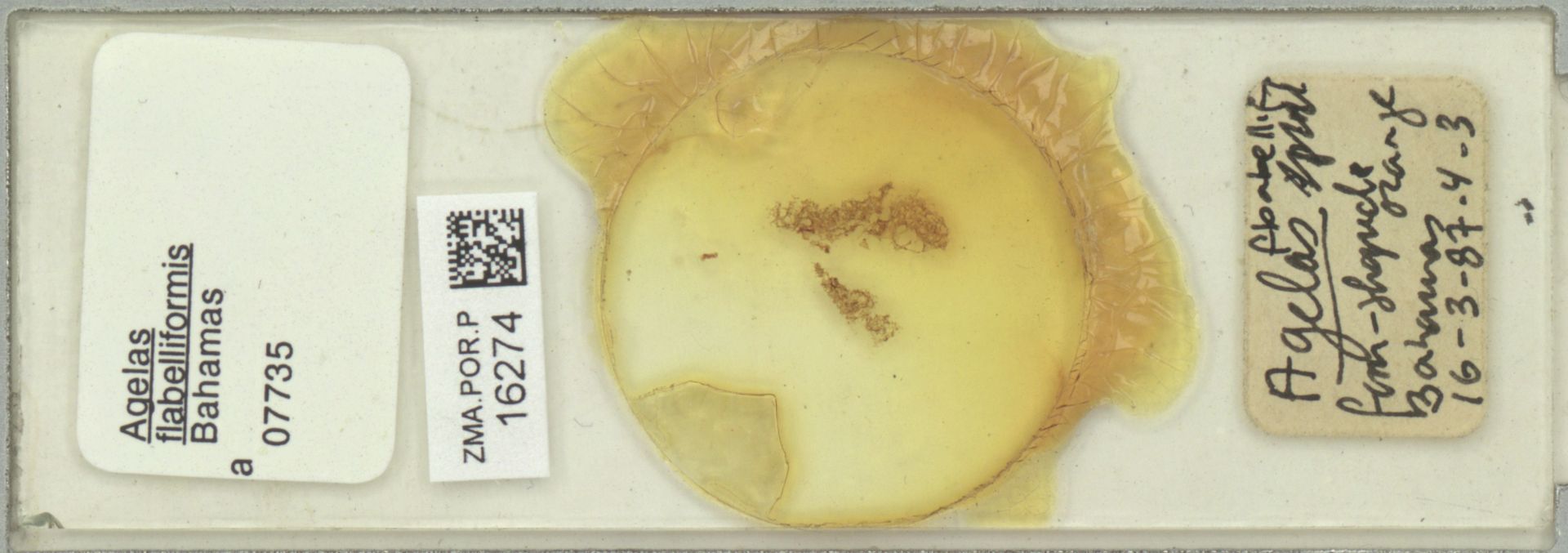
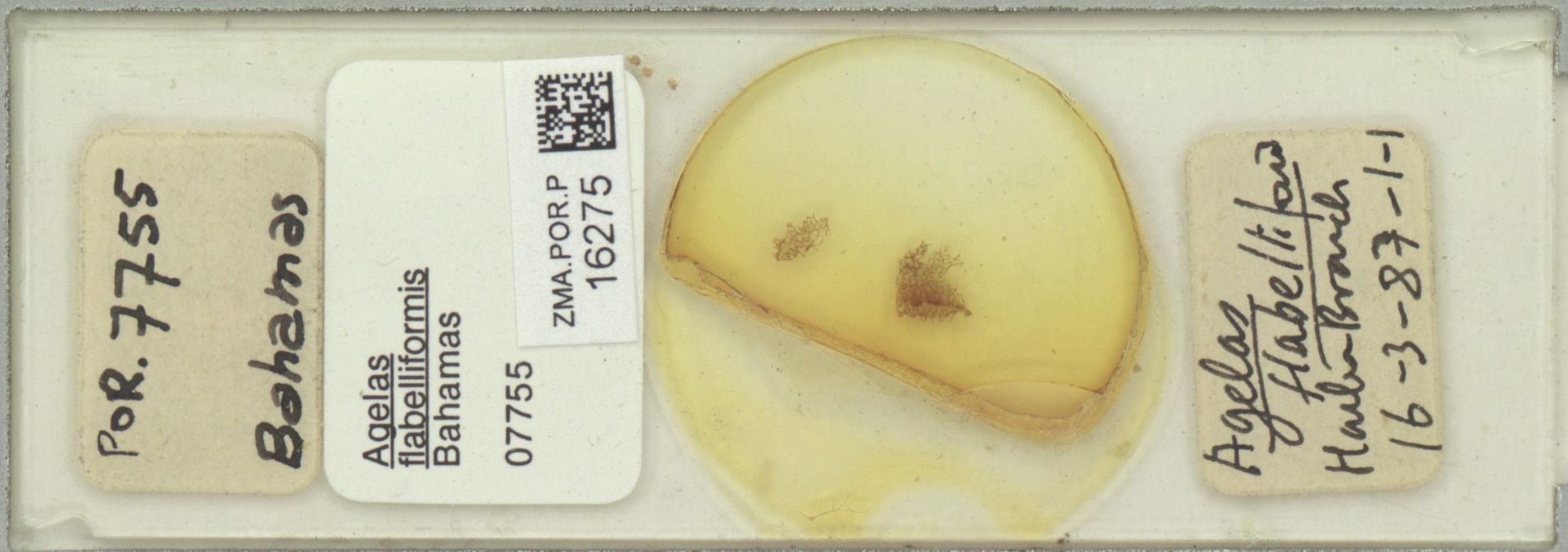
Museum specimen images for Agelas flabelliformis (preserved material) show a generally upright, fan- or flabellum-shaped growth form. The sponge appears as thin, lamellar tissue arranged in a radiating/pleated manner, producing a sheet-like, flexible look rather than an obviously massive form. In preserved specimens, coloration appears light to medium brown/cream.
Nomenclature and Taxonomic Status
GBIF lists Agelas flabelliformis (Carter, 1883) as an accepted species name. GBIF also reports the basionym Ectyon flabelliformis Carter, 1883.
Ecology and Holobiont Context (General for Sponges)
Across sponges generally, the review by Pita et al. frames sponges as holobionts (host sponge + associated microbes) and emphasizes that sponge-associated microbiomes can be conceptualized as having a relatively stable “core” community with a more variable fraction shaped by environmental conditions. This general framework is relevant for interpreting microbiome patterns and host–microbe stability in Agelasidae.
Gallery
References
- ↑ Dataset view for Animalia / Porifera / Demospongiae / Agelasida / Agelasidae / Agelas / flabelliformis constructed from imageomics/TreeOfLife-200M records under this taxonomic path. Hugging Face Datasets. https://huggingface.co/datasets/imageomics/TreeOfLife-200M.