Afrosyrphus
Taxonomy
This page represents the following TreeOfLife-200M taxonomic path.[1]
- Kingdom: Animalia
- Phylum: Arthropoda
- Class: Insecta
- Order: Diptera
- Family: Syrphidae
- Genus: Afrosyrphus
Visual Description
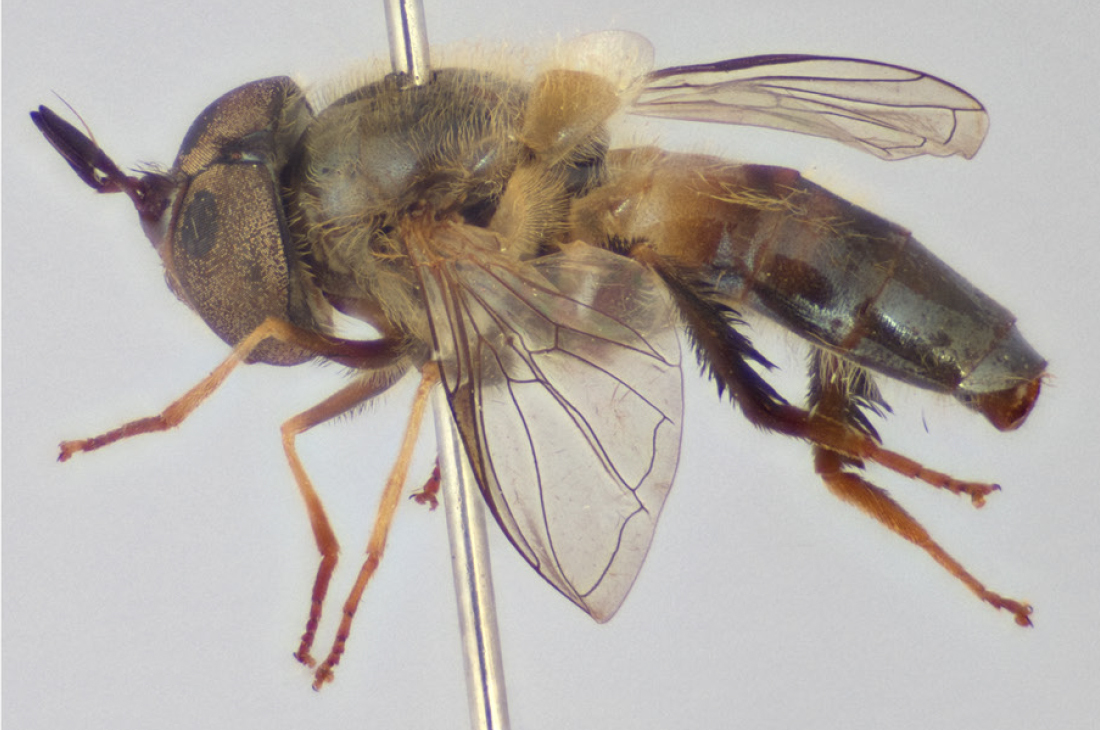
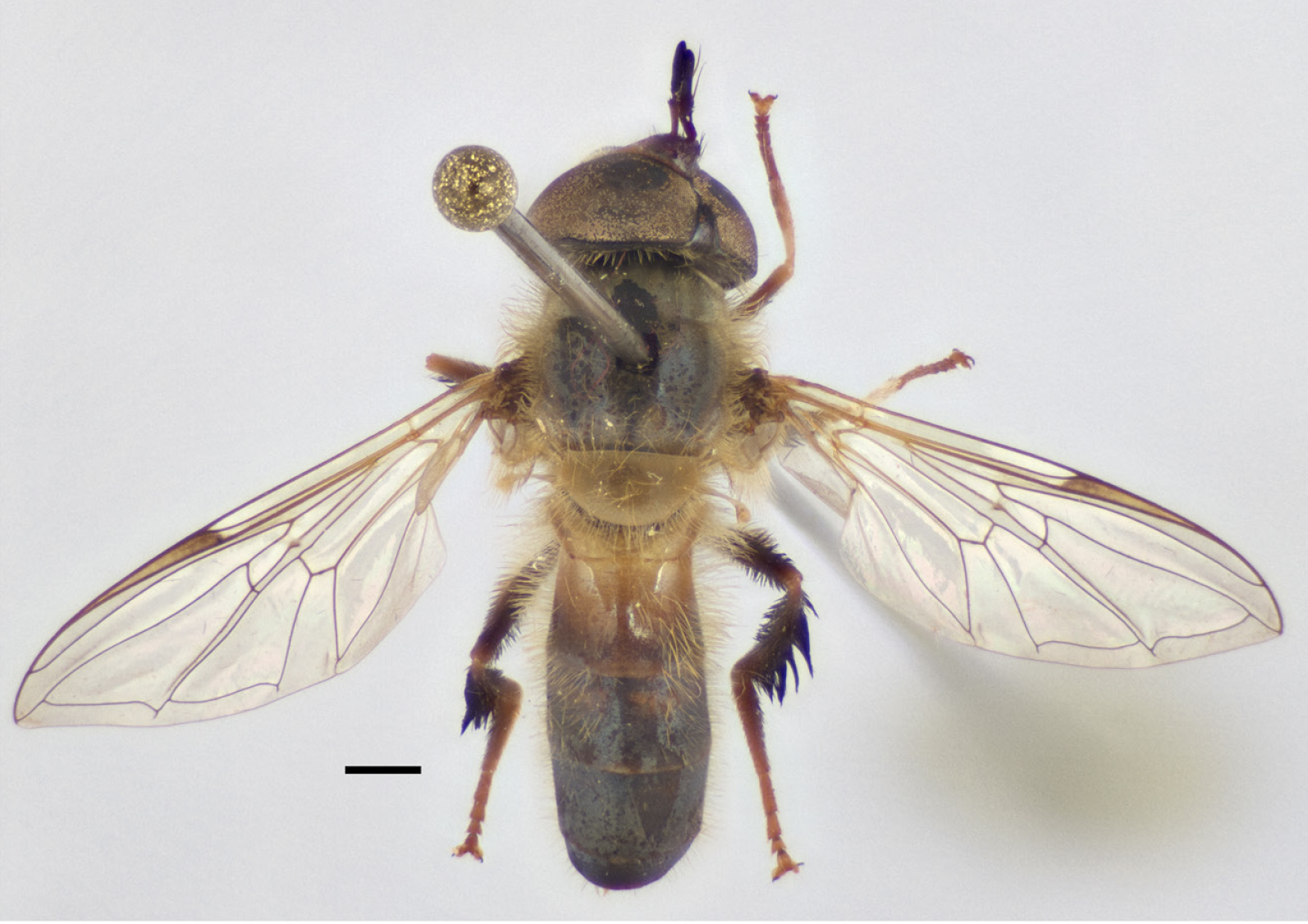
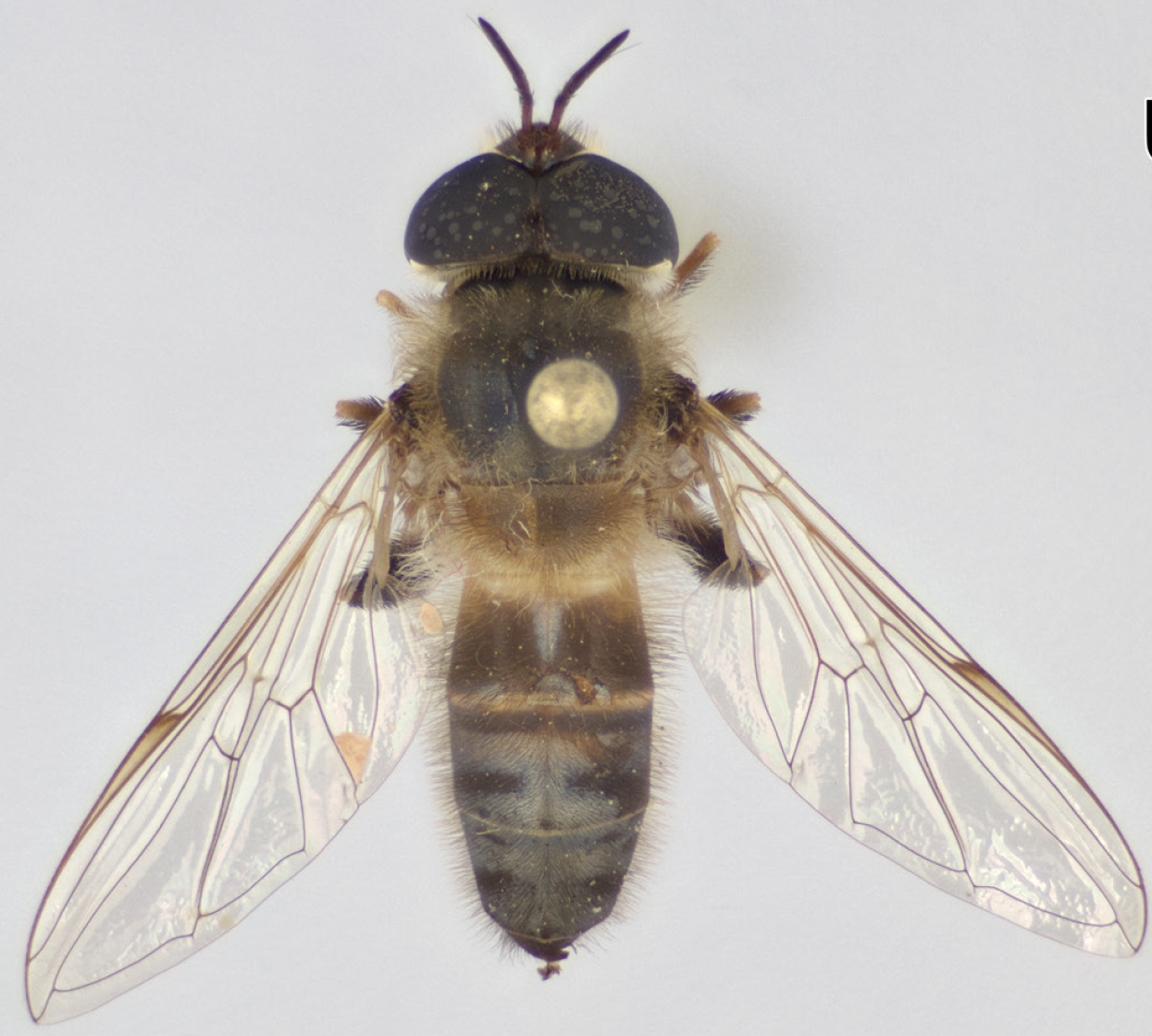
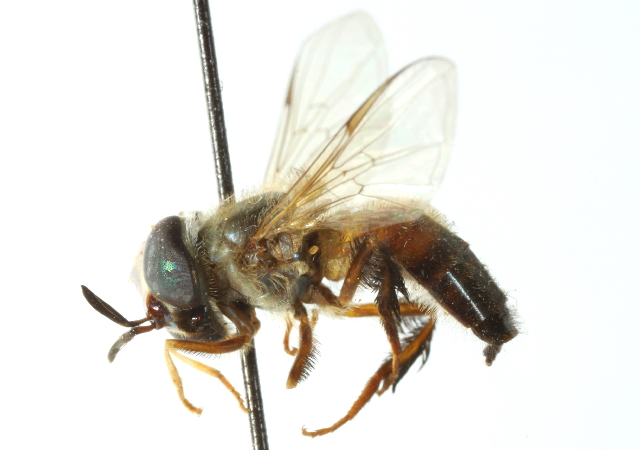
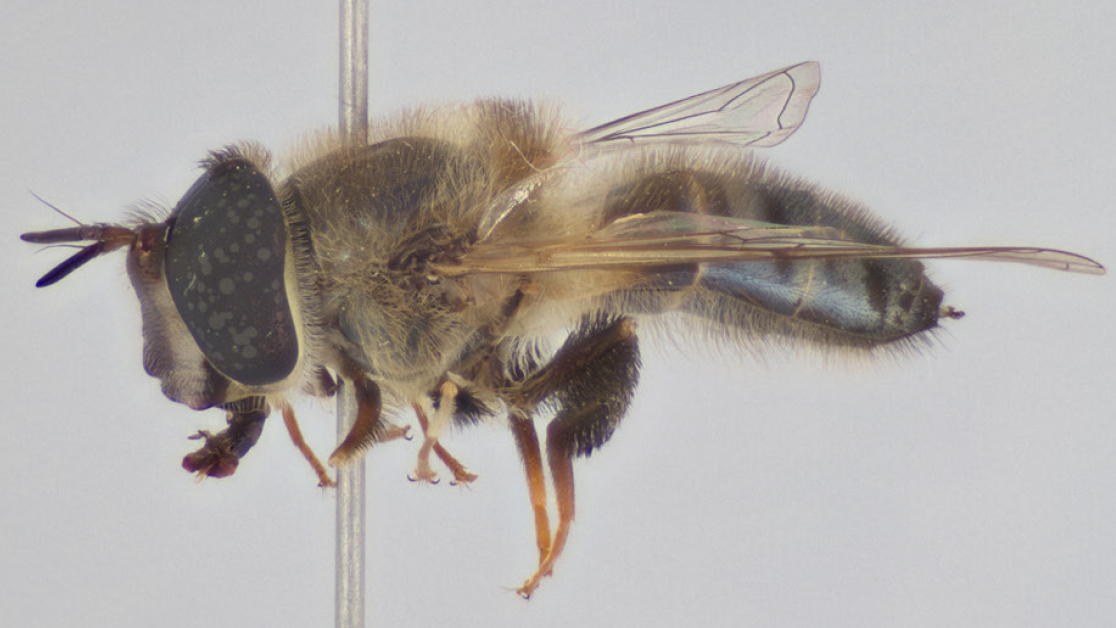
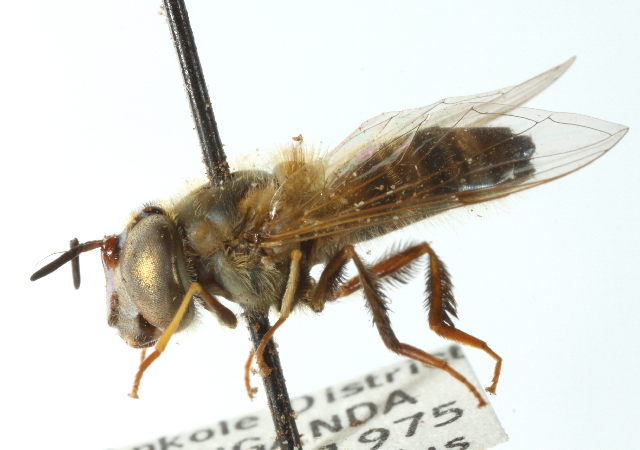
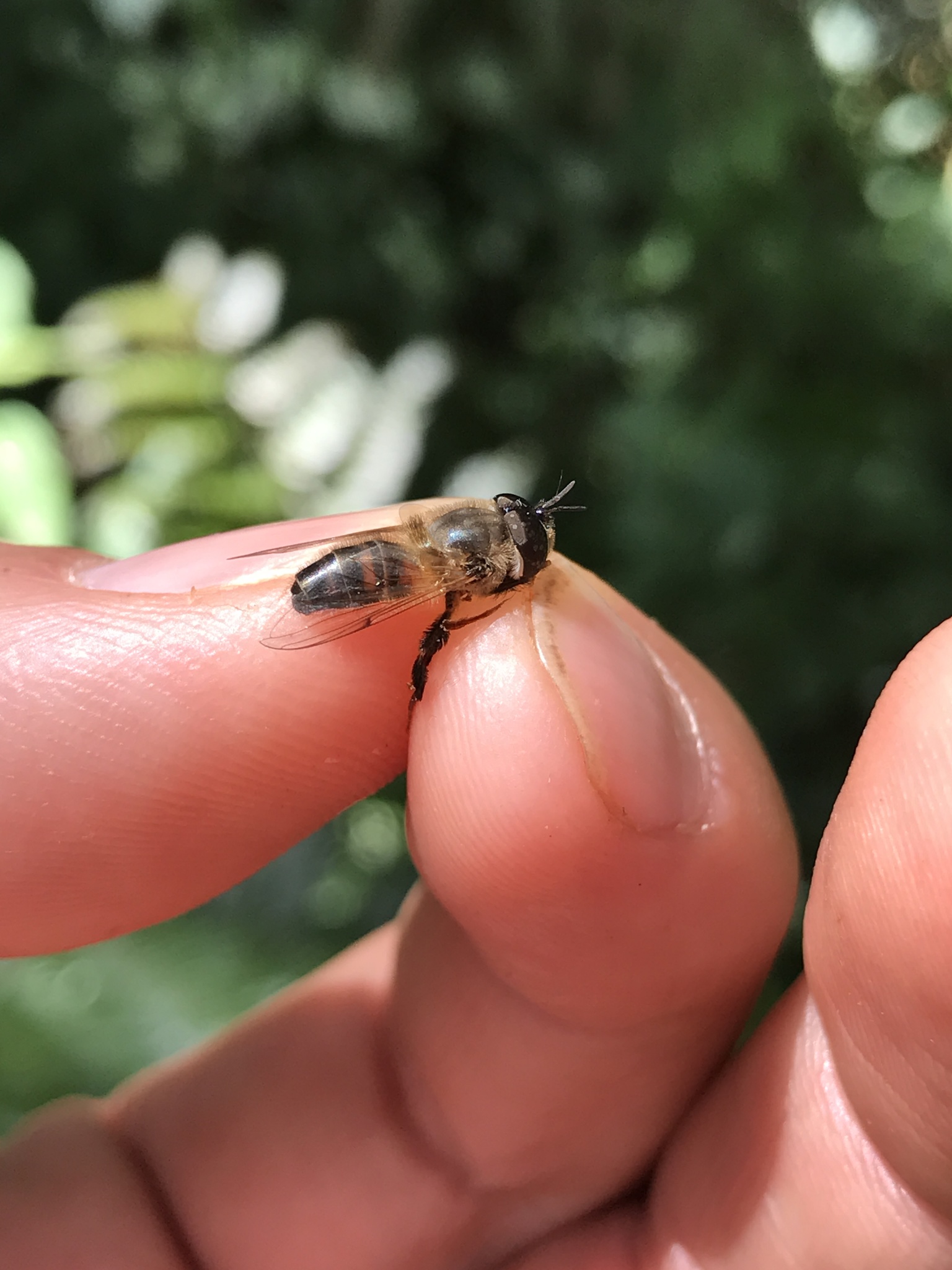
Afrosyrphus species are moderately robust, pilose flower flies. They are characterized by elongated, porrect antennae where the postpedicel is longer than the scape and pedicel combined, and a bare, subbasal arista [2]. The face is straight in profile with a low tubercle and a shining, dark median facial vitta [2]. The thorax is dull and pruinose, covered in long pile that does not obscure the ground color, and the subscutellar fringe is long and dense [2]. Observations of specimens in the TreeOfLife-200M dataset confirm these features, including the robust, pilose body form and the distinct, elongated antennal structure [1].
Biology and Ecology
The genus Afrosyrphus is restricted to the Afrotropical Region [2]. These flies are known for their mimicry of stingless bees [2].
The larvae are aphidophagous, feeding on various aphid species across multiple plant families [2]. Mature larvae are broad and strongly flattened, while the puparium is drop-shaped with a long posterior extension formed by a pair of stigmatic tubes [2]. Larvae may enter a quiescent state under low humidity, a hypothesized adaptation for surviving drought [2]. Adults have been observed using landmark mating strategies, such as hovering in forest openings or canopy gaps [2].
Species
The genus includes two known species: A. varipes Curran, 1927 and A. schmuttereri Mengual et al., 2020 [2]. A. schmuttereri is distinguished from A. varipes by its more robust build, darker pilosity, and specific coloration patterns on the abdomen, face, and femora [2].
Gallery
References
- 1 2 Dataset view for Animalia / Arthropoda / Insecta / Diptera / Syrphidae / Afrosyrphus constructed from imageomics/TreeOfLife-200M records under this taxonomic path. Hugging Face Datasets. https://huggingface.co/datasets/imageomics/TreeOfLife-200M.
- 1 2 3 4 5 6 7 8 9 10 11 Ximo Mengual; Axel Ssymank; Jeffrey H. Skevington; Menno Reemer; Gunilla Ståhls. The genus Afrosyrphus Curran (Diptera, Syrphidae), with a description of a new species. European Journal of Taxonomy. 2020. https://doi.org/10.5852/ejt.2020.635.