Aedes albopictus
Taxonomy
This page represents the following TreeOfLife-200M taxonomic path.[1]
- Kingdom: Animalia
- Phylum: Arthropoda
- Class: Insecta
- Order: Diptera
- Family: Culicidae
- Genus: Aedes
- Species: Aedes albopictus
Visual Description
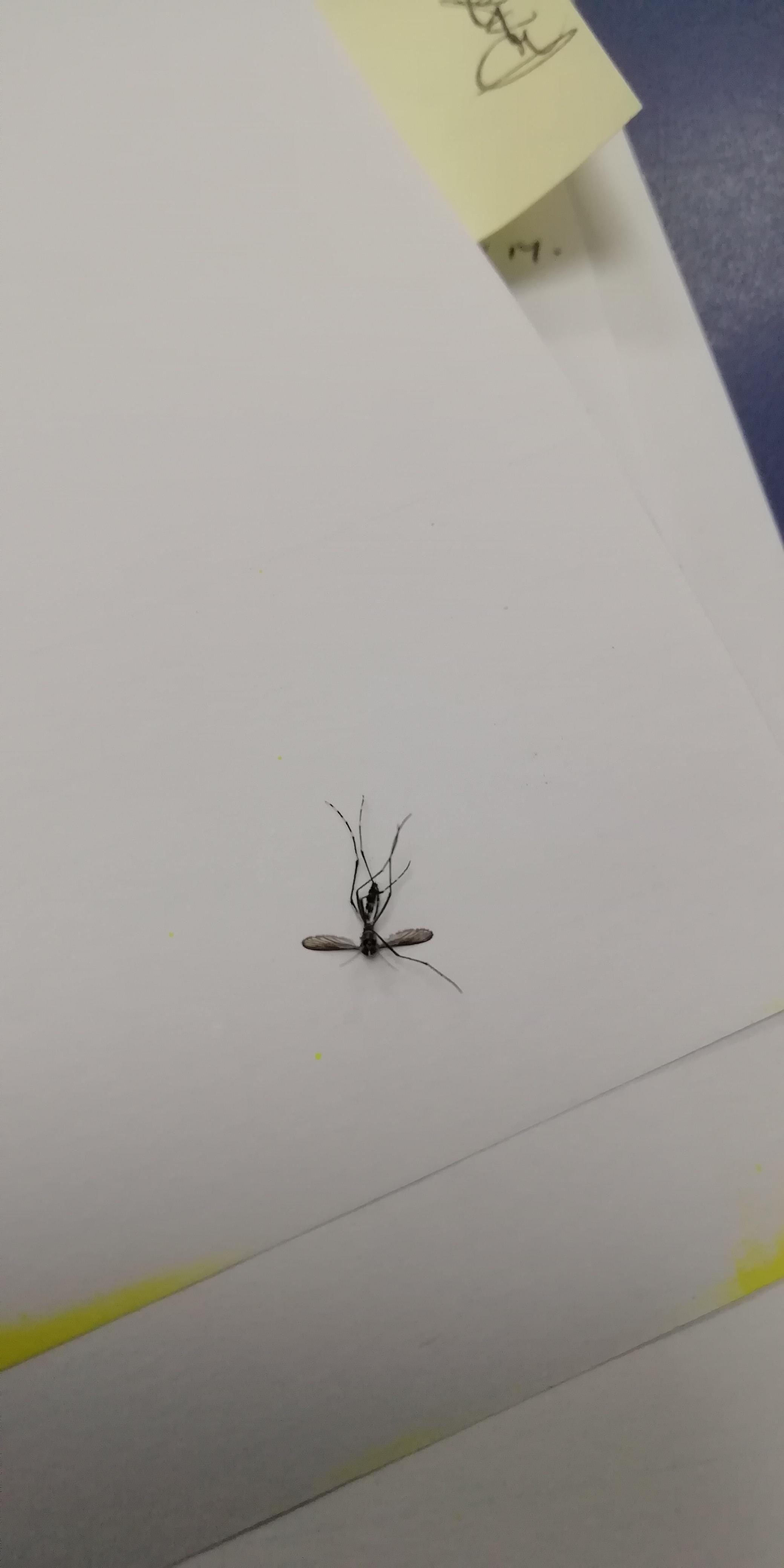
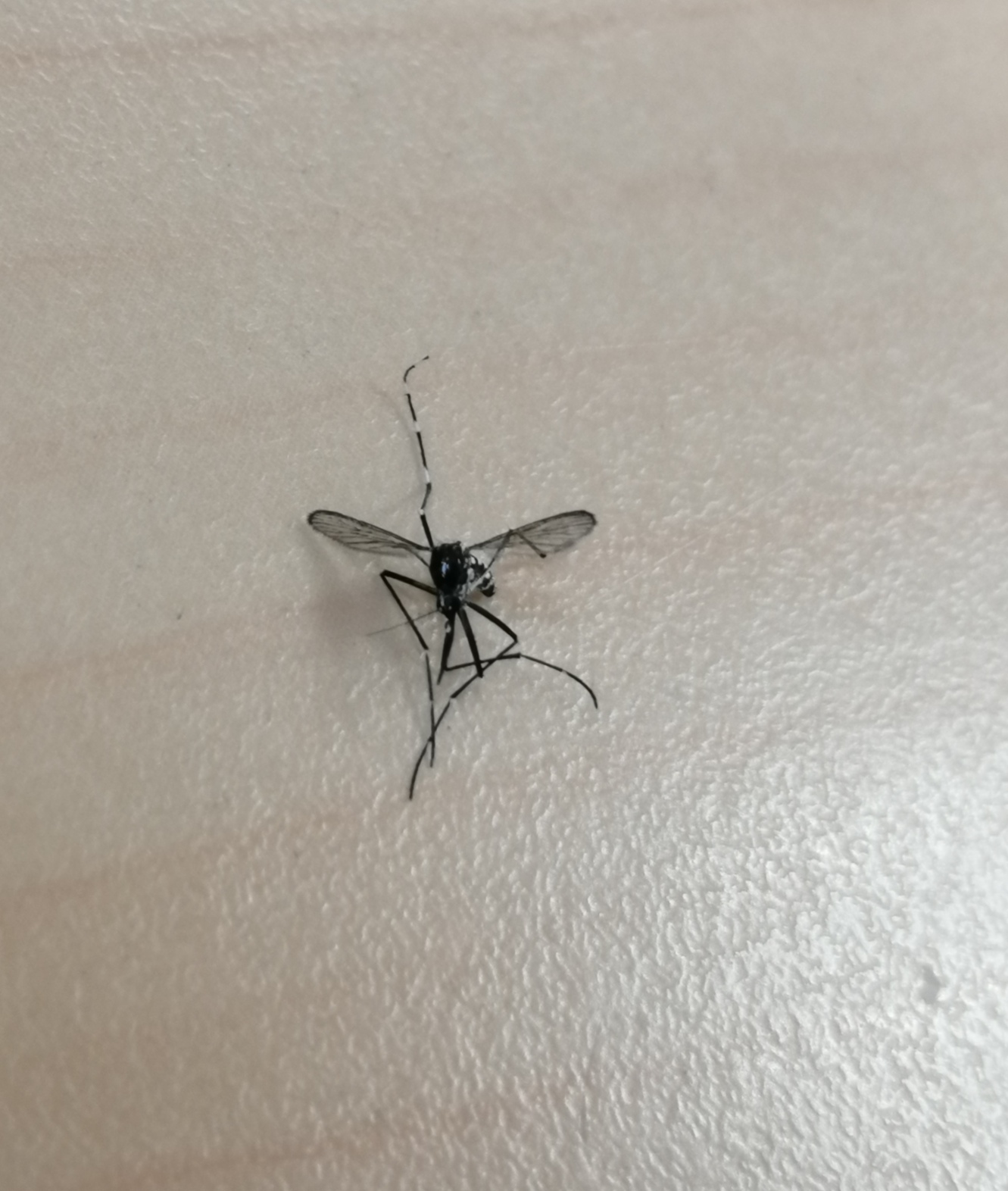
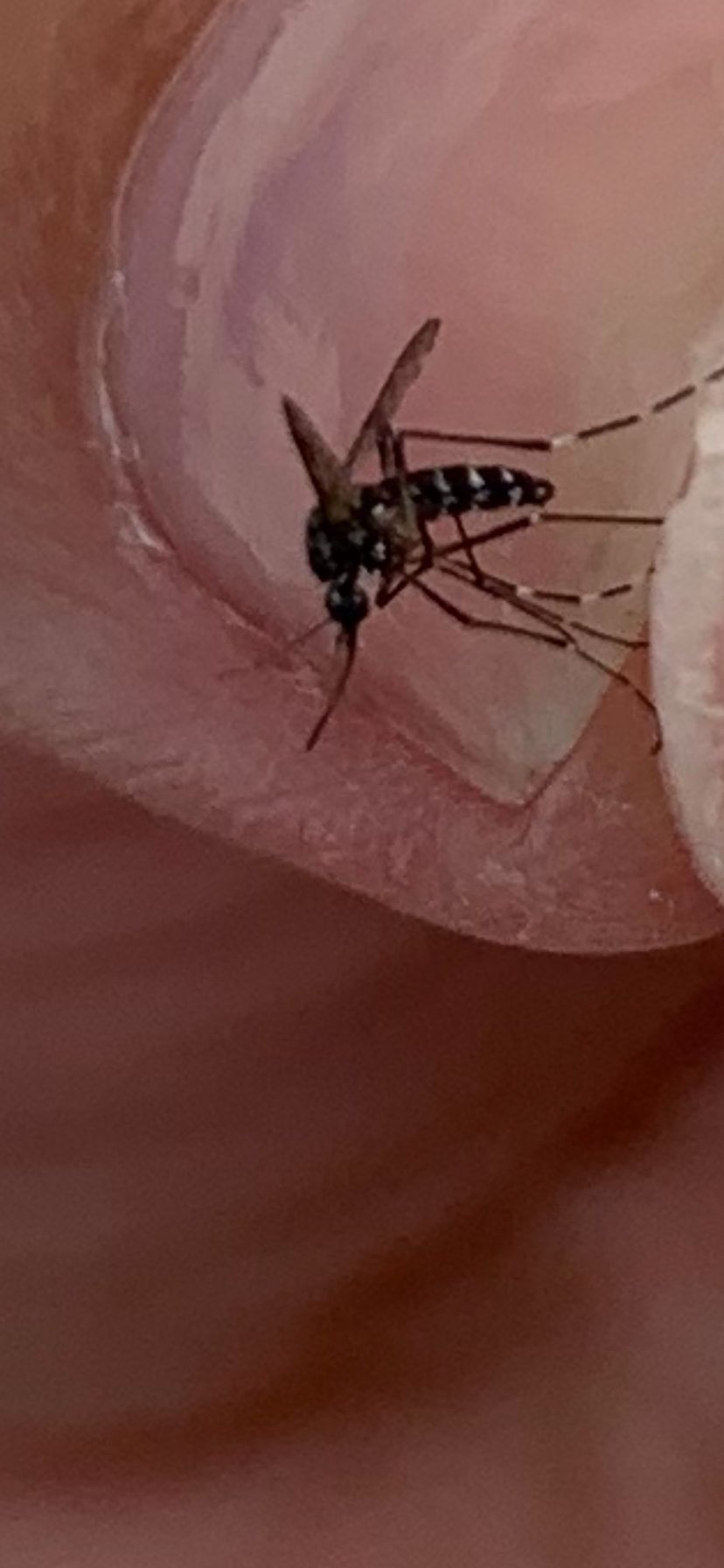
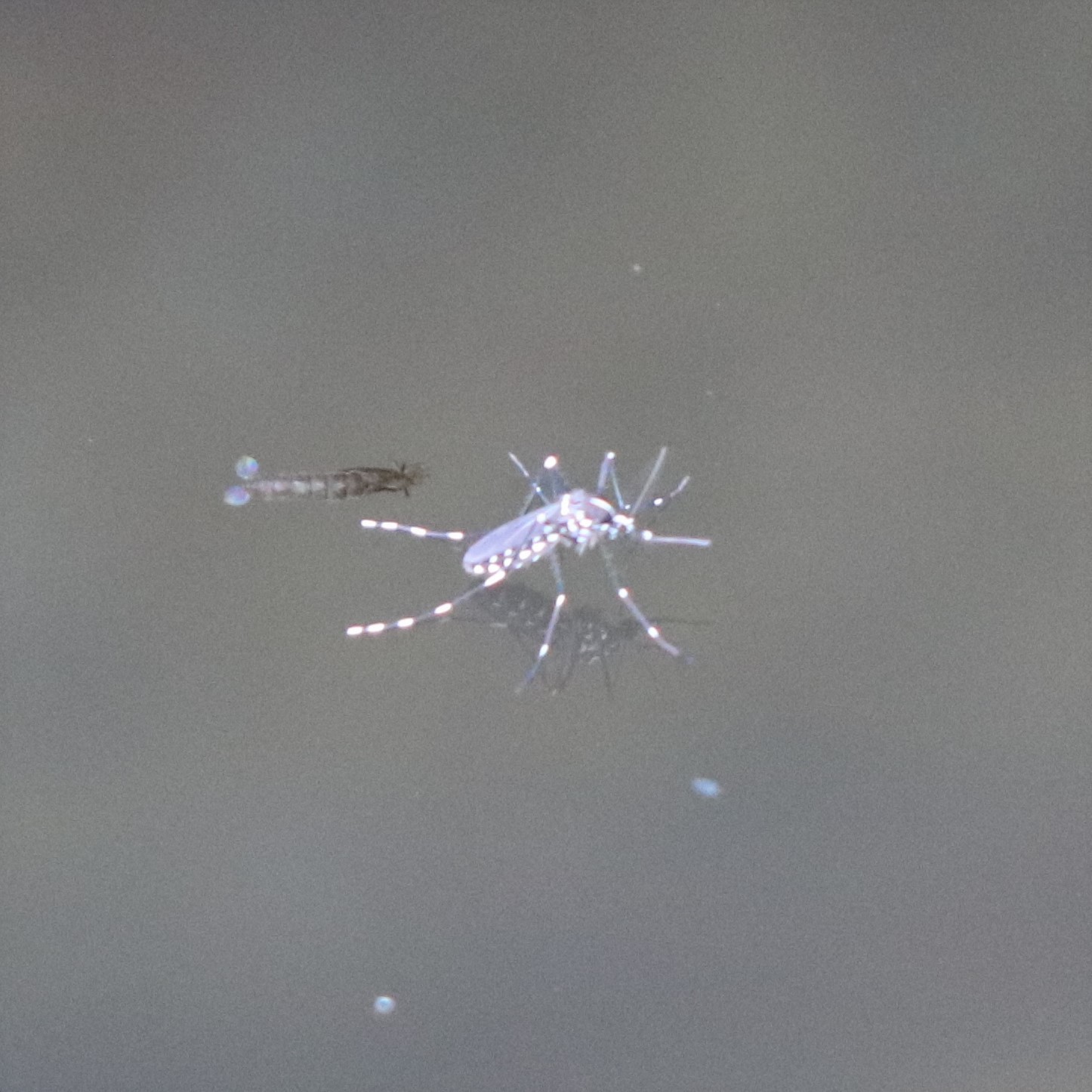
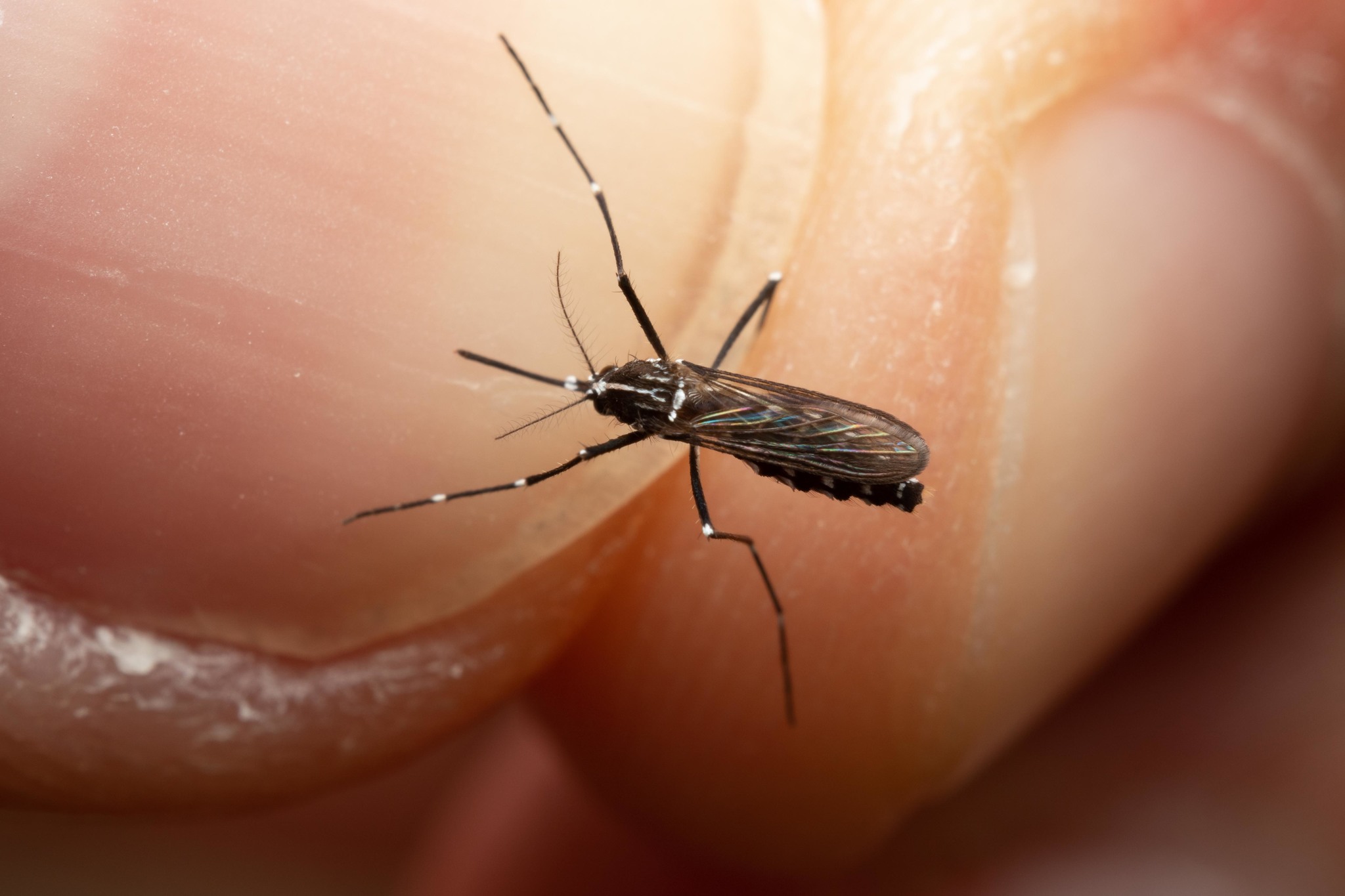
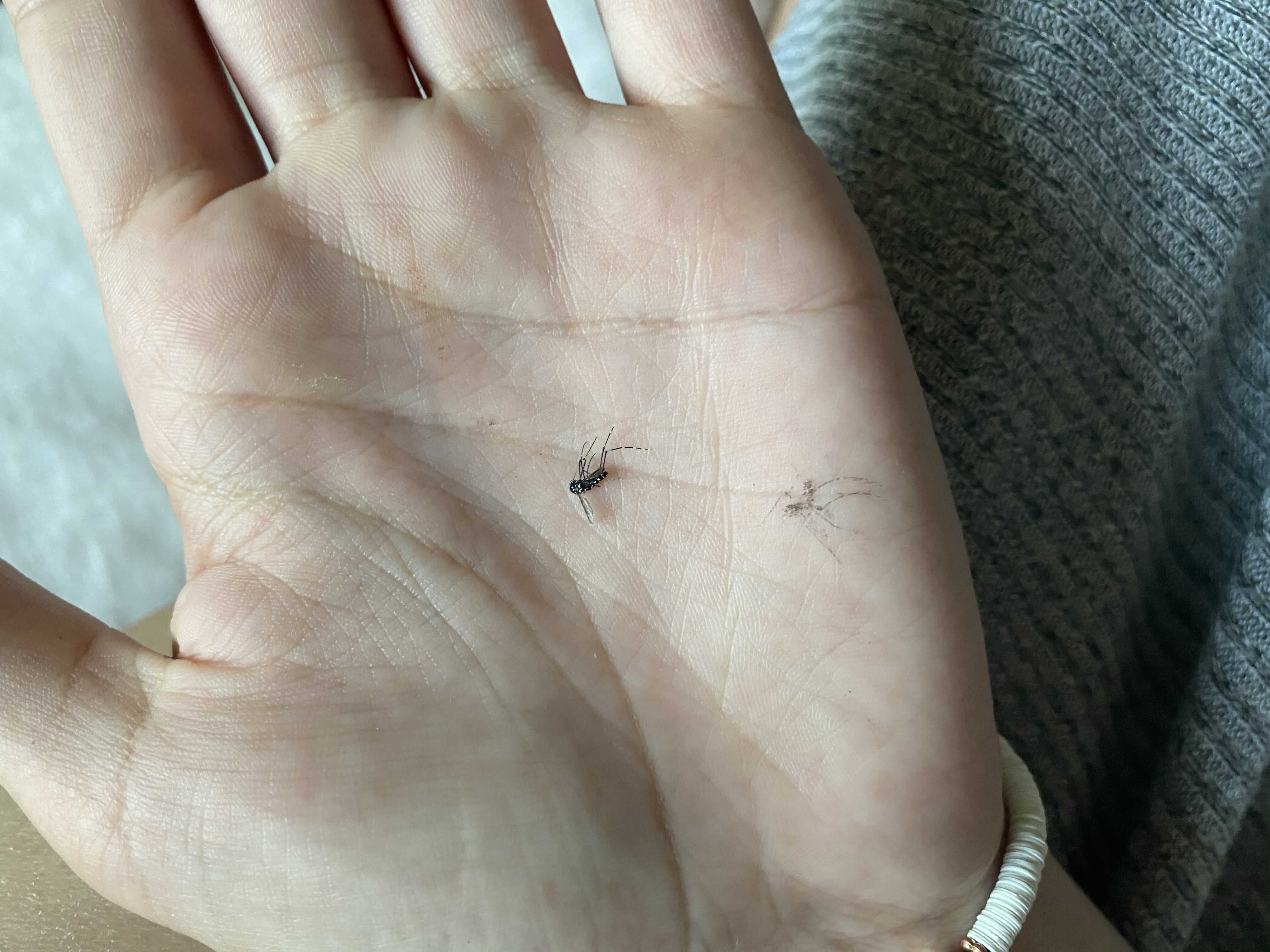
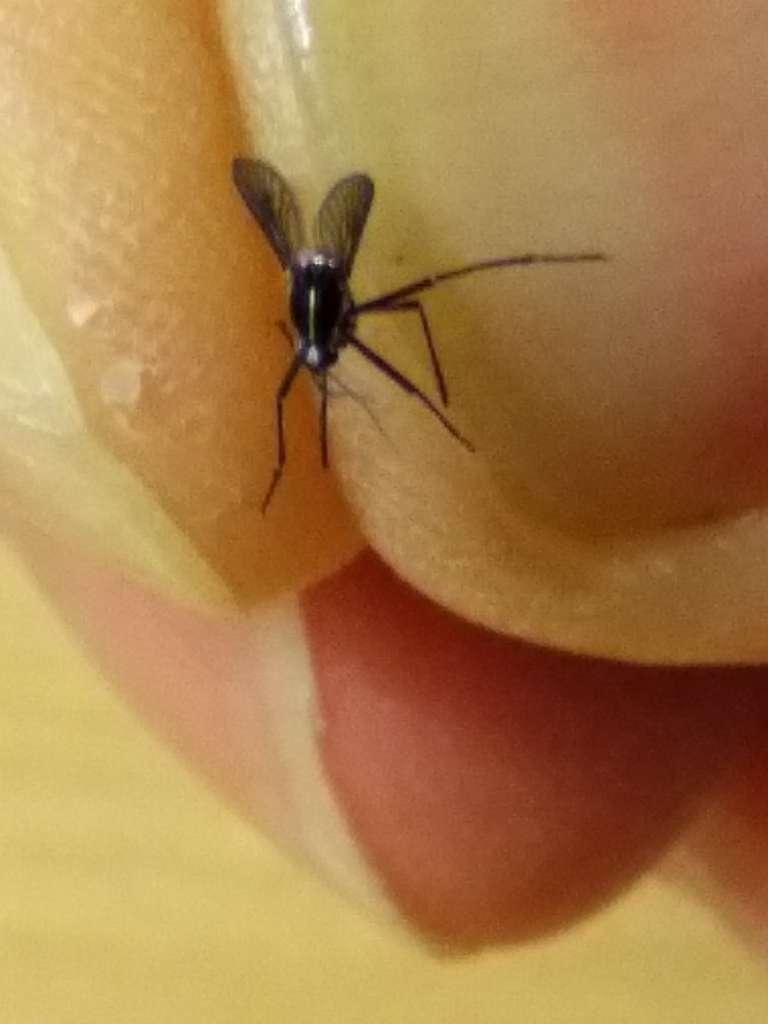
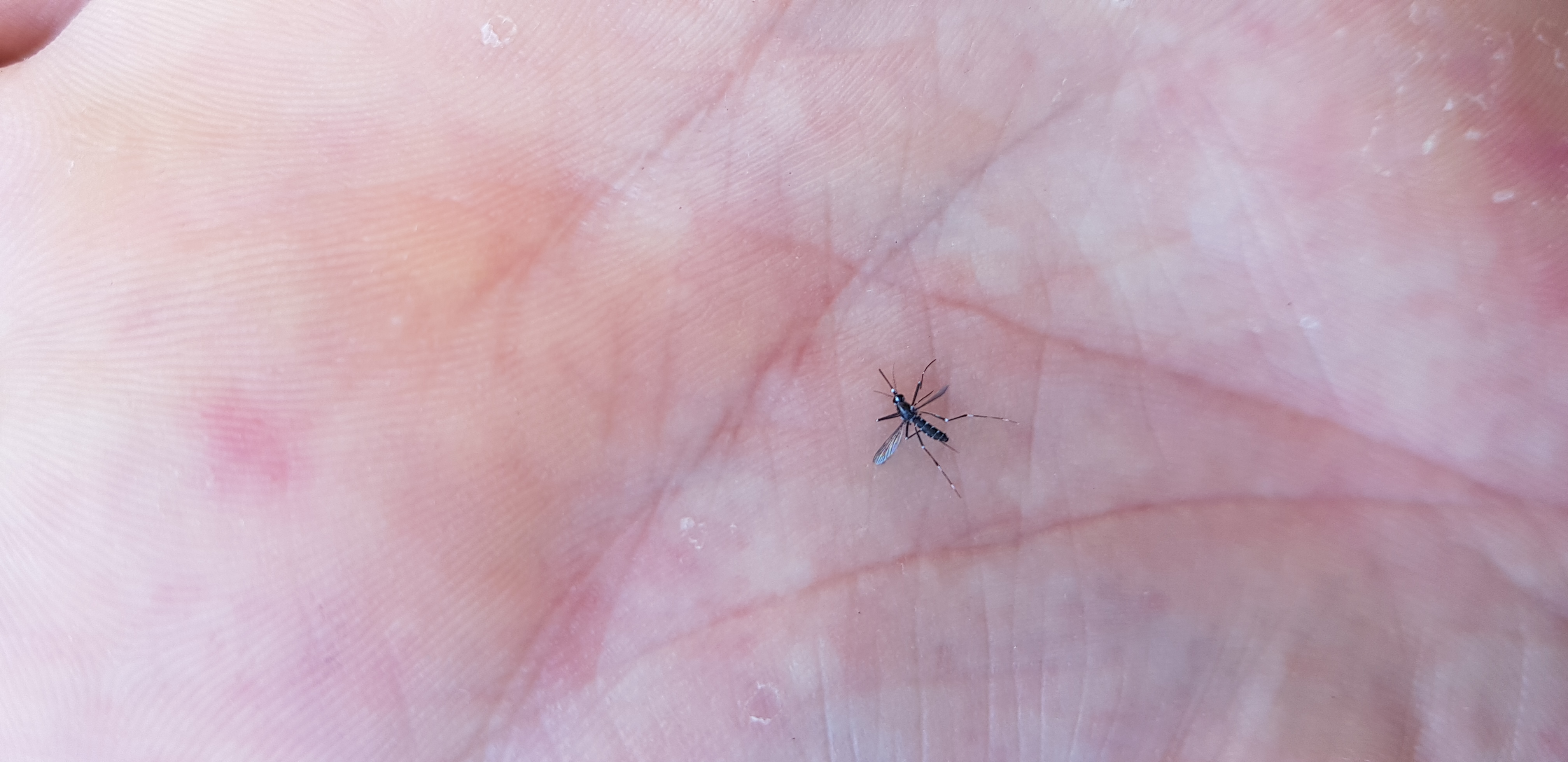
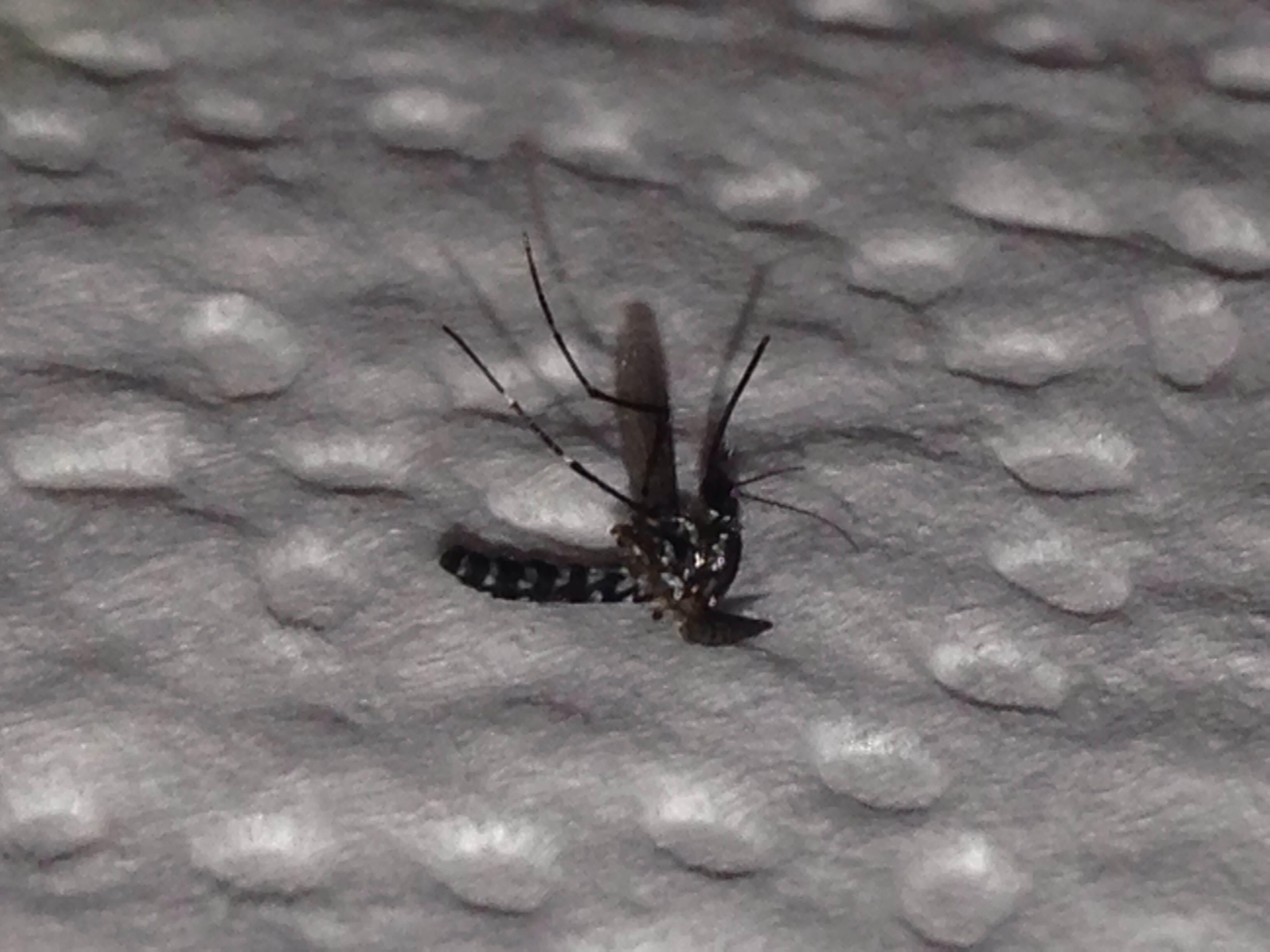
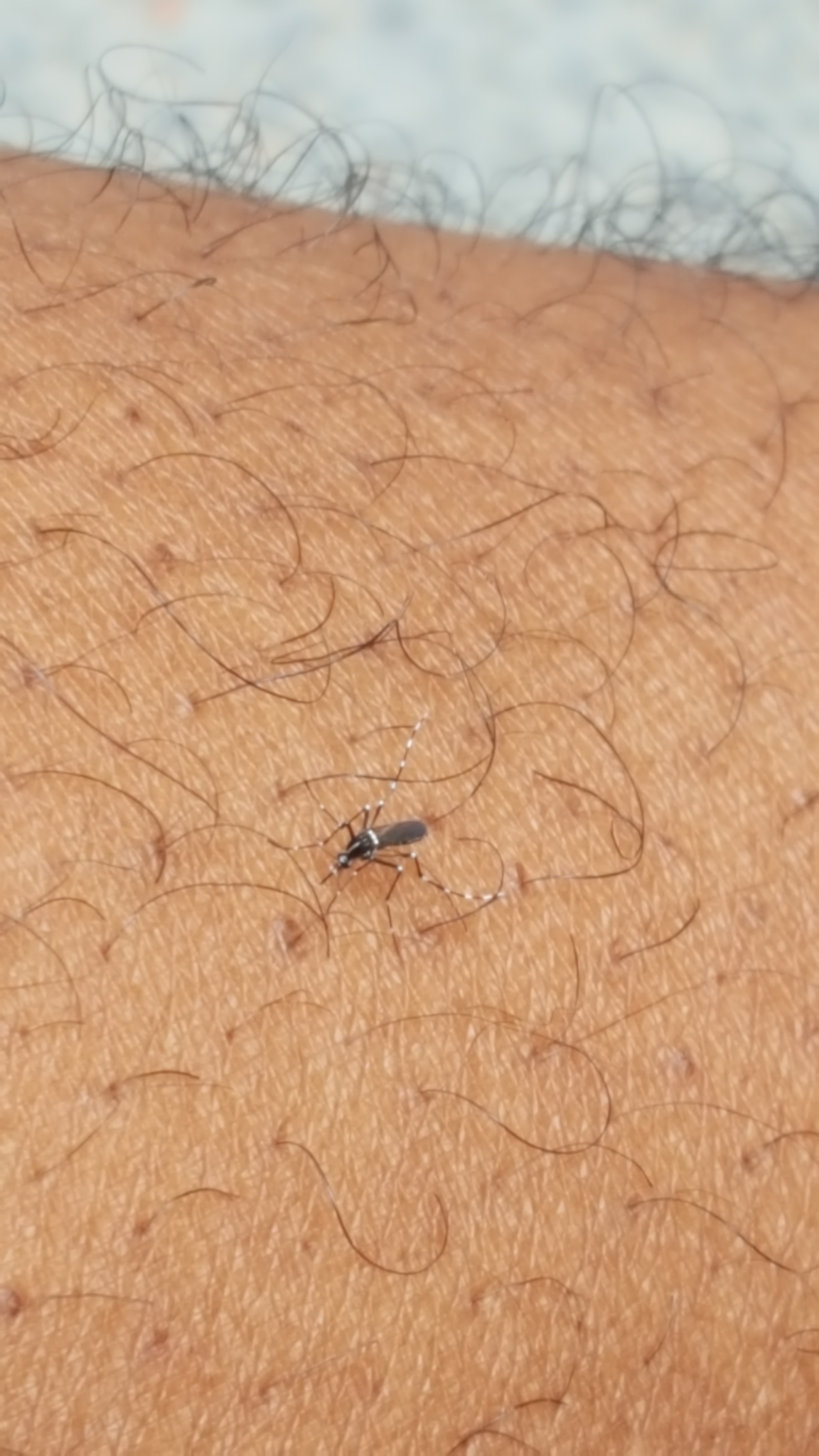
Aedes albopictus, commonly known as the tiger mosquito, is characterized by a distinct black and white pattern on its body and legs. Observations from the TreeOfLife-200M dataset reveal a prominent white stripe running longitudinally along the dorsal surface of the thorax, a key diagnostic feature of the species.[1] The legs exhibit conspicuous white banding at the joints, contributing to its "tiger" appearance.[1]
Biology and Ecology
Aedes albopictus (also known as Stegomyia albopicta) is a significant vector for several arboviruses, including dengue, chikungunya, yellow fever, and Zika.[2] The species has expanded globally from its native Asian range, a process facilitated by its shift to anthropophily and its adaptation to breeding in artificial containers within domestic or peridomestic environments.[2]
The species exhibits notable ecological plasticity, including the ability of its eggs to undergo diapause, which allows the population to survive in cooler climates.[2] Its dispersal is largely driven by human movement and climate suitability, with expansion occurring primarily along the fringes of its established distribution through short-range importation between adjacent areas.[2]
Gallery
References
- 1 2 3 Dataset view for Animalia / Arthropoda / Insecta / Diptera / Culicidae / Aedes / albopictus constructed from imageomics/TreeOfLife-200M records under this taxonomic path. Hugging Face Datasets. https://huggingface.co/datasets/imageomics/TreeOfLife-200M.
- 1 2 3 4 Moritz U. G. Kraemer; Robert C. Reiner; Oliver J. Brady; Jane P. Messina; Marius Gilbert; David M. Pigott; Dingdong Yi; Kimberly B. Johnson; Lucas Earl; Laurie B. Marczak; Shreya Shirude; Nicole Davis Weaver; Donal Bisanzio; T. Alex Perkins; Shengjie Lai; Xin Lü; Peter B. Jones; Giovanini Evelim Coelho; Roberta Gomes Carvalho; Wim Van Bortel; Cedric Marsboom; Guy Hendrickx; Francis Schaffner; Chester G. Moore; Heinrich H. Nax; Linus Bengtsson; Erik Wetter; Andrew J. Tatem; John S. Brownstein; David L. Smith; Louis Lambrechts; Simon Cauchemez; Catherine Linard; Nuno R. Faria; Oliver G. Pybus; Thomas W. Scott; Qiyong Liu; Hongjie Yu; William Wint; Simon I Hay; Nick Golding. Past and future spread of the arbovirus vectors Aedes aegypti and Aedes albopictus. Nature Microbiology. 2019. https://doi.org/10.1038/s41564-019-0376-y.