Acricotopus
Taxonomy
This page represents the following TreeOfLife-200M taxonomic path.[1]
- Kingdom: Animalia
- Phylum: Arthropoda
- Class: Insecta
- Order: Diptera
- Family: Chironomidae
- Genus: Acricotopus
Visual Description
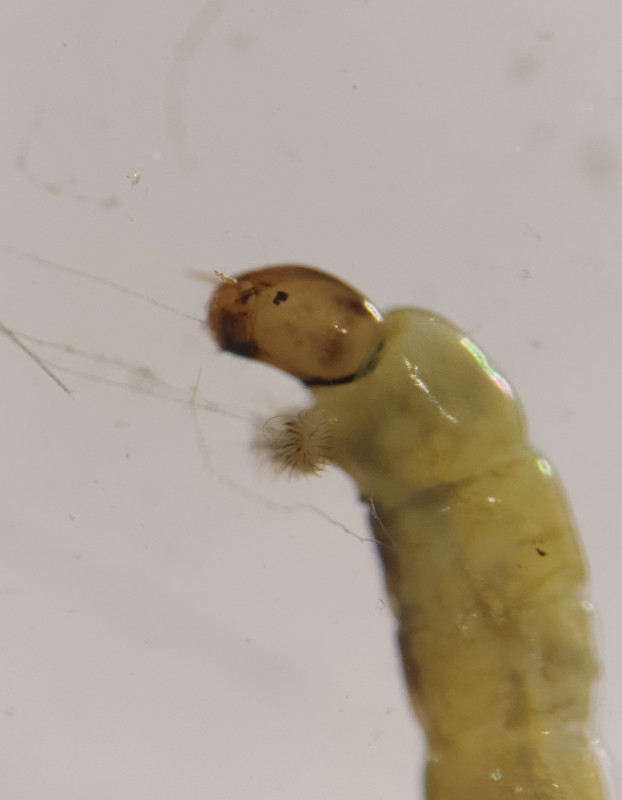
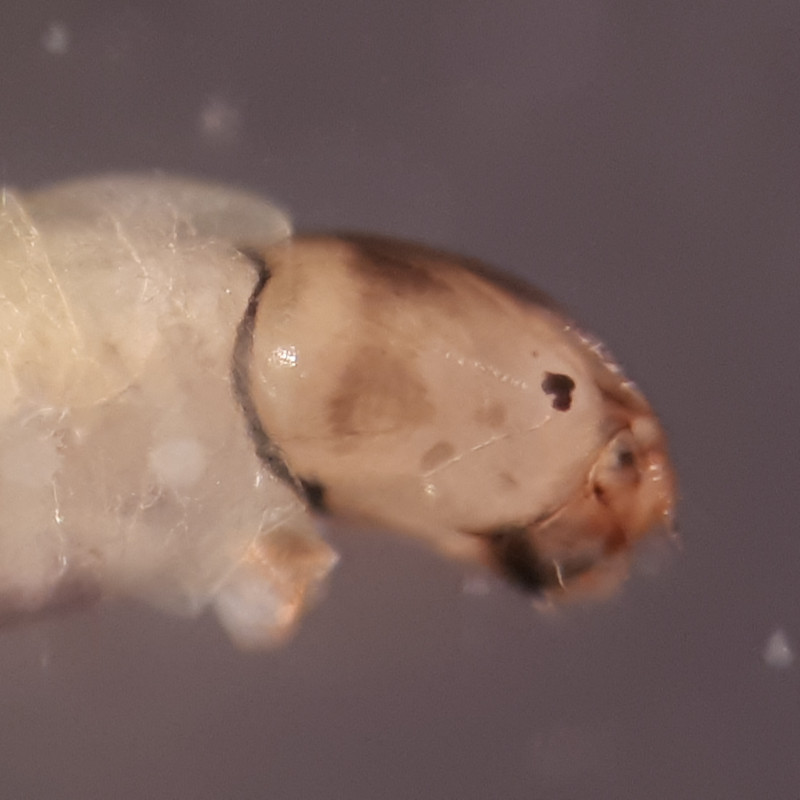
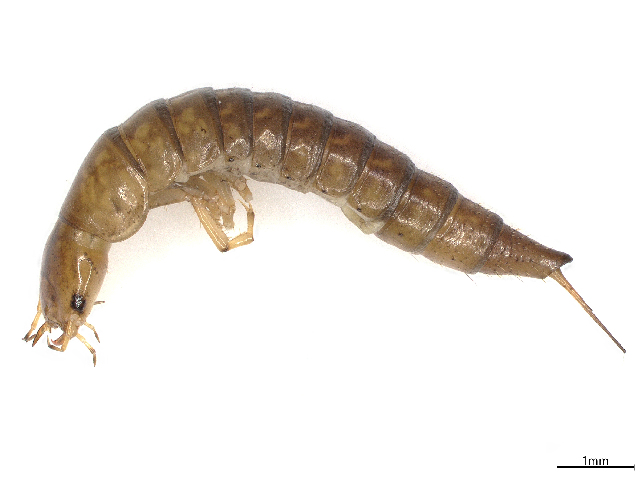
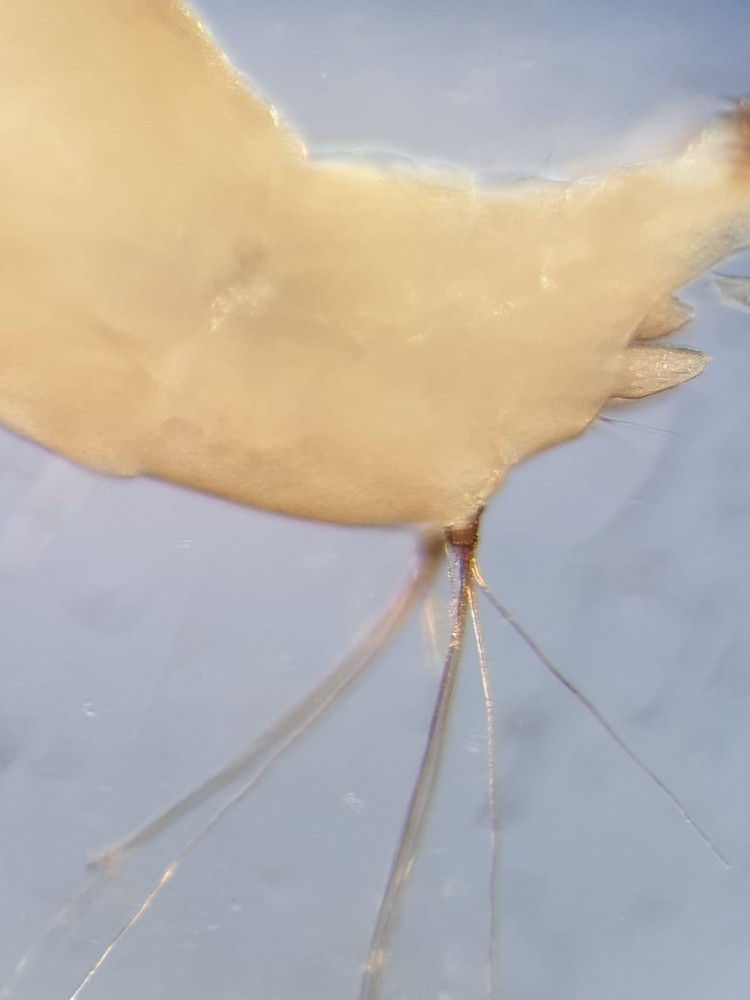
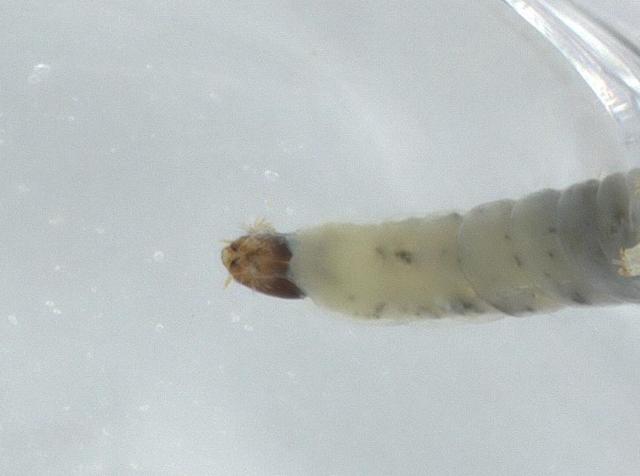
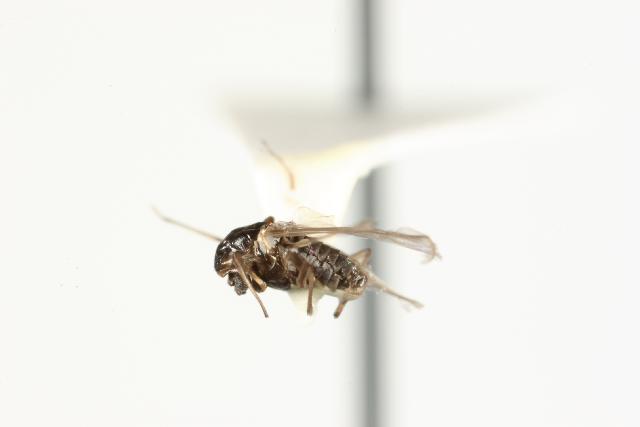
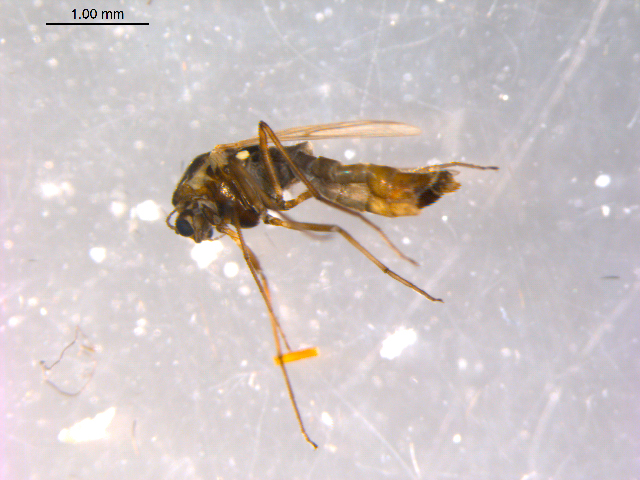
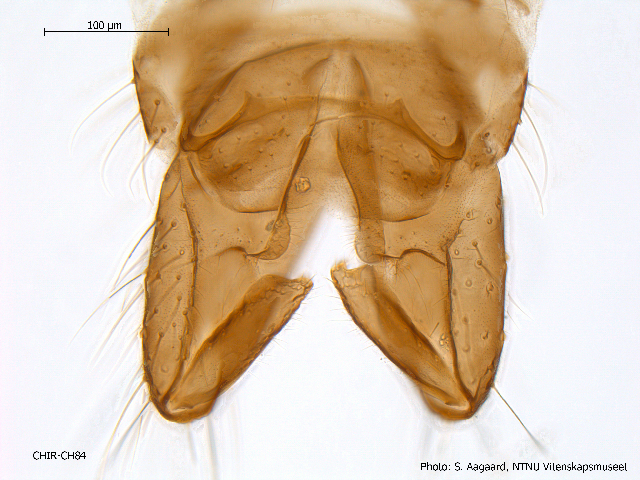
Based on observations from the TreeOfLife-200M dataset, members of the genus Acricotopus exhibit typical chironomid morphology.[1] They possess a slender, elongated body structure characteristic of non-biting midges. The head features prominent, well-developed eyes and antennae. The wings are typically clear or lightly patterned, with venation patterns consistent with the family Chironomidae. The legs are long and thin, often appearing delicate.[1]
Biology
In the germ line of the chironomid Acricotopus lucidus, the final gonial mitosis prior to meiosis is a specialized "differential mitosis" that generates daughter cells with distinct chromosome constitutions and developmental fates.[2] During this process, germ-line-limited chromosomes (Ks) undergo monopolar movement to one pole, while somatic chromosomes (Ss) segregate equally.[2] This division results in one daughter cell receiving all Ks and two sets of Ss (developing into an oocyte or primary spermatocyte) and the other receiving only two sets of Ss (developing into a nurse cell or aberrant spermatocyte).[2]
Differential mitosis in A. lucidus is characterized by significant spindle asymmetry and an asymmetric distribution of mitochondria, which accumulate in the cell half destined to become the nurse cell or aberrant spermatocyte.[2] Cytokinesis is incomplete in these divisions, leaving the daughter cells connected by a permanent cytoplasmic bridge.[2] Following the unequal partitioning of mitochondria, a surplus of mitochondria is transported from the aberrant spermatocyte back to the primary spermatocyte through this bridge.[2]
Gallery
References
- 1 2 3 Dataset view for Animalia / Arthropoda / Insecta / Diptera / Chironomidae / Acricotopus constructed from imageomics/TreeOfLife-200M records under this taxonomic path. Hugging Face Datasets. https://huggingface.co/datasets/imageomics/TreeOfLife-200M.
- 1 2 3 4 5 6 Wolfgang Staiber. Asymmetric distribution of mitochondria and of spindle microtubules in opposite directions in differential mitosis of germ line cells in Acricotopus. Cell and Tissue Research. 2007. https://doi.org/10.1007/s00441-007-0400-z.