Achanthiptera rohrelliformis
Achanthiptera rohrelliformis (Robineau-Desvoidy, 1830) is a species of fly in the family Muscidae. It is the sole representative of the genus Achanthiptera Rondani, 1856.
Taxonomy
This page represents the following TreeOfLife-200M taxonomic path.[1]
- Kingdom: Animalia
- Phylum: Arthropoda
- Class: Insecta
- Order: Diptera
- Family: Muscidae
- Genus: Achanthiptera
- Species: Achanthiptera rohrelliformis
Visual Description
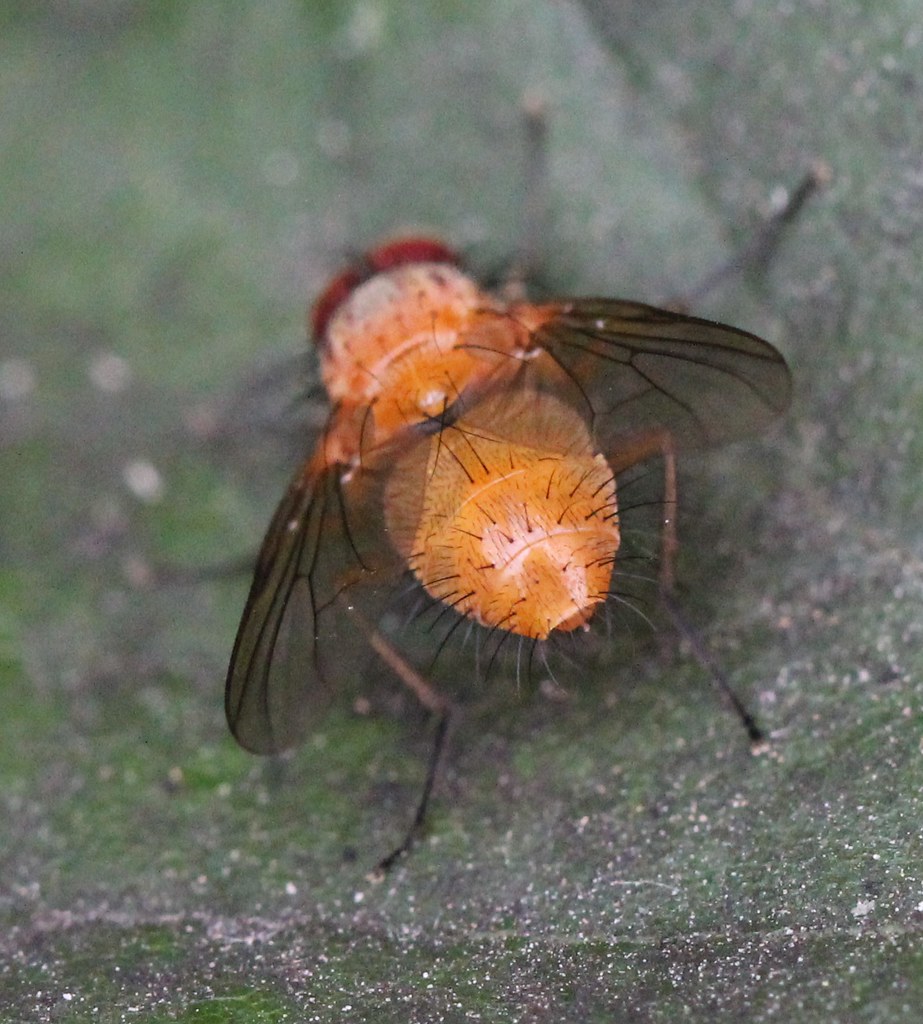
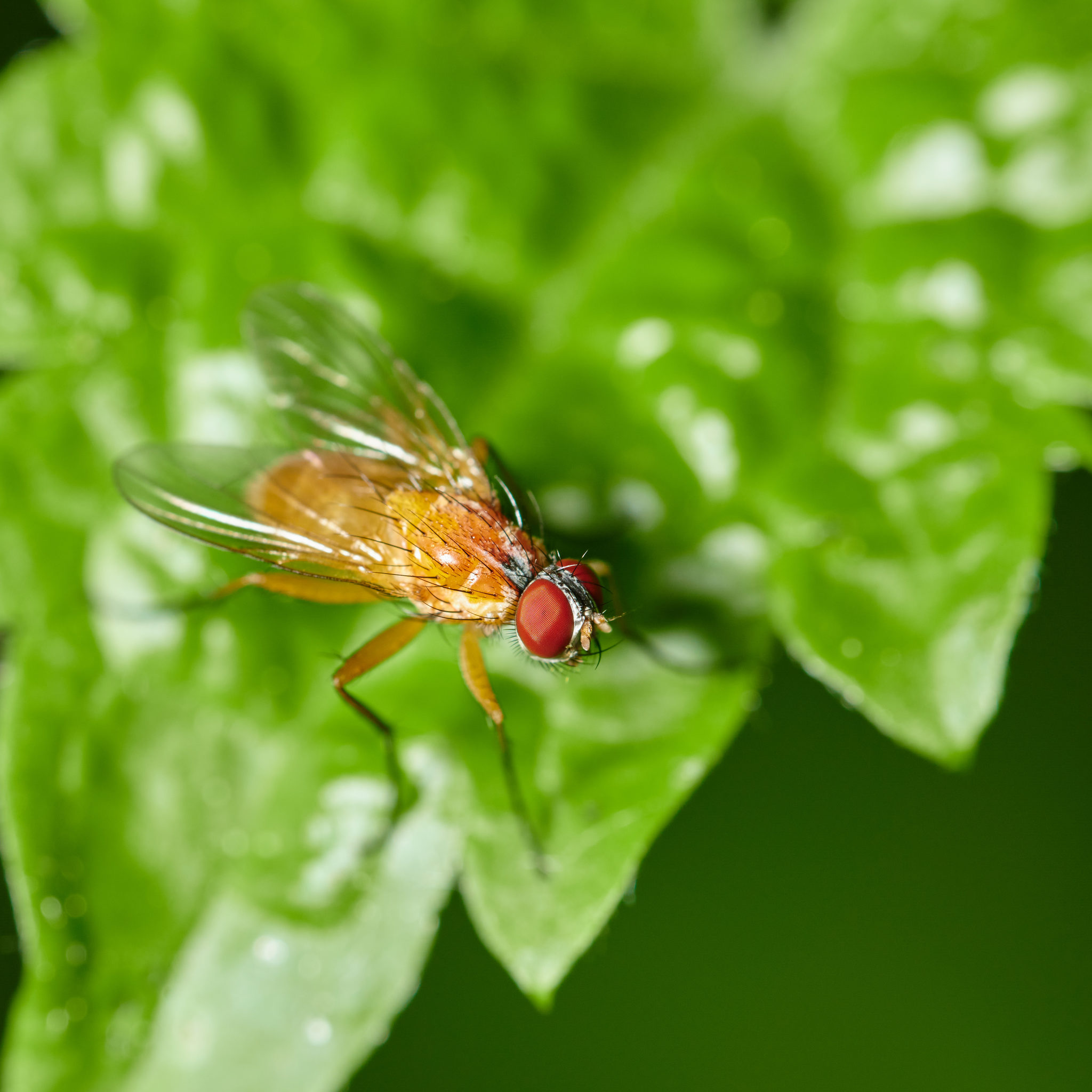
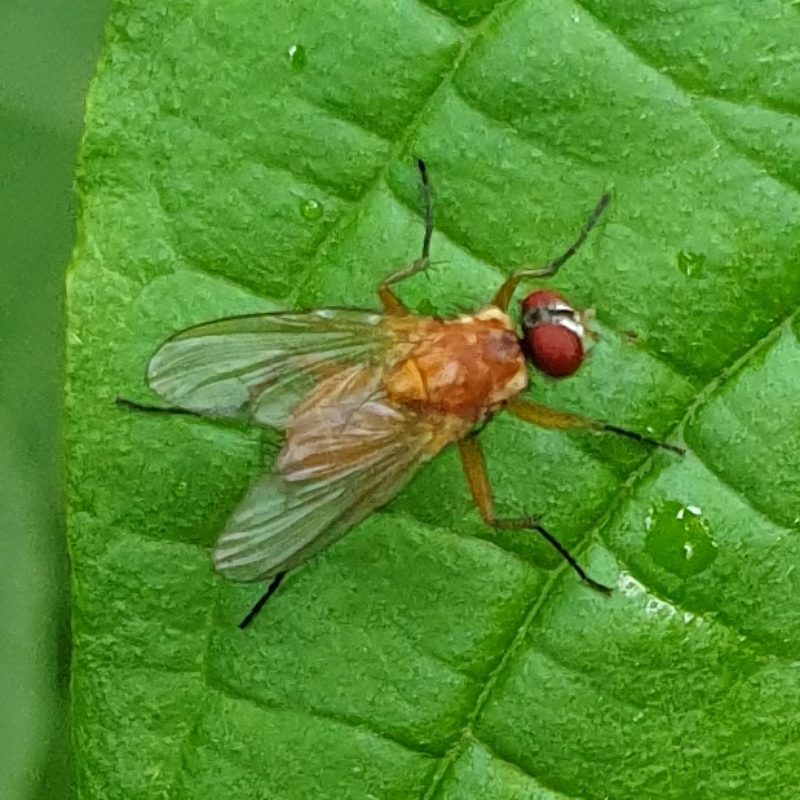
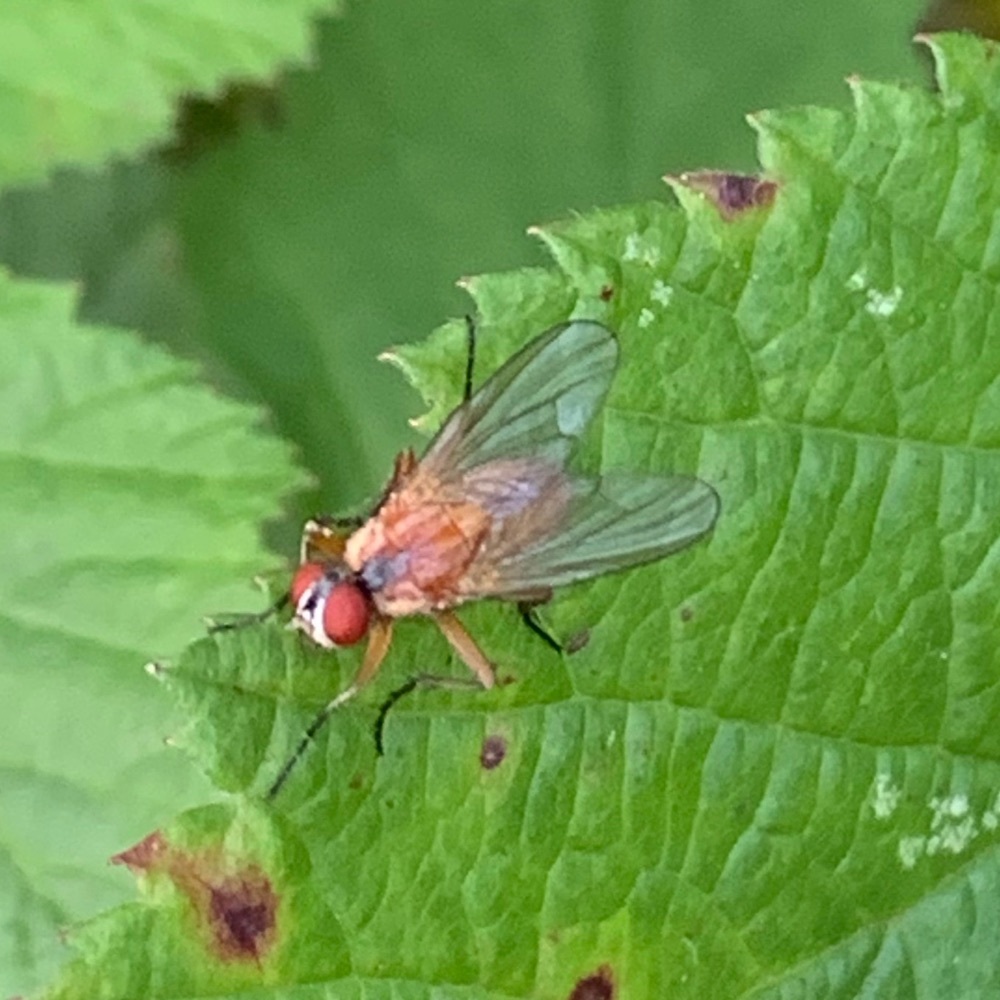
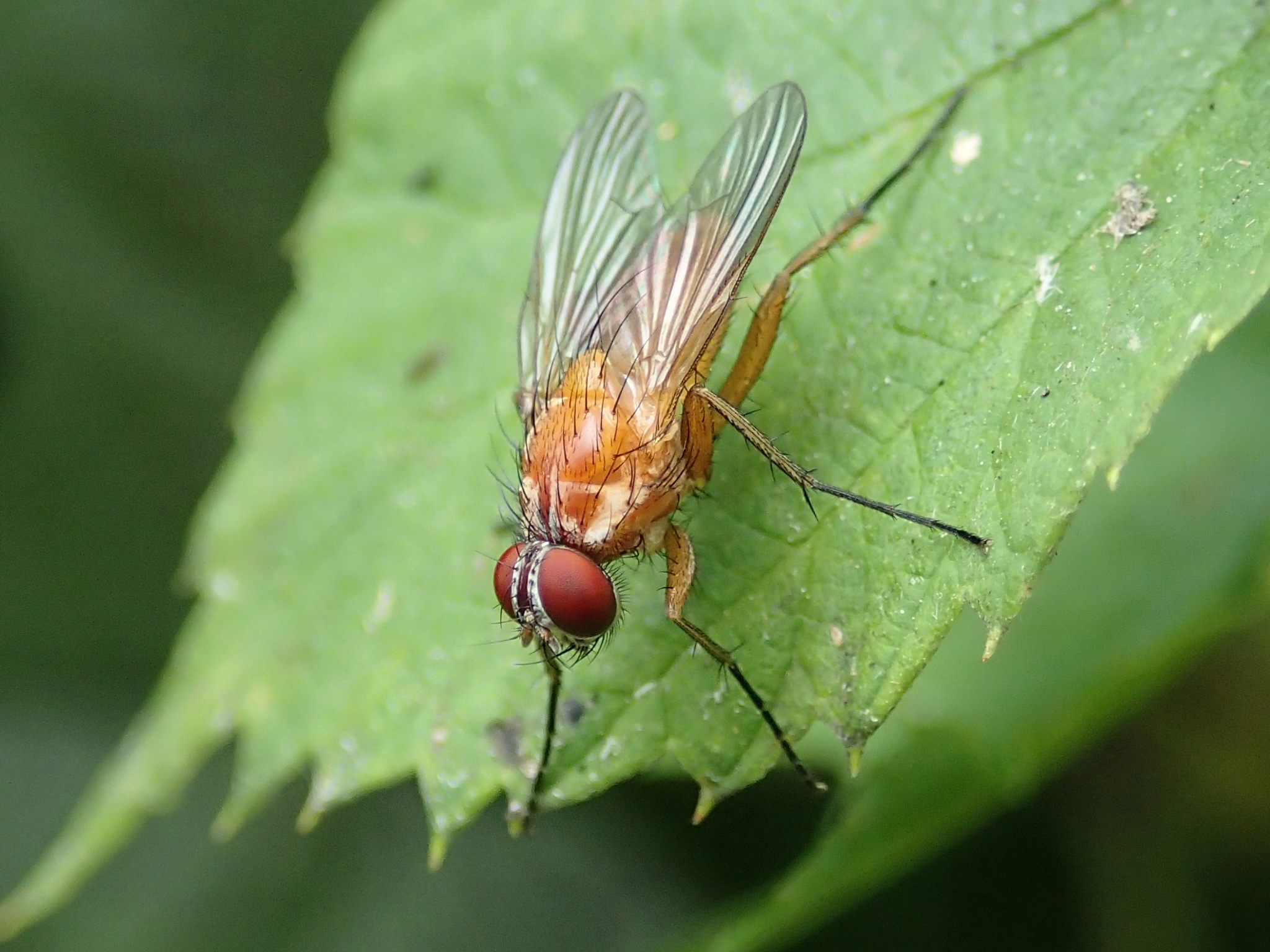
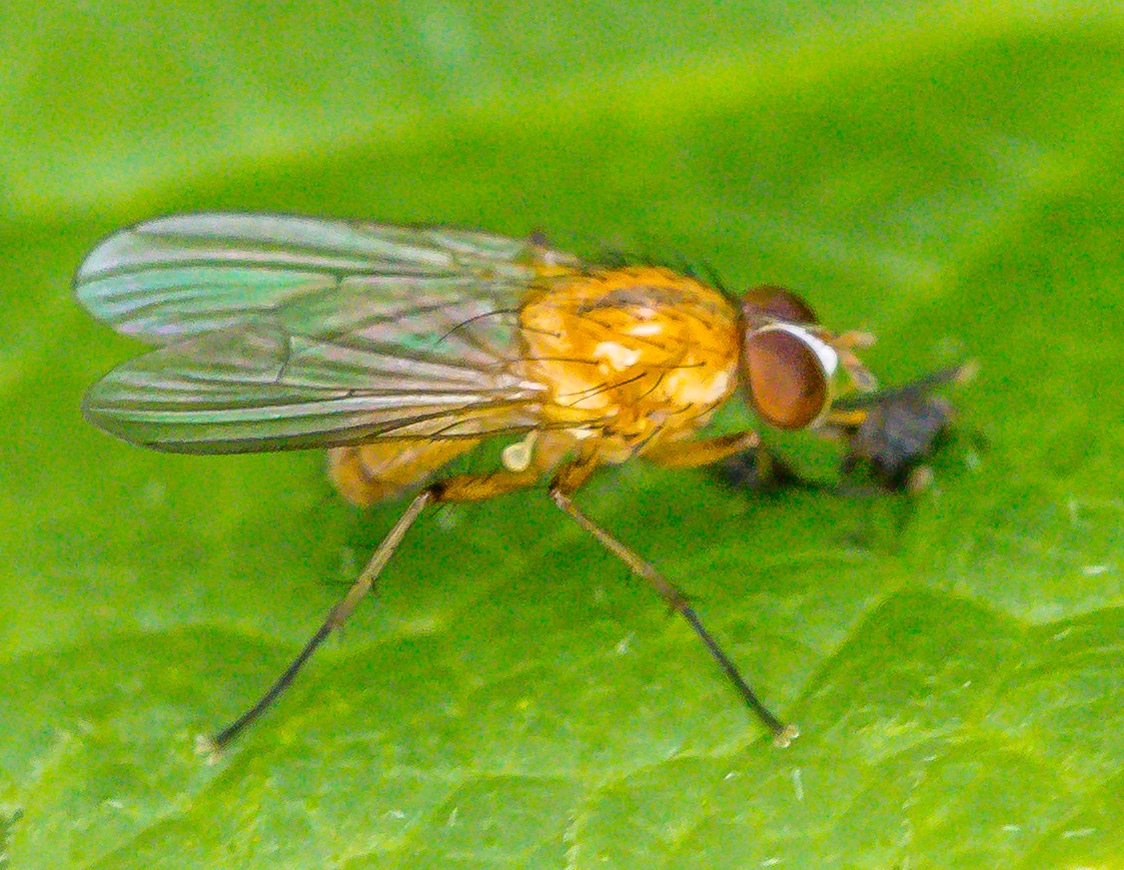
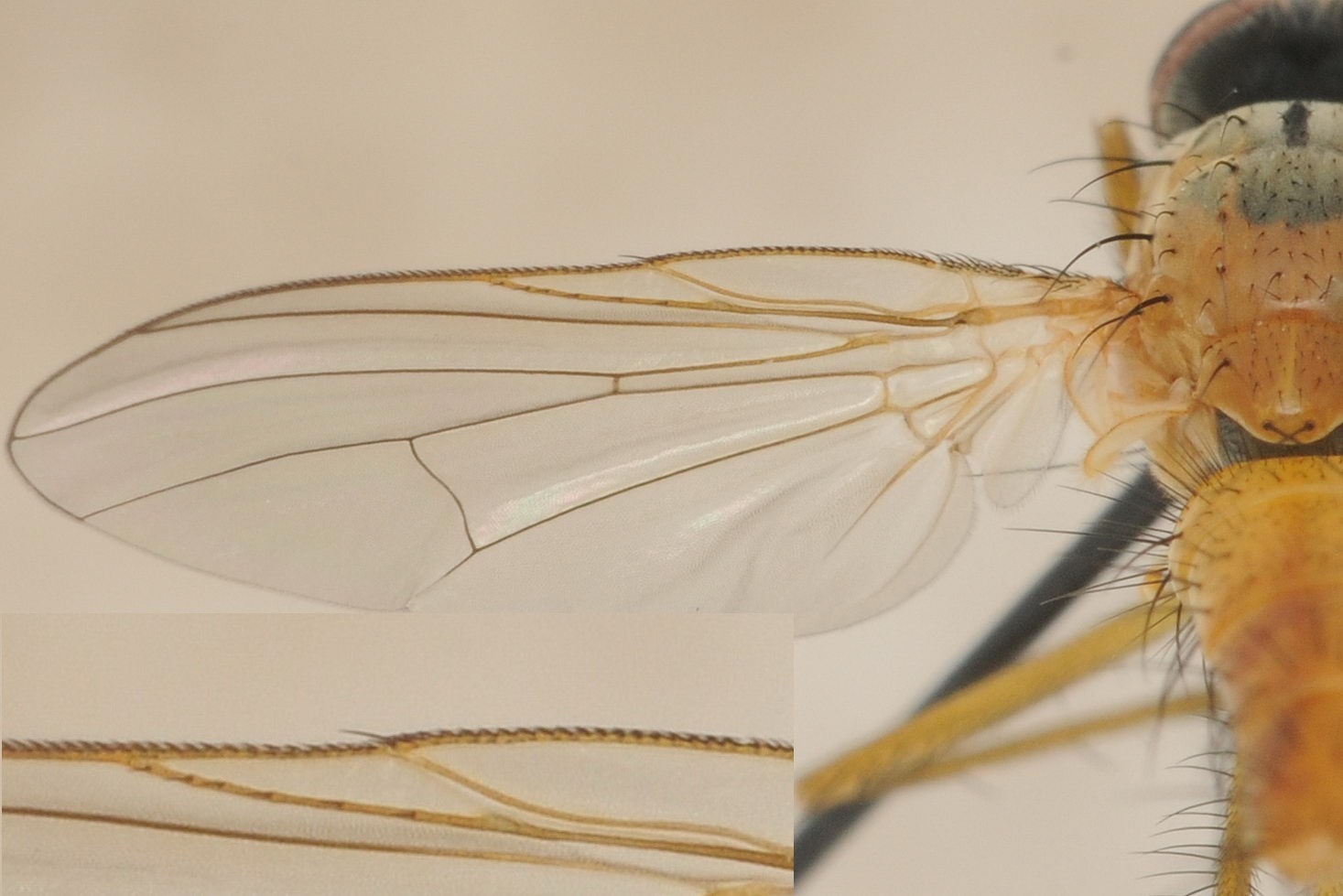
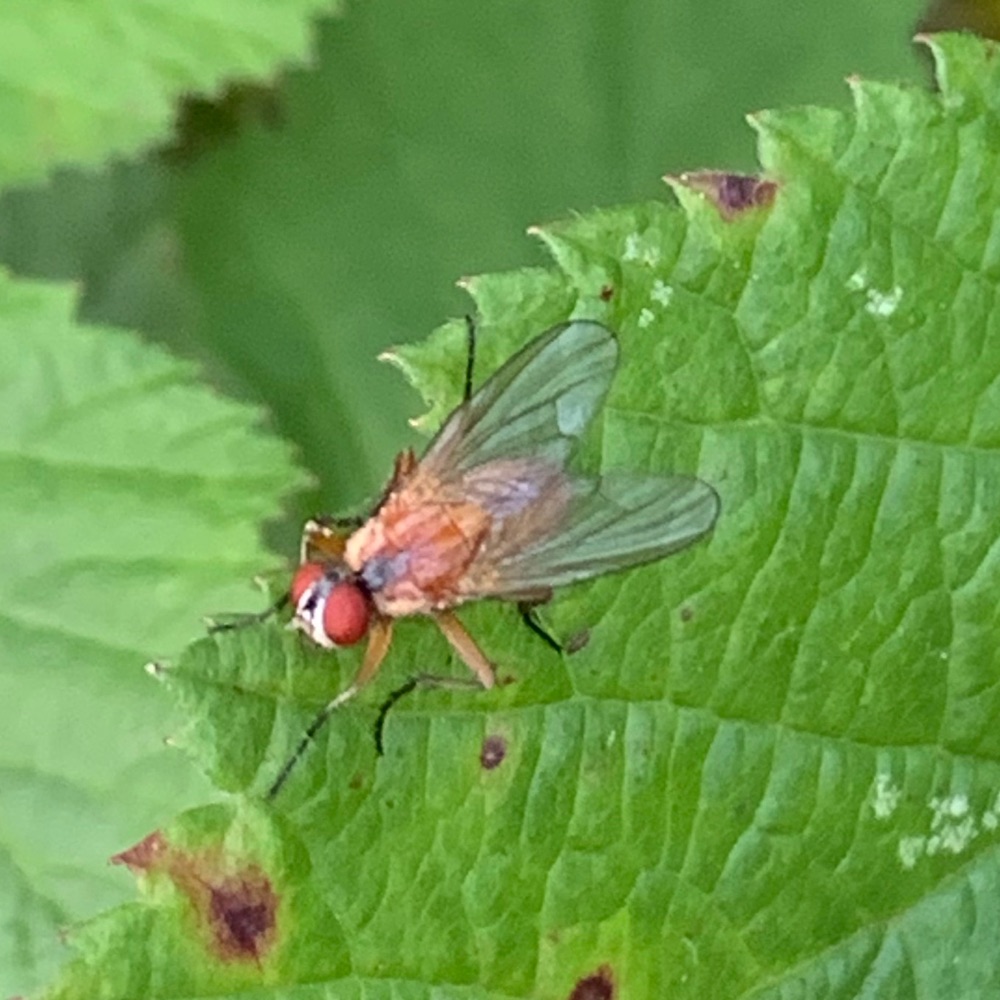
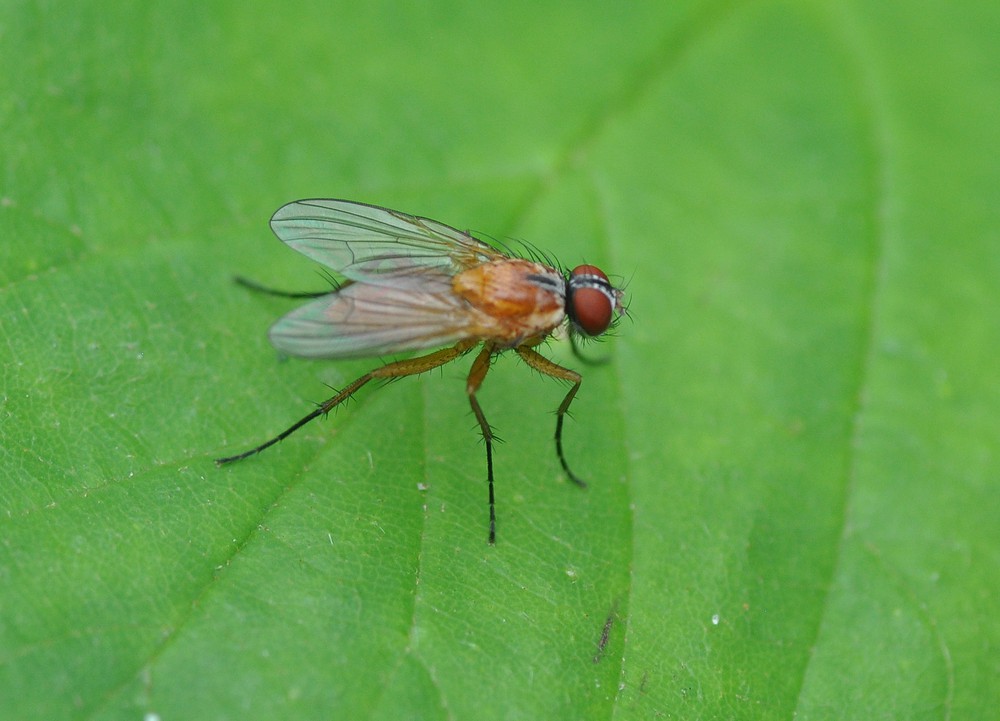
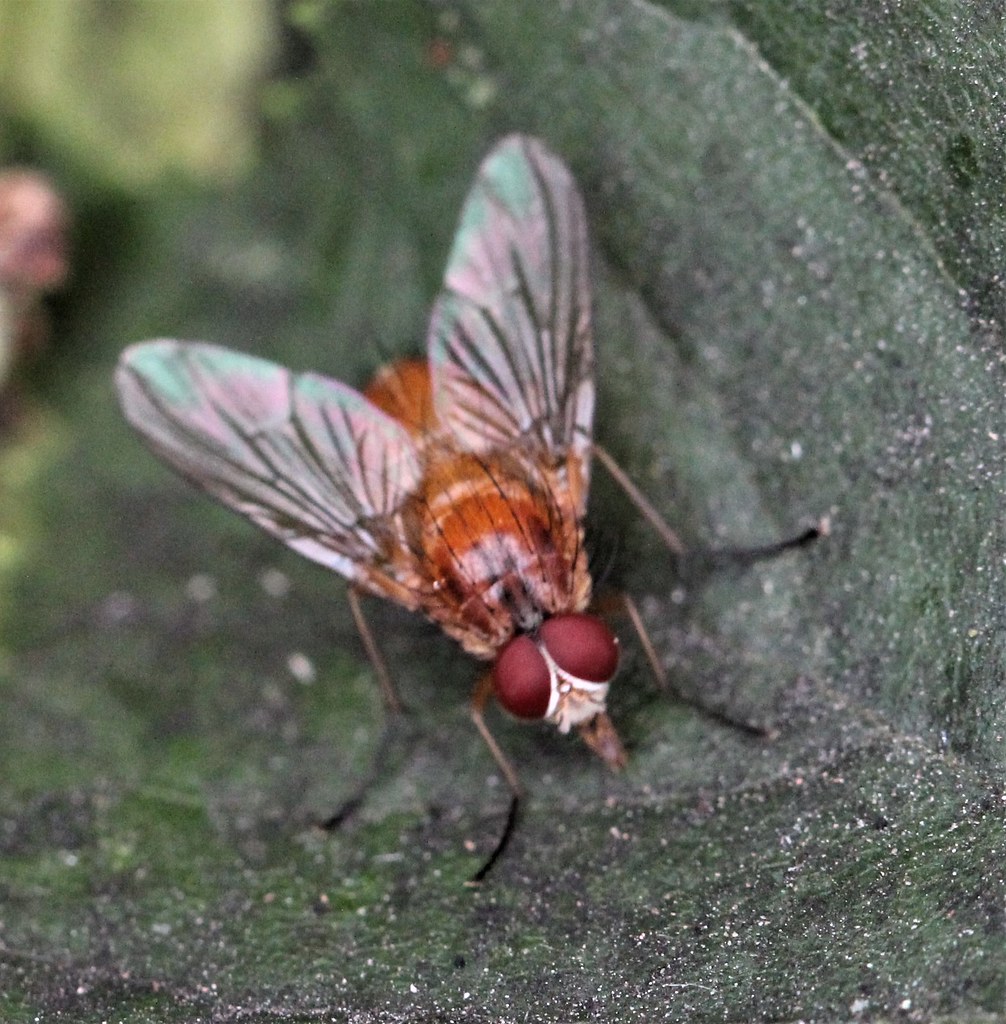
Adults of Achanthiptera rohrelliformis are mid-sized flies, typically measuring 6–9 mm in length. They are characterized by a predominantly yellow body and a bare anepimeron. A diagnostic trait visible on the wings is the presence of distinct setulae on the dorsal surface of the apical third of wing-vein R1.[2] Observations from the TreeOfLife-200M dataset confirm these general morphological features.[1]
Classification and Phylogeny
While previously assigned to its own subfamily, Achanthipterinae, based on a misinterpretation of female postabdominal spiracles, molecular and morphological evidence now places the genus within the subfamily Azeliinae, where it is considered closely related to the genus Potamia.[2]
Ecology and Distribution
Achanthiptera rohrelliformis is associated with the nests of wasps or hornets. The larvae are trimorphic and facultatively carnivorous, developing by feeding on organic debris, including dead wasps and other soft-bodied larvae. The larvae overwinter in the nests and pupate in the ground during the spring. Adults are short-lived, emerging in summer (June to early August), and are not commonly encountered.[2]
The species is distributed across much of the Western Palaearctic, including Tajikistan, Siberia, and China. Its presence in the Balkan Peninsula is confirmed by historical specimens collected in Sofia, Bulgaria, around 1907–1908.[2]
Gallery
References
- 1 2 Dataset view for Animalia / Arthropoda / Insecta / Diptera / Muscidae / Achanthiptera / rohrelliformis constructed from imageomics/TreeOfLife-200M records under this taxonomic path. Hugging Face Datasets. https://huggingface.co/datasets/imageomics/TreeOfLife-200M.
- 1 2 3 4 Eberhard Zielke. On two remarkable species of Azeliinae (Diptera: Muscidae), previously unknown from the Balkans, but collected from Bulgaria already in the 20th century. Historia naturalis bulgarica. 2018. https://doi.org/10.48027/hnb.30.01001.