Acanthodotheca
Taxonomy
This page represents the following TreeOfLife-200M taxonomic path.[1]
- Kingdom: Animalia
- Phylum: Arthropoda
- Class: Insecta
- Order: Diptera
- Family: Sarcophagidae
- Genus: Acanthodotheca
Visual Description
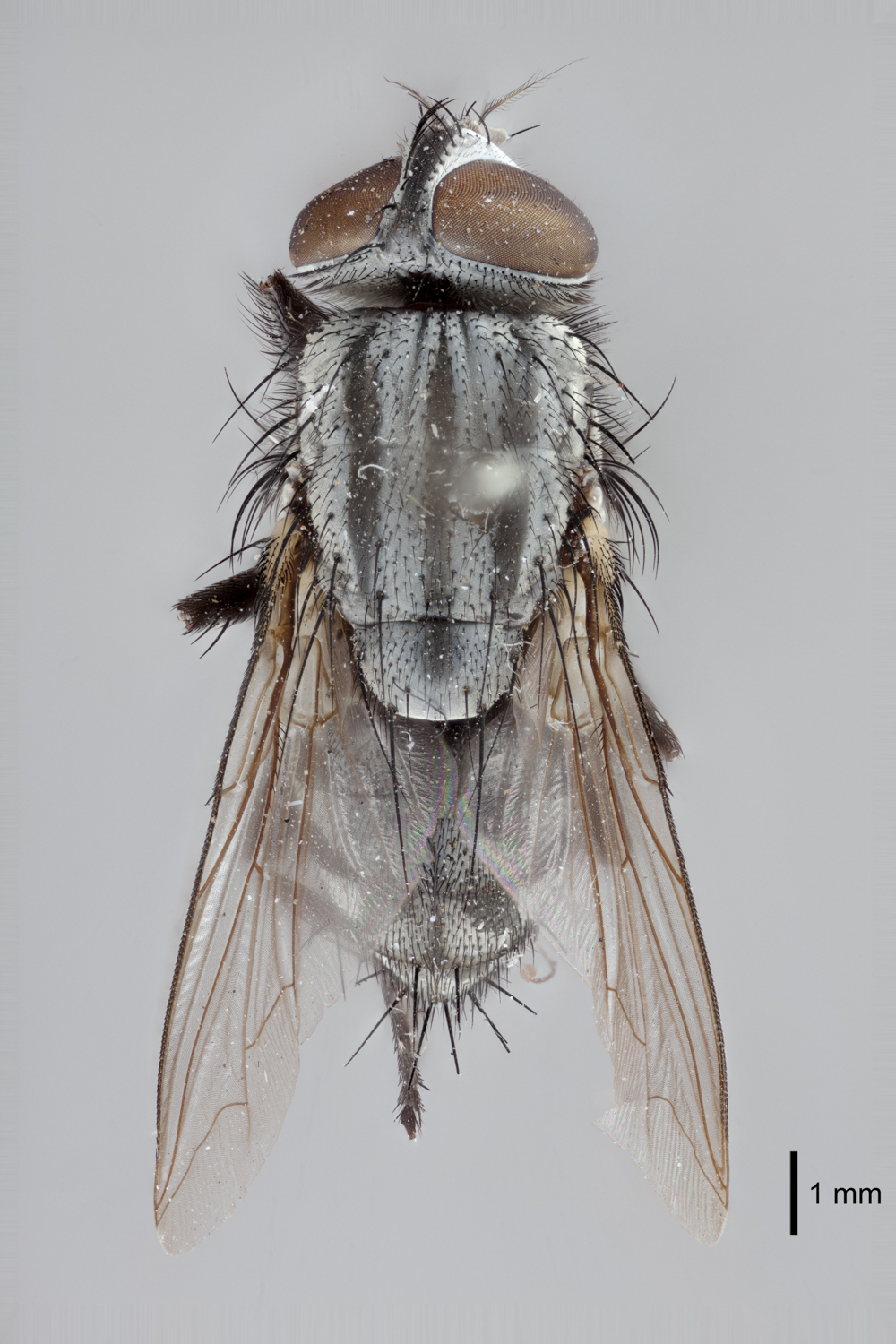
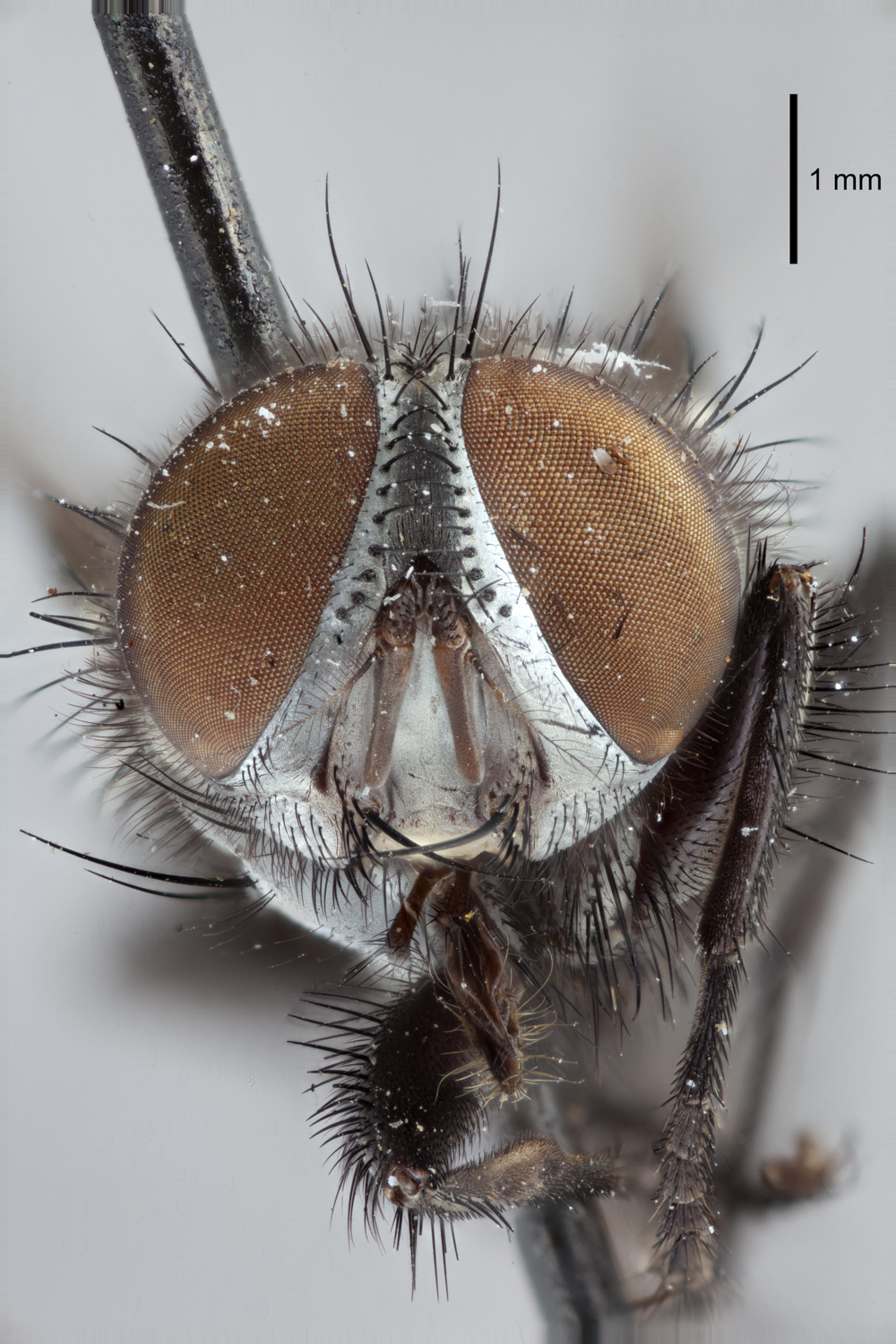
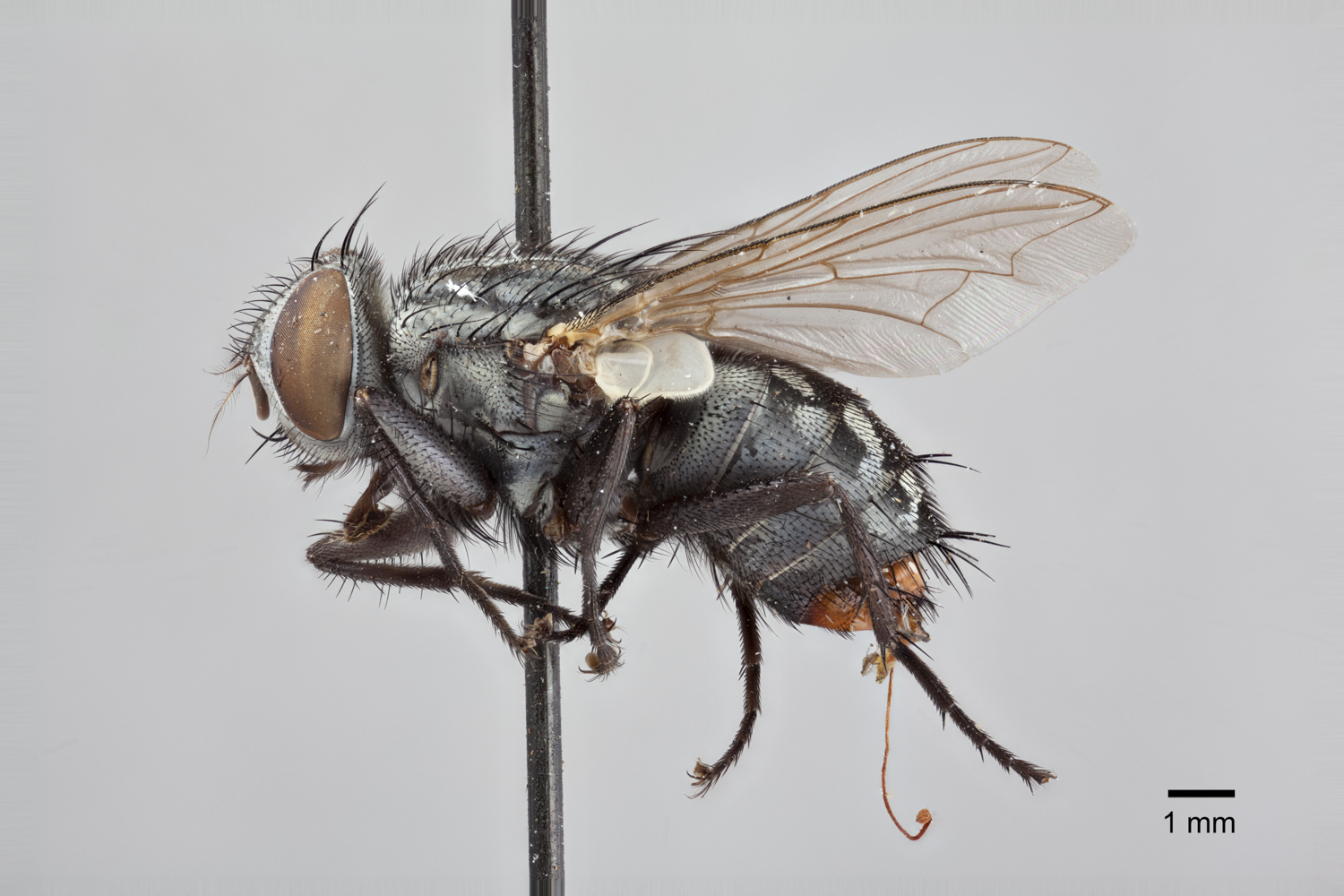
Based on observations of Acanthodotheca specimens (e.g., Acanthodotheca masculina), these flies exhibit typical sarcophagid morphology. They possess a robust, bristly body, characteristic of the family. The thorax is marked by distinct longitudinal dark stripes against a lighter, often greyish or pollinose background. The abdomen displays a classic "checkerboard" or tessellated pattern, common in many flesh flies, resulting from alternating light and dark patches that shift with the angle of light.[1]
Ecology and Distribution
Acanthodotheca is a genus within the family Sarcophagidae, described by Townsend in 1918.[2] Research in the Cerrado biome of Minas Gerais, Brazil, has documented the presence of species within this genus, such as Blaesoxipha (Acanthodotheca) acridiophagoides, Blaesoxipha (Acanthodotheca) lanei, and Blaesoxipha (Acanthodotheca) minensis.[3]
Studies on necrophagous Sarcophagidae have observed B. (A.) acridiophagoides associated with decomposing pig carcasses. In these environments, the species was collected specifically during the bloated stage of decomposition and was found exclusively in forested areas during the warm, wet season.[3]
Gallery
References
- 1 2 Dataset view for Animalia / Arthropoda / Insecta / Diptera / Sarcophagidae / Acanthodotheca constructed from imageomics/TreeOfLife-200M records under this taxonomic path. Hugging Face Datasets. https://huggingface.co/datasets/imageomics/TreeOfLife-200M.
- ↑ Acanthodotheca Townsend, 1918. GBIF. https://www.gbif.org/species/1483396. Accessed 2026-07-16.
- 1 2 Maria Lígia Paseto; Lucas Silva de Faria; Júlio Mendes; Arício Xavier Linhares. Diversity of Sarcophagidae (Insecta, Diptera) associated with decomposing carcasses in a rural area of the State of Minas Gerais, Brazil. EntomoBrasilis. 2019. https://doi.org/10.12741/ebrasilis.v12i3.842.