Acanthocotylidae
Taxonomy
Acanthocotylidae is a family of parasitic flatworms within the class Monogenea, order Gyrodactylidea. First described by F. S. Monticelli in 1903, the family includes several genera, such as Acanthocotyle, Lophocotyle, Myxinidocotyle, and Pseudacanthocotyla. Historical synonyms for the group include Acanthocotylinae, Allacanthocotylinae, Lophocotylinae, and Pseudacanthocotylinae.[1]
These flatworms are primarily external parasites of fish. Members of the genera Acanthocotyle and Pseudacanthocotyla are typically associated with elasmobranchs, particularly skates of the family Rajidae. The family currently comprises 24 descendant taxa and exhibits a broad geographic distribution.[2][3]
Visual Description
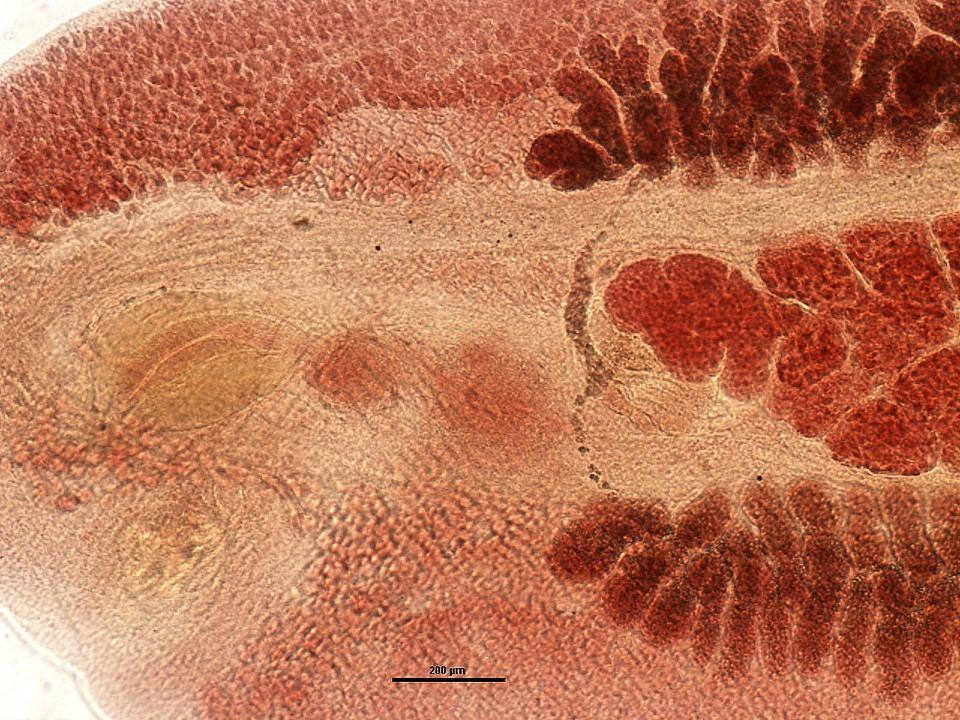
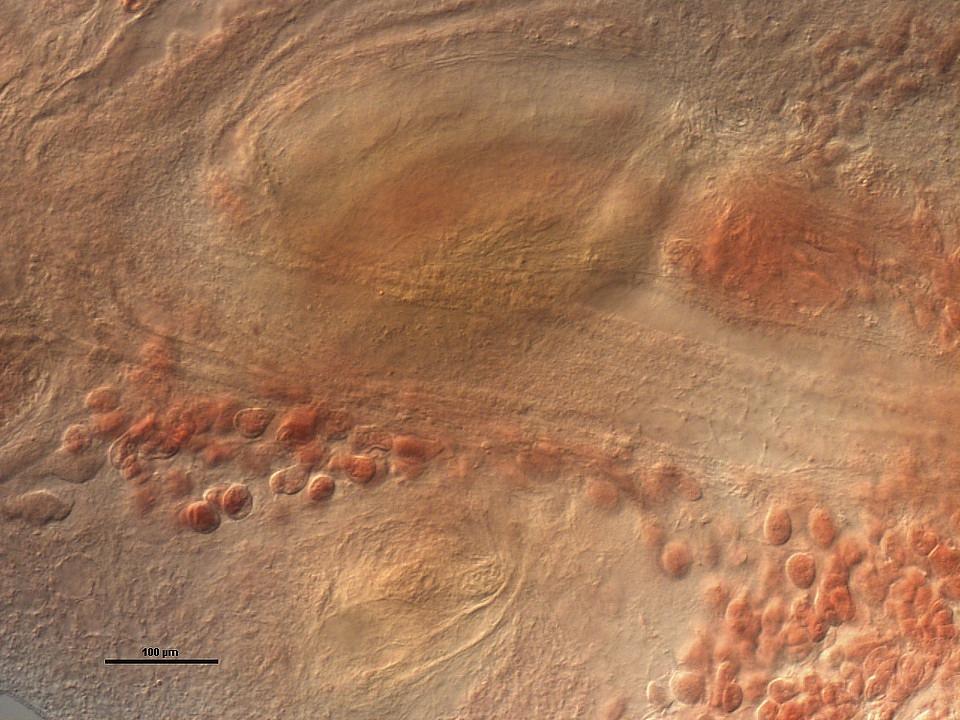
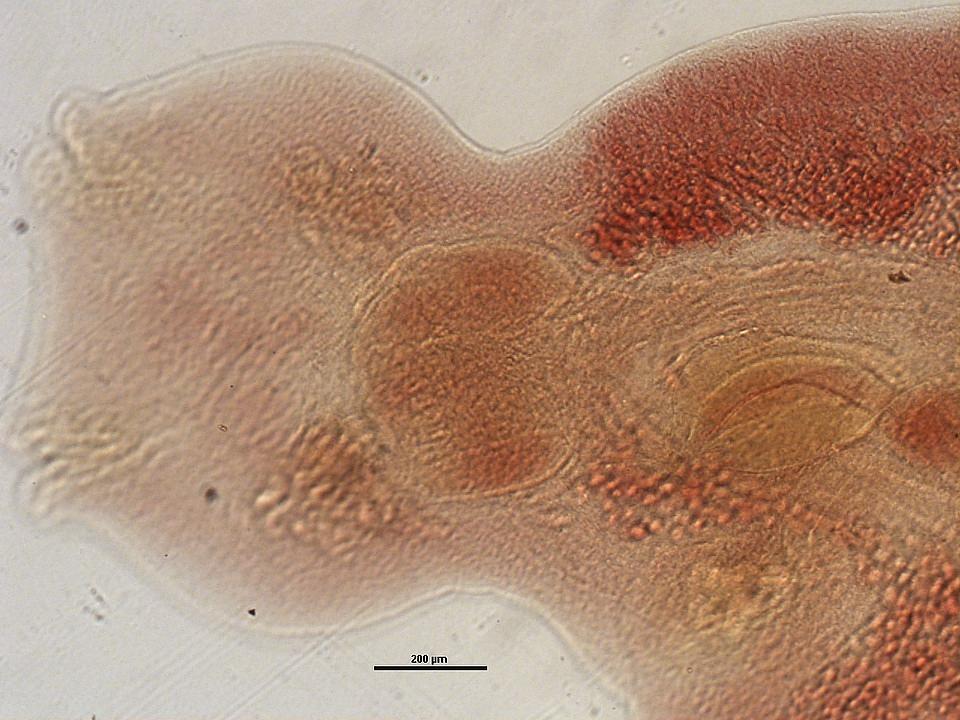
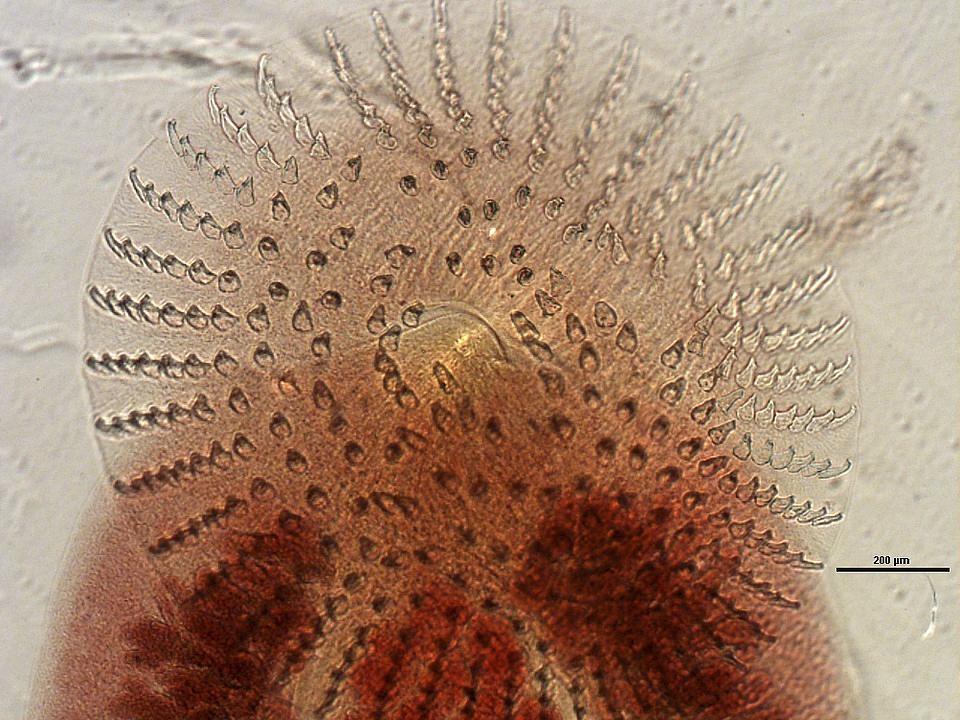
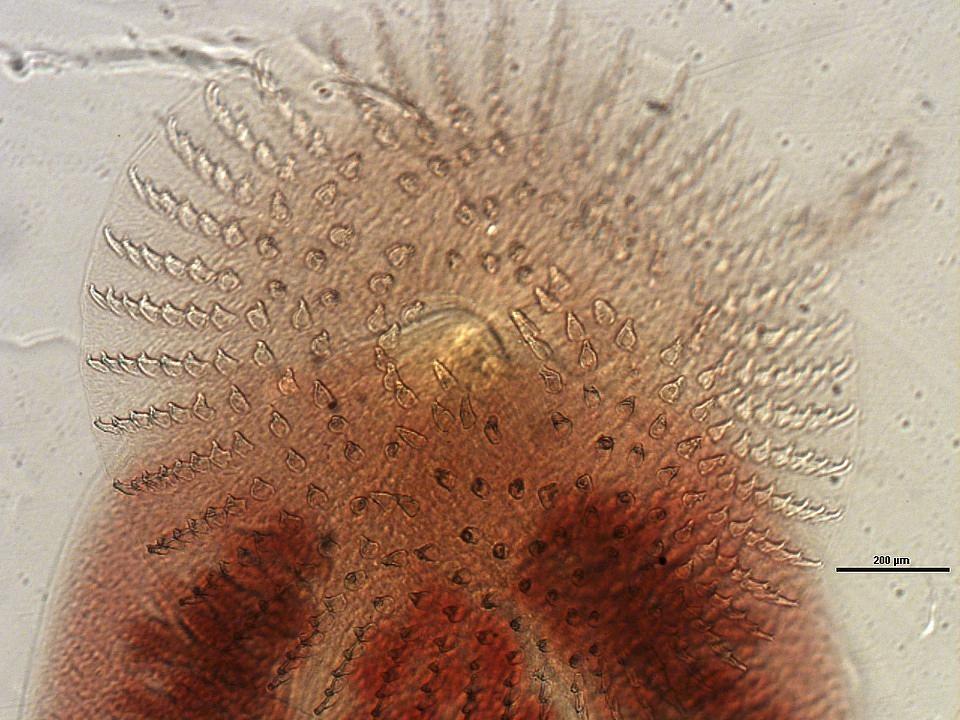
Microscopic examination of Acanthocotylidae specimens reveals complex internal anatomy, including lobed, darkly stained regions likely associated with reproductive organs or glandular tissue, and granular, reddish-stained structures. The anterior region is characterized by a broad, somewhat bilobed head containing dense, central organs. The posterior attachment organ, or haptor, is a prominent feature, displaying a fan-like arrangement of numerous sclerotized, hook-like structures that radiate from a central area or the periphery.
Gallery
References
- ↑ Acanthocotylidae. Wikipedia. https://en.wikipedia.org/wiki/Acanthocotylidae. Accessed 2026-09-05.
- ↑ Acanthocotylidae. Global Biotic Interactions. https://www.globalbioticinteractions.org/?targetTaxon=Acanthocotylidae. Accessed 2026-09-05.
- ↑ Acanthocotylidae. GBIF. https://www.gbif.org/species/6440. Accessed 2026-09-05.