Acanthocotyle
Taxonomy
Acanthocotyle is a genus of monogenean flatworms within the family Acanthocotylidae and the order Gyrodactylidea. Established by Monticelli in 1888, the genus is classified under the subclass Monopisthocotylea, class Monogenea, and phylum Platyhelminthes. The genus Allacanthocotyla (Yamaguti, 1963) is recognized as a synonym. Currently, the genus is accepted and comprises 13 species.[1][2][3][4][5]
Biology and Ecology
Species of Acanthocotyle are specialized skin parasites of fish, primarily infecting elasmobranchs such as skates and rays. Documented hosts include various species within the genera Raja, Leucoraja, Amblyraja, and Bathyraja. Additionally, some records associate these parasites with teleost fish, such as Protosciaena bathytatos. Research into their biology has examined their epidermal structure and feeding habits. Notably, the skin mucus of host fish has been shown to act as a hatching stimulant for the eggs of A. lobianchi. The genus exhibits a broad geographic distribution, with occurrence records spanning from approximately 33 degrees South to 79 degrees North latitude.[1][2][4]
Visual Description
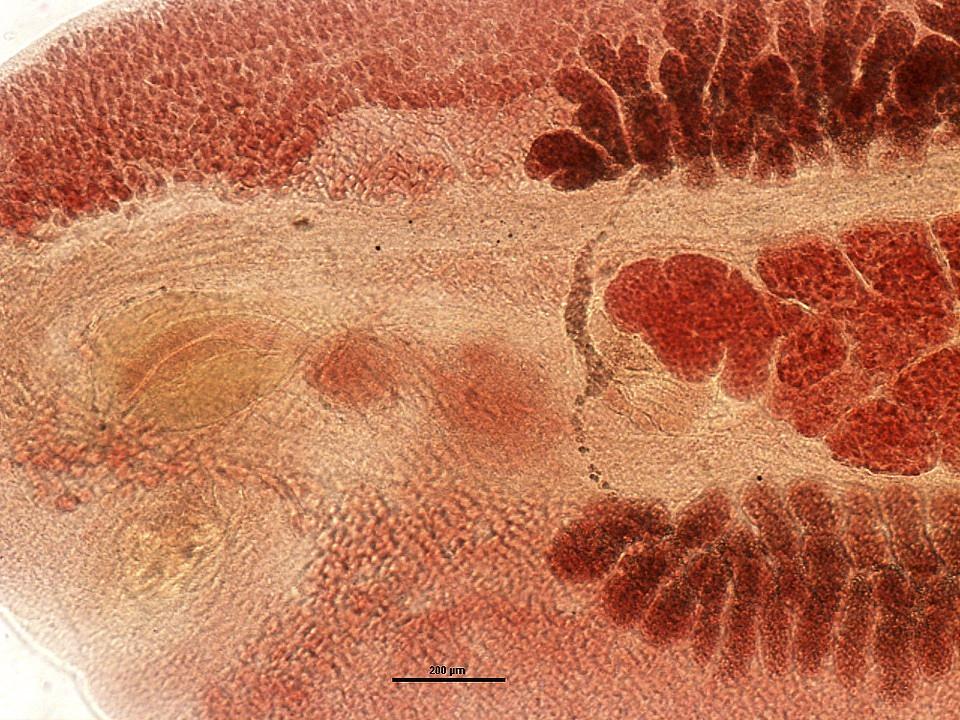
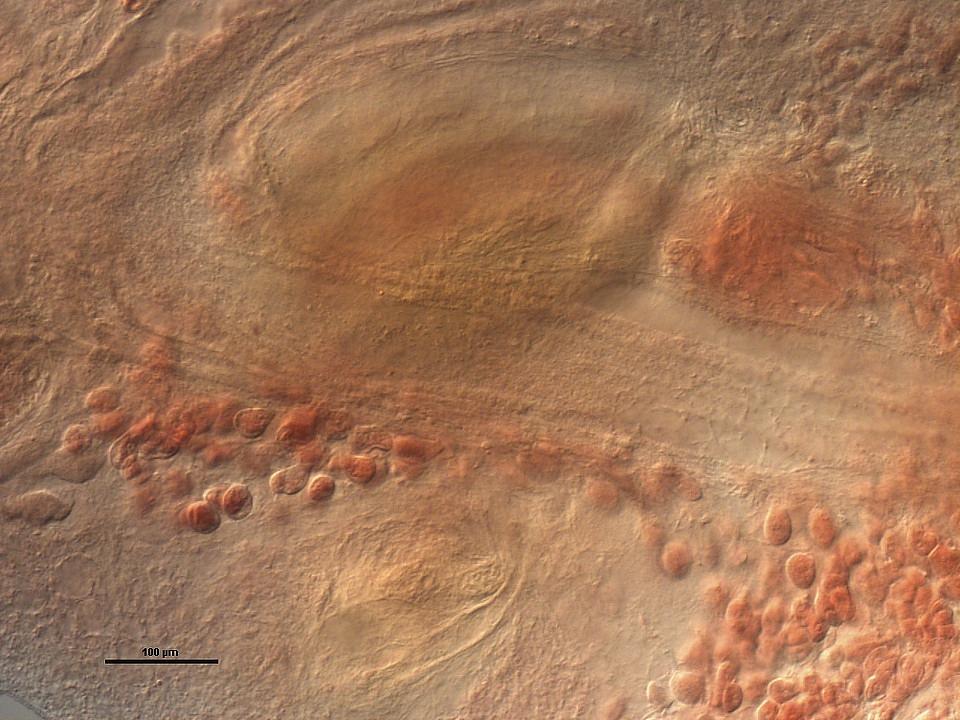
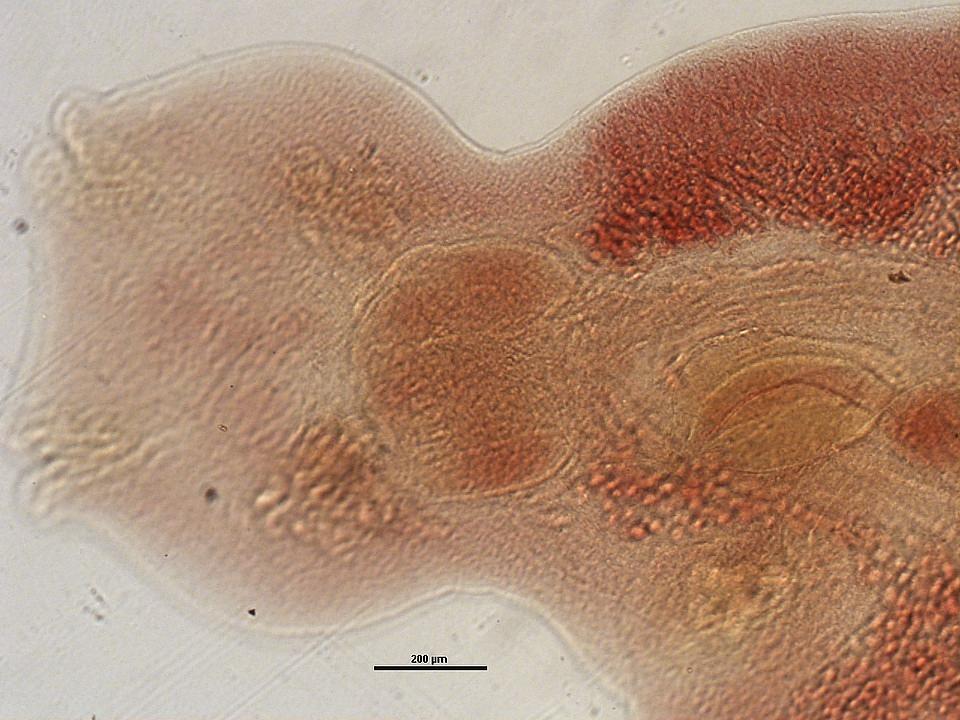
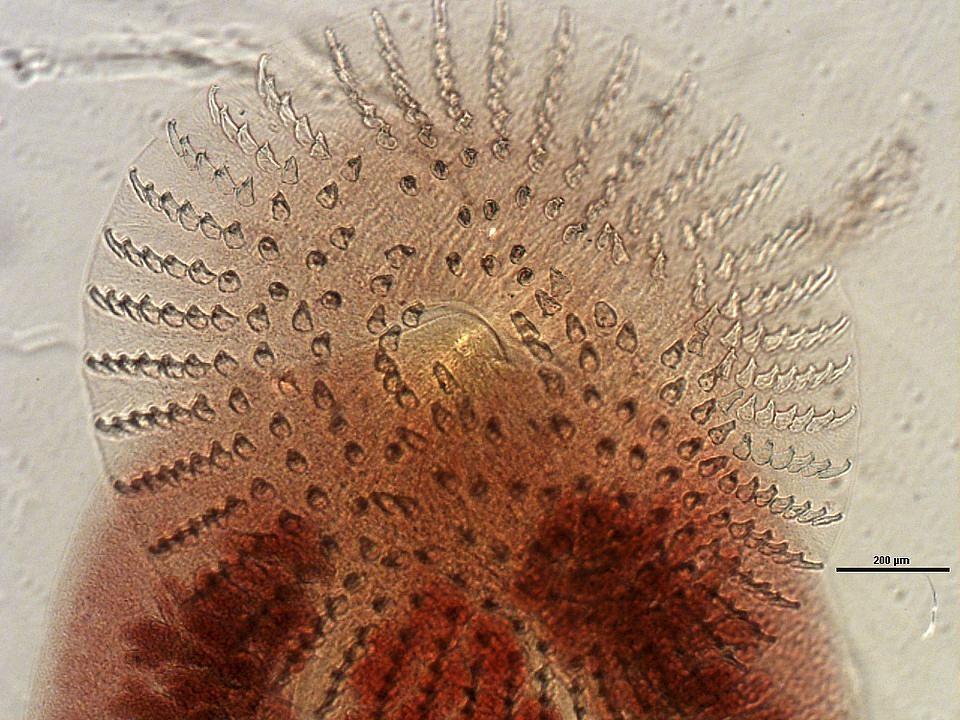
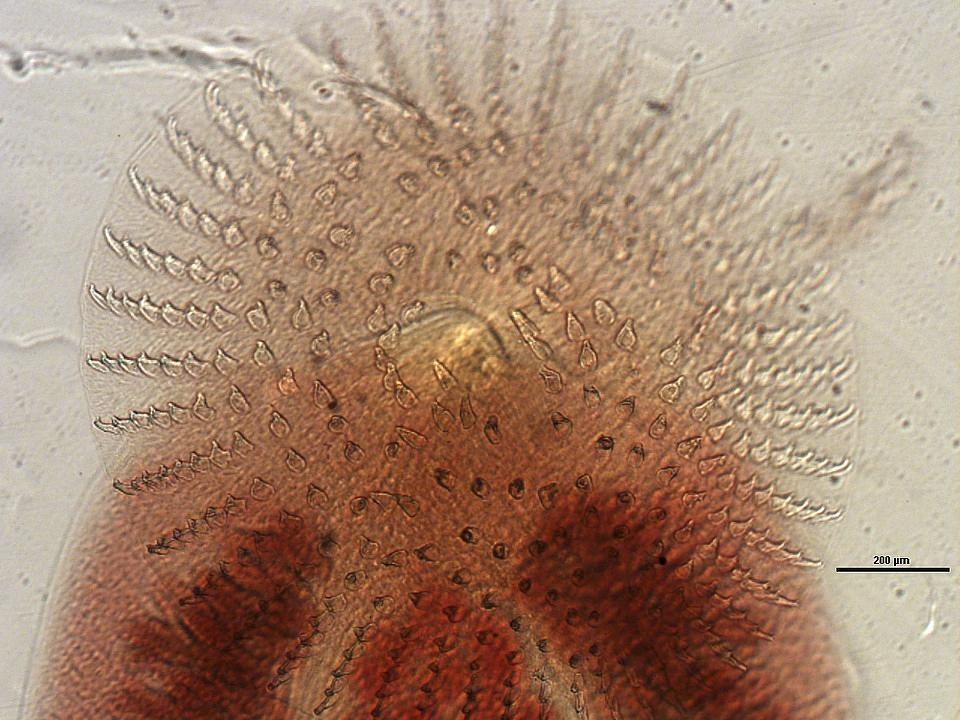
Microscopic examination of Acanthocotyle specimens reveals a complex internal anatomy, including lobed, dark-stained regions likely corresponding to reproductive or digestive organs, and fibrous tissues. The anterior region features a broad, somewhat bilobed head structure containing granular, reddish-stained tissues and a central, defined, rounded structure. The posterior attachment organ, or haptor, is a large, circular, sucker-like disc characterized by numerous radially arranged, sclerotized, hook-like structures (hamuli) distributed across its surface.
Gallery
References
- 1 2 Acanthocotyle. Wikipedia. https://en.wikipedia.org/wiki/Acanthocotyle. Accessed 2026-09-05.
- 1 2 Acanthocotyle. Global Biotic Interactions. https://www.globalbioticinteractions.org/?targetTaxon=Acanthocotyle. Accessed 2026-09-05.
- ↑ Acanthocotyle. NCBI Nucleotide. https://www.ncbi.nlm.nih.gov/nuccore/?term=txid651749[organism:exp]. Accessed 2026-09-05.
- 1 2 Acanthocotyle Monticelli, 1888. GBIF. https://www.gbif.org/species/4343822. Accessed 2026-09-05.
- ↑ Dataset view for Animalia / Platyhelminthes / Monogenea / Gyrodactylidea / Acanthocotylidae / Acanthocotyle constructed from imageomics/TreeOfLife-200M records under this taxonomic path. Hugging Face Datasets. https://huggingface.co/datasets/imageomics/TreeOfLife-200M