Acanthocolpidae
Taxonomy
Acanthocolpidae is a family of digenean trematodes established by Lühe in 1906. These parasites are primarily found in marine environments, where they infect a diverse range of teleost fishes, including members of the families Congridae, Carangidae, Lethrinidae, Serranidae, and Scombridae. The family has a broad global distribution, with records spanning various regions including the South Pacific, the Western Mediterranean, Namibia, Australia, and China.[1][2][3]
Morphological identification of acanthocolpids relies on several diagnostic characters, including the presence and arrangement of circum-oral spines, the ratio of the suckers, and the structure of the seminal vesicle, which is often bipartite. The anterior extent of the vitellarium relative to the ventral sucker and the overall body spination are also critical for distinguishing taxa within the family. Key genera include Acaenodera, Acanthocolpus, Critovitellarium, Neophasis, Pleorchis, and Stephanostomum.[1][3][4]
Visual Description
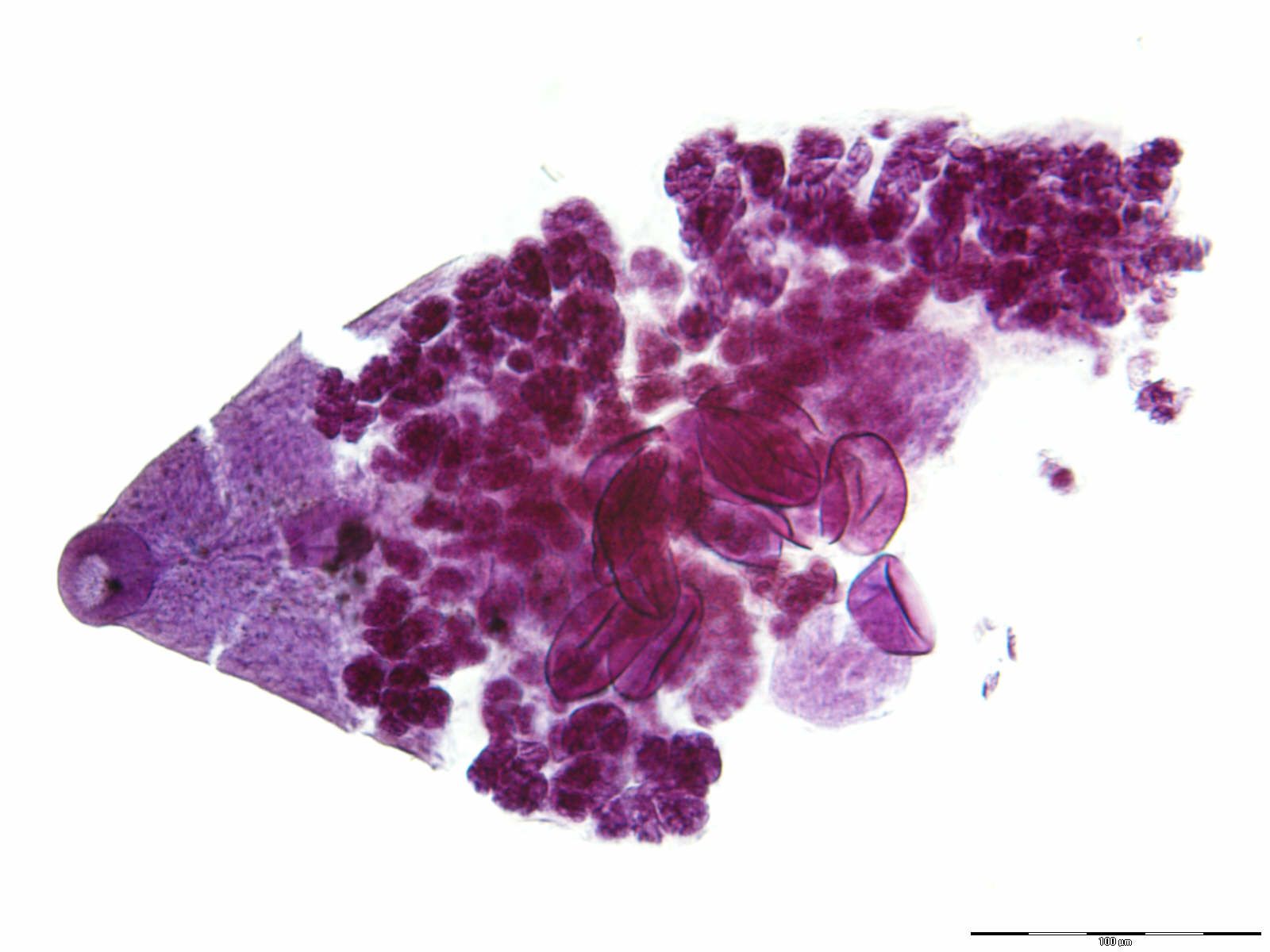
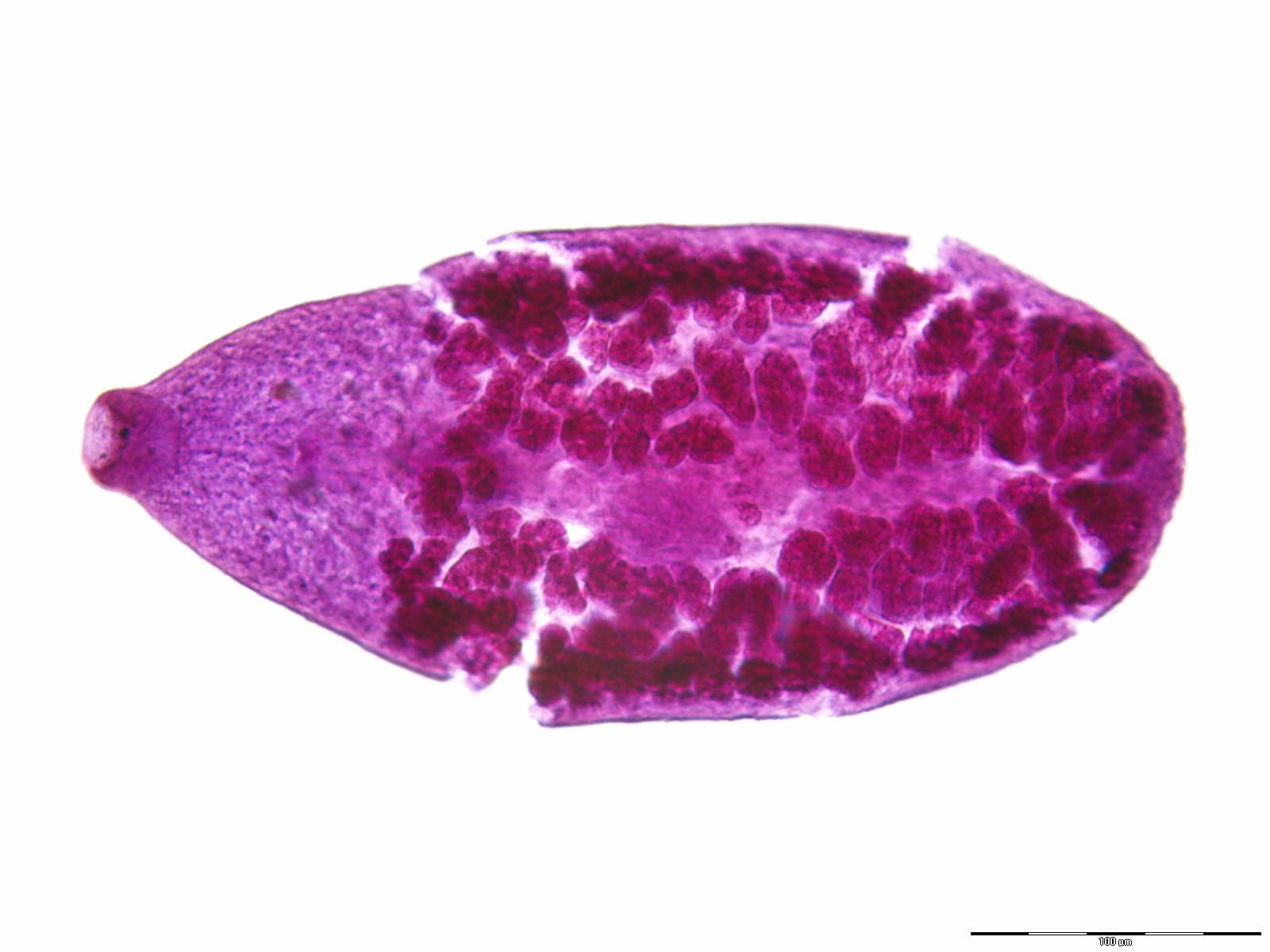
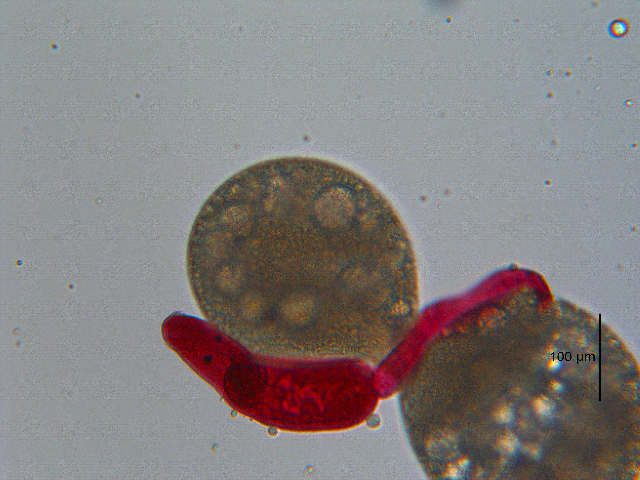
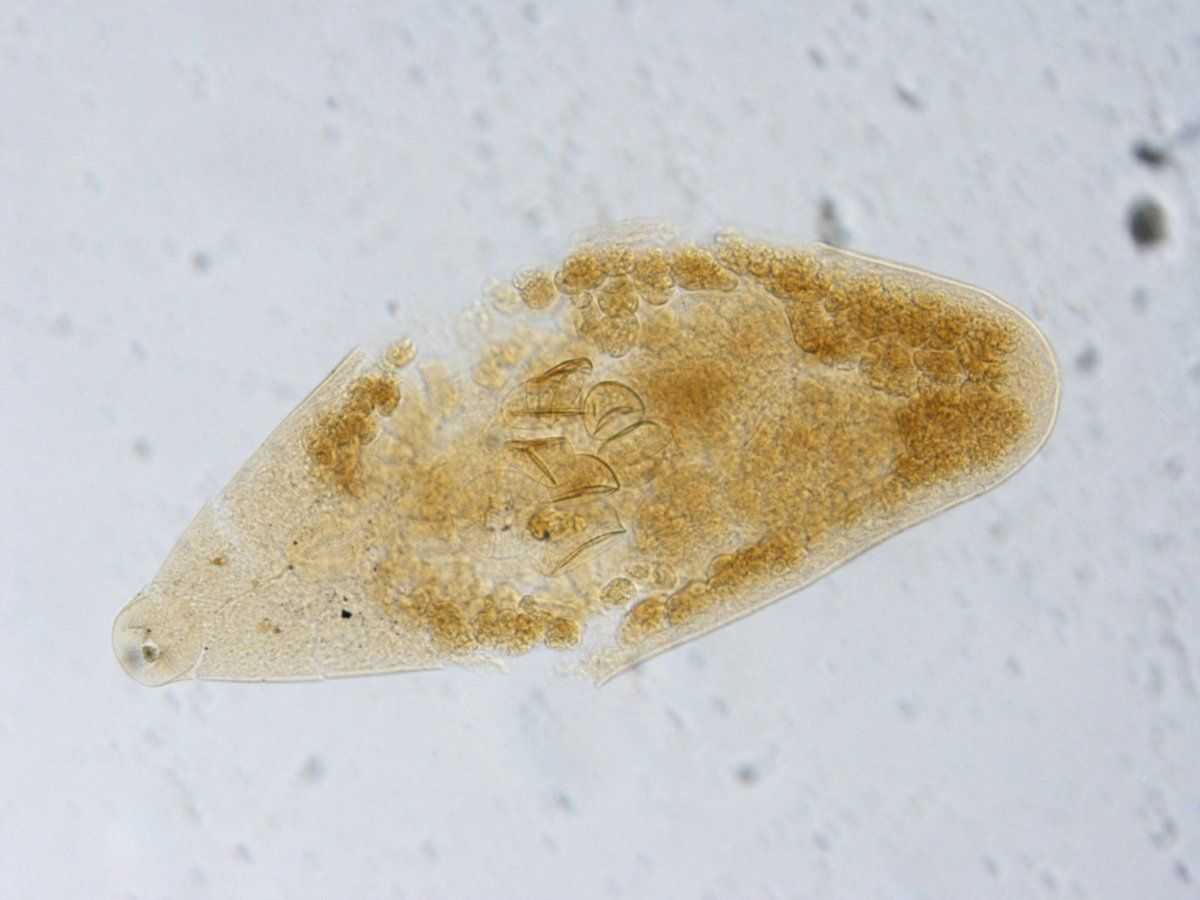
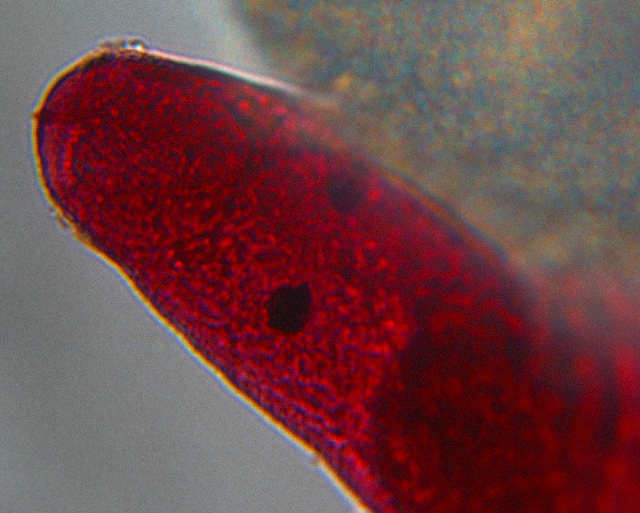
Acanthocolpids are typically observed as flattened, elongated trematodes. They feature a distinct anterior end, often rounded or slightly tapered, which houses an oral sucker. The body is characterized by dense internal reproductive structures that occupy much of the posterior region. Some specimens exhibit granular internal features or distinct hook-like structures. Stained preparations often reveal a deep red or pinkish coloration, with well-defined body margins and internal organs such as suckers and eggs clearly visible under magnification.
Gallery
References
- 1 2 Rodney A. Bray; Jean‐Lou Justine. Acanthocolpidae (Digenea) of marine fishes off New Caledonia, with the descriptions of two new species. Folia Parasitologica. 2011. https://doi.org/10.14411/fp.2011.004.
- ↑ Acanthocolpidae. GBIF. https://www.gbif.org/species/3205. Accessed 2026-09-05.
- 1 2 Acanthocolpidae. Wikipedia. https://en.wikipedia.org/wiki/Acanthocolpidae. Accessed 2026-09-05.
- ↑ Dataset view for Animalia / Platyhelminthes / Trematoda / Plagiorchiida / Acanthocolpidae constructed from imageomics/TreeOfLife-200M records under this taxonomic path. Hugging Face Datasets. https://huggingface.co/datasets/imageomics/TreeOfLife-200M