Abyssocladia fryerae
Taxonomy
This page represents the following TreeOfLife-200M taxonomic path.[1]
- Kingdom: Animalia
- Phylum: Porifera
- Class: Demospongiae
- Order: Poecilosclerida
- Family: Cladorhizidae
- Genus: Abyssocladia
- Species: Abyssocladia fryerae
Description
Abyssocladia fryerae is a carnivorous sponge belonging to the family Cladorhizidae. Like other members of this family, it lacks a functional aquiferous system and has adapted to a carnivorous feeding strategy, which is considered an evolutionary response to the nutrient-poor conditions of the deep sea [2].
Visual Description
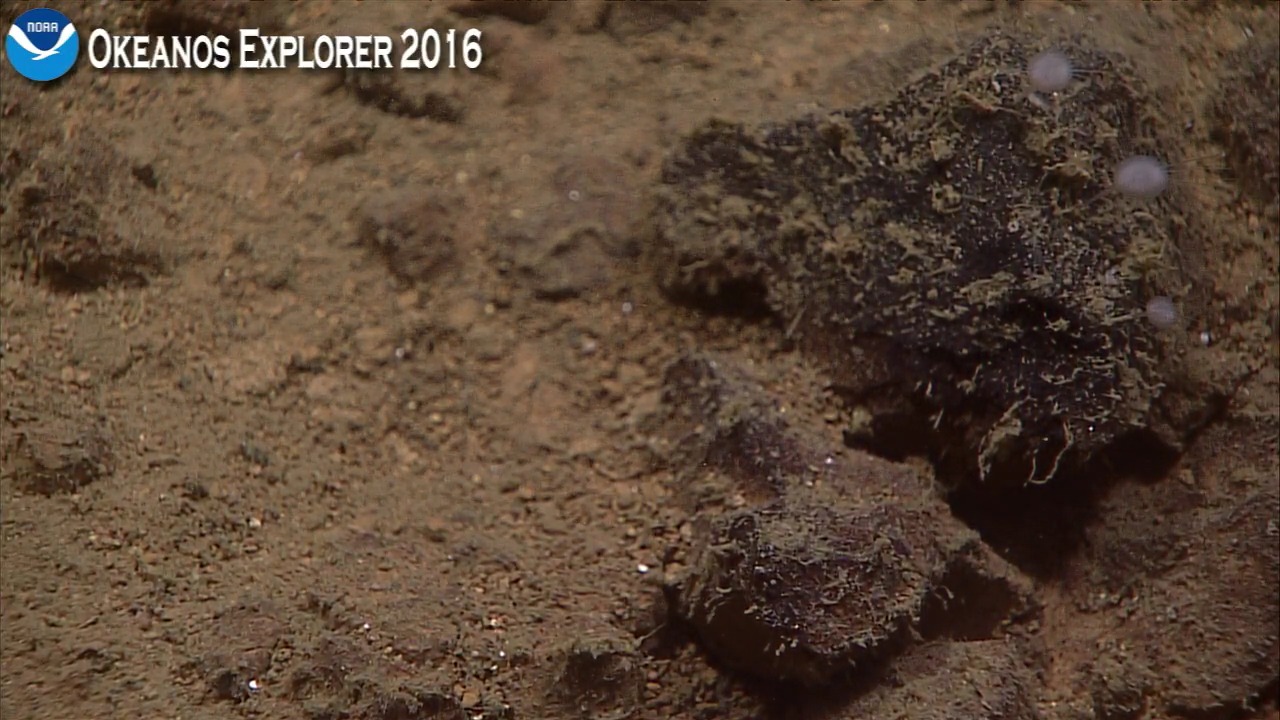
Abyssocladia fryerae is a pedunculate (stalked) sponge with a disc-shaped, slightly droplet-formed body [2]. Thin filaments radiate outward in a single plane from the margin of the disc [2]. The species is white to translucent gray in color [2]. Observations from the TreeOfLife-200M dataset confirm the presence of a distinct stalk supporting the disc-like body and the radiating filaments [1].
Biology and Ecology
The skeletal structure of A. fryerae consists of subtylostyles (550–1150 µm) that form the main structural skeleton of the stem and radiate into the disc and filaments [2]. Microscleres include arcuate isochelae (75–110 µm) and sigmancistras (17–23 µm) [2].
The species is known only from its type locality at the Petite Spot Volcano off the Mariana Islands, where it was collected at a depth of 5565 m on a hard, rocky substrate [2]. Phylogenetic analysis indicates that A. fryerae is closely related to other disc-shaped Abyssocladia species from the Pacific, such as A. kellyae, A. dominalba, and A. lakwollii [2].
Gallery
References
- 1 2 Dataset view for Animalia / Porifera / Demospongiae / Poecilosclerida / Cladorhizidae / Abyssocladia / fryerae constructed from imageomics/TreeOfLife-200M records under this taxonomic path. Hugging Face Datasets. https://huggingface.co/datasets/imageomics/TreeOfLife-200M.
- 1 2 3 4 5 6 7 8 Jon Thomassen Hestetun; Hans Tore Rapp; Shirley A. Pomponi. Deep-Sea Carnivorous Sponges From the Mariana Islands. Frontiers in Marine Science. 2019. https://doi.org/10.3389/fmars.2019.00371.